
9th Standard Syllabus & Materials
9th Standard
TN 9th Tamil உள்ளத்தின் சீர் -கற்கண்டு (இலக்கணம்) - தொடர் இலக்கணம், ஆகுபெயர் Important Questions And Answers Study Material - QB365 Set A
NEW9th Standard
TN 9th Tamil உள்ளத்தின் சீர் -விரிவானம் (துணைப்பாடம்) - தாய்மைக்கு வறட்சி இல்லை! Important Questions And Answers Study Material - QB365 Set A
NEW9th Standard
TN 9th Tamil உள்ளத்தின் சீர் -கவிதை பேழை (செய்யுள்) - மார்கழி பெருவிழா Important Questions And Answers Study Material - QB365 Set A
NEW9th Standard
TN 9th Tamil உயிருக்கு வேர்-இலக்கணம் - பகுபத உறுப்பிலக்கணம் Important Questions And Answers Study Material - QB365 Set A
NEW9th Standard
TN 9th Tamil அமுதென்று பேர் - இலக்கணம்-எழுத்து -அளபெடை Important Questions And Answers Study Material - QB365 Set A
NEW9th Standard
TN 9th Tamil அமுதென்று பேர்-துணைப்பாடம் - ஆறாம்திணை Important Questions And Answers Study Material - QB365 Set A

Published on: 15/10/2019
Man and Environment
Download Tamil Nadu 9th Standard Social Science question papers, model tests, one-mark questions, important questions, and public exam papers in PDF format. Free study materials and answer keys for TN State Board students.
Questions + Answers key
Take MCQ Social Science Test
1.
Define.
i) Population growth
ii) Infant Mortality Rate
iii) Census
iv) Sustainable Development
2.
What is Green House effect?
3.
Where do we have high and low densities of population?
4.
What is 'black death'?
5.
What do you mean by the term 'density of population'?
6.
Write a note on Ozone layer
7.
What are the effects of Deforestation?
8.
What are Urban Settlements? and explain its types.
9.
Describe the patterns of rural settlement with neat diagrams.
10.
Explain the factors affecting the distribution of population.
1.
(i) Population growth:
Population growth refers to an increase in the number of people who reside in a particular area during a particular period.
(iii) Census:
It is an official enumeration of population carried out periodically, It records information about the characteristics of population such as age, sex, literacy and occupation.
(iii) Sustainable Development:
1. The excessive usage of natural and manmade resources deplete its availability for the future generation.
2. We need to look after our planet, our resources and our people to ensure that we can hand over our planet to our children to live in true sustainability.
2.
(i) The green house effect is the process by which radiation from a planets, atmosphere warms the planets' surface to a temperature above what it would be without its atmosphere.
(ii) If a planet's atmosphere contains radiatively active gases they will radiate energy in all directions.
3.
(i) Areas of high density (above 50 people per sq.km) - East Asia, South Asia, North West Europe and Eastern North America.
(ii) Areas of low density (less than 10 people per sq.km) - Central Africa, Western Australia, Northern Russia, Canada, etc.
4.
(i) Natural Disaster or man made disaster such as famine, war, land slides, earthquake, Tsunami, epidemics, extreme weather, etc.
(ii) The black death is estimated to have killed 30 - 60 percent of Europe's total population during the 14th century.
(iii) The dominant explanation for black death is attributed to the break of plague.
5.
(i) Density of population refers to the number of people living per sq. km.
(ii) An area is said to be sparsely populated when it has large area with less number of people.
(iii) Similarity, smaller the area with a targe number of people. it is said to be densely populated.
(iv) Population density = \(\frac{Total \ population}{Total \ land \ area}\)
6.
(i) Ozone is a poisonous gas made up of molecules consisting of three oxygen atoms (03). This gas is extremely rare in the atmosphere, representing just three out of every 10 million molecules.
(ii) The ozone layer is not really a layer at all, but has become known as such because most ozone particles are scattered between 19 and 30 kilometre up in the earth's atmosphere, in a region called the stratosphere.
(iii) Ozone layer in the atmosphere absorbs most of the harmful ultraviolet radiation from the sun.
(iv) It also screens out the deadly UV-C radiation the ozone shield is this essential to protect life.
7.
(i) Deforestation results in many effects like floods and droughts, loss of soil fertility, air pollution, extinction of species, global warming, spread of deserts, depletion of water resource, melting of ice caps and glaciers, rise in sea level and depletion of ozone layer.
(ii) The United Nations Conference on Environment and Development (UNCED) by name Earth Summit Conference held at Rio de Janeiro, Brazil, on June 1992 concluded that all member countries should reduce their emission of carbon dioxide, methane and other green house gases thought to be responsible for global warming.
8.
(i) Urban is the term related to cities and towns where people are primarily engaged in non-agricultural activities.
(ii) The factors responsible for urbanization are better employment opportunities, suitable conditions for business, education, transport, etc.
(iii) Urban centres are classified as towns, cities, metropolitan cities, mega cities, conurbation, etc., depending on the size and services available and functions rendered to it.
(a) Town: A town is generally larger than a village, but smaller than a city. It has a population of less than 1 lakh. E.g: Arakkonam.
(b) City: Cities are much larger than towns and have a greater number of economic functions. The population in cities are estimated to be more than 1 lakh. E.g: Coimbatore
(c) Metropolitan Cities: Cities accommodating population between 10 lakhs and 50 lakhs are metropolitan cities. E.g: Madurai
(d) Mega cities: Cities with more than 50 lakh population are called Megacities. E.g: Chennai
(e) Conurbation: A conurbation is a region comprising of a number of cities, large towns and other urban areas. E.g: Delhi
9.
Patterns of rural settlements:
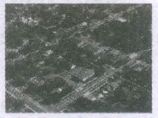
| (i) Rectangular pattern: Rectangular pattern of settlements are found in plain areas or valleys. The roads are rectangular and cut each other at right angles. |
 |
| (ii) Linear pattern : In a linear pattern, the houses are located along a road, railway line and along the edge of the river valley. |
.JPG) |
| (iii) Circular or Semicircular pattern : The pattern of settlement that is found around the lakes, ponds and sea coasts are called circular or semicircular pattern. |
.JPG) |
| (iv) Star like pattern: Where several metalled or unmetalled roads converge, star shaped settlements develop. |
.JPG) |
| (v) Triangular pattern: Triangular patterns of rural settlement generally develop at the confluence of rivers |
.JPG) |
| (vi) T-Shaped, V-Shaped, Cross-Shaped or Cruciform settlements: T-shaped settlements develop at tri-junctions of the roads (T) while V-shaped where two roads converge with the third one and Cruciform settlements develop on the cross-roads which extend in all your directions. |
.JPG) |
| (vii) Nebular pattern: The arrangement of roads is almost circular which ends at the central location or nucleus of the settlement around the house of the main landlord of the village or around a mosque, temple or church. |
.JPG) |
10.
Population distribution refers to the way in which people are spread out across the earth surface.
The world population is not uniformly distributed, owing to the following factors.
(a) Physical factors: It includes temperature, rainfall, Soil, relief, water, natural vegetation, distribution of minerals and availability of energy resources.
(b) Historical factors : Regions with historical importance (river valley civilizations, war and constant invasions fall under historical factors responsible for population distribution.
(c) Economic factors: Educational Institutions, employment opportunities, manufacturing industries, luxurious amenities, trade and commerce and other facilities encourage dense population in an area.

9th Standard Syllabus & Materials
9th Standard
TN 9th Tamil உள்ளத்தின் சீர் - திருக்குறள் Important Questions And Answers Study Material - QB365 Set A
NEW9th Standard
TN 9th Tamil உள்ளத்தின் சீர் - மணிமேகலை Important Questions And Answers Study Material - QB365 Set A
NEW9th Standard
TN 9th Tamil உள்ளத்தின் சீர் - ஏறு தழுவுதல் Important Questions And Answers Study Material - QB365 Set A
NEW9th Standard
TN 9th Tamil உயிருக்கு வேர் - தண்ணீர் Important Questions And Answers Study Material - QB365 Set A



Tamilnadu Stateboard 9th Standard Subjects
Tamilnadu Stateboard Standards




