
 100% FREE ACCESS
9th Standard Syllabus & Materials
9th Standard
TN 9th Tamil உள்ளத்தின் சீர் -கற்கண்டு (இலக்கணம்) - தொடர் இலக்கணம், ஆகுபெயர் Important Questions And Answers Study Material - QB365 Set A
NEW9th Standard
TN 9th Tamil உள்ளத்தின் சீர் -விரிவானம் (துணைப்பாடம்) - தாய்மைக்கு வறட்சி இல்லை! Important Questions And Answers Study Material - QB365 Set A
NEW9th Standard
TN 9th Tamil உள்ளத்தின் சீர் -கவிதை பேழை (செய்யுள்) - மார்கழி பெருவிழா Important Questions And Answers Study Material - QB365 Set A
NEW9th Standard
TN 9th Tamil உயிருக்கு வேர்-இலக்கணம் - பகுபத உறுப்பிலக்கணம் Important Questions And Answers Study Material - QB365 Set A
NEW9th Standard
TN 9th Tamil அமுதென்று பேர் - இலக்கணம்-எழுத்து -அளபெடை Important Questions And Answers Study Material - QB365 Set A
NEW9th Standard
TN 9th Tamil அமுதென்று பேர்-துணைப்பாடம் - ஆறாம்திணை Important Questions And Answers Study Material - QB365 Set A

Published on: 13/05/2022
QB365 provides detailed and simple solution for every Book back Questions in class 9 Science Subject. It will helps to get more idea about question pattern in every book back questions with solution.
latest Book back QuestionsDownload Tamil Nadu 9th Standard Science question papers, model tests, one-mark questions, important questions, and public exam papers in PDF format. Free study materials and answer keys for TN State Board students.
Questions + Answers key
Take MCQ Science Test1.
Why are one-time use and throwaway plastics harmful?
2.
What is the valency of carbon in carbon monoxide?
3.
Carbon does not form ionic compounds. Why?
4.
What are saturated and unsaturated compounds called?
5.
Differentiate graphite and diamond.
1.
1. Use and throwaway plastics cause short and long term environmental damage.
2. Half of all the plastic items made today is used for throwaway plastic items.
3. They block drains and pollute water bodies .
4. One-time use plastic causes health problems for humans, plants and animals.
5. If these items are thrown away they can stay in our environment for over 1000 years causing plastic pollution for future generations.
6. Some examples are plastic carry bags, cups, plates, straws, water pouches etc.
2.
In carbon monoxide, the electron pairs of oxygen gets delocalized between C and O. So without another oxygen atom, the structure becomes stable as oxygen shares its lone pair with carbon.
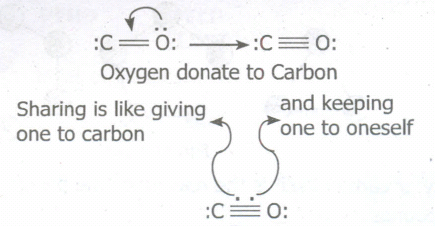
i) Thus in carbon monoxide, one electron of tetravalent carbon forms sigma and other electron forms pi bond with oxygen.
ii) Then one lone pair of oxygen is shared between C and O, so that C has complete octet.
iii) Thus two unbonded electrons of C are available, so valency is 2.
Thus valency of carbon in CO is 2.
3.
1. Covalent bonding is the sharing of electron between atoms. This type of bonding occurs between two atoms of the same element.
2. To form Ionic compounds carbon must gain four electrons forming C4- anions but it would be difficult for its nucleus with six protons to hold onto ten electrons .
3. It could lose four electrons to form C4+ cations, but it would require a large amount of energy to remove four electrons .
4. These two conditions are highly unfavourable. Therefore carbon molecules share their four valence electrons through single, double, and triple bonds so that each atom can achieve noble gas configuration.
4.
| Saturated Compounds | Unsaturated Compounds |
| i) Saturated compounds are organic compounds that have only carbon - carbon single bonds. | Unsaturated compounds are organic compounds containing at least one double bond or triple bond between carbon atoms. |
| ii) Less reactive | Highly reactive |
| iii) More stable | Less stable |
| iv) Do not undergo polymerisation | undergo polymerisation |
| v) More stable | Less stable |
| vi) Includes Alkanes | Includes Alkenes, Alkynes and aromatic compounds. |
5.
| Diamond | Graphite |
| i) Each carbon has four covalent bonds | Each carbon has three covalent bonds |
| ii) Hard, heavy and transparent | Soft, slippery to touch and opaque |
| iii) It has tetrahedral units linked in three dimension | It has planar layers of hexagon units |
| iv) It is a non-conductor of heat and electricity | It is a conductor of heat and electricity |

9th Standard Syllabus & Materials
9th Standard
TN 9th Tamil உள்ளத்தின் சீர் - திருக்குறள் Important Questions And Answers Study Material - QB365 Set A
NEW9th Standard
TN 9th Tamil உள்ளத்தின் சீர் - மணிமேகலை Important Questions And Answers Study Material - QB365 Set A
NEW9th Standard
TN 9th Tamil உள்ளத்தின் சீர் - ஏறு தழுவுதல் Important Questions And Answers Study Material - QB365 Set A
NEW9th Standard
TN 9th Tamil உயிருக்கு வேர் - தண்ணீர் Important Questions And Answers Study Material - QB365 Set A



Tamilnadu Stateboard 9th Standard Subjects
Tamilnadu Stateboard Standards





