
 100% FREE ACCESS
9th Standard Syllabus & Materials
9th Standard
TN 9th Tamil உள்ளத்தின் சீர் -கற்கண்டு (இலக்கணம்) - தொடர் இலக்கணம், ஆகுபெயர் Important Questions And Answers Study Material - QB365 Set A
NEW9th Standard
TN 9th Tamil உள்ளத்தின் சீர் -விரிவானம் (துணைப்பாடம்) - தாய்மைக்கு வறட்சி இல்லை! Important Questions And Answers Study Material - QB365 Set A
NEW9th Standard
TN 9th Tamil உள்ளத்தின் சீர் -கவிதை பேழை (செய்யுள்) - மார்கழி பெருவிழா Important Questions And Answers Study Material - QB365 Set A
NEW9th Standard
TN 9th Tamil உயிருக்கு வேர்-இலக்கணம் - பகுபத உறுப்பிலக்கணம் Important Questions And Answers Study Material - QB365 Set A
NEW9th Standard
TN 9th Tamil அமுதென்று பேர் - இலக்கணம்-எழுத்து -அளபெடை Important Questions And Answers Study Material - QB365 Set A
NEW9th Standard
TN 9th Tamil அமுதென்று பேர்-துணைப்பாடம் - ஆறாம்திணை Important Questions And Answers Study Material - QB365 Set A

Published on: 12/02/2020
9th Standard Mathematics All Chapter Creative Questions-I-2019-2020
Download Tamil Nadu 9th Standard Maths question papers, model tests, one-mark questions, important questions, and public exam papers in PDF format. Free study materials and answer keys for TN State Board students.
Questions + Answers key
Take MCQ Maths Test1.
Two dice are thrown simultaneously. Find the probability of getting
(i) an even number as the sum.
(ii) atotal of at least 10
(iii) a doublet of even number.
2.
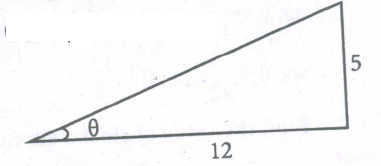
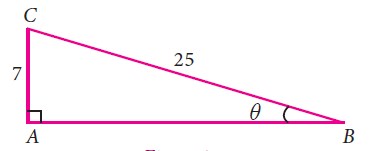
Find the six trigo'nometric ratios of the angle 0 using the diagram
3.
Find the area of an equilateral triangle whose perimeter is 150 m.
4.
Find the coordinates of the point which divides the line segment joining the points (3, 1) and (5, 13) internally in the ratio 3 : 5.
5.
Solve \(\cfrac { 17(2-x)-5(x+12) }{ 1-7x } =8\)
6.
The volume of a container is 1440 m3. The length and breadth of the container are 15 m and 8 m respectively. Find its height.
7.
The probability of guessing the correct answer to a certain question is \(\frac { x }{ 3 } \). If the probability of not guessing the correct answer is \(\frac { x }{ 5 } \), then find the value of x.
8.
ABCD is a cyclic quadrilateral such that \(\angle \)A = (4y + 20) ° , \(\angle \)B = (3y –5) ° , \(\angle \)C =(4x) ° and \(\angle \)D = (7x + 5) ° . Find the four angles.
9.
If cos A = \(\frac { 2x }{ 1+{ x }^{ 2 } } \) then find the values of sinA and tan A in terms of x.
10.
The centre of a circle is (−4, 2). If one end of the diameter of the circle is (−3, 7) then find the other end.
11.
State Associative property of sets.
12.
Find the value of \({ 729 }^{ \frac { -5 }{ 6 } }\)
13.
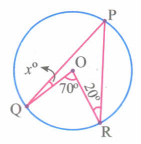
Find the value of Xo
14.
The radius of a circle 15 cm and the length of one of its chord is 24 cm. Find the distance of the chord from the centre.
15.
In a week, temperature of a certain place is measured during winter are as follows 26oC, 24oC, 28oC, 31oC, 30oC, 26oC, 24oC. Find the mean temperature of the week.
16.
In a rice mill, seven labours are receiving the daily wages of Rs. 500, Rs. 600, Rs. 600, Rs. 800, Rs. 800, Rs. 800 and Rs. 1000, find the modal wage
17.
A chord is 12 cm away from the centre of the circle of radius 15 cm. Find the length of the chord
18.
Factorise the following: a3+b3-3ab+1
19.
Write the following in scientific notation: (50000000)4
20.
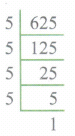
Write the following in the form of 5n?
625
21.
Express the following in the form \({p\over q},\) where p and q are integers and q \(\ne\) 0.
\(0.\overline {47}\)
22.
Objective: To find the mid-point of a line segment using paper folding
Procedure: Make a line segment on a paper by folding it and name it PQ. Fold the line segment PQ in such a way that P falls on Q and mark the point of intersection of the line segment and the crease formed by folding the paper as M. M is the midpoint of PQ.
23.
Write the following in "Roster" form?
(a) A = set of the months having 31 days.
(b) B = {x : x is a natural number of 2 digits divisible by 13}
(c) C = {set of vowels in the word "father"}
(d) D = {x : 5 < x < 10 ; x ∈ N}
(e) E = {x: x is a square natural number less than 16}
24.
If U = {a, b, c, d, e, f, g, h}, A = {b, d, f, h} and B = {a, d, e, h}, find the following sets. (B′)′
25.
Are A = {x : x ∈ N, 4 ≤ x ≤ 8} and B = { 4, 5, 6, 7, 8} equal sets?
26.
If the ratio of the sides of two cubes are 2:3, then ratio of their surface areas will be _______.
4 : 6
4 : 9
6 : 9
16 : 36
27.
A collection of one or more outcomes of an experiment is called _______.
Event
Outcome
Sample point
None of the above
28.
If A is any event in S and its complement is A' then, P(A′) is equal to _______.
1
0
1-A
1-P(A)
29.
The total surface area of a cuboid is ______________
4a2 sq. units
6a2 sq. units
2(l + b)h sq. units
2(lb + bh + lh) sq. units
30.
The value of tan 1° tan 2° tan 3°...tan 89° is ________.
0
1
2
\(\frac { \sqrt { 3 } }{ 2 } \)
31.
The value of \(\frac { 1-{ tan }^{ 2 }{ 45 }^{ 0 } }{ 1+{ tan }^{ 2 }{ 45 }^{ 0 } } \) is ________.
2
1
0
\(\frac { 1 }{ 2 } \)
32.
The value of k for which the pair of linear equations 4x + 6y −1 = 0 and 2x + ky − 7 = 0 represents parallel lines is _______.
k = 3
k = 2
k = 4
k = -3
33.
In what ratio does the y-axis divide the line joining the points (−5, 1) and (2, 3) internally ______.
1 : 3
2 : 5
3 : 1
5 : 2
34.
\(n(A\cup B\cup C)\)=________
n(A) + n(B) + n(C)
n(A) + n(b) + n(C) -\(n\left( A\cap B\cap C \right) \)
\(n\left( A\cap B\cap C \right) \)
n(A) + n(B) + n(C) -\(n\left( A\cap B \right) \)-\(n\left( B\cap A \right) -n\left( A\cap C \right) +n\left( A\cap B\cap C \right) \)
35.
Which of the following is true?
\(\left( A\cup B \right) =B\cup A\)
\({ \left( A\cup B \right) }^{ ' }{ A }^{ ' }{ -B }^{ ' }\)
\({ \left( A\cap B \right) }^{ ' }={ A }^{ ' }\cap { B }^{ ' }\)
\(A-\left( B\cap C \right) =\left( A-B \right) \cap \left( A-C \right) \)
36.
If one of the factor of x2-9x+18 is (x-3) then the other factor is_________
x-9
x+6
(x-6)
x-18
37.
The length of a square is 1.2\(\times\)103 m. Its area is_______
14.4 \(\times\) 106
1.44 \(\times\) 106
0.144 \(\times\) 10
1440
38.
In simple form,\(\sqrt [ 3 ]{ 54 } \) is ?
\(3\sqrt [ 3 ]{ 2 } \)
\(3\sqrt { 27 } \)
\(3\sqrt { 2 } \)
\(\sqrt { 3 } \)
39.
The perpendicular line from the centre of the circle to the chord divides the chord in the ratio________
1: 1
1: 2
2: 1
1: 3
40.
Find the mean of the prime factors of 165 _____________
5
11
13
55
41.
The mean of the first 10 whole numbers is
4
4.5
5
5.5
42.
Which one of the following is not a measure of central tendency?
Mean
Range
Median
Mode
43.
Let m be the mid point and b be the upper limit of a class in a continuous frequency distribution. The lower limit of the class is
2m-b
2m+b
m-b
m-2b
44.
For which set of numbers do the mean, median and mode all have the same values?
2, 2, 2, 4
1, 3, 3, 3, 5
1, 1, 2, 5, 6
1, 1, 2, 1, 5
45.
The mean of a set of seven numbers is 81. If one of the numbers is discarded, the mean of the remaining numbers is 78. The value of discarded number is _______.
101
100
99
98
46.
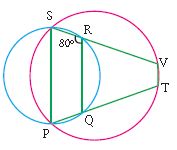
In the figure, PQRS and PTVS are two cyclic quadrilaterals, If ㄥQRS = 100°, then ㄥTVS = ______.
80°
100°
70°
90°
47.
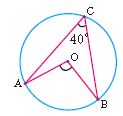
In the figure, O is the centre of the circle and ㄥACB = 40° then ㄥAOB = ________.
80°
85°
70°
65°
48.
(a+b−c)2 is equal to ______.
(a−b+c)2
(−a−b+c)2
(a+b+c)2
(a-b-c)2
49.
\(\left( 0.000729 \right) ^{ \frac { -3 }{ 4 } }\times \left( 0.09 \right) ^{ \frac { -3 }{ 4 } }\) = ______.
\(\frac { { 10 }^{ 3 } }{ { 3 }^{ 3 } } \)
\(\frac { { 10 }^{ 5 } }{ { 3 }^{ 5 } } \)
\(\frac { { 10 }^{ 2 } }{ { 3 }^{ 2 } } \)
\(\frac { { 10 }^{ 6 } }{ { 3 }^{ 6 } } \)
50.
If n(A \(\cup \) B \(\cup \) C) = 40, n(A) = 30, n(B) = 25, n(C) = 20, n(A\(\cap \)B) = 12, n(B\(\cap \)C) = 18 and n(A\(\cap \)C) = 15 , then n(A\(\cap \)B\(\cap \)C) is ___________
5
10
15
20
51.
The degree of the polynomial \( \sqrt { 2 } { x }^{ 2 }-\frac { 7 }{ 2 } { x }^{ 4 }+x-5x^{ 3 }\) is _______________
2
3
4
5
52.
The area of a rectangle with length \(2l^{ 2 }m\) and breadth \(3l^{ 2 }m\) is_______________________
\(6l^{ 3 }m^{ 3 }\)
\(l^{ 3 }m^{ 3 }\)
\(2l^{ 3 }m\)
\(4l^{ 3 }m^{ 3 }\)
53.
Which of the following is a monomial?
\({ 4x }^{ 2 }\)
\(a+b\)
\(a+b+c\)
\(a+b+c+d\)
54.
ABCD is a parallelogram as shown. Find x and y.
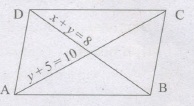
1, 7
2, 6
3, 5
4, 4
55.
The point of concurrency of the medians of a triangle is known as __________
circumcentre
incentre
orthocentre
centroid
56.
The angle sum of a convex polygon with number of sides 7 is ________
900°
1080°
1444°
720°
57.
The number of elements of the set {x : x ∈ Z, x2 = 1} is ________
0
1
2
3
58.
Which one of the following has terminating decimal expansion?
\(\frac { 7 }{ 9 } \)
\(\frac { 8 }{ 15 } \)
\(\frac { 1 }{ 2 } \)
\(\frac { 5 }{ 32 } \)
59.
The point (0, -3) lies on _______________
+ ve x-axis
+ ve y-axis
- ve x-axis
- ve y-axis
60.
A point which lies in the III quadrant is__________________
(5, 4)
(5, -4)
(-5, -4)
(-5, 4)
61.
The point whose abscissa is 5 and lies on the x-axis is__________
(-5, 0)
(5,5)
(0,5)
(5,0)
62.
On which quadrant does the point (-4, 3) lie?
I
II
III
IV
63.
The number \(0.\bar { 3 } \) in the form \(\frac { p }{ q } \) where p and q are integers and \(q\neq 0\)
\(\frac { 33 }{ 100 } \)
\(\frac { 3 }{ 10 } \)
\(\frac { 1 }{ 3 } \)
\(\frac { 3 }{ 100 } \)
64.
Point (0, –7) lies ________
on the x-axis
in the II quadrant
on the y-axis
in the IV quadrant
65.
If A∪B = A∩B, then ________.
A ≠ B
A = B
A ⊂ B
B ⊂ A
66.
The probability that it will rain tomorrow is \(\\ \frac { 91 }{ 100 } \). What is the probability that it will not rain tomorrow?
67.
The length, breadth and height of a hall are 25 m, 15 m and 5 m respectively. Find the cost of renovating its floor and four walls at the rate of Rs. 80 per m2.
68.
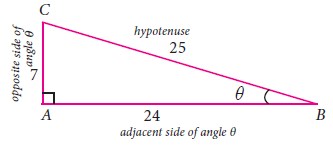
Find the six trigonometric ratios of the angle \(\theta\) using the given diagram.
69.
If A = {2,5,6,7} and B = {3,5,7,8}, then verify the commutative property of intersection of sets
70.
Is (4x + 3) a factor of 4x3 + 15x2 - 31 x -30
71.
Write in scientific notation: (500000)5\(\times\)(3000)3
72.
Find the mean, median and mode of the following distribution:
| Weight(in kgs) | 25-34 | 35-44 | 45-54 | 55-64 | 65-74 | 75-84 |
|---|---|---|---|---|---|---|
| Number of students | 4 | 8 | 10 | 14 | 8 | 6 |
73.
If \(\sqrt{2}\) =1.414, \(\sqrt{3}\) = 1.732, \(\sqrt{5}\) = 2.236, \(\sqrt{10}\) = 3.162 then find the values of the following correct to 3 places of decimals.
(i) \(\sqrt { 40 } -\sqrt { 20 } \)
(ii) \(\sqrt { 300 } -\sqrt { 90 } -\sqrt { 8 } \)
74.
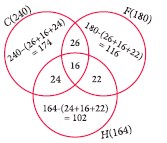
In a college, 240 students play cricket, 180 students play football, 164 students play hockey, 42 play both cricket and football, 38 play both football and hockey, 40 play both cricket and hockey and 16 play all the three games. If each student participate in at least one game, then find
(i) the number of students in the college
(ii) the number of students who play only one game.
75.
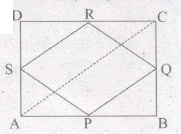
ABCD is a rectangle and P, Q, R and S are the mid-points of the sides AB, BC, CD and DA respectively. Show that the quadrilateral PQRS is a rhombus.
76.
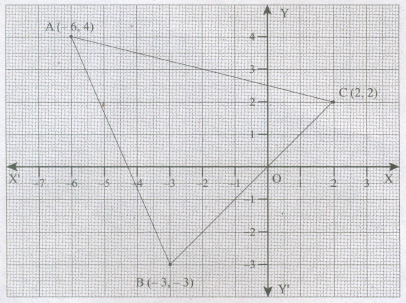
Read the coordinates of the vertices of the triangle ABC with the following figure.
77.
Find the quotient and remainder of the following.
(8x3 – 1)÷(2x–1)
78.
Show that the following points taken in order form an equilateral triangle in each case
\(A\left( \sqrt { 3 } ,2 \right) ,B\left( 0,1 \right) ,C\left( 0,3 \right) \)
79.
Find the area of a quadrilateral ABCD whose sides are AB = 8cm, BC = 15 cm, CD = 12 cm, AD = 25 cm and  = 90°.
80.
If U = {x :x \(\in \) Z, -3 \(\le \) x \(\le \) 9 },A = {x : x = 2P +1, \(\in \) Z, -2 \(\le \) P\(\le \) 3}, B ={x : x = q + 1, q \(\in \) Z, 0 \(\le \) q \(\le \) 3}, verify De Morgan's law's for complementation.
81.
Find the quotient and remainder when 4x3 + 6x2 + 7x + 2 is divided by x - 2
82.
Calculate the mean of the following distribution using Assumed Mean Method
| Class Interval | 0-10 | 10-20 | 20-30 | 30-40 | 40-50 |
| Frequency | 5 | 7 | 15 | 28 | 8 |
83.
Represent \(-\frac { 2 }{ 11 } ,-\frac { 5 }{ 11 } and-\frac { 9 }{ 11 } \)on the number line.
84.
Find any three rational numbers between \(\frac { 1 }{ 2 } \) and \(\frac { 1 }{ 5 } \)
85.
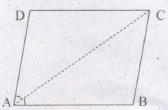
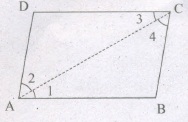
Diagonal AC of a parallelogram ABCD bisects ∠A. Show that
(i) it bisects ∠C also
(ii) ABCD is a rhombus.
86.
Find the type of triangle formed by (-1, -1), (1, 1) and (\(-\sqrt{13},\sqrt{13}\))
87.
Construct \(\triangle\)ABC in which AB = BC = 8 cm and \(\angle \)B =70o. Locate its incentre and draw the incircle
88.
Construct the ΔLMN such that LM = 7.5cm, MN = 5cm and LN = 8cm. Locate its centroid.
1.
S = { (1,1), (1,2), (1,3), (1,4), (1,5), (1,6), (2,1), (2,2), (2,3), (2,4), (2,5), (2,6), (3,1), (3,2), (3,3), (3,4), (3,5), (3,6), (4,1), (4,2), (4,3), (4,4),(4,5), (4,6), (5,1), (5,2), (5,3), (5,4), (5,5), (5,6), (6,1), (6,2), (6,3), (6,4), (6,5), (6,6)}
n(S) = 36
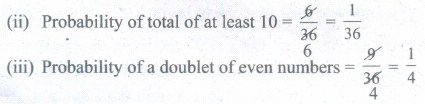
(i) Probability of even number as the sum = \(\frac { 18 }{ 36 } =\frac { 1 }{ 2 } \)
2.
Hypotenuse = \(\sqrt { { 12 }^{ 2 }+{ 5 }^{ 2 } } \)
= \(\sqrt { 144+25\quad } =\sqrt { 69 } \)
= 13
\(sin\theta =\cfrac { 5 }{ 13 } ;cos\theta =\cfrac { 12 }{ 13 } ;tan\theta =\cfrac { 5 }{ 12 } ;
\)
\(cosec\theta =\cfrac { 13 }{ 5 } ;sec\theta =\cfrac { 13 }{ 12 } ;cot\theta =\cfrac { 12 }{ 3 } \)
3.
3a = 150
a = \(\frac { 150 }{ 3 } \) = 50 m

4.
\(\left( \frac { 5(3)+3(5) }{ 5+3 } ,\frac { 5(1)+3(13) }{ 5+3 } \right) =\left( \frac { 15+15 }{ 8 } ,\frac { 5+39 }{ 8 } \right) =\left( \frac { 30 }{ 8 } ,\frac { 44 }{ 8 } \right) =\left( \frac { 15 }{ 4 } ,\frac { 11 }{ 2 } \right) \)
5.
17(2 -x) - 5(x + 12) = 8 (1-7x)
34 - 17x - 5x - 60 = 8 - 56x
56x - 17x - 5x = 60 + 8 - 34
56x-22x = 34
34x = 34
x = 1
6.
Volume of a cuboid = 1800 cm3
l = 15 cm h = 12 cm b = ?
l \(\times\) b \(\times\) h = V
15 \(\times\) b \(\times\) 12 = 1800
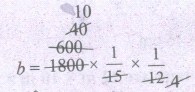
Breadth = 10 cm
7.
\(\frac { x }{ 3 } +\frac { x }{ 5 } \) = 1
\(\frac { 5x+3x }{ 15 } \) = 1
\(\frac { 8x }{ 15 } \) = 1
8x = 15
x = \(\frac { 15 }{ 8 } \)
8.
\(\angle A+\angle C={ 180 }^{ 0 }\)
4y + 20 + 4x = 180
4x + 4y = 180 - 20
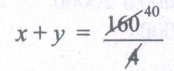
x +Y = 40 ...(1)
\(\angle B+\angle D\quad =180^{ 0 }\)
3y - 5 + 7x + 5 =180
7x + 3y = 180 ...(2)
(1)\(\times\)7\(\Rightarrow\) 7x + 7y = 280
(2) \(\Rightarrow\) \(\cfrac { 7x+3y=180 }{ 4y=100 } \) ...(2)
y = 25°
Substitute y = 25° in (1)
x+ 25 = 40
x = 40 - 25
x = 15°
\(\angle A\) = (4y+ 20)° = (4\(\times\)25 + 20) = 100 + 20 = 120°
\(\angle B\) = (3y - 5) = (3\(\times\)25° - 5) = 75° - 5° = 70°
\(\angle C\) = (4x)° = (4\(\times\)15°) = 60°
\(\angle D\) = (7x + 5)° = (7\(\times\)15 + 5) = 105° + 5° = 110°
The Four angles are \(\angle A\) = 120°, \(\angle B\) =70°, \(\angle C\) = 60°, \(\angle D\) = 110°
9.
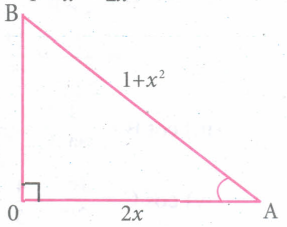
By the pythagoras theorem,
AB2 = OA2 + OB2
(1 + x2)2 = (2x)2 + OB2
OB2 = (1 +x2)2 - (2x)2 = 1+ x4 + 2x2 - 4x2 = 1+x4 - 2x2
OB2 = (1-x2)2 B
OB = (1-x2)
\(\therefore sin\ A=\cfrac { 1-{ x }^{ 2 } }{ 1+{ x }^{ 2 } } \)
\(tan\ A=\cfrac { 1-{ x }^{ 2 } }{ 2x } \)
10.
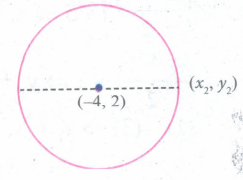
\(M(x,y)=\left( \frac { { x }_{ 1 }+{ x }_{ 2 } }{ 2 } ,\frac { { y }_{ 1 }+{ y }_{ 2 } }{ 2 } \right) \)
\((-4,2)=\left( \frac { -3+{ x }_{ 2 } }{ 2 } ,\frac { 7+{ y }_{ 2 } }{ 2 } \right) \left( { x }_{ 1 }{ y }_{ 1 } \right) \)
\(\frac { -3+{ x }_{ 2 } }{ 2 } =-4\quad \frac { 7+{ y }_{ 2 } }{ 2 } =2\)
-3 + x2 = -8
7 +y2 = 4
x2 = -8 +3
y2 = 4 -7 = -3
x2 = -5
The other end is (-5, -3)
11.
For any three sets A, B and C
(i) \(A\cap \left( B\cap C \right) =\left( A\cap B \right) \cap C\)
(ii) \(A\cup \left( B\cup C \right) =\left( A\cup B \right) \cup C\)
12.
\({ 729 }^{ \frac { -5 }{ 6 } }\) =\(\cfrac { 1 }{ { 729 }^{ \cfrac { 5 }{ 6 } } } =\cfrac { 1 }{ \left( \sqrt [ 6 ]{ 729 } \right) ^{ 5 } } =\cfrac { 1 }{ \left( \sqrt [ 6 ]{ { 3 }^{ 6 } } \right) } =\cfrac { 1 }{ { 3 }^{ 5 } } =\cfrac { 1 }{ 243 } \)
13.
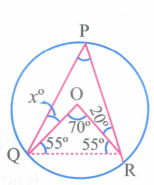
\(\angle \)QPR = \(\cfrac { 1 }{ 2 } \) \(\angle \)QPR =\(\cfrac { 1 }{ 2 } \) X 70o = 35o
In\(\triangle\)QPR
\(\angle \)R + \(\angle \)P + \(\angle \)Q = 180o
75o + 35o +\(\angle \)Q =180o
\(\angle \)Q =180o-110o = 70o
\(\angle \)Q = xo + 55o = 70o
xo = 70o - 55o = 15o
14.
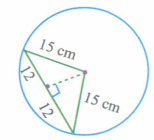
Distance of the chord from the centre
= \(\sqrt { { 15 }^{ 2 }-{ 12 }^{ 2 } } \)
= \(\sqrt { 225-144 } \)
= \(\sqrt { 89 } \)
= 9 cm
15.
Mean \(\bar { x } =\cfrac { \Sigma x }{ n } \)
= \(\cfrac { 26+24+28+31+30+26+24 }{ 7 } =\cfrac { 189 }{ 7 } \)
Mean temperature of the week = 270C
16.
In the given data Rs. 800 occurs thrice. Hence the mode is Rs. 800
17.
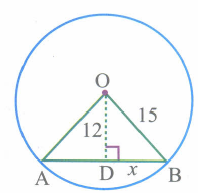
BD = \(\sqrt { { 15 }^{ 2 }+{ 12 }^{ 2 } } \)
= \(\sqrt { 225-144 } \)
= \(\sqrt { 81 } \)
= 9 cm
\(\therefore\) length of the chord AB = 9 + 9 = 18
18.
a3+b3+13-3ab\(\times\)13
= (a+b+1)(a2+b2+12-ab-b\(\times\)1-1\(\times\)a)
= (a+b+1)(a2+b2+1-ab-b-a)
= (1+x-3y)2
19.
(50000000)4 = (5.0 \(\times\)107)4
= (5.0)4\(\times\)(107)4
= 625.0 \(\times\)1028
= 6 25 \(\times\) 102 \(\times\) 1028 .
= 6 25 \(\times\) 1030
20.
625 = 54
21.
Let x = 0.474747 ....... \(\rightarrow\) (1)
100x = 47.4747 ......... \(\rightarrow\) (2)
| (2) - (1) \(\Rightarrow \) 100x - x | = 47.4747 ..... |
| = 0. 4747 | |
| 99 x | = 47.0000 |
\(x={47\over 99}\)
\(\therefore 0.\overline {47}={47\over 99}\)
22.
23.
(a) A = {Jan, March, May, July, Aug, Oct, Dec}
(b) B = {13,26,39,52,65,78,91}
(c) C = {a,e}
(d) D = {6,7,8,9,10}
(e) E = {1,4,9}
24.
B' = {b, c, f, g}
(B')' = U-B'
= { a, b, c, d, e, f, g, h} - {b, c, f, g}
= {a, d, e, h}
25.
A = { 4, 5, 6, 7, 8}, B = { 4, 5, 6, 7, 8}
A and B are equal sets.
26.
(b)
4 : 9
27.
(a)
Event
28.
(d)
1-P(A)
29.
(d)
2(lb + bh + lh) sq. units
30.
(b)
1
31.
(c)
0
32.
(a)
k = 3
33.
(d)
5 : 2
34.
(d)
n(A) + n(B) + n(C) -\(n\left( A\cap B \right) \)-\(n\left( B\cap A \right) -n\left( A\cap C \right) +n\left( A\cap B\cap C \right) \)
35.
(a)
\(\left( A\cup B \right) =B\cup A\)
36.
(c)
(x-6)
37.
(b)
1.44 \(\times\) 106
38.
(a)
\(3\sqrt [ 3 ]{ 2 } \)
39.
(a)
1: 1
40.
(c)
13
41.
(b)
4.5
42.
(b)
Range
43.
(a)
2m-b
44.
(b)
1, 3, 3, 3, 5
45.
(c)
99
46.
(a)
80°
47.
(a)
80°
48.
(b)
(−a−b+c)2
49.
(d)
\(\frac { { 10 }^{ 6 } }{ { 3 }^{ 6 } } \)
50.
(b)
10
51.
(c)
4
52.
(a)
\(6l^{ 3 }m^{ 3 }\)
53.
(a)
\({ 4x }^{ 2 }\)
54.
(c)
3, 5
55.
(d)
centroid
56.
(a)
900°
57.
(c)
2
58.
(d)
\(\frac { 5 }{ 32 } \)
59.
(d)
- ve y-axis
60.
(c)
(-5, -4)
61.
(d)
(5,0)
62.
(b)
II
63.
(c)
\(\frac { 1 }{ 3 } \)
64.
(c)
on the y-axis
65.
(b)
A = B
66.
Let E be the event that it will rain tomorrow. Then E′ is the event that it will not rain tomorrow.
Since P(E) = 0.91, we have P(E′) = 1−0.91 (how?)
= 0.09
Therefore, the probability that it will not rain tomorrow
= 0.09
67.
Here, length (l) = 25 m, breadth (b) = 15 m, height (h) = 5 m.
Area of four walls = LSA of cuboid
= 2(l + b) × h
= 2(25 +15) × 5
= 80 × 5 = 400 m2
Area of the floor = l × b
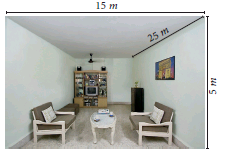
= 25 ×15
= 375 m2
Total renovating area of the hall = (Area of four walls + Area of the floor) = (400 + 375) m2 = 775 m2
Therefore, cost of renovating at the rate of Rs.80 per m2 = 80 × 775
= Rs. 62,000
68.
By Pythagoras theorem,
\(AB=\sqrt { { BC }^{ 2 }{ AC }^{ 2 } } \)
= \(\sqrt { { \left( 25 \right) }^{ 2 }-{ 7 }^{ 2 } } \)
= \(\sqrt { 625-49 } =\sqrt { 576 } \) = 24
The six trigonometric ratios are
\(sin\theta =\frac { opposite\ side }{ hypotenuse } =\frac { 7 }{ 25 } \)
\(tan\theta =\frac { oppositeside }{ adjacent\ side } =\frac { 7 }{ 24 } \)
\(sec\theta =\frac { hypotenuse }{ adjacent\ side } =\frac { 25 }{ 24 } \)
\(cos\theta =\frac { adjacentside }{ hypotenuse } =\frac { 24 }{ 25 } \)
\(cosec\theta =\frac { hypotenuse }{ oppositeside } =\frac { 25 }{ 7 } \)
\(cot \theta\ \frac { adjacentside }{ oppositeside } =\frac { 24 }{ 7 } \)
69.
\(A\cap B\) = {5,7}
\(B\cap A\)= {5,7}
From (3) and (4) we get, \(A\cap B=B\cap C\)
It is verified that intersection of sets is commutative.
70.
Let p(x)= 4x3 + 15x2 - 31 x -30
By factor theorem,(4x+3) is a factor,if \(p\left( \cfrac { -3 }{ 4 } \right) \)=0
\(p\left( \cfrac { -3 }{ 4 } \right) =4\left( \cfrac { -3 }{ 4 } \right) +15\left( \cfrac { -3 }{ 4 } \right) ^{ 2 }-31\left( \cfrac { -3 }{ 4 } \right) -30\)
= \(4\left( \cfrac { -27 }{ 4 } \right) +15\left( \cfrac { 9 }{ 4 } \right) ^{ 2 }-31\left( \cfrac { 3 }{ 4 } \right) -30\)
= \(\cfrac { -27 }{ 16 } +\cfrac { 135 }{ 16 } +\cfrac { 372 }{ 16 } +\cfrac { 480 }{ 16 } \) = \(\cfrac { -507+507 }{ 16 } -P\cfrac { -3 }{ 4 } \) = 0
Therefore,4x+3 is a factor 4x3 + 15x2 - 31 x -30
71.
(500000)5 \(\times\) (3000)3
\(
=\left(5.0 \times 10^{5}\right)^{3} \times\left(3.0 \times 10^{3}\right)^{3} \\
=(5.0)^{2} \times\left(10^{5}\right)^{2} \times(3.0)^{3} \times\left(10^{3}\right)^{3} \\
=25 \times 10^{10} \times 27 \times 10^{9}=675 \times 10^{19} \\
=675.0 \times 1019=6.75 \times 102 \times 1019=6.75 \times 10^{21}
\)
72.
| Weight in kgs | Number of Students f | Mid x | fx | cf |
| 24.5-34.5 | 4 | 29.5 | 118 | 4 |
| 34.5-44.5 | 8 | 39.5 | 316 | 12 |
| 44.5-54.5 | 10 | 49.5 | 495 | 22 |
| 54.5-64.5 | 14 | 59.5 | 833 | 36 |
| 64.5-74.5 | 8 | 69.5 | 556 | 44 |
| 74.5-84.5 | 6 | 79.5 | 477 | 50 |
| 50 | 2975 |
Mean\(\bar{x}=\cfrac{\Sigma fx}{\Sigma f}=\cfrac{2795}{50}=55.9\)
Median = \(\left(\cfrac{N}{2}\right)^{th} \) term is called the median class
N = 50
\(\cfrac{N}{2}=\cfrac{50}{2}=25\)
\(\therefore\) Median class = 25th value = 54.5 - 64.5
l = 54.5, m = 22, f = 14, c = 10
Median = \( l+\cfrac { \left( \cfrac { N }{ 2 } -m \right) }{ f } \times c\)
= 54.5 + \(\cfrac{25-22}{14}\times10\)
= 54.5 + \(\cfrac{3}{14}\times10\)
= 54.5 + \(\cfrac{30}{14}\)
= 54.5 + 2.14
= 56.64
Modal class is 54.5 - 64.5 since it has the maximum frequency.
l = 54.5, f = 14, f1 = 10, f2 = 8, c = 10
\(\therefore\) Mode =\(l+\left[\cfrac{f-{f}_{1}}{2f-{f}_{1}{f}_{2}}\right]\times c\)
= 54.5+\(\left[\cfrac{14-10}{2\times 14-10-8}\right]\times 8\)
= 54.5+ \(\left(\cfrac{4}{28-18}\right)\times 10\)
= 54.5+ \(\cfrac{4}{10}\times 10=58.5\)
\(\therefore \) Mean = 55.9
Median = 56.64
Mode = 58.5
73.
(i) \( =\sqrt{8 \times 5}-\sqrt{4 \times 5} =\sqrt{4 \times 2 \times 5}-\sqrt{4 \times 5} \)
\( =2 \sqrt{2 \times 5}-2 \sqrt{5} \)
\( =2 \sqrt{2} \times \sqrt{5}-2 \sqrt{5} \)
\( =2 \times 2.236(1.414-1) \)
\( =4.472 \times 0.414 =1.852 \)
(ii) \(\sqrt{300}+\sqrt{90}-\sqrt{8}=\sqrt{3\times100}+\sqrt{9\times10}+\sqrt{4\times2}\)
\(=10\sqrt{3}+3\sqrt{10}+2\sqrt{2}\)
= 10\(\times\)1.732 + 3\(\times\)3.162 + 2\(\times\)1.414
= 17.32 + 9.486 + 2.828 = 23.978
74.
Let C, F and H represent sets of students who play Cricket, Football and Hockey respectively.
Then , n(C) = 240, n(F) = 180, n(H) = 164, n(C ∩ F) = 42,
n(F ∩ H) = 38, n(C ∩ H) = 40, n(C ∩ F ∩ H) = 16.
Let us represent the given data in a Venn diagram.
(i) The number of students in the college = 174 + 26 + 116 + 22 + 102 + 24 + 16 = 480
(ii) The number of students who play only one game = 174 + 116 + 102 = 392
75.
In rectangle ABCD, P is the mid-point of AB.
Q is the mid-point of BC. R is the mid-point of CD
S is the mid-point of DA. AC is the diagonal
Now in ΔABC,
PQ = \(\frac { 1 }{ 2 } \)AC and PQ || AC .......(1)
Similarly in ΔACD,
SR = \(\frac { 1 }{ 2 } \) AC and SR || AC .......(2)
From (1) and (2) we get,
PQ = SR and PQ || SR
Similarly by joining BD, we have
PS = QR and PS || QR
i.e. Both pairs of opposite sides of quadrilateral PQRS are equal and parallel.
∴ PQRS is a parallelogram.
76.
A (- 6, 4), B (- 3, -3) and C (2, 2)
77.
.png)
\(\therefore\) The Quotient : 4x2+2x+1
The Remainder : 0
78.
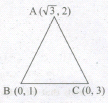
Distance =\(\sqrt{(x_2-x_1)^2+(y_2-y_1)^2}\)
AB =\(\sqrt{(0-\sqrt{3})^2+(1-2)^2}\)
=\(\sqrt{(-\sqrt{3})^2+(-1)^2}=\sqrt{3+1}=\sqrt{4}=2\)
BC =\(\sqrt{(0-0)^2+(3-1)^2}\)
=\(\sqrt{0^2+2^2}\)=\(\sqrt{4}\) = 2
AC =\(\sqrt{(0-\sqrt{3})^2+(3-2)^2}\)
=\(\sqrt{(-\sqrt{3})^2+1^2}=\sqrt{3+1}\)
=\(\sqrt{4}\) = 2
AB = BC = AC (Three sides are equal)
ABC is an equilateral triangle.
79.
In the quadrilateral ABCD, join one of the diagonals, say AC.
Area of \(\triangle\)ABC = \(\frac{1}{2}\)\(\times\) base \(\times\) height
=\(\frac{1}{2}\)\(\times\)8\(\times\)15\(\times\) 60 cm2
By Pythagoras theorem, in right angled triangle ABC,
AC2 = AB2 + BC2
= 82 +152 = 64 + 225 = 289 cm
Therefore, AC =\(\sqrt{289}\) =17cm
Now, for\(\triangle\)ACD, let us consider a = 17 cm, b =12 cm, c =25 cm
then, s = \(\frac{a+b+c}{2}=\frac{17+12+25}{2}=\frac{54}{2}\) = 27cm
.PNG)
Area of \(\triangle\)ACD =\(\sqrt { s(s-a)(s-b)(s-c) } \)
=\(\sqrt{27(27-17)(27-12)(27-25)}\)
=\(\sqrt{27\times10\times15\times2}\)
=\(\sqrt{3\times3\times3\times2\times5\times5\times3\times2}\)
= 3 × 3 × 2 × 5 = 90cm2
Therefore, Area of quadrilateral ABCD
=Area of \(\triangle\)ABC + Area of \(\triangle\)ACD
= 60 + 90 = 150 cm2
80.
Given,U = {-3, -2, -1, 0, 1, 2, 3, 4, 5, 6, 7, 8, 9}
A = {-3, -1, 1, 3, 5, 7}
and B = {1, 2, 3, 4}
Law (i) \(\left( A\cup B \right) ^{ ' }\) = \({ A }^{ ' }\cap { B }^{ ' }\)
\(\left( A\cup B \right) ^{ ' }\) = {-2, 0, 6, 8, 9} and ...(1)
Then,A' ={-2, 0, 2, 4, 6, 8, 9} and
B ' = {-3, -2, -1, 0, 5, 6, 7, 8, 9}
\({ A }^{ ' }\cap { B }^{ ' }\) = {-2, 0, 6, 8, 9}
From (1) and (2) it is verified that ...(2)
\(\left( A\cup B \right) ^{ ' }\) =\({ A }^{ ' }\cap { B }^{ ' }\)
Law (ii) \(\left( A\cap B \right) ^{ ' }\) = \({ A }^{ ' }\cap { B }^{ ' }\)
Now,\(A\cap B\) = {1, 3}
\(\left( A\cap B \right) ^{ ' }\) = {-3, -2, -1, 0, 2, 4, 5, 6, 7, 8, 9} ...(3)
Then,\({ A }^{ ' }\cup { B }^{ ' }\) = {-3, -2, -1, 0,2 ,4, 5, 6, 7, 8, 9} ...(4)
From (3) and (4) it is verified that
\(\left( A\cap B \right) ^{ ' }\) = \({ A }^{ ' }\cup { B }^{ ' }\)
81.
P (x) = 4x3 + 6x2 + 7x + 2
d(x) = x - 2
Standard form of p (x) 4x3 + 6x2 + 7x + 2 and
d(x) x - 2
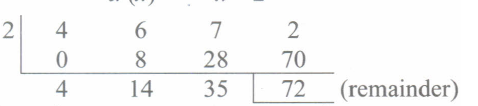
4x2 + 6x2 + 7x + 2 = (x - 2)(4x3 + 14x + 35) + 72
Hence the quotient is 4x3 + 14x + 35 and remainder is 72
82.
Let Assumed mean be 25
| Class Interval x | Frequency f | Mid x | A = 25 d = x -A |
fd |
| 0-10 | 5 | 5 | -20 | -100 |
| 10-20 | 7 | 15 | -10 | -70 |
| 20-30 | 15 | 25 | 0 | 0 |
| 30-40 | 28 | 35 | 10 | 280 |
| 40-50 | 8 | 45 | 20 | 160 |
| \(\Sigma f=63\) | \(\Sigma fd=270\) |
Mean \(\bar{x}=A+\frac{\Sigma fd}{\Sigma f}\)
= \(25+\frac{270}{63}\)
= 25 + 4.29 = 29.29
83.

To represent \(-\frac { 2 }{ 11 } ,-\frac { 5 }{ 11 } and-\frac { 9 }{ 11 } \)on the number line we make 11 markings each being equal distance \(\frac { 1 }{ 11 } \) on the left of 0.
The point A represents \(\left( -\frac { 2 }{ 11 } \right) \) , the point B represents\(\left( -\frac { 2 }{ 11 } \right) \) and the point C represents \(\left( -\frac { 9 }{ 11 } \right) \)
84.
Rational between \(\frac { 1 }{ 2 } \) and \(\frac { 1 }{ 5 } \) = \(\frac { 1 }{ 2 } \left( \frac { 1 }{ 2 } +\frac { 1 }{ 5 } \right) \)
=\(\frac { 1 }{ 2 } \left( \frac { 1 }{ 2 } +\frac { 1 }{ 5 } \right) \)
= \(\frac { 1 }{ 2 } \left( \frac { 1 }{ 2 } +\frac { 1 }{ 5 } \right) \)
Rational numbers between\(\frac { 1 }{ 2 } \) and \(\frac { 7 }{ 20 } \)
=\(\frac { 1 }{ 2 } \left( \frac { 10+7 }{ 20 } \right) \)
=\(\frac { 17 }{ 40 } \)
Rational number between \(\frac { 1 }{ 2 } \) and \(\frac { 7 }{ 20 } \) =\(\frac { 1 }{ 2 } \left( \frac { 1 }{ 2 } \times \frac { 17 }{ 40 } \right) \)
=\(\frac { 1 }{ 2 } \left( \frac { 20+17 }{ 40 } \right) \)
=\(\frac { 37 }{ 80 } \)
Thus the rational numbers are \(\frac { 7 }{ 20 } ,\frac { 17 }{ 40 } and\frac { 37 }{ 80 } \)
85.
We have a parallelogram ABCD in which diagonals AC bisect ㄥA.
ㄥDAC = ㄥBAC
(i) To prove that AC bisects ∠C
∵ ABCD is a parallelogram
∴ AB II DC and AC is a transversal
∴ ㄥ1 = ㄥ3 (Alternate interior angle) .........(1)
.Also BC II AD and AC is a transversal.
∴ ㄥ2 = ㄥ4 (Alternate interior angle) ...........(2)
But AC bisects ㄥA
∴ ㄥ1 = ㄥ2
From (1), (2) and (3) we get
ㄥ3 = ㄥ4
∴ AC bisects ㄥC.
(ii) To prove that ABCD is a rhombus.
In ΔABC, we have ㄥ1 = ㄥ4 [ ∵ ㄥ1 = ㄥ2 = ㄥ4]
∴ BC = AB (side opposite to equal angles are equal) (4)
Similarly AD = DC ....... (5)
But ABCD is a parallelogram AB = DC (Opposite sides of a parallelogram) .......(6)
From (4), (5) and (6) we have AB = BC = CD = DA.
Thus ABCD is a rhombus.
86.
Let the point A (-1, -1), (1, 1) and (\(-\sqrt{13},\sqrt{13}\))
Distance = \(\sqrt{(x_2-x_1)^2+(y_2-y_1)^2}\)
AB =\(\sqrt{(1+1)^2+(1+1)^2}\)
\(\sqrt{2^2+2^2}=\sqrt{4+4}=\sqrt{8}\)
BC =\(\sqrt{(-\sqrt{3}+1)^2+(\sqrt{3}-1)^2}\)
\(\sqrt{(\sqrt{3}+1)^2+(\sqrt{3}-1)^2}\)
\(\sqrt{3+1+2\sqrt{3}+3+1-2\sqrt{3}}\)
\(\sqrt{3+1+3+1}=\sqrt{8}\)
AC =\(\sqrt{(-\sqrt{3}+1)^2+(\sqrt{3}+1)^2}\)
\(=\sqrt{3+1-2\sqrt{3}+3+1+2\sqrt{3}}\)
\(=\sqrt{4+4}=\sqrt{8}\)
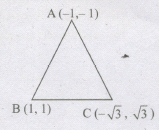
AB= BC=AC= \(\sqrt{8}\)
\(\therefore\)ABC is an equilateral triangle.
87.
In \(\triangle\)ABC, AB = BC = 8 cm, \(\angle\)B = 70°.
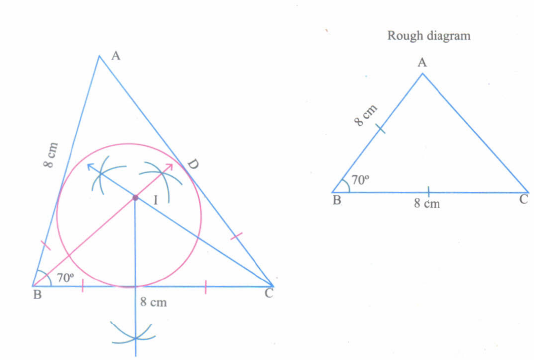
Construction :
Step 1: Draw \(\triangle\)ABC with BC = 8 cm, \(\angle\)B = 70°. AB = 8.
Step 2: Construct the angle bisectors of any two angles (B and C) and let them meet at I. Then I is the incentre of \(\triangle\)ABC. Draw perpendicular from I to anyone of the side (BC) to meet BC at D.
Step 3: With I as centre and ID as radius draw a circle. This circle touches all the sides of the triangle internally.
88.
In \(\triangle \)LMN
LM = 7.5 cm,
MN = 5 cm,
LN = 8 cm
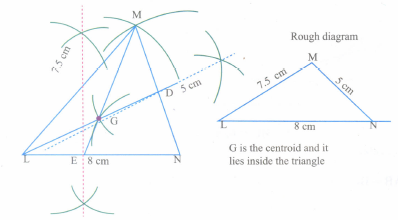
Construction :
Step 1: Draw \(\triangle \)LMN with LNM = 8 cm, MN = 5 cm, LM = 7.5 cm
Step 2: Construct perpendicular bisectors for any two sides (LN and MN) to find the midpoints of LM and MN.
Step 3: Draw the medians LD, ME. Let them meet at G.
Step 4: G is the centroid of the triangle LMN.

9th Standard Syllabus & Materials
9th Standard
TN 9th Tamil உள்ளத்தின் சீர் - திருக்குறள் Important Questions And Answers Study Material - QB365 Set A
NEW9th Standard
TN 9th Tamil உள்ளத்தின் சீர் - மணிமேகலை Important Questions And Answers Study Material - QB365 Set A
NEW9th Standard
TN 9th Tamil உள்ளத்தின் சீர் - ஏறு தழுவுதல் Important Questions And Answers Study Material - QB365 Set A
NEW9th Standard
TN 9th Tamil உயிருக்கு வேர் - தண்ணீர் Important Questions And Answers Study Material - QB365 Set A



Tamilnadu Stateboard 9th Standard Subjects
Tamilnadu Stateboard Standards





