
 100% FREE ACCESS
9th Standard Syllabus & Materials
9th Standard
TN 9th Tamil உள்ளத்தின் சீர் -கற்கண்டு (இலக்கணம்) - தொடர் இலக்கணம், ஆகுபெயர் Important Questions And Answers Study Material - QB365 Set A
NEW9th Standard
TN 9th Tamil உள்ளத்தின் சீர் -விரிவானம் (துணைப்பாடம்) - தாய்மைக்கு வறட்சி இல்லை! Important Questions And Answers Study Material - QB365 Set A
NEW9th Standard
TN 9th Tamil உள்ளத்தின் சீர் -கவிதை பேழை (செய்யுள்) - மார்கழி பெருவிழா Important Questions And Answers Study Material - QB365 Set A
NEW9th Standard
TN 9th Tamil உயிருக்கு வேர்-இலக்கணம் - பகுபத உறுப்பிலக்கணம் Important Questions And Answers Study Material - QB365 Set A
NEW9th Standard
TN 9th Tamil அமுதென்று பேர் - இலக்கணம்-எழுத்து -அளபெடை Important Questions And Answers Study Material - QB365 Set A
NEW9th Standard
TN 9th Tamil அமுதென்று பேர்-துணைப்பாடம் - ஆறாம்திணை Important Questions And Answers Study Material - QB365 Set A

Published on: 12/02/2020
9th Standard Mathematics All Chapter Creative Questions-I-2020
Download Tamil Nadu 9th Standard Maths question papers, model tests, one-mark questions, important questions, and public exam papers in PDF format. Free study materials and answer keys for TN State Board students.
Questions + Answers key
Take MCQ Maths Test1.
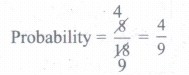
An urn contains 10 red and 8 white balls. One ball is drawn at random. Find the probability, that the ball drawn is white.
2.
The outer dimensions of a closed wooden box are 10 cm by 8 cm by 7 cm, Thickness of the wood is 1 cm3. Find the total cost of wood required to make box if 1 cm3 of wood costs Rs. 2.00?
3.
If 3 cot\(\theta\) = 1, then find the value of \(\cfrac { 3cos\theta -4sin\theta }{ 5sin\theta +4cos\theta } \)
4.
Using section formula, show that the points A (7, -5), B (9, -3) and C (13, 1), are collinear.
5.
The volume of a container is 1440 m3. The length and breadth of the container are 15 m and 8 m respectively. Find its height.
6.
A manufacturer tested 7000 LED lights at random and found that 25 of them were defective. If a LED light is selected at random, what is the probability that the selected LED light is a defective one.
7.
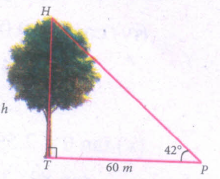
In the given figure, HT shows the height of a tree standing vertically. From a point P, the angle of elevation of the top of the tree
8.
State the formula to find \(n\left( A\cup B\cup C \right) \)
9.
Express the following in the form 3n: 27
10.
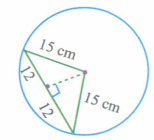
The radius of a circle 15 cm and the length of one of its chord is 24 cm. Find the distance of the chord from the centre.
11.
Find the mode of the given data: 3.1, 3.2, 3.3, 2.1, 1.3, 3.3, 3.1
12.
Find the mode for the set of values 17, 18, 20, 20, 21, 21, 22, 22.
13.
Factorise the following: m4-7m2+1
14.
Factorise the following expressions: 2y3+y2-2y-1
15.
Express the following in the form 2n:
\(\sqrt{2}\)
16.
Express the following in the form 2n:
32
17.
Find the total savings of a boy who saves Rs. (4x - 6y), Rs. (6x + 2y), Rs. (4y - x) and Rs. (y - 2x) for four consecutive days
18.
Without actual division classify the decimal expansion of the following numbers as terminating or non-terminating and recurring.
\({17\over 200}\)
19.
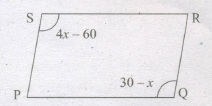
In the given diagram PQRS is a parallelogram.
ㄥS = 4x - 60, ㄥQ = 30 - x. Find the angles of P and R.
20.
In a class of 50 students, each of the students passed either in mathematics or in science or in both. 10 students passed in both and 28 passed in science. Find how many students passed in mathematics only
21.
Identify the following sets as finite or infinite.
Y = The set of all straight lines passing through a point.
22.
Find the distance between the following pairs of points. (3,– 9) and (–2, 3)
23.
In a party of 60 people, 35 had Vanilla ice cream, 30 had Chocolate ice cream. All the people had at least one ice cream. Then how many of them had,
(i) both Vanilla and Chocolate ice cream.
(ii) only Vanilla ice cream.
(iii) only Chocolate ice cream.
24.
Find the complement of the following angles (1°= 60′ minutes, 1′ = 60′′ seconds)
27°
25.
If the lateral surface area of a cube is 600 cm2, then the total surface area is _______.
150 cm2
400 cm2
900 cm2
1350 cm2
26.
The lateral surface area of a cube of side 12 cm is _______.
144 cm2
196 cm2
576 cm2
664 cm2
27.
A letter is chosen at random from the word “STATISTICS”. The probability of getting a vowel is
\(\frac { 1 }{ 10 } \)
\(\frac { 2 }{ 10 } \)
\(\frac { 3 }{ 10 } \)
\(\frac { 4 }{ 10 } \)
28.
The probability based on the concept of relative frequency theory is called _______.
Empirical probability
Classical probability
Both (1) and (2)
Neither (1) nor (2)
29.
Given that sin \(\alpha\) = \(\frac { 1 }{ 2 } \) and cos \(\beta\) = \(\frac { 1 }{ 2 } \), then the value of \(\alpha\) + \(\beta\) is ________.
00
900
300
600
30.
The value of \(\frac { 2tan\ 30° }{ 1-{ tan }^{ 2 }30° } \) is equal to ________.
cos 600
sin 600
tan 600
sin 300
31.
The value of k for which the pair of linear equations 4x + 6y −1 = 0 and 2x + ky − 7 = 0 represents parallel lines is _______.
k = 3
k = 2
k = 4
k = -3
32.
The mid-point of the line joining (−a, 2b) and (−3a,−4b) is ______.
(2a, 3b)
(−2a, −b)
(2a, b)
(−2a, −3b)
33.
If the coordinates of one end of a diameter of a circle is (3, 4) and the coordinates of its centre is (−3, 2), then the coordinate of the other end of the diameter is ______.
(0, −3)
(0, 9)
(3, 0)
(−9, 0)
34.
Quadratic polynomial may have maximum of ______ linear factors
1
2
3
4
35.
Zero of (7+4x) is_______
\(\cfrac { 4 }{ 7 } \)
\(\cfrac { -7 }{ 4 } \)
7
4
36.
Which of the following is not an irrational number?
\(\sqrt { 2 } \)
\(\sqrt { 5 } \)
\(\sqrt { 3 } \)
\(\sqrt { 25 } \)
37.
The distance between the longest chord of a circle and the centre is________
1
0
2
5
38.
If sum of two opposite angles of a cyclic quadrilateral is_________
45°
90°
180°
360°
39.
The angle subtended by a semicircle at the centre is_________
60o
90°
120o
180o
40.
Find the mean of the prime factors of 165 _____________
5
11
13
55
41.
The mean of set of numbers is \(\bar{x}\) If each number is multiplied by z, the mean is
\(\bar{X}+z\)
\(\bar{X}-z\)
\(z\bar{X}\)
\(\bar{X}\)
42.
The mean of the first 10 whole numbers is
4
4.5
5
5.5
43.
For which set of numbers do the mean, median and mode all have the same values?
2,2,2,4
1,3,3,3,5
1,1,2,5,6
1,1,2,1,5
44.
The median of the first 10 whole numbers is ______________
4
4.5
5
5.5
45.
The algebraic sum of the deviations of a set of n values from their mean is _______.
0
n-1
n
n+1
46.
If p(a)= 0 then (x-a) is a _____ of p(x).
divisor
quotient
remainder
factor
47.
Which one of the following is not a rational number?
\(\sqrt { \frac { 8 }{ 18 } } \)
\(\frac { 7 }{ 3 } \)
\(\sqrt{0.01}\)
\(\sqrt{13}\)
48.
If n(A U B U C) = 100, n(A) = 4x, n(B) = 6x, n(C) = 5x, n(A ∩ B) = 20, n(B ⋂C) = 15, n(A C) = 25 and n(A ⋂ B ⋂ C) = 10 , then the value of x is ________.
10
15
25
30
49.
For any three sets P, Q and R, P-(Q\(\\ \cap \)R) is ________.
P-(Q\(\cup \)R)
(P\(\\ \cap \)Q)-R
(P-Q)\(\cup \)(P-R)
(P-Q)\(\\ \cap \)(P-R)
50.
Divide x3-4x2+6x by "x" the result is _____________________
\(x^{ 2 }+4x-6\)
\(x^{ 2 }-4x-6\)
\(x^{ 2 }-4x+6\)
\(x^{ 2 }+4x+6\)
51.
Which of the following is a monomial?
\({ 4x }^{ 2 }\)
\(a+b\)
\(a+b+c\)
\(a+b+c+d\)
52.
What is the name of a regular polygon of six sides?
Square
Equilateral triangle
Regular hexagon
Regular octagon
53.
If A is a proper subset of B, then A ∩ B = __________
A
B
Ø
A U B
54.
The number of elements of the set {x : x ∈ Z, x2 = 1} is ________
0
1
2
3
55.
The set does not have a proper subset is __________
Finite set
Infinite set
Null set
Singleton set
56.
Which of the following are irrational numbers?
\(\sqrt { 2+\sqrt { 3 } } \)
\(\sqrt [ 3 ]{ 5+\sqrt { 7 } } \)
\(\sqrt { 8-\sqrt [ 3 ]{ 8 } } \)
\(\sqrt { 4+\sqrt { 25 } } \)
(ii), (iii) and (iv)
(i), (ii) and (iv)
(i), (ii) and (iii)
(i), (iii) and (iv)
57.
The decimal form of -\(\frac { 3 }{ 4 } \) is_______________
- 0.75
- 0.50
-0.25
- 0.125
58.
The distance between the points (4, -1) and the origin is___________
\(\sqrt{24}\)
\(\sqrt{37}\)
\(\sqrt{26}\)
\(\sqrt{17}\)
59.
A point on the y-axis is ________________
(1, 1)
(6,0)
(0,6)
(-1, -1)
60.
A point which lies in the III quadrant is__________________
(5, 4)
(5, -4)
(-5, -4)
(-5, 4)
61.
The point whose abscissa is 5 and lies on the x-axis is__________
(-5, 0)
(5,5)
(0,5)
(5,0)
62.
Which one of the following has a terminating decimal expansion?
\(\frac { 5 }{ 64 } \)
\(\frac { 8 }{ 9 } \)
\(\frac { 14 }{ 15 } \)
\(\frac { 1 }{ 12 } \)
63.
If the diagonal of a rhombus are equal, then the rhombus is a ________.
Parallelogram but not a rectangle
Rectangle but not a square
Square
Parallelogram but not a square
64.
ABCD is a square, diagonals AC and BD meet at O. The number of pairs of congruent triangles with vertex O are ________.

6
8
4
12
65.
When a dice is rolled, find the probability to get the number greater than 4?
66.
The length, breadth and height of a hall are 25 m, 15 m and 5 m respectively. Find the cost of renovating its floor and four walls at the rate of Rs. 80 per m2.
67.
Solve the system of linear equations x + 3y = 16 and 2x − y = 4 by substitution method.
68.
If sec \(\theta\) = \(\frac { 13 }{ 5 } \), then show that \(\frac { 2sin\theta -3cos\theta }{ 4sin\theta -9cos\theta } \) = 3
69.
If (x, 3), (6, y), (8, 2) and (9, 4) are the vertices of a parallelogram taken in order, then find the value of x and y.
70.
In a mathematics class, 20 children forgot to bring their rulers,17 children forgot to bring their pencil and 5 children forgot to bring both ruler and pencil. Then find the number of children
(i) who forgot to bring only pencil
(ii) who forgot to bring only ruler
(iii) in the class
71.
Expand the following using identities (4a + 3b) (4a - 3b)
72.
Write in scientific notation: (500000)5\(\times\)(3000)3
73.
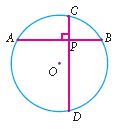
In the given figure, ㄥCAB = 25°, find ㄥBDC, ㄥDBA and ㄥCOB
74.
The angles of quadrilateral are in the ratio 3 : 5 : 9 : 13. Find all the angles of the quadrilateral.
75.
Given that A = {1,3,5,7} B = {1,2,4,6,8}. Find
(i) AΔB and
(ii) BΔA
76.
Three vertices of a rectangle are (3, 2), (-4, 2) and (-4, 5). Plot the points and find the coordinates of the fourth vertex.
77.
Express the following decimal expression into rational numbers \(3.1\overline { 7 } \)
78.
Find the area of a quadrilateral ABCD whose sides are AB = 8cm, BC = 15 cm, CD = 12 cm, AD = 25 cm and  = 90°.
79.
If U = {x :x \(\in \) Z, -3 \(\le \) x \(\le \) 9 },A = {x : x = 2P +1, \(\in \) Z, -2 \(\le \) P\(\le \) 3}, B ={x : x = q + 1, q \(\in \) Z, 0 \(\le \) q \(\le \) 3}, verify De Morgan's law's for complementation.
80.
Factorise 2x3- x2 - 12x - 9 into linear factors
81.
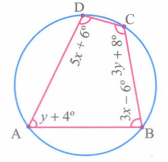
Find the angle of the given cyclic quadrilateral ABCD in the figure.
82.
Represent \(-\frac { 2 }{ 11 } ,-\frac { 5 }{ 11 } and-\frac { 9 }{ 11 } \)on the number line.
83.
Find any seven rational numbers between \(\frac { 5 }{ 8 } \) and \(\frac { 5 }{ 6 } \)
84.
Show that the point (3, -2), (3, 2), (-1, 2) and (-1, -2) taken in order are the vertices of a square.
85.
Draw and locate the centroid of the triangle ABC where right angle at A, AB = 8 cm and AC = 6 cm.
86.
Draw an equilateral triangle of side 6.5 cm and locate its incentre. Also draw the incircle.
1.
2.
Volume of wood = 12 \(\times\) 10\(\times\) 9 - 10 \(\times\) 8 \(\times\) 7
= 1080 - 560 = 520 cm3 \(\times\)2.00 = Rs. 1040
3.
\(cot\theta =1\)
\(cot\theta =\cfrac { 1 }{ 3 } \)
\(\cfrac { adjacent }{ opposite } =\cfrac { 1 }{ 3 } \)
\(\sqrt { { 3 }^{ 2 }+1 } =\sqrt { 10 } \)
\(\cfrac { 3cos\theta -4sin\theta }{ 5sin\theta +4cos\theta } =\cfrac { 3\times \cfrac { 1 }{ \sqrt { 10 } } -4\times \cfrac { 3 }{ \sqrt { 10 } } }{ 5\times \cfrac { 3 }{ \sqrt { 10 } } +4\times \cfrac { 1 }{ \sqrt { 10 } } } =\cfrac { 3-12 }{ 15+4 } =\cfrac { -9 }{ 19 } \)
4.
\((9,-3)=\left( \frac { m(12+n(7) }{ m+n } ,\frac { m(1)+n(-5) }{ m+n } \right) \)
\(\frac {13m+37n}{ m+n } =9\)
13m + 7n = 9m + 9n
4m = 2n
\(\frac { m }{ n } =\frac { 2 }{ 4 } =\frac { 1 }{ 2 } \)
\(\frac{m-5n}{m+nn}=-3\)
m -5n = -3m -3n
m + 3m= 5n-3n
4m=2n
\(\frac { m }{ n } =\frac { 2 }{ 4 } =\frac { 1 }{ 2 } \)
5.
Volume of a cuboid = 1800 cm3
l = 15 cm h = 12 cm b = ?
l \(\times\) b \(\times\) h = V
15 \(\times\) b \(\times\) 12 = 1800
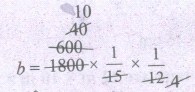
Breadth = 10 cm
6.
n(S) = 7000
S - Total no. of lights.
n(A) = 25
A - Defective ones.
P(A) = \(\frac { n(A) }{ n(S) } =\frac { 25 }{ 7000 } =\frac { 1 }{ 280 } \).
7.
\(tan\ {42 }^{ 0 }=\cfrac { h }{ 60 } =0.9004\)
h = 0.9004 \(\times\) 60 = 54.024 m
8.
\(n\left( A\cup B\cup C \right) \)= n(A) + n(B) + n(C) - \(n\left( A\cap B \right) -\left( B\cap C \right) -n\left( A\cap C \right) +\left( A\cap B\cap B \right) \)
9.
27 = 3 \(\times\) 3 \(\times\) 3;
therefore 27 = 33
10.
Distance of the chord from the centre
= \(\sqrt { { 15 }^{ 2 }-{ 12 }^{ 2 } } \)
= \(\sqrt { 225-144 } \)
= \(\sqrt { 89 } \)
= 9 cm
11.
3.1, 3.2, 3.3, 2.1, 1.3, 3.3, 3.1
In this given data 3.1, 3.3 occurs twice
\(\therefore\) mode = 3.1 and 3.3 (bimodal)
12.
In this example, three values 20, 21, 22 occur two times each. There are three modes for the given data!
13.
m4-7m2+1 = (m3+3m+1)(m2-3m+1)
14.
2y3+y2-2y-1 = 2y3-2y+y2-1
= 2y(y2-1)+(y2-1)
= (y2-1)(2y+1)
= (y+1)(y-1)(2y+1)
15.
\(\sqrt{2}\) = 21/2
16.
32 = 2 \(\times\) 2 \(\times\) 2 \(\times\) 2 \(\times\) 2 = 25
17.
7x + y
18.
\({17\over 200}={17\over 2^3\times 5^2}\)
\(\therefore {17\over 200}\) has a terminating decimal expansion.
19.
ㄥP = ㄥR= 1680
20.
22
21.
Here the set of all districts in tamilnadu is finite.
So, infinite set (many lines can be drawn from a point)
22.
Distance between the two points (3,- 9) and (-2, 3)
= \(\sqrt { ({ x }_{ 2 }-{ x }_{ 1 })^{ 2 }+({ y }_{ 2 }-{ y }_{ 1 })^{ 2 } } \)
= \(\sqrt { (-2-3)^{ 2 }+(3+9)^{ 2 } } =\sqrt { (-5)^{ 2 }+(12)^{ 2 } } \)
=\(\sqrt { 25+144 } =\sqrt { 169 } \) = 13 units
23.
Let V be the set of people who had Vanilla ice cream and C be the set of people who had Chocolate ice cream.
Then n(V) = 35, n(C) = 30, n(VUC) = 60,
Let x be the number of people who had both ice creams.
From the Venn diagram
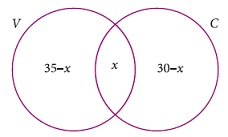
35 – x + x +30 – x = 60
65 – x = 60
x = 5
Hence 5 people had both ice creams.
(i) Number of people who had only Vanilla ice cream = 35 – x
= 35 – 5 = 30
(ii) Number of people who had only Chocolate ice cream = 30 – x
= 30 – 5 = 25.
We have learnt to solve problems involving two sets using the formula n(A U B) = n(A)+n(B)−n(A ∩ B). Suppose we have three sets, we can apply this formula to get a similar formula for three sets.
24.
Complement of 27° =90° - 27°
= 63°
25.
(c)
900 cm2
26.
(c)
576 cm2
27.
(c)
\(\frac { 3 }{ 10 } \)
28.
(a)
Empirical probability
29.
(b)
900
30.
(c)
tan 600
31.
(a)
k = 3
32.
(b)
(−2a, −b)
33.
(d)
(−9, 0)
34.
(b)
2
35.
(b)
\(\cfrac { -7 }{ 4 } \)
36.
(d)
\(\sqrt { 25 } \)
37.
(b)
0
38.
(c)
180°
39.
(d)
180o
40.
(c)
13
41.
(c)
\(z\bar{X}\)
42.
(b)
4.5
43.
(b)
1,3,3,3,5
44.
(b)
4.5
45.
(a)
0
46.
(d)
factor
47.
(d)
\(\sqrt{13}\)
48.
(a)
10
49.
(c)
(P-Q)\(\cup \)(P-R)
50.
(c)
\(x^{ 2 }-4x+6\)
51.
(a)
\({ 4x }^{ 2 }\)
52.
(c)
Regular hexagon
53.
(a)
A
54.
(c)
2
55.
(c)
Null set
56.
(d)
(i), (iii) and (iv)
57.
(a)
- 0.75
58.
(d)
\(\sqrt{17}\)
59.
(c)
(0,6)
60.
(c)
(-5, -4)
61.
(d)
(5,0)
62.
(a)
\(\frac { 5 }{ 64 } \)
63.
(c)
Square
64.
(a)
6
65.
Sample space S = {1, 2, 3, 4, 5, 6}
Let E be the event of getting a number greater than 4
E = {5, 6}
\(P(E)=\frac { Number\ of\ favourable\ outcomes }{ Total\ number\ of\ outcomes } \)
\(P(E)=\frac { n(E) }{ n(S) } =\frac { 2 }{ 6 } =0.333...\)
66.
Here, length (l) = 25 m, breadth (b) = 15 m, height (h) = 5 m.
Area of four walls = LSA of cuboid
= 2(l + b) × h
= 2(25 +15) × 5
= 80 × 5 = 400 m2
Area of the floor = l × b
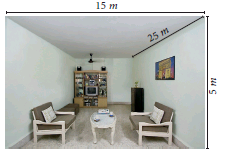
= 25 ×15
= 375 m2
Total renovating area of the hall = (Area of four walls + Area of the floor) = (400 + 375) m2 = 775 m2
Therefore, cost of renovating at the rate of Rs.80 per m2 = 80 × 775
= Rs. 62,000
67.
Given x + 3y = 16 ... (1)
2x – y = 4 ... (2)
| Step 1 | Step 2 | Step 3 | Solution |
|---|---|---|---|
| From equation (2) 2x −y = 4 –y = 4–2x y = 2x − 4 ...(3) |
Substitute (3) in (1) x + 3y = 16 x + 3(2x − 4) = 16 x + 6x −12 = 16 7x = 28 x = 4 |
Substitute x = 4 in (3) y = 2x − 4 y = 2(4) − 4 y = 4 |
x = 4 and y = 4 |
68.
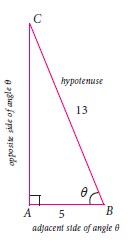
Let BC = 13 and AB = 5
sec θ = \(\frac { hypotenuse }{ adjacentside } =\frac { BC }{ AB } =\frac { 13 }{ 5 } \)
By the Pythagoras theorem,
\(AC=\sqrt { { BC }^{ 2 }-{ AB }^{ 2 } } \)
= \(\sqrt { { 13 }^{ 2 }-{ 5 }^{ 2 } } \)
= \(\sqrt { 169-25 } \) = \(\sqrt { 144 } \) = 12
Therefore, \(sin\theta =\frac { AC }{ BC } =\frac { 12 }{ 13 } \) ; \(cos\theta =\frac { AB }{ BC } =\frac { 5 }{ 13 } \)
\(LHS=\frac { 2sin\theta -3cos\theta }{ 4sin\theta -9cos\theta } =\frac { 2\times \frac { 12 }{ 13 } =3\times \frac { 5 }{ 13 } }{ 4\times \frac { 12 }{ 13 } -9\times \frac { 5 }{ 13 } } =\frac { \frac { 24-15 }{ 13 } }{ \frac { 48-45 }{ 12 } } =\frac { 9 }{ 3 } =3\) = RHS
69.
Let A(x, 3), B(6, y), C(8, 2) and D(9, 4) be the vertices of the parallelogram ABCD. By definition, diagonals AC and BD bisect each other.
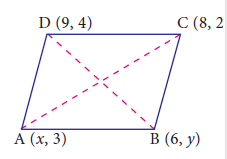
Mid-point of AC = Mid-point of BD
\(\left( \frac { x+8 }{ 2 } ,\frac { 3+2 }{ 2 } \right) =\left( \frac { 6+9 }{ 2 } ,\frac { y+4 }{ 2 } \right) \)
equating the coordinates on both sides, we get
\(\frac { x+8 }{ 2 } =\frac { 15 }{ 2 } \)
x + 8 = 15
x = 7
\(\frac { 5 }{ 2 } =\frac { y+4 }{ 2 } \)
5 = y + 4
y = 1
Hence, x = 7 and y = 1.
70.
Let R be the set of children forgotten their rulers.
Let P be the set of children forgotten their pencil.
n(R) = 20, n(P) = 17, n(R\(\cap \)P) = 5
By using venn-diagram
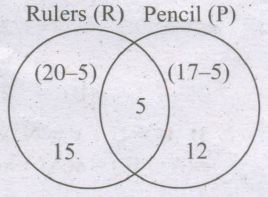
From the venn -diagram we get
(i) Number of children forgotten only pencil = 12
(ii) Number of children forgotten only ruler 15
(iii) Total number of children in the class 15 + 5 + 12 = 32
71.
(4a+3b) (4a-3b) = (4a)2 - (3b)2 = 16a2 - 9b2 [We have (a+b)(a-b) = a2 - b2] Put [a = 4a, b = 3b]
72.
(500000)5 \(\times\) (3000)3
\(
=\left(5.0 \times 10^{5}\right)^{3} \times\left(3.0 \times 10^{3}\right)^{3} \\
=(5.0)^{2} \times\left(10^{5}\right)^{2} \times(3.0)^{3} \times\left(10^{3}\right)^{3} \\
=25 \times 10^{10} \times 27 \times 10^{9}=675 \times 10^{19} \\
=675.0 \times 1019=6.75 \times 102 \times 1019=6.75 \times 10^{21}
\)
73.
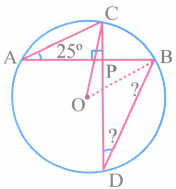
(i)\(\angle\)CAB = 250
\(\therefore\) \(\angle\)BDC = 250
(ii) \(\angle\)DBA = \(\angle\)DCA =180-(90+250)
= 1800 - 1150
= 65
(iii)\(\angle\)COB = 2\(\angle\)CAB = 2\(\times\)250 = 500
74.
Let the angles of the quadrilateral be 3x, 5x, 9x and 13x.
Sum of all the angles of quadrilateral = 360°.
3x + 5x + 9x + 13x = 360°
30x = 360°
x = \(\frac { { 360 }^{ 0 } }{ 30 } \)
=120
3x =3 \(\times\) 12 = 36°
5x = 5 \(\times\) 12 = 60°
9x = 9 \(\times\) 12 = 108°
13x = 13 \(\times\) 12 = 156°
The required angles of quadrilateral are 36°, 60° 108° and 156°.
75.
(i) A = {1,3,5,7} ; B = {1,2,4,6,8}
A-B = {1,3,5,7} - {1,2,4,6,8}
= {3,5,7}
B -A = {1,2,4,6, 8} - {1,3,5,7}
= {2,4,6,8}
AΔB = (A - B)U(B-A)
= {3,5,7} U {2,4,6,8}
= {2,3,4,5,6,7,8}.
(ii) BΔA = (B-A) U (A-B)
= {2,4,6,8} u {3,5,7}
= {2,3,4,5,6,7,8}
76.
(3, 5)
77.
Let x = \(3.1\overline { 7 } \) = 3.1777 ....... (1)
Here period of decimal is 2, multiply equation (1) by 100
100x = 31.777 ......... (2)
(2)-(1)
.JPG)
\( =\frac{143}{45} \)
78.
In the quadrilateral ABCD, join one of the diagonals, say AC.
Area of \(\triangle\)ABC = \(\frac{1}{2}\)\(\times\) base \(\times\) height
=\(\frac{1}{2}\)\(\times\)8\(\times\)15\(\times\) 60 cm2
By Pythagoras theorem, in right angled triangle ABC,
AC2 = AB2 + BC2
= 82 +152 = 64 + 225 = 289 cm
Therefore, AC =\(\sqrt{289}\) =17cm
Now, for\(\triangle\)ACD, let us consider a = 17 cm, b =12 cm, c =25 cm
then, s = \(\frac{a+b+c}{2}=\frac{17+12+25}{2}=\frac{54}{2}\) = 27cm
.PNG)
Area of \(\triangle\)ACD =\(\sqrt { s(s-a)(s-b)(s-c) } \)
=\(\sqrt{27(27-17)(27-12)(27-25)}\)
=\(\sqrt{27\times10\times15\times2}\)
=\(\sqrt{3\times3\times3\times2\times5\times5\times3\times2}\)
= 3 × 3 × 2 × 5 = 90cm2
Therefore, Area of quadrilateral ABCD
=Area of \(\triangle\)ABC + Area of \(\triangle\)ACD
= 60 + 90 = 150 cm2
79.
Given,U = {-3, -2, -1, 0, 1, 2, 3, 4, 5, 6, 7, 8, 9}
A = {-3, -1, 1, 3, 5, 7}
and B = {1, 2, 3, 4}
Law (i) \(\left( A\cup B \right) ^{ ' }\) = \({ A }^{ ' }\cap { B }^{ ' }\)
\(\left( A\cup B \right) ^{ ' }\) = {-2, 0, 6, 8, 9} and ...(1)
Then,A' ={-2, 0, 2, 4, 6, 8, 9} and
B ' = {-3, -2, -1, 0, 5, 6, 7, 8, 9}
\({ A }^{ ' }\cap { B }^{ ' }\) = {-2, 0, 6, 8, 9}
From (1) and (2) it is verified that ...(2)
\(\left( A\cup B \right) ^{ ' }\) =\({ A }^{ ' }\cap { B }^{ ' }\)
Law (ii) \(\left( A\cap B \right) ^{ ' }\) = \({ A }^{ ' }\cap { B }^{ ' }\)
Now,\(A\cap B\) = {1, 3}
\(\left( A\cap B \right) ^{ ' }\) = {-3, -2, -1, 0, 2, 4, 5, 6, 7, 8, 9} ...(3)
Then,\({ A }^{ ' }\cup { B }^{ ' }\) = {-3, -2, -1, 0,2 ,4, 5, 6, 7, 8, 9} ...(4)
From (3) and (4) it is verified that
\(\left( A\cap B \right) ^{ ' }\) = \({ A }^{ ' }\cup { B }^{ ' }\)
80.
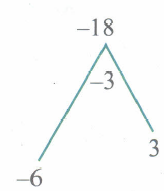
Let p (x) 2x3 - x2 - 12x - 9
Sum of the co-efficients = 2 - 1- 12- 9 = -20 \(\neq \) 0
Hence x-1 is not a factor
Sum of co-efficients of even powers with constant = -1 - 9 = -10
Sum of co-efficients of odd powers = 2 - 12= -10
Hence x + 1 is a factor of x.
Now we use synthetic division to find the other factors.
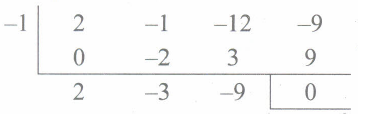
Then p (x) = (x + 1)(2x2 - 3x - 9)
Now 2x2 - 3x - 9 = 2x2 - 6x + 3x - 9 = 2x (x - 3) + 3 (x - 3)
= (x - 3)(2x + 3)
Hence 2x3 - x2 - 12x - 9 (x + 1) (x - 3) (2x + 3)
81.
\(\angle\)In the cyclic quadrilateral \(\angle\) A+\(\angle\)C = 180o
y + 4o + 3yo + 8o = 180o
4yo + 12o = 80o
4yo = 180o -12o = 168
y =\(\cfrac { 168 }{ 4 } \) = 42
\(\angle\)B + \(\angle\)D = 180o
8x + 12 = 180o
8x = 180o - 12o = 168
x = \(\cfrac { 168 }{ 8 } \) = 21o
\(\therefore\) \(\angle\)A = y + 4o = 42o + 4o = 46o
\(\angle\)C = 3y + 8 = 3 \(\times\) 42 + 8 = 126 + 8 = 134o
\(\angle\)B = 3x + 6 = 3 \(\times\) 21 + 6 = 63 + 6 = 69o
\(\angle\)D = 5x + 6 = 5 \(\times\) 21 + 6
= 105 + 6 = 111o
82.

To represent \(-\frac { 2 }{ 11 } ,-\frac { 5 }{ 11 } and-\frac { 9 }{ 11 } \)on the number line we make 11 markings each being equal distance \(\frac { 1 }{ 11 } \) on the left of 0.
The point A represents \(\left( -\frac { 2 }{ 11 } \right) \) , the point B represents\(\left( -\frac { 2 }{ 11 } \right) \) and the point C represents \(\left( -\frac { 9 }{ 11 } \right) \)
83.
Let us convert the given rational numbers having the same denominators.
L.C.M of 8 and 6 is 24.
\(\frac { 5 }{ 8 } \times \frac { 5\times 3 }{ 8\times 3 } =\frac { 15 }{ 24 } \)
\(\frac { 5 }{ 8 } \times \frac { 5\times 3 }{ 8\times 3 } =\frac { 15 }{ 24 } \)
Now the rational numbers between \(-\frac { 202 }{ 24 } and\frac { 15 }{ 24 } are-\frac { 19 }{ 24 } ,-\frac { 18 }{ 24 } ,-\frac { 17 }{ 24 } ,....,\frac { 0 }{ 24 } ,\frac { 1 }{ 24 } ,\frac { 22 }{ 24 } ,...,\frac { 14 }{ 24 } \)
we can take any seven of them \(\frac { 1 }{ 24 } ,\frac { 2 }{ 24 } ,\frac { 3 }{ 24 } ,\frac { 4 }{ 24 } ,\frac { 5 }{ 24 } ,\frac { 6 }{ 24 } ,\frac { 7 }{ 24 } \)
84.
Distance = \(\sqrt{(x_2+x_1)^2+(y_2-y_1)^2}\)
AB =\(\sqrt{(3-3)^2+(2+2)^2}\)
=\(\sqrt{0+4^2}=\sqrt{16}=4\)
BC =\(\sqrt{(-1-3)^2+(2-2)^2}\)
\(\sqrt{(-4)^2+0}=\sqrt{16}=4\)
CD =\(\sqrt{(-1-1)^2+(2-2)^2}\)
\(\sqrt{0+(-4)^2}=\sqrt{16}=4\)
AD =\(\sqrt{(-1-3)^2+(-2+2)^2}\)
\(\sqrt{(-4)^2+0}=\sqrt{16}=4\)
AB = BC = CD = DA = 4. All the four sides are equal.
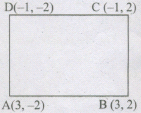
\(\therefore \)ABCD is a Rhombus .................(1)
Diagonal AC =\(\sqrt{(3+1)^2+(-2-2)^2}\)
\(=\sqrt{4^2+(-4)^2}=\sqrt{16+16}=\sqrt{32}\)
Diagonal BD =\(\sqrt{(3+1)^2+(2+2)^2}\)
\(=\sqrt{4^2+4^2}=\sqrt{16+16}=\sqrt{32}\)
Diagonal AC = Diagonal BD =\(\sqrt{32}\) ................ (2)
From (1) and (2) we get ABCD is a square.
85.
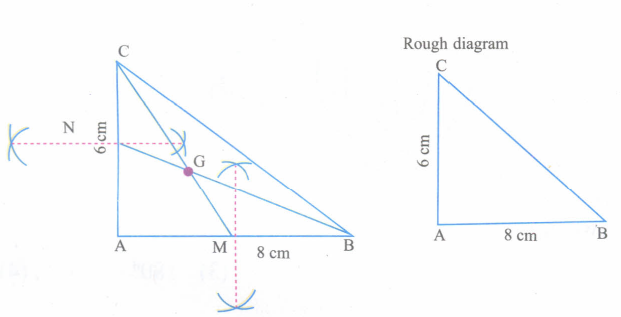
Construction:
Step 1: Draw ΔABC with the given measurements AB = 8 cm, \(\angle\)A = 90o and AC = 6 cm and construct the perpendicular bisector of any two sides (AB and AC) to find the mid points M and N of AB and BC respectively.
Step 2: Draw the medians (C and BN and let them meet at G. The point G is the centroid of the given ΔABC.
86.
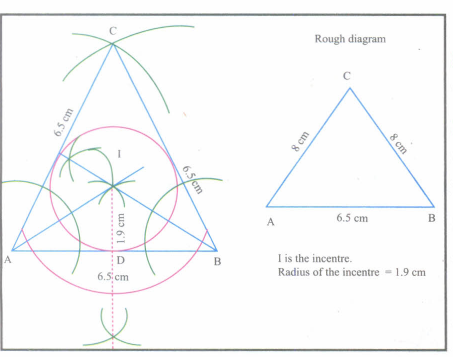
Construction :
Step 1: Draw \(\triangle \)ABC with AB = BC = CA = 6.5 cm
Step 2: Construct angle bisectors of any two angles (A and B) and let them meet at I. I is the incentre of \(\triangle \)ABC.
Step 3: Draw perpendicular from I to any one of the side (AB) to meet AB at D.
Step 4: With I as centre, ID as radius draw the circle. This circle touches all the sides of triangle internally.
Step 5: Measure inradius. Inradius = 1.9 cm.

9th Standard Syllabus & Materials
9th Standard
TN 9th Tamil உள்ளத்தின் சீர் - திருக்குறள் Important Questions And Answers Study Material - QB365 Set A
NEW9th Standard
TN 9th Tamil உள்ளத்தின் சீர் - மணிமேகலை Important Questions And Answers Study Material - QB365 Set A
NEW9th Standard
TN 9th Tamil உள்ளத்தின் சீர் - ஏறு தழுவுதல் Important Questions And Answers Study Material - QB365 Set A
NEW9th Standard
TN 9th Tamil உயிருக்கு வேர் - தண்ணீர் Important Questions And Answers Study Material - QB365 Set A



Tamilnadu Stateboard 9th Standard Subjects
Tamilnadu Stateboard Standards





