
 100% FREE ACCESS
9th Standard Syllabus & Materials
9th Standard
TN 9th Tamil உள்ளத்தின் சீர் -கற்கண்டு (இலக்கணம்) - தொடர் இலக்கணம், ஆகுபெயர் Important Questions And Answers Study Material - QB365 Set A
NEW9th Standard
TN 9th Tamil உள்ளத்தின் சீர் -விரிவானம் (துணைப்பாடம்) - தாய்மைக்கு வறட்சி இல்லை! Important Questions And Answers Study Material - QB365 Set A
NEW9th Standard
TN 9th Tamil உள்ளத்தின் சீர் -கவிதை பேழை (செய்யுள்) - மார்கழி பெருவிழா Important Questions And Answers Study Material - QB365 Set A
NEW9th Standard
TN 9th Tamil உயிருக்கு வேர்-இலக்கணம் - பகுபத உறுப்பிலக்கணம் Important Questions And Answers Study Material - QB365 Set A
NEW9th Standard
TN 9th Tamil அமுதென்று பேர் - இலக்கணம்-எழுத்து -அளபெடை Important Questions And Answers Study Material - QB365 Set A
NEW9th Standard
TN 9th Tamil அமுதென்று பேர்-துணைப்பாடம் - ஆறாம்திணை Important Questions And Answers Study Material - QB365 Set A

Published on: 06/02/2020
9th Standard Science 5 Mark Important Questions (Bookback and Creative)
Download Tamil Nadu 9th Standard Science question papers, model tests, one-mark questions, important questions, and public exam papers in PDF format. Free study materials and answer keys for TN State Board students.
Questions + Answers key
Take MCQ Science Test1.
Name the causative agent of Tuberculosis in human. How does the pathogen gain entry into the human body? write the diagnostic symptom and mention the organ that is affected in severe cases, How is it treated.
2.
List out the uses of honey.
3.
List out the advantages of farm ponds.
4.
List out the drawbacks of Nanomaterials in chemistry.
5.
List out the drawbacks of plastic.
6.
Give an account of Stars .
7.
Define and write SI units of Amplitude, frequency, time period, wavelength and velocity of sound.
8.
Explain the working of Hydraulic press. Why are they called force multipliers.
9.
Give an account of different types of fish ponds used for rearing fishes.
10.
Give an account of classification of bacteria based on the shape.
11.
What are the conditions in a dry habitat to which plants develop adaptations? List out the adaptations of xerophytes?
12.
Discuss the benefits of ISS.
13.
Describe with diagram, how compressions and rarefactions are produced.
14.
What are the chemical reactions of carbon?
15.
State the laws of flotation.
16.
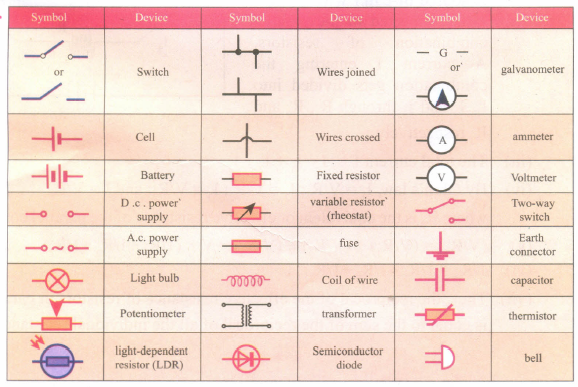
Some common symbols in the electrical circuit.
17.
Write notes on importance of pH in everyday life.
18.
Draw a chart to show the various enzymes produced during digestion in our body and their action
19.
List the advantages of alloys.
20.
Explain the principle, construction and working of an AC generator.
21.
Explain simple epithelium and its types.
22.
Give the difference between heat and temperature.
23.
Describe the alimentary canal of man.
24.
Sulphuric acid is called King of Chemicals. Why is it called so?
25.
List down the differences between Ionic and Covalent compounds.
26.
State any five features of modern periodic table.
27.
Draw a neat diagram of an AC generator.
28.
A wire of resistance 10 \(\Omega\) is bent in the form of a circle. Find the effective resistance between the points A and B which lies on the diameter.
29.
What are the changes of state in water? Explain.
30.
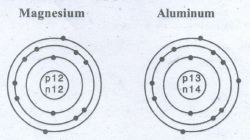
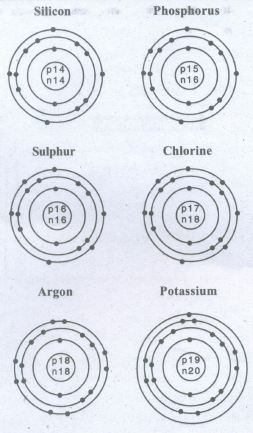
Draw the model of the following pairs of isotones
31.
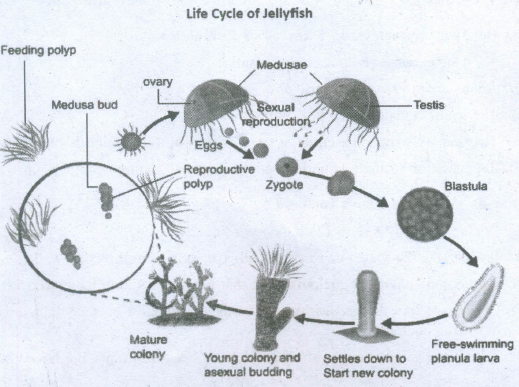
Draw the life cycle of jellyfish.
32.
How to detect food adulteration in bananas and apples?
33.
Write the properties of mixture.
34.
Find the size, nature and position of image formed when an object of size 1 cm is placed at a distance of 15 cm from a concave mirror of focal length 10 cm.
35.
Explain the method to find the diameter of the sphere.
36.
Give an account on phylum Arthropoda.
37.
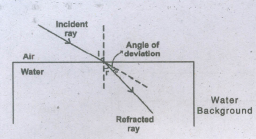
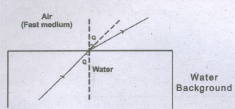
Explain with diagrams how refraction of incident light takes place from
a) rarer to denser medium
b) denser to rarer medium
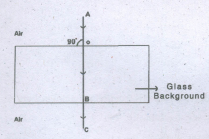
c) normal to the surface separating the two media.
38.
How are vitamins useful to us? Tabulate the sources, deficiency diseases and symptoms of fat soluble vitamins
39.
List out the generations of computer
40.
What are the different steps involved in data processing?
41.
During an experiment, a signal from a spaceship reached the ground station in five seconds. What was the distance of the spaceship from the ground station? The signal travels at the speed of light that is 3 × 10⁸ ms-1?
42.
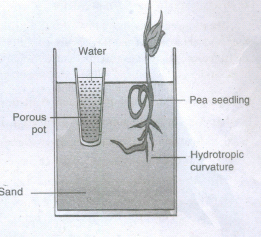
Design an experiment to demonstrate hydrotropism.
43.
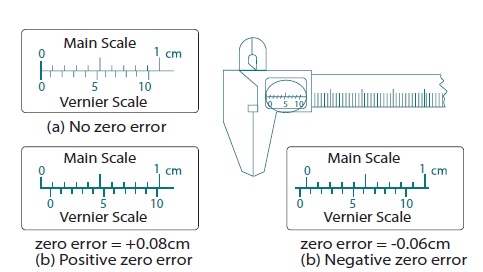
Calculate the positive and negative error from the given figure
44.
Hydrogen sulphide (H2S) contains 94.11% sulphur, water (H2O) contains 11.11% hydrogen and sulphur dioxide (SO2) contains 50% of oxygen. Show that the results are in agreement with the law of reciprocal proportions
45.
How are homogeneous solutions different from heterogeneous solution? Explain with examples.
46.
The soil pH of a crop land is 5. What kind of fertilizers should be used in that land?
47.
What is the consequence that occur if all blood platelets are removed from the blood?
1.
Tuberculosis
Causative Agent: Mycobacterium tuberculosis
Mode of entry: Droplet infection from sputum of infected persons.
Organ affected in severe cases: Lungs
Symptoms: Persistent cough, Chest pain, Loss of weight and appetite.
Treatment: Infected person has to be treated with anti-tuberculosis drugs for a period of 6 months to one year.
2.
1. Honey has an antiseptic and antibacterial property. It is a blood purifier .
2. It helps in building up of haemoglobin content in the blood .
3. It is used in ayurvedic and unani system of medicines .
4. It prevents cough, cold, fever and relieves sore throat .
5. It is remedy for ulcers on tongue, stomach and intestine .
6. In enhances digestion and apetite.
3.
1. They provide water to growing crops, without waiting for rainfall.
2. They provide water for irrigation even when there is no rain.
3. They reduce soil erosion.
4. They recharge ground water.
5. They improve drainage.
6. The excavated soil can be used to enrich soil in fields and ·Ievelling lands.
7. They promote fish rearing.
8. They provide water for domestic purposes and livestock.
4.
1. Nano particles are unstable when they contact with oxygen .
2. Their exothermic combustion with oxygen can easily cause explosion .
3. Because nanoparticles are highly reactive, they inherently interact with impurities as well.
4. Nanoparticles are usually considered biologically harmful and toxic .
5. It is difficult to synthesis, isolate and apply them .
6. There are no hard-and-fast safe disposal policies for nanomaterials.
5.
1. Plastics take a very long time to fully break down in nature.
2. The microbes that break down plastic are too few in nature to deal with the quantity of plastics we produce.
3. A lot of plastic does not get recycled and ends up polluting the environment.
4. Some types of plastics contain harmful chemical additives that are not good for human health.
5. Burning of plastics releases toxic gases that are harmful to our health and contribute to climate change .
6. One-time use and throwaway plastics end up littering and polluting the environment.
6.
1. Stars were the fundamental building blocks of galaxies .
2. Stars were formed, when the galaxies were formed during 'big bang' .
3. Stars produce heat light ultraviolet rays, X-rays and other forms of radiations .
4. They are largely composed of gas and plasma .
5. They are built by hydrogen gases. Hydrogen atoms fuse together to form helium atoms and in the process they produce large amount of heat.
6. Our universe contains more than 100 billion galaxies and each of those galaxies may have 100 billion stars.
7. The brightness of the stars depends on their intensity and distance from the earth.
8. Stars appear to be in different colours depending on their temperature.
9. Group of stars are called as constellations .
10. There are 88 formally accepted constellations such as Aries, Gemini, Leo etc.,
7.
Amplitude (A):
The maximum displacement of the particles of the medium from their original undisturbed position is called amplitude.
It is denoted by A. SI unit is metre (m)
Frequency (n):
The number of vibrations produced in one second is called frequency of the wave.
It is denoted as n. SI unit is Hz or s-1.
Time period (T):
The time required to produce one complete vibration is called time period of the wave.
It is denoted as T. SI unit is second (s).
Wavelength (A.):
The minimum distance in which a sound wave repeats itself is called its wavelength.
It is denoted by λ. SI unit is metre (m).
Velocity (v):
The distance travelled by sound wave in one second is called velocity of the sound.
It is denoted by v. SI unit is ms-1.
8.
Hydraulic press works under the principle of Pascal's Law.
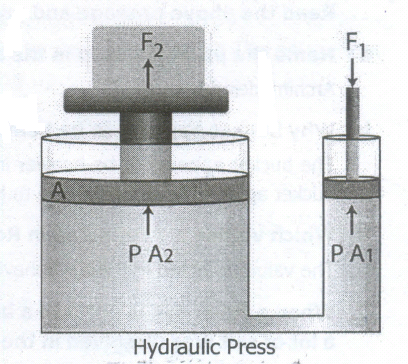
1. It consists of two cylinders of different cross-sectional area. They are fitted with pistons of cross-sectional areas 'A1' and 'A2' The object to be lifted is placed over the piston of large cross-sectional area A2.
2. The force F1 is applied on the piston of small cross-sectional area A1.
3. The pressure P produced by small piston is transmitted equally to large piston and a force F2 acts on A2 which is much larger than F1. Pressure on piston of small area 'A1' is given by
P = \(\frac { {F}_{1}}{{A}_{1}}\) ----------- (1)
Applying Pascal's law; the pressure on large piston of area A will be the same as that on small piston.
∴ P = \(\frac { {F}_{2}}{{A}_{2}}\) -------------(2)
Comparing equations (1) & (2). we get,
\(\frac { {F}_{1}}{{A}_{1}}\) = \(\frac { {F}_{2}}{{A}_{2}}\) or F2 = F1 x \(\frac { {A}_{2} }{{A}_{1}}\)
Since the ratio \(\frac { {A}_{2} }{{A}_{1}}\) is greater than 1, the force F2 that acts on the larger piston is greater than the force F1 acting on the smaller piston.
Hydraulic system working in this way are known as Force multipliers.
9.
Fish farm requires different types of pond for the various developmental stages of fish growth, they are
a) Breeding pond:
Healthy and sexually mature male and female fishes are collected and introduced in this pond for breeding. The eggs released by the female are fertilized by the sperm and fertilized eggs float in water as a frothy mass.
b) Hatching pits:
The fertilized eggs are transferred to hatching pits for hatching.
c) Nursery ponds:
The hatchlings are transferred from hatching pits after 2 to 7 days. The hatchlings grow into fry and are cultured in these ponds for about 60 days with proper feeding till they reach 2 - 2.5 cm in length.
d) Rearing ponds:
Rearing ponds are used to culture the fry. The fish fry are transferred from nursery pond to rearing ponds and are maintained for about three months till they reach 10 to 15 cm in length. In these rearing ponds, the fry develops into fingerlings.
e) Stocking pond:
The stocking pond is also called as culture pond or production pond. These ponds are used to rear fingerlings up to the marketable size. Before releasing the fingerlings the pond is manured with organic manure and inorganic fertilizers.
10.
Based on the shapes, bacteria are grouped as
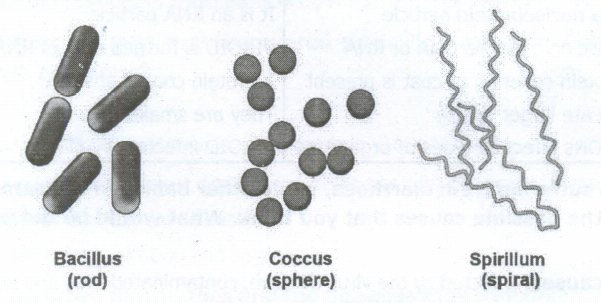
1. Spherical shaped bacteria called as cocci or coccus for a single cell.
2. Rod shaped bacteria called as bacilli or bacillus for a single cell.
3. Spiral shaped bacteria called as spirilla or spirillum for single cell.
| Different shapes of Bacteria | ||
| Arrangement of Cocci | Examples | |
| Diplococci | cocci are arranged in pairs | Streptococcus pneumoniae |
| Streptococci | Streptococci cocci are arranged in chains | Streptococcus pyogenes |
| Tetracocci | cocci are arranged in packets of four cells | Aerococcus sp |
| Staphylococci | cocci are arranged in grape-like clusters | Staphylococcus aureus |
| Arrangement of Bacilli | Examples | |
| Diplobacilli | diplobacilli appear in pairs | Klebsiella sp |
| Streptobacilli | bacilli are arranged in chains | Streptobacillus sp |
| Coccobacilli | short and stumpy and appear ovoid | Haemophilus sp |
| Arrangement of Spirilla | Examples | |
| Vibrio | comma-shaped bacteria | Vibrio cholerae |
| Spirilla | rigid spiral structure | Helicobacter pylori |
| Spirochetes | helical shape and flexible bodies | Treponema pallidum |
11.
Xerophytes:
Plants that grow in dry habitat are called xerophytes. They develop special structured and physiological characteristics to meet the following conditions.
i) To absorb as much water as they can get from the surroundings.
ii) To retain water in their organs for very long time.
iii) To reduce transpiration rate.
iv) To reduce consumption of water.
Adaptations of xerophytes:
1. They have well developed roots, Roots grow very deep and reach the layer where water in available as in allotropic.
2. They store water in succulent water storing parenchymatous tissues. eg: Opuntia, Aloe vera.
3. They have small sized leaves with waxy coating ego Acacia. In some plants leaves are modified into spines eg: Opuntia.
4. Some of the xerophytes complete their life cycle within a very short period when sufficient moisture is available.
12.
Supporting Water - Purification Efforts:
1. Using the technology developed for the ISS, areas having water scarcity can gain access to advanced water filtration and purification systems.
2. This could very well be a life - saving difference for the people in such hazardous locations.
3. The water recovery system (WRS) and the oxygen generation system (OGS) developed for the ISS have saved a village in Iraq from being deserted due to lack of clean water.
Eye tracking technology:
1. The Eye tracking device, built for a microgravity experiment has proved ideal to be used in many laser surgeries.
2. This device tracks the eyes position very accurately without interfering with the surgeon's work.
3. Eye tracking technology is helping disabled people with limited movement and speech.
Robotic arms and Surgeries:
1. Robotic arms developed for research in ISS are providing significant help to the surgeons in removing inoperable tumours and taking biopsies with great accuracies.
2. Robotic arms do heavy lifting in Cancer treatment in the form of surgical robots.
3. ISS technology are useful in the development of improved vaccines, breast cancer detection and treatment, ultrasound machines for remote regions etc.
13.
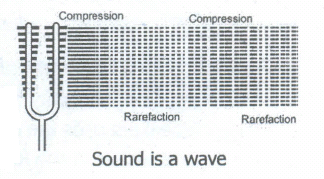
1. When a vibrating body moves forward it pushes and compresses the air in front of it creating a region of high pressure. This region is called Compression. This compression starts to move away from the vibrating object.
2. When a vibrating body moves backwards, it creates a region of low pressure called rarefaction. As the object is in a to and fro movement or oscillates rapidly a series of compressions and rarefactions is created in the air.
3. This makes the sound wave to propagate in the air.
4. compressions are the regions where particles are crowded together creating high pressure region. And rarefactions are the regions, where the particles are spread apart creating low pressure region.
14.
Oxidation: (Reaction with oxygen)
Carbon combines with oxygen to form its oxides like carbon monoxide (CO) and carbon dioxide (CO2) with evolution of heat.
Organic carbon compounds like hydrocarbon also undergo oxidation to form oxides and steam with evolution of heat and flame. This is otherwise called combustion.
2C(s)+ O2(g) ➝ 2CO(g) + heat
C(s)+ O2(g) ➝ CO2(g) + heat
CH4(s)+ 2O2(g) ➝ CO2(g) + 2H2O(g) + heat
Reaction with steam:
Carbon reacts with steam to form carbon monoxide and hydrogen. This mixture is called water gas.
C(s) + H2O(g) ➝ CO(g) + H2(g)
Reaction with sulphur:
With sulphur, carbon forms its disulphide at high temperature
C(s) + S(g) ➝ CS2(g)
Reaction with metals :
At elevated temperatures, carbon reacts with some metals like iron, tungsten, Titanium, etc to form their carbides. Tungsten+Carbon➝Tungsten carbide
W + C ➝ WC
15.
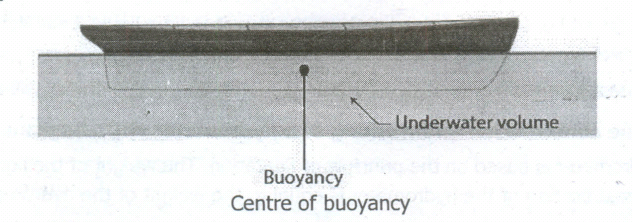
Laws of flotation are:
1. The weight of a floating body in a fluid is equal to the weight of the fluid displaced by the body.
2. The centre of gravity of the floating body and the centre of buoyancy are in the same vertical line.
The point through which the force of buoyancy is supposed to act is known as centre of buoyancy.
16.
17.
pH in our digestive system:
Hydrochloric acid produced in our stomach helps in the digestion of food without harming the stomach. During indigestion, the stomach produces too much acid and this causes pain and irritation. pH of stomach fluid is approximately 2.0.
pH changes as the cause of tooth decay:
White enamel coating of our teeth is calcium phosphate, the hardest substance in our body. Toothpastes which are generally basic and used for cleaning the teeth can neutralise the excess acid and prevent tooth decay.
pH of soil :
In agriculture, the pH of soil is very important. Citrus fruits require slightly alkaline soil, while rice requires acidic soil and sugarcane requires neutral soil.
pH of rain water:
The pH of rain water is approximately 7 which means that it is neutral and also represents its high purity. If the atmospheric air is polluted with oxide gases of sulphur and nitrogen, they get dissolved in rainwater and make its pH less than 7. Thus, if the pH of rain water is less than 7, then it is called acid rain. When acid rain flows into the rivers it lowers the pH of the river water. The survival of aquatic life in such rivers becomes difficult.
18.
| Digestive glands | Enzymes | Substrate (nutrient) | Product of digestion |
| Salivary glands | Ptyalin (Salivary amylase) | Starch | Maltose |
| Gastric glands | Pepsin | Proteins | Peptones |
| Rennin (in infants) | Milk protein or caseinogen | Curdles milk to Peptides casein amino acids | |
| Pancreas | Pancreatic amylase | Starch | Maltose |
| Trypsin | Proteins and peptones | Peptides and amino acids | |
| Chymotrypsin | Protein | Proteoses, Peptones Polypeptide, tri and dipeptides | |
| Pancreatic lipase | Emulsified fats | Fatty acids and Glycerol | |
| Intestinal glands | Maltase | Maltose | Glucose and Glucose |
| Lactase | Lactose | Glucose and Galactose | |
| Sucrase | Sucrose | Glucose and Fructose | |
| Lipase | Fats | Fatty acids and Glycerol |
19.
(i) Alloys do not get corroded or get corroded to very less extent.
(ii) They are harder and stronger than pure metals (Example: Gold is mixed with copper and it is harder than pure gold)
(iii) They have less conductance than pure metals (Example: Copper is good conductor of heat and electricity whereas brass and bronze are not good conductors)
(iv) Some alloys have lower melting point than pure metals (Example: Solder is an alloy of lead and tin which has lower melting point than each of the metals)
(v) When metal is alloyed with mercury, it is called amalgam.
20.
(i) An alternating current (AC) generator, consists of a rotating rectangular coil ABCD called armature placed between the two poles of a permanent magnet.
(ii) The two ends of this coil are connected to the two slip rings S1 and S2. The inner sides of these rings are insulated.
(iii) Two conducting stationary brushes B1 and B2 are kept separately on the rings S1 and S2 respectively. The two rings S1 and S2 are internally attached to an axle.
(iv) The axle may be mechanically rotated from outside to rotate the coil inside the magnetic field. Outer ends of the two brushes are connected to the external circuit
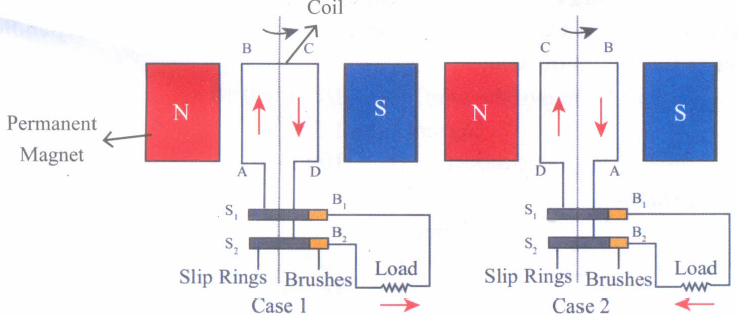
(v) When the coil is rotated, the magnetic flux linked with the coil changes. This change in magnetic flux will lead to generation of induced current.
(vi) The direction of the induced current, as given by Fleming's Right Hand Rule, is along ABCD in the coil and in the outer circuit it flows from B2 to B1.
(vii) During the second half of rotation, the direction of current is along DCBA in the coil and in the outer circuit it flows from B1 to B2
(viii) As the rotation of the coil continues, the induced current in the external circuit is changing its direction for every half a rotation of the coil
21.
Simple Epithelium:
1. It is formed of single layer of cells. It forms a lining for the body cavities and ducts.
2. On the basis of structural modification of the cells, simple epithelium is further divided into following types.
(i) Squamous epithelium
(ii) Cuboidal epithelium
(iii) Columnar epithelium
(iv) Ciliated epithelium
(v) Glandular epithelium
(i) Squamous epithelium
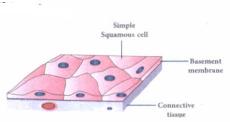
1. It is made up of thin, flat cells with prominent nuclei. These cells have irregular boundaries and bind with neighbouring cells
2. The squamous epithelium is also known as pavement membrane, which form delicate lining of the buccal cavity, alveoli of lungs, proximal tubule of kidneys, blood vessels etc
3. It protects the body from mechanical injury, drying and invasion of germs
4. It also helps in filtration by forming a selectively permeable membrane surface.
(ii) Cuboidal epithelium
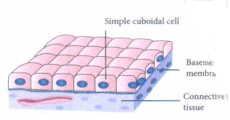
1. It is composed of single layer of cubical cells.
2. The nucleus is round and lies in the centre.
3. This tissue is present in the thyroid vesicles, salivary glands, sweat glands, exocrine pancreas etc.
4. Their main function is secretion and absorption.
(iii) Columnar epithelium
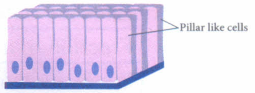
1. It is composed of a single layer of slender, elongated and pillar like cells.
2. Their nuclei are located at the base.
3. It is found lining the stomach, gall bladder, bile duct, small intestine, colon, oviducts etc.,
4. They are mainly involved in secretion and absorption.
(iv) Ciliated epithelium
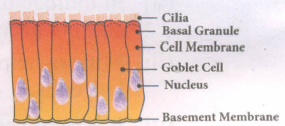
1. Certain columnar cells bear numerous delicate hair-like outgrowths called cilia and are called ciliated epithelium.
2. Their function is to move particles or mucus in a specific direction over the epithelium.
3. It is seen in the trachea of wind-pipe, bronchioles of respiratory tract, kidney tubules and fallopian tubes of oviducts.
(v) Glandular epithelium
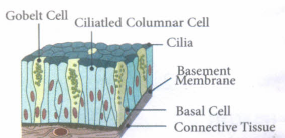
1. Epithelial cells are often modified to form specialized gland cells which secrete chemical substances at the epithelial surface.
2. Sometimes a portion of the epithelial tissue folds inward to form a multicellular gland, which lines the gastric glands, pancreatic tubules and intestinal gland
22.
| Heat | Temperature | |
| 1. | Heat is a form of energy due to which we feel hot or cold. | The degree of hotness or coldness of a body is known as temperature |
| 2. | It's SI unit is joule (J) | Its SI unit is kelvin (K). |
| 3. | It depends upon mass, nature and temperature of the body. | It does not depend upon mass, nature and temperature of the body. |
| 4. | It is a form of energy. | It is a condition which determines the direction of flow of heat. |
| 5. | It is measured by a calorimeter. | It is measured by a thermometer. |
23.
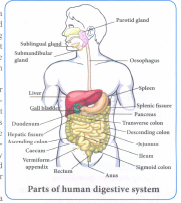
Alimentary canal of man:
Alimentary canal is a muscular coiled, tubular structure. It consists of mouth, buccal cavity, pharynx, oesophagus, stomach, small intestine (consisting of duodenum, jejunum and ileum), large intestine (consisting of caecum, colon and rectum) and anus.
Mouth: The mouth leads into the buccal cavity. The buccal cavity is a large space bound above by the palate (which separates the windpipe and food tube), below by the throat and on the sides by the jaws. The jaws bear teeth.
Teeth: Teeth are hard structures meant for holding, cutting, grinding and crushing the food. In human beings two sets of teeth (Diphyodont) are developed in their lifetime.
Each tooth has a root fitted in the gum (Thecodont). Permanent teeth are of four types (Heterodont), according to their structure and function namely incisors, canines, premolars and molars.
Dental formula represents the number of different type of teeth present in each half of a jaw (upper and lower jaw).
For Permanent teeth in each half of upper and lower jaw:
\(\cfrac { 2,1,2,3 }{ 2,1,2,3 } =16\times 2=32\)
Salivary glands: Three pairs of salivary glands are present in the mouth cavity. They are: parotid glands, sublingual glands and submaxillary or submandibular glands
i. Parotid glands are the largest salivary glands, which lie in the cheeks
ii. Sublingual glands are the smallest glands and lie beneath the tongue.
iii. Submaxillary or Submandibular glands lie at the angles of the lower Jaw.
Tongue: The tongue is a muscular, sensory organ which helps in mixing the food with the saliva.
Pharynx: The pharynx is a membrane lined cavity behind the nose and mouth, connecting them to the oesophagus. It serves as a pathway for the movement of food from mouth to oesophagus.
Oesophagus: Oesophagus or the food pipe is a muscular-membranous canal about 22 cm length. It conducts food from pharynx to the stomach by peristalsis (wave-like movement) produced by the rhythmic contraction and relaxation of the muscular walls of alimentary canal.
Stomach: The stomach is a wide J-shaped muscular organ located between oesophagus and the small intestine
Small intestine: The small intestine is the longest part of the alimentary canal, which is a long coiled tube measuring about 5 - 7 m. It comprises three parts duodenum, jejunum and ileum.
1. Duodenum is C-shaped and receives the bile duct (from liver) and pancreatic duct (from pancreas).
2. Jejunum is the middle part of the small intestine. It is a short region of the small intestine.
3. Ileum forms the lower part of the small intestine and opens into the large intestine. Ileum is the longest part of the small intestine. It contains minute finger like projections called villi (one millimeter in length) where absorption of food takes place. Internally, each villus contains fine blood capillaries and lacteal tubes. The small intestine serves both for digestion and absorption. It receives (i) the bile from liver and (ii) the pancreatic juice from pancreas in the duodenum.
Liver: It is the largest digestive gland of the body which is reddish brown in colour. Bile salts help in the digestion of fats by bringing about their emulsification (conversion of large fat droplets into small ones).
Pancreas: It is a lobed, leaf shaped gland situated between the stomach and duodenum. Pancreas acts both as an exocrine gland and as an endocrine gland.
Large intestine: The unabsorbed and undigested food is passed into the large intestine. It extends from the ileum to the anus. It is about 1.5 meters in length. It has three parts- caecum, colon and rectum .
The caecum is a small blind pouch like structure situated at the junction of the small and large intestine. From its blind end a finger-like structure called vermiform appendix arises. It is a vestigial (functionless) organ in human beings
The colon is much broader than ileum. It passes up the abdomen on the right (ascending colon), crosses to the left just below the stomach (transverse colon) and down on the left side (descending colon).
The rectum is the last part which opens into the anus. It is kept closed by a ring of muscles called anal sphincter which opens when passing stools.
24.
Sulphuric acid is called King of Chemicals because it is used in the preparation of many other compounds.
25.
| S.No | Ionic Compounds | Covalent Compounds |
| 1. | Formed by the transfer of electrons from a metal to a non-metal atom. | Formed by sharing of electrons between non-metal atoms. |
| 2. | Strong electrostatic force of attraction between cations and anions | Mutual sharing of electrons and so weak force of attraction between atoms. |
| 3. | Solids at room temperature. | Gases, liquids and soft solids |
| 4. | Conducts electricity in molten state or in solutions | Non-conductors of electricity |
| 5. | Have high melting and boiling points | Have low melting and boiling points. |
| 6. | Soluble in polar solvents. | Soluble in non-polar solvents |
| 7. | Hard and brittle | Soft and waxy. |
| 8. | Undergo ionic reaction which are fast and instantaneous. | Undergo molecular reactions which are slow. |
26.
Features of modern periodic table:
(i) All the elements are arranged in the increasing order of their atomic number.
(ii) The horizontal rows are called periods. There are seven periods in the periodic table.
(iii) The elements are placed in periods based on the number of shells in their atoms.
(iv) Vertical columns in the periodic table starting from top to bottom are called groups. There are 18 groups in the periodic table.
(v) Based on the physical and chemical properties of elements, they are grouped into various families.
27.
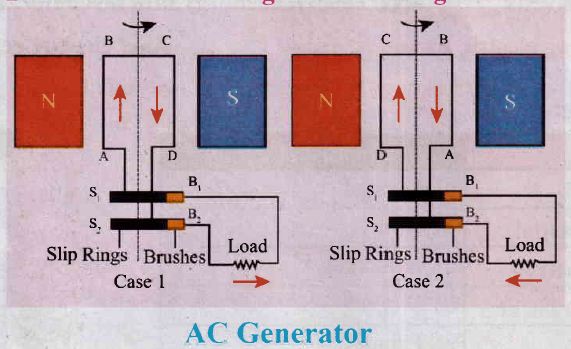
Explanation:
When the coil is rotated, the magnetic flux linked with the coil changes. This change in magnetic flux will lead to generation of induced current. The direction of the induced current, as given by Fleming's Right Hand Rule, is along ABCD in the coil and in the outer circuit it flows from B2 to B1. During the second half of rotation, the direction of current is along DCBA in the coil and in the outer circuit it flows from B1 to B2. As the rotation of the coil continues, the induced current in the external circuit is changing its direction for every half a rotation of the coil.
28.
Two points at the ends of any diameter will divide the resistor into two equal parts and so they are in parallel combinations as shown in figure
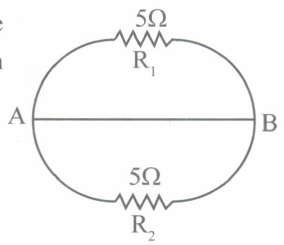
R1=5\(\Omega \),R2 = 5\(\Omega \)
\(\cfrac { 1 }{ { R }_{ P } } =\cfrac { 1 }{ { R }_{ 1 } } +\cfrac { 1 }{ { R }_{ 2 } } \)
\(=\cfrac { 1 }{ 5 } +\cfrac { 1 }{ 5 } =\cfrac { 2 }{ 5 } \)
\({ R }_{ P }=\cfrac { 5 }{ 2 } =2.5\Omega \)
29.
The process of changing of a substance from one physical state to another at a definite temperature is defined as change of state.
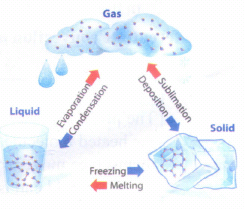
For example, water molecules are in liquid state at normal temperature. When water is heated to 100oC, it becomes steam which is a gaseous state of matter. On reducing the temperature of the steam it becomes water again. If we reduce the temperature further to 0oC, it becomes ice which is a solid state of water. Ice on heating, becomes water again. Thus, water changes its state when there is a change in temperature. There are different such processes in the change of state in matter. The figure shows various processes of change state.
30.
31.
32.
Bananas: If the stem of banana appears green, instead of a shiny yellow, it has probably been ripened by Calcium carbide.
Apples: The apple will appear very glossy and shiny. It could have slight scratches and you may notice a thin layer peeling off, which is the wax.
33.
1. The constituents of a mixture retain their individual properties.
2. A mixture can be prepared by mixing the constituents in any proportion.
3. Formation of mixtures does not involve any exchange of energy.
4. Mixtures do not have any characteristic set of properties.
5. Components of a mixture can be separated by physical methods.
34.
Object distance (u) = -15 cm
Focal length (f) = -10 cm
Image distance (v) = ?; Image size h' = ?
\(\frac { 1 }{ f } =\frac { 1 }{ v } +\frac { 1 }{ u } \)
\(\frac { 1 }{ v } =\frac { 1 }{ f } +\frac { 1 }{ u } =\frac { 1 }{ -10 } -\frac { 1 }{ -15 } =\frac { -3-(-2) }{ 30 } =\frac { -1 }{ 30 } \)
v = -30 cm
The image is formed at a distance of 30 cm on the side of the object. Negative sign indicates that the object and image are on the same side.
ii) Nature of the image: The image is real and inverted.
\(magnification=\frac { h' }{ h_{ 0 } } =\frac { -v }{ u } \\ h'=-h\times \frac { v }{ u } =-1\times \frac { -30 }{ -15 } =-2\\ image\ size\ { h }_{ 0 }=-2\quad cm\)
35.
(i) The first step in using the Vernier caliper is to find out its least count, range and zero error.
(ii) \(Least\ count\ of\ the\ instrument(LC)=\frac{Value\ of\ one\ smallest\ main\ scale\ division}{Total\ number\ of\ vernier\ scale\ division}\)
The main scale division can easily be obtained by inspecting the main scale. It will be in centimeter, further divided into millimetre. The value of the smallest, main scale division is 1 mm. The Vernier scale division is obtained by counting number of division in it. In the Vernier scale there will be 10 divisions.
\(LC=\frac{1mm}{10}=0.1\ mm\)
(iii) Unscrew the slider and move it to the left, such that both the jaws touch each other.
(iv) If they are not coinciding with each other, the instrument is said to possess zero error. Zero error may be positive or negative. If the zero mark of the Vernier is shifted to the right, it is called negative error. On the other hand, if the Vernier zero is shifted to the left of the main scale zero marking, then the error is positive.
(v) Once you are able to calculate the zero error, you can get the correct reading using the formula:
The correct reading = Main scale reading + (VC x LC) - (Zero correction)
(vi) We can use Vernier caliper to find different dimensions of any familiar object.
36.
1. Arthropoda is an ancient and the largest phylum with number of species.
2. Insects, spiders, crabs, shrimps, butterflies, millipedes, centipedes and scorpions are arthropods.
3. Body is divisible into head, thorax and abdomen.
4. The coelomic cavity is filled with haemolymph
5. They have open circulatory system
6. Excretion occurs through Malpighian tubules in insects and through green glands in crabs and prawns.
37.
a) Rarer to denser medium:
When a ray of light travels from optically rarer medium to optically denser medium, it bends towards the normal.
b) Denser medium to rarer medium:
When a ray of light travels from an optically denser medium to an optically rarer medium it bends away from the normal.
c) Normal to the surface separating the two media:
A ray of light incident normally on a denser medium goes without any deviation.
38.
Vitamins are vital nutrients, required in minute amounts to perform special functions to maintain a healthy body. It is deficiency in the food it cause many diseases.
| Vitamins | Sources | Deficiency disorders | Symptoms |
|
Vitamin A |
Carrot, papaya leaf vegetable, egg yolk, liver |
Xerophthalmia Nyctalopia (night blindness) |
Dryness of cornea unable to see in the night (dim light) scaly skin |
| Vitamin D |
Egg, liver, diary products, fish, synthesized by the sunlight |
Rickets (in children) |
Bow legs, defective ribs development of pigeon chest. |
| Vitamin E | Wheat, vegetable oil, meat, milk | Sterility in rats, Reproductive abnormalities |
Sterility |
| Vitamin K |
Leafy vegetables, soyabeans, milk | Blood clotting is prevented | Excessive bleeding due to delayed blood clotting. |
39.
Generations of Computer:
| Generation | Digital devices |
|---|---|
| 1940-1956 - I Generation | Vacuum tubes |
| 1956-1963 - II Generation | Transistor |
| 1964-1971 - III Generation | Integrated circuits |
| 1972-2010 - IV Generation | Microprocessors |
| After 2010 - V Generation | Artificial Intelligence |
40.
Data processing has six steps. They are:
Data collection
Data storage
Data sorting
The data processing
Data analysis
Data presentation and conclusions
41.
Speed of the signal = Speed of the light = 3 x 10⁸ ms-1
Time taken by the signal to reach the ground = 5 seconds
Speed = \(\frac { Distance }{ time\ taken } \)
3 x 10⁸ ms-1 =\(\frac { Distance }{ 5s } \)
Distance = 3 x 108 x 5
= 15 x 108 m
Distance of the spaceship from the ground station = 15 x 108 m.
42.
Materials required: Glass trough, sand, flower pot, plugged at the bottom, pea or bean seeds and water.
Procedure:
1. A glass trough is taken and is filled with sand. A flower pot containing water, plugged at the bottom is kept at the centre of the glass trough.
2. Soaked pea or bean seeds are placed around the pot in the sand, what do we observe after 6 or 7 days?
Observation: It will be observed that radicle has grown towards the pot and moisture instead of growing vertically downward.
Inference: It proves that primary root is positively hydrotropic.
43.
Case (a): Zero of the vernier scale and zero of the main scale are coinciding with each other. So there is no zero error.
Case (b): The zero of vernier scale is shifted to the right from the zero of the main scale. It is positive error. The 8th division of vernier scale coincides with one of the main scale divisions. So the positive error = (8×0.01cm) = 0.08 cm.
Case (c): The zero of vernier scale is shifted to the left from the zero of main scale. It is negative error. The 4th division of vernier scale (6th from backward) coincides with one of the main scale divisions. So the negative zero error = ‒(6×0.01cm)= ‒0.06 cm.
44.
In 100g of water, the weight of hydrogen = 11.11 g
The weight of oxygen = 100 – 11.11 = 88.89 g
In 100g of sulphur dioxide, the weight of sulphur = 50 g
Weight of oxygen = 100 – 50 = 50 g
The ratio between the weight of oxygen and Hydrogen is 88.89:11.11 i.e. 8:1 ..... (1)
In hydrogen sulphide, the weight of sulphur = 94.11 g
The weight of hydrogen = 100 – 94.11 = 5.89 g
The ratio between the weight of sulphur and hydrogen is 94.11: 5.89 ie. 16: 1 ..... (2)
The two ratios 1 and 2 are related as 8/1: 16/1 (or) 1: 2
These are simple multiples of each other. The ratio between the weight of sulphur (32) and oxygen (16) which combine separately with the weight of Hydrogen (2) supports the law of reciprocal proportions
45.
| Homogeneous mixtures | Heterogeneous mixtures |
| 1. Components are uniformly mixed and it will have single phase, E.g. Alloys, salt solution, lemonade, petrol, etc |
Components are not uniformly mixed and it will have more than single phase are called suspensions. E.g. chalk in water, petrol in water, sand in water, etc. |
| 2. No boundaries of separation between the components. Has single phase. |
There are visible boundaries between the components. Have two or more distinct phases. |
| 3. Components are invisible to naked eye. | Components are visible to naked eye |
| 4. They will be in solid, liquid or in the gaseous phase | Can be a solid-liquid or solid-gas or liquid- gas or solid-solid, or liquid-liquid mixtures |
46.
The pH of a crop land is 5. So it is acidic in nature. So we use ammonium nitrate and calcium phosphate, urea. They are basic in nature.
47.
If all platelets are removed from the blood, the blood clotting mechanism will be stopped. The person will die.

9th Standard Syllabus & Materials
9th Standard
TN 9th Tamil உள்ளத்தின் சீர் - திருக்குறள் Important Questions And Answers Study Material - QB365 Set A
NEW9th Standard
TN 9th Tamil உள்ளத்தின் சீர் - மணிமேகலை Important Questions And Answers Study Material - QB365 Set A
NEW9th Standard
TN 9th Tamil உள்ளத்தின் சீர் - ஏறு தழுவுதல் Important Questions And Answers Study Material - QB365 Set A
NEW9th Standard
TN 9th Tamil உயிருக்கு வேர் - தண்ணீர் Important Questions And Answers Study Material - QB365 Set A



Tamilnadu Stateboard 9th Standard Subjects
Tamilnadu Stateboard Standards





