
 100% FREE ACCESS
9th Standard Syllabus & Materials
9th Standard
TN 9th Tamil உள்ளத்தின் சீர் -கற்கண்டு (இலக்கணம்) - தொடர் இலக்கணம், ஆகுபெயர் Important Questions And Answers Study Material - QB365 Set A
NEW9th Standard
TN 9th Tamil உள்ளத்தின் சீர் -விரிவானம் (துணைப்பாடம்) - தாய்மைக்கு வறட்சி இல்லை! Important Questions And Answers Study Material - QB365 Set A
NEW9th Standard
TN 9th Tamil உள்ளத்தின் சீர் -கவிதை பேழை (செய்யுள்) - மார்கழி பெருவிழா Important Questions And Answers Study Material - QB365 Set A
NEW9th Standard
TN 9th Tamil உயிருக்கு வேர்-இலக்கணம் - பகுபத உறுப்பிலக்கணம் Important Questions And Answers Study Material - QB365 Set A
NEW9th Standard
TN 9th Tamil அமுதென்று பேர் - இலக்கணம்-எழுத்து -அளபெடை Important Questions And Answers Study Material - QB365 Set A
NEW9th Standard
TN 9th Tamil அமுதென்று பேர்-துணைப்பாடம் - ஆறாம்திணை Important Questions And Answers Study Material - QB365 Set A

Published on: 01/08/2019
Living World of Animals - Diversity in Living Organism - Kingdom Animalia
Download Tamil Nadu 9th Standard Science question papers, model tests, one-mark questions, important questions, and public exam papers in PDF format. Free study materials and answer keys for TN State Board students.
Questions + Answers key
Take MCQ Science Test1.
The presence of tube feet is a characteristic feature of the phylum_________.
Arthropoda
Nemathelminthes
Mollusca
Echinodermata
2.
Identify the single celled organism.
Fern
Rabbit
Cat
Pond algae
3.
Cephalization is related to
Head formation
Gut formation
Coelom formation
Gonad formation
4.
Crop, gizzard and air sacs are seen in
Fish
Frog
Bird
Bat
5.
Choose the correct terms related for Hemichordate
Vermiform, unsegmented, triploblastic, ciliary feeders
Vermiform, segmented, triploblastic, ciliary feeders
Vermiform, unsegmented, diploblastic, ciliary feeders
Vermiform, unsegmented, triploblastic, filter feeders
6.
The bilaterally symmetrical larvae which transform into radially symmetrical adult is
Bipinnaria
Trochophore
Tadpole
Polyp
7.
Identify the animal having four chambered heart
Lizard
Snake
Crocodile
Calotes
8.
Which is not an insect?
Housefly
Bedbug
Mosquito
Spider
9.
In ___________ the heart is four chambered.
10.
Free living soil nematodes are ____________
11.
In mammals testis are enclosed by ______________.
12.
The binomial name of our National Bird is ______________.
13.
The larvae of an amphibian is ___________.
14.
In India National deworming day is observed on ______________.
15.
The excretory opening of Porifera is ________
16.
Reproduction takes place through contractile vacuole.
17.
Cloaca is present in all vertebrates.
18.
Wings of birds are the modified forelimbs
19.
Fishes have two chambered heart.
20.
Nephridia are the respiratory organ of Annelida
21.
Canal system is seen in coelenterates
22.
What is Coelom?
23.
Why are frogs said to be amphibians?
24.
Differentiate between tube feet and false feet.
25.
Define taxonomy?
26.
How are the limbs of the birds adapted for avian life?
27.
Differentiate between flat worms and round worms?
28.
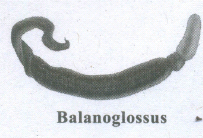
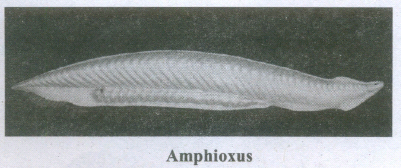
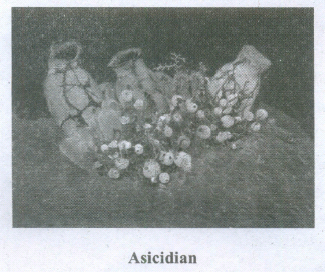
Describe the characteristic features of different Prochordates with suitable diagrams.
29.
Arthropoda
30.
Trochophore
31.
Mollusca
32.
Platyhelminthes
33.
Coelenterata
1.
(d)
Echinodermata
2.
(d)
Pond algae
3.
(a)
Head formation
4.
(c)
Bird
5.
(d)
Vermiform, unsegmented, triploblastic, filter feeders
6.
(a)
Bipinnaria
7.
(c)
Crocodile
8.
(b)
Bedbug
9.
()
Crocodiles
10.
()
roundworms
11.
()
Scrotal sacs
12.
()
Pavo cristatus
13.
()
Tadpole (frog)
14.
()
Feb. 10th
15.
()
Ostia
16.
(b)
17.
(b)
18.
(a)
19.
(a)
20.
(b)
21.
(b)
22.
Body cavity.
23.
Frogs are live in aquatic and land. So this double life is expressed as amphibians. So frogs are called as amphibians.
24.
| Tube feet | False feet |
| 1. It is present in starfish. | Present in Amoeba. |
| 2. Connected with water vascular system | Connected with locomotion. |
| 3. They are fluid filled muscular tubes. | It is an extension of the cell membrane called pseudopodia. |
25.
Taxonomy is the theoretical study of classification including its basic principles, procedures and rules.
26.
i) Forelimbs of birds are modified into wings with feathers for flight.
ii) The hind limbs are adapted for walking perching or swimming.
27.
| S.No | Flat worms | Round worms |
| 1. | It is phylum platyhelminthes. | It is phylum Aschelminthes |
| 2. | The alimentary canal is either absent or very simple |
The alimentary canal is straight tube. |
| 3. | Having both male and female reproductive organ in a single individual. |
Sexes are separate individual. |
28.
The prochordates are considered as the forerunners of vertebrates. They are classified into Hemichordata, cephalochordata and urochordata.
Hemichordata:
Hemichordata are marine organisms without backbone. They mostly remain as tubiculous forms. The body is soft, vermiform, unsegmented, bilaterally symmetrical and triploblastic.
Eg: Balanoglossus
Cephalochordata:
Cephalochordates are small fish like marine chordates with unpaired dorsal fins. The notochord extends throughout the entire length of the body.
Eg: Amphioxus
Urochordata:
The adults are mostly degenerate and are sessile forms. The body is enveloped by a tunic or test.
Eg: Ascidian
29.
Green glands
30.
Annelids, Molluscs
31.
Snail
32.
Tapeworm
33.
Hydra

9th Standard Syllabus & Materials
9th Standard
TN 9th Tamil உள்ளத்தின் சீர் - திருக்குறள் Important Questions And Answers Study Material - QB365 Set A
NEW9th Standard
TN 9th Tamil உள்ளத்தின் சீர் - மணிமேகலை Important Questions And Answers Study Material - QB365 Set A
NEW9th Standard
TN 9th Tamil உள்ளத்தின் சீர் - ஏறு தழுவுதல் Important Questions And Answers Study Material - QB365 Set A
NEW9th Standard
TN 9th Tamil உயிருக்கு வேர் - தண்ணீர் Important Questions And Answers Study Material - QB365 Set A



Tamilnadu Stateboard 9th Standard Subjects
Tamilnadu Stateboard Standards





