
 100% FREE ACCESS
9th Standard Syllabus & Materials
9th Standard
TN 9th Tamil உள்ளத்தின் சீர் -கற்கண்டு (இலக்கணம்) - தொடர் இலக்கணம், ஆகுபெயர் Important Questions And Answers Study Material - QB365 Set A
NEW9th Standard
TN 9th Tamil உள்ளத்தின் சீர் -விரிவானம் (துணைப்பாடம்) - தாய்மைக்கு வறட்சி இல்லை! Important Questions And Answers Study Material - QB365 Set A
NEW9th Standard
TN 9th Tamil உள்ளத்தின் சீர் -கவிதை பேழை (செய்யுள்) - மார்கழி பெருவிழா Important Questions And Answers Study Material - QB365 Set A
NEW9th Standard
TN 9th Tamil உயிருக்கு வேர்-இலக்கணம் - பகுபத உறுப்பிலக்கணம் Important Questions And Answers Study Material - QB365 Set A
NEW9th Standard
TN 9th Tamil அமுதென்று பேர் - இலக்கணம்-எழுத்து -அளபெடை Important Questions And Answers Study Material - QB365 Set A
NEW9th Standard
TN 9th Tamil அமுதென்று பேர்-துணைப்பாடம் - ஆறாம்திணை Important Questions And Answers Study Material - QB365 Set A

Published on: 18/01/2019
9-Std World of Microbes Complete Material
Download Tamil Nadu 9th Standard Science question papers, model tests, one-mark questions, important questions, and public exam papers in PDF format. Free study materials and answer keys for TN State Board students.
Questions + Answers key
Take MCQ Science Test1.
Severity of disease symptom depends upon
number of microbes
target organ
both a and b
none of these.
2.
The organ affected by jaundice is
liver
lungs
kidney
brain
3.
The primary organ infected during tuberculosis is
bone marrow
intestine
spleen
lungs
4.
Which of the following disease is spread by animal bite?
Pneumonia
Tuberculosis
Cholera
Rabies
5.
Diphtheria affects the
Lungs
Throat
Blood
Liver
6.
Syphilis is caused by
Treponema pallidum
Leptospira
Pasteurella
Vibrio cholerae
7.
Which of the following is transmitted through air?
Tuberculosis
Meningitis
Typhoid
Cholera
8.
Bacteria involved in curd formation is
Lactobacillus acidophilus
Nitrosomonas
Bacillus ramosus
none of the above
9.
The major constituent of vinegar is
citric acid
acetic acid
oxalic acid
hydrochloric acid
10.
Mycology is the branch of biology that deals with the study of
algae
virus
bacteria
fungi
11.
Cholera is caused by ______________ and malaria is caused by ______________.
12.
_____________ vaccine gives considerable protection against tuberculosis.
13.
______________ is a vector of viral disease dengue.
14.
H1N1 virus causes ______________.
15.
Typhoid fever is caused by _____________.
16.
The two non-symbiotic nitrogen fixing bacteria are ______________ and ______________.
17.
Baker’s yeast is ______________.
18.
First antibiotic ______________ was developed by ______________.
19.
The hyphae with branches form a complex network called ______________.
20.
______________ break down organic matter and animal waste into ammonia.
21.
Name one disease that is transmitted by houseflies. Mention their causative pathogen.
22.
Name two common mosquitoes and the diseases they transmit.
23.
Name the organism causing diarrhoeal diseases and give one precaution against it.
24.
Name the scientist who first discovered penicillin antibiotic. Can you name any other known antibiotic?
25.
Name the chronic diseases associated with respiratory system.
26.
Sanjay had an attack of chicken pox and has just recovered. The health officer of his locality says that the disease would not occur again for him. What would be the reason for this?
27.
What is triple antigen? Mention the disease which can be prevented by using the antigen.
28.
Name the vector of the malarial parasite. Mention the species of malarial parasite which cause malignant and fatal malaria.
29.
A baby is suffering from diarrhoea, while other babies in the same locality do not. Mention the possible causes that you think. What would be the possible solutions for this?
30.
Distinguish between Virion and Viroid.
31.
Some human diseases are transmitted only when the blood of a patient comes in close contact with the blood of a healthy person. In one such disease, there is a progressive decrease in WBC of the patient.
a. Name the disease and its causative agent.
b. Name the type of WBC affected during infection.
c. How does the blood of a patient come in contact with blood of healthy patient?
d. Suggest three methods that help in preventing such infection.
32.
Name the causative agent of typhoid in human. How does the pathogen gain entry into the human body? Write the diagnostic symptoms and mention the organ that is affected in severe cases.
33.
Suggest the immunization schedule for a new born baby till 12 months of age. Why it is necessary to follow the schedule?
34.
Explain the various types of viruses with examples.
35.
Describe the role of microbes in agriculture and industries.
36.
Give an account of classification of bacteria based on the shape.
37.
Define the following.
1. Pathogen
2. Bacteriophages
3. Plasmid
4. Vaccines
5. Prions
1.
(c)
both a and b
2.
(a)
liver
3.
(d)
lungs
4.
(d)
Rabies
5.
(b)
Throat
6.
(a)
Treponema pallidum
7.
(a)
Tuberculosis
8.
(a)
Lactobacillus acidophilus
9.
(b)
acetic acid
10.
(d)
fungi
11.
()
Vibrio cholerae, Plasmodium falciparum
12.
()
Bacillus calmette Guerin
13.
()
Aedes aegypti mosquito
14.
()
Swine flu
15.
()
Salmonella typhi
16.
()
Nitrosomonas, Nostoc
17.
()
Saccharomyces cerevisiae
18.
()
Penicillin, Alexander Fleming
19.
()
Mycelium
20.
()
Fungi
21.
Cholera
Causative agent: Vibrio Cholerae
22.
i) Malaria caused by female Anopheles mosquito.
ii) Dengue caused by Aedes aegypti mosquito.
23.
i) Diarrhoea is caused by Rota virus.
ii) Prevention:
a) Don't take contaminated food.
b) Don't stagnant contaminated water around the living areas.
24.
Alexander Fleming.
Name of Antibiotic: Streptomycin, Erythromycin, Bacitracin
25.
Tuberculosis, Diphtheria, whooping cough, common cold, chickenpox are the diseases associated with respiratory system.
26.
1. Yes, Chicken pox would not occur again for sanjay .
2. Because, once it occured, his body will derive immunity against that disease .
3. This kind of immunity is developed by our body, during the first infection of chicken pox pathogen .
4. The antibodies produced in the blood remain for a long period and kill the simile pathogens, whenever they enter the body.
27.
Triple antigen is a combined vaccine for protection against Diphtheria, Pertussis (whooping cough) and Tetanus.
28.
i) The vector of malarial parasite is female Anopheles mosquito.
ii) Malaria is caused by Plasmodium falciparum is malignant and fatal.
29.
Possible causes: Infected by the virus through, contaminated food and water and oral route.
Possible solution: Proper sanitation and hygiene in the babies family.
30.
| VIRION | VIROID |
| 1. They grow in living cells | They are found in Plant cells. |
| 2. They have Protein coat. | Protein free Pathogenic RNA. |
31.
In one such disease, there is a progressive decrease in WBC of the patient.
a) Name the disease and its causative agent.
Name of the disease : AIDS
Causative agent :. HIV - Human immuno deficiency virus
b) Name the type of WBC affected during infection.
Type of WBC affected by HIV : T-Iymphocytes
c) How does the blood of a patient come in contact with blood of healthy patient?
Mode of Transmission : Sexual contact, transfusion of unscreened blood, by surgical equipments from infected mother to the foetus.
d) Suggest three methods that help in preventing such infection.
Prevention :
1. Disposable syringes and needles should be used .
2. Protected and safe sexual contact.
3. Screening of blood before blood transfusion .
4. Avoid sharing shaving blades/razors.
32.
Typhoid causative agent: Salmonella typhi
Mode of entry of the pathogen:
Through food and water contaminated with faeces of infected person and through houseflies.
Diagnostic symptoms:
High fever, weakness, abdominal pain, headache, loss of appetite, rashes on chest and upper abdomen.
Organ affected in severe cases:
Human Digestive system gets affected and the blood can carry the bacteria to other organs including the lungs, liver, gall bladder and kidneys.
33.
| Age | Vaccine | Dosage |
| New born | BCG | 1st dose |
| 15 days | Oral Polio | 1st dose |
| 6th week | DPT and Polio | 1st dose |
| 10th week | DPT and Polio | 1st dose |
| 14th week | DPT and Polio | 1st dose |
| 9 - 12 months | Measles | 1st dose |
The immunization schedule indicates the age at which the vaccine should be administered to protect the children from infectious diseases.
34.
Viruses are categorized as
i) Plant virus:
Virus that infect plants,
eg: Tobacco mosaic virus, cauliflower mosaic virus, Potato virus.
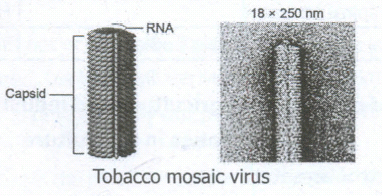
ii) Animal virus:
Virus that infect animals
eg: Adenovirus, Retrovirus(HIV), Influenza virus
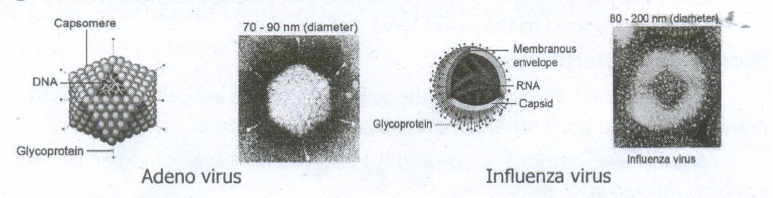
iii) Bacteriophages:
Virus that infect bacterial cells.
eg: T4 Bacteriophage
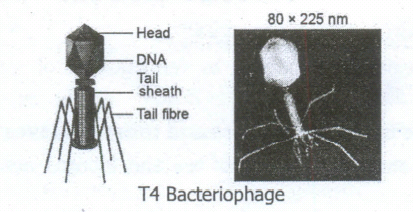
35.
Microbes in Agriculture:
Microbes play an important role in agriculture as biocontrol agents and biofertilizers. Microbes play a vital role in the cycling of elements like carbon, nitrogen, oxygen, sulphur and phosphorus.
(i) Microbes as biocontrol agents:
1. Microorganisms used for controlling harmful or pathogenic organisms and pests of plants are called as biocontrol agents (Biopesticides).
2. Bacillus thuringiensis (Bt) is a species of bacteria that produces a protein called as 'cry' protein.
3. This protein is toxic to the insect larva and kills them.
4. Spores of B thuringiensis are available in sachets, which are dissolved in water and sprayed on plants infected with insect larva.
(ii) Microbes as biofertilizers
1. Microorganisms which enrich the soil with nutrients are called as biofertilizers.
2. Bacteria, cyanobacteria and fungi are the main sources of biofertilizers.
3. Nitrogen is one of the main source of plant nutrients.
4. Atmospheric nitrogen has to be converted to available form of nitrogen.
5. This is done by microbes either in free living conditions or by having symbiotic relationship with the plants.
6. e.g. Nitrosomonas Nostoc (free living), symbiotic microbes like Rhizobium, Frankia.
Microbes in Industries:
Microorganisms play an important role in the production of wide variety of valuable products for the welfare of human beings.
i) Production of fermented beverages:
Beverages like wine are produced by fermentation of grape fruits by Saccharomyces cerevisiae.
ii) Curing of coffee beans, tea leaves and tobacco leaves:
1. Beans of coffee and cocoa, leaves of tea and tobacco are fermented by the bacteria Bacillus megaterium.
2. This gives the special aroma.
iii) Production of curd:
Lactobacillus sp. converts milk to curd.
iv) Production of organic acids, enzymes and vitamins:
1. Oxalic acid, acetic acid and citric acid are produced by fungus Aspergillus niger.
2. Enzymes like lipases, invertase, proteases, and glucose oxidase are derived from microbes. Yeasts are rich source of vitamin-B complex.
36.
Based on the shapes, bacteria are grouped as
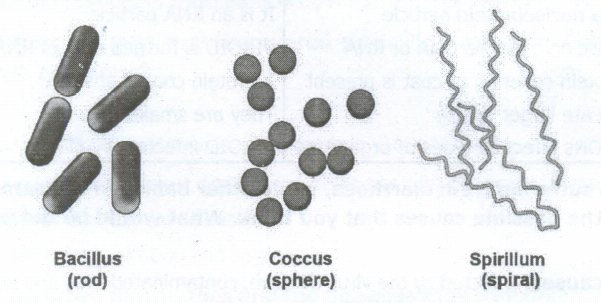
1. Spherical shaped bacteria called as cocci or coccus for a single cell.
2. Rod shaped bacteria called as bacilli or bacillus for a single cell.
3. Spiral shaped bacteria called as spirilla or spirillum for single cell.
| Different shapes of Bacteria | ||
| Arrangement of Cocci | Examples | |
| Diplococci | cocci are arranged in pairs | Streptococcus pneumoniae |
| Streptococci | Streptococci cocci are arranged in chains | Streptococcus pyogenes |
| Tetracocci | cocci are arranged in packets of four cells | Aerococcus sp |
| Staphylococci | cocci are arranged in grape-like clusters | Staphylococcus aureus |
| Arrangement of Bacilli | Examples | |
| Diplobacilli | diplobacilli appear in pairs | Klebsiella sp |
| Streptobacilli | bacilli are arranged in chains | Streptobacillus sp |
| Coccobacilli | short and stumpy and appear ovoid | Haemophilus sp |
| Arrangement of Spirilla | Examples | |
| Vibrio | comma-shaped bacteria | Vibrio cholerae |
| Spirilla | rigid spiral structure | Helicobacter pylori |
| Spirochetes | helical shape and flexible bodies | Treponema pallidum |
37.
1. Pathogen
In Greek 'pathos' means suffering 'genes' means "producer'. A pathogen is defined as anything that can produce disease.
2. Bacteriophages
Virus that infect bacterial cells is called Bacteriophages.
3. Vaccines
Vaccines are preparation of living or killed microorganisms or their products used for prevention or treatment of diseases.
4. Prions
Prions means proteinaceous infective particles. They are viral particles which contains only proteins. They do not contain nucleic acids.

9th Standard Syllabus & Materials
9th Standard
TN 9th Tamil உள்ளத்தின் சீர் - திருக்குறள் Important Questions And Answers Study Material - QB365 Set A
NEW9th Standard
TN 9th Tamil உள்ளத்தின் சீர் - மணிமேகலை Important Questions And Answers Study Material - QB365 Set A
NEW9th Standard
TN 9th Tamil உள்ளத்தின் சீர் - ஏறு தழுவுதல் Important Questions And Answers Study Material - QB365 Set A
NEW9th Standard
TN 9th Tamil உயிருக்கு வேர் - தண்ணீர் Important Questions And Answers Study Material - QB365 Set A



Tamilnadu Stateboard 9th Standard Subjects
Tamilnadu Stateboard Standards





