
 100% FREE ACCESS
9th Standard Syllabus & Materials
9th Standard
TN 9th Tamil உள்ளத்தின் சீர் -கற்கண்டு (இலக்கணம்) - தொடர் இலக்கணம், ஆகுபெயர் Important Questions And Answers Study Material - QB365 Set A
NEW9th Standard
TN 9th Tamil உள்ளத்தின் சீர் -விரிவானம் (துணைப்பாடம்) - தாய்மைக்கு வறட்சி இல்லை! Important Questions And Answers Study Material - QB365 Set A
NEW9th Standard
TN 9th Tamil உள்ளத்தின் சீர் -கவிதை பேழை (செய்யுள்) - மார்கழி பெருவிழா Important Questions And Answers Study Material - QB365 Set A
NEW9th Standard
TN 9th Tamil உயிருக்கு வேர்-இலக்கணம் - பகுபத உறுப்பிலக்கணம் Important Questions And Answers Study Material - QB365 Set A
NEW9th Standard
TN 9th Tamil அமுதென்று பேர் - இலக்கணம்-எழுத்து -அளபெடை Important Questions And Answers Study Material - QB365 Set A
NEW9th Standard
TN 9th Tamil அமுதென்று பேர்-துணைப்பாடம் - ஆறாம்திணை Important Questions And Answers Study Material - QB365 Set A

Published on: 12/02/2020
9th Standard Social Science All Chapter Creative Questions-II-2020
Download Tamil Nadu 9th Standard Social Science question papers, model tests, one-mark questions, important questions, and public exam papers in PDF format. Free study materials and answer keys for TN State Board students.
Questions + Answers key
Take MCQ Social Science Test
1.
What are the preventive measures for accidents?
2.
Write a note on Farmer Producer Organizations (FPOs) in Tamil Nadu.
3.
Why is Sustainability important?
4.
Account for urbanisation in England.
5.
Name the Urban local governments.
6.
What are the factors responsible for the poorer sections and better-off sections to migrate?
7.
Unitary and federal forms of government.
8.
Why were coins of low value printed in large quantities?
9.
What is Biosphere?
10.
What do you mean by the ocean salinity?
11.
Write about the military expeditions of Malik Kafur.
12.
Snowline of Alps is 2700 metre whereas the snowline of Greenland is just 600 mts. Find out the reason.
13.
What is Hydrosphere?
14.
What do you know about Muvendhar?
15.
Describe the burials in the Sangam Age
16.
The Egyptians excelled in art and architecture Illustrate.
17.
Pick out the odd man
Australia
USA
Gulf countries
Uganda
18.
Panchayats are constituted wherever the population of the village is
2000
200
500
1000
19.
The productivity of paddy during the year 2014-2015
3,039 kg
4,429 kg
2,775 kg
3,519 kg
20.
The Secondary sector of the economy produces ____________from raw materials.
Semi-finished goods
Finished goods
Economic goods
raw materials
21.
The author of Don Quixote, Cervantes belonged to______
Persia
Italy
Spain
Portugal
22.
One rupee and two rupee notes were first printed in India in the year_______
1917
1927
23.
The theory of sacraments increased the power of the___________
Commoners
Emperor
Nobles
Clergy
24.
The establishment of __________ empire changed the administrative and institutional structures of South India.
Bahmani
Vijayanagar
Mughal
Nayak
25.
The other name for Greeks was_______
Hellenists
Hellenes
Phoenicians
Spartans
26.
Which country has single party system?
USA
UK
Cuba
France
27.
Former Soviet Union is an example for _________.
aristocracy
theocracy
oligarchy
republic
28.
Inscription that mentions the Cheras
Pugalur
Girnar
Pulimankombai
Madurai
29.
Mention the rules to ensure Road Safety for children.
30.
What are Farmer Producer Organisations (FPOs)?
31.
Explain the term sustainable development. Why should we balance the economic, social and environmental factors of sustainability in equal harmony?
32.
What were the effects of Industrial Revolution of England on India?
33.
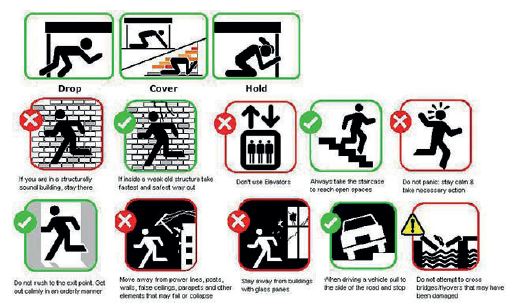
1. Why do you think you should cover your head with one hand and hold the table with the other during an earthquake?
2. During an earthquake, why should we exit through staircase and not use elevators?
3. Suppose you are in a room of a strong building without any furniture when an earthquake occurs. What would you do to protect yourself from the earthquake?
4. Reason out why should you stay away from buildings with glass panes during an earthquake.
34.
Write in details about the salient features of the 73rd & 74th Constitutional Amendment Act (1992).
35.
State the aims of migration policies.
36.
Write about the presidential form of government and what is the difference between presidential and parliamentary forms of government.
37.
How is currency printed in India?
38.
Write about Feudalism.
39.
Examine the outcome of the geographical discoveries.
40.
Give an account of Mobilisation and Democratic Participation.
41.
Discuss the Neolithic culture in Tamil Nadu
42.
What are the challenges to Indian democracy? explain
43.
Consider the following statements.
Assertions (A): Rights and duties are the two sides of the same coin.
Reason (R): We have a right to freedom of religions. We have to promote harmony and the spirit of the people of other religions.
a) Both A and R are correct and R explains A
b) Both A and R are correct but R does not explain A
c) A is correct but R is false
d) A is false but R is correct
both A and R are correct and R explains A
both A and R are correct but R does not explain A
A is correct but R is false
A is false but R is correct
44.
Mention about the Unitary feature of Indian constitution.
45.
What do you do if you are indoors during an earthquake?
1.
Preventive measures for accidents are,
i) Education and awareness about road safety.
ii) Strict enforcement of law
iii) Engineering: a) Vehicle design b) Road infrastructure.
2.
(i) Small and marginal farmers in Tamil Nadu will be benefited from FPOs.
(ii) Each of the producers' groups have been given an investment grant of Rs. 5 lakh to purchase farm equipment.
(iii) Apart from using the equipment within the group, these can also be rented out to other farmers.
(iv) The government also has a contract farming policy.
3.
(i) The excessive usage of natural and manmade resources deplete its availability for the future generation.
(ii) We need to look after our planet, our resources and our people to ensure that we can hand over our planet to our children to live in true sustainability.
(iii) Hence conservation and awareness are the two important terms that can bring sustainability to our living.
(iv) When we use the word sustainability to mean maintain, it means to maintain it forever.
(v) This is because our actions have a lasting effect on the environment and we should protect it for our future generations.
4.
(i) With the advent of the Industrial Revolution, England became the workshop of the world.
(ii) There was however a general decline in agriculture.
(iii) This resulted in the flow of population from village to industrial towns.
(iv) Population growth, migration and urbanization were the social changes taking place.
(v) In pre-industrial society over 80% of people lived in rural areas.
(vi) As the migration from the country side began to intensify small towns became large cities.
5.
(i) Urban local governments are Corporation, Municipality and Town Panchayat
(ii) The area where more than 10,000 people are living is called a Town Panchayat
(iii) Municipalities were constituted in India for the first time in Chennai in 1688
(iv) Municipal Corporation are established in big cities.
6.
The poorer sections of the people migrate for survival but migrants from better off sections migrate to improve their living standards.
7.
| S.No | Unitary form of government | Federal form of government |
|---|---|---|
| 1 | Only one level of government or subunits | Two levels of government |
| 3 | Mostly single citizenship | Dual citizenship |
| 4 | Subunits cannot operate independently | Federal units are answerable to central government |
| 5 | No division of power. | Division of power. |
| 6 | Centralisation of power. | Decentralisation of power. |
8.
(i) As days went by, issues arose while trade prospered, there were insufficient reserves of gold and silver.
(ii) Mines also had a limited reserve of these metals.
(iii) An alternative was found and coins were made using metals with lesser value.
(iv) These were used to buy and sell goods of lesser value.
9.
(i) Biosphere, the fourth sphere of the Earth, is a life supporting layer that exists on the earth's surface.
(ii) This layer on earth encompasses the Lithosphere, Hydrosphere and Atmosphere.
(iii) It includes flora and fauna that thrive on or near the earth's surface.
(iv) Biosphere harbours all ecosystems on the earth and sustains life forms including mankind
10.
(i) The degree of concentration of salts in the sea water is called salinity.
(ii) It is usually expressed in terms of parts per thousand (ppt or ‰).
(iii) Salinity varies both horizontally and vertically.
(iv) The influence of temperature on ocean salinity depends upon the heating up of the surface water, which varies from tropics to polar regions
11.
The first ten years of the 1300 AD(CE) Alauddin Khalji's slave and commander Malik Kafur was sent on military expedition to south India.
12.
On tropical mountains, the snowline may be as high as 500 mts, but when traced poleward it descends to 2700 mts in the European Alps to 600 meters in Greenland and just to sea level near the poles.
13.
The Hydrosphere is the watery part of the Earth's surface including oceans, rivers, lakes and water vapour.
14.
Among the political powers of the Sangam Age, the Cheras, the Cholas and the Pandyas occupied pre-eminent positions. They were known as Muvendhar (the three kings). The muvendhar controlled the major towns and ports of the Sangam period.
15.
(i) The Sangam literature mentions the various burial practices of the people.
(ii) The Megalithic burials are classified as dolmens, cists, menhirs, rock-cut caves, urn burials and sarcophagus.
(iii) The burial types of Kodakkal (umbrella stone), Toppikkal (hatstone) and Paththikal (hood stone) are found in Kerala.
16.
1. The Numerous sculpture, paintings and carvings attest to the artistic skills of Egyptians.
2. Their writing is also a form of art.
3. Giza pyramids are considered to be one of the wonders of the world.
4. These monuments display the engineering, architectural and human resource management skills of the Egyptians.
17.
(d)
Uganda
18.
(c)
500
19.
(b)
4,429 kg
20.
(b)
Finished goods
21.
(c)
Spain
22.
(a)
1917
23.
(d)
Clergy
24.
(b)
Vijayanagar
25.
(b)
Hellenes
26.
(c)
Cuba
27.
(c)
oligarchy
28.
(a)
Pugalur
29.
Rules to Ensure Road Safety for chlldren
It is impportant for children to know about road safety rules and regulatioins. Here are a few
basic road safety rules for children.
i) Know Your Signals
ii) Stop, Look and Cross
iii) Pay Attention - Listen
iv) Don't Run on Roads
v) Always Use Sidewalks
vi) Never Stick Hands outside the Vehicle
vii) Never cross Road at Bends
viii) Don't Rush.
30.
(i) In April 2013, the Government of India issued a National Policy and Process Guidelines on formation of FPOs.
(ii) The year 2014 was observed as the "Year of Farmer Producer Organisations" by the Government of India.
(iii) Its main idea of promoting and strengthening member based institutions of farmers.
(iv) It aimed at engaging the farmer companies to procure agricultural products and sell them.
(v) Supply of inputs such as seed, fertilizer and machinery, market linkages, training & networking and financial and technical advice are also among the major activities of FPO.
31.
(i) "Sustainable development is development that meets the needs of the present without compromising the ability of future generation to meet their own needs".
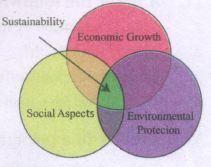
(ii) For sustainable development to be achieved, it is crucial to harmonize three core elements: economic growth, social aspects and environmental protection.
(iii) These elements are interconnected and are crucial for the well-being of individuals and societies
(iv) To achieve true sustainability, we need to balance the economic, social and environmental factors of sustainability in equal harmony.
Social Sustainability:
(i) The ability of a social system such as a country, family or organization to function at a defined level of social well being and harmony is called social sustainability.
(ii) The balancing capacity of a government in maintaining peaceful existence towards other countries and at the same time providing the requirements of its citizens without affecting the environment creates social sustainability.
Economic Sustainability:
(i) The economic sustainability is successfully implemented through strong Public Distribution System.
(ii) Economic sustainability ensures that our economic growth maintains a healthy balance with our ecosystem.
Environment Sustainability:
(i) It is the ability of the environment to support a defined level of environmental quality and natural resource extraction rates forever to mankind.
(ii) Unnecessary disturbances to the environment should be avoided whenever.
32.
1. In the first quarter of eighteenth century, in the context of Indian cotton manufactures flooding in England, a law was enacted prohibiting the use of Indian calicoes and silk.
2. The invention of flying shuttle by John Kay and the inventions of Hargreaves, Arkwright and Crompton within thirty years accelerated the process of spinning and weaving.
3. When the British established their foothold in Bengal as a territorial power the loot from Bengal and the Carnatic provided the required capital and helped accomplish industrial revolution in England.
4. The weavers of Bengal suffered at the hands of the Company's officials and their agents insisted on payment of a transit duty for the commodities they carried from one place to another and later for cultivation of commercial crops required for British industries in England
5. The English deliberately destroyed Indian industry by dumping Indian markets with their machine-made cheap cotton piece goods.
6. Because of loss of market for hand-woven cotton goods. India lost her old industrial position and became an exporter of raw material.
7. By the first quarter of the nineteenth century the export of Dacca muslin to England stopped.
8. Even the export of raw cotton from India had steadily dwindled owing to the competition from U.S.A.
9. Weavers who were eking out an independent livelihood were thrown out of employment because of flooding of British factory-made cheap cotton fabrics in Indian markets.
10. To escape starvation deaths, peasants and artisans had to move out of the country opting to work on plantations in British Empire Colonies as indentured labourers under wretched service and living conditions.
33.
1. It is mainly to protect the head and neck from gently damaged.
2. Because the earthquake likely to knock out electrical power, the elevator machinery will not work.
3. If doors are opened, stand under a door way or in a comer inside the room. Cover your face and head with your arms.
4. At jolting of the earthquake bursting and breaking of wall, glass panes may happen. So it is better to be away from it.
34.
Salient features of the 73rd and 74th Constitutional Amendment Acts (1992)
(i) Panchayats and Municipalities will be "Institutions of Self Government".
(ii) Basic Units of Democratic System - Grama Sabhas (Villages) and Ward Committees (Municipalities) comprising all the adult members registered.
(iii) Three tier system of panchayats at village, intermediate block/taluk/mandal and district levels. Smaller states with population below 2 million only two tiers.
(iv) Seats at all levels filled by direct election.
(v) Seats reserved for SCs and STs at all levels in proportion to their population.
(vi) One third of the total number of seats-reserved for women. One third of the seats reserved for SCs and STs also reserved for women. One third of offices of Chairpersons at all levels reserved for women.
(vii) Uniform five year term and election to constitute new bodies to be completed before the expiry of the term. In the event of dissolution, elections compulsorily within six months.
35.
To reduce the volume of migration:
1. As a large part of migration is a reflection of poverty and insecurity faced by large sections of the rural people, the focus of intervention has to be in rural areas.
2. Rural development policies to reduce poverty and insecurity would be essential to reduce migration.
To redirect the migrant streams:
1. Redirection of migrant stream occurring from cities is a desirable policy option.
2. This policy can help in reducing spatial inequalities by suitable strategies.
3. This can develop a more dispersed pattern of urbanisation.
36.
Presidential form of government
(i) The American President is both the head of the state and the head of government. As the head of state, he occupies a ceremonial position.
(ii) The president is elected by an electoral college for a fixed tenure of four years.
(iii) He governs with the help of a cabinet or a smaller body called' Kitchen Cabinet' . It is only an advisory body.
(iv) The President and his secretaries are not responsible to the Congress for their acts.
(v) The legislative, executive and judicial powers of the government are separated.
(vi) It is also known as non-responsible or non-parliamentary or fixed executive system of government.
Difference between Presidential and Parliamentary form of government
| No. | Presidential Form of Government | Parliamentary form of Government |
|---|---|---|
| 1 | President is directly elected by the people. | Prime Minister is the leader of majority party. |
| 2 | President is supreme | Central Legislature is supreme |
| 3 | Separation of Powers | Absence of Separation Powers Centralisation |
| 4 | Independent branches | Independent branches with Overlapping functions |
| 5 | President-head of the Government | Prime Minister-head of the Government |
| 6 | Separation of Powers | Centralisation |
| 7 | Independent branches | Independent branches with Overlapping functions |
| 8 | Individual Leadership | Collective leadership |
| 9 | President is not accountable to Congress | Collective and Individual Responsibility. |
37.
(i) In 1925, the British government established a government press at Nasik in Maharashtra.
(ii) Currencies were printed three years later.
(iii) In 1974, a press was started in Dewas, Madhya Pradesh.
(iv) In the 1990s two more presses were started in Mysuru, Karnataka and Salboni in West Bengal to print banknotes.
(v) The Reserve Bank of India has the authority to decide the value of currency to be printed and how the amount should reach its destination safely.
(vi) Though the RBI has the power to print up to ten-thousand-rupee notes, at present a maximum of up to rupees two thousand is printed.
38.
(i) Feudalism was born out of chaos and disorder in the society.
(ii) Under Feudalism the king was the head of the feudal regime.
(iii) Immediately after him were the great nobles, known as dukes, counts, earls.
(iv) The relationship was one of a vassal.
(v) The nobles in turn had vassals of their own, dividing and distributing their fief to lesser nobles called viscounts or barons.
(vi) Last in this order were the knights, whose fiefs cannot be divided.
(vii) At the bottom were the villeins or serfs.
(viii) In the feudal system which centred around vassalage, there was no idea of equality or freedom.
(ix) There were only rights and obligations.
(x) The Bishops, Abbots and Cardinals and the Church came under this socio-political structure.
(xi) The nobility and the clergy did not do any physical work only peasants and artisans were taxed.
(xii) The new class of traders formed guilds, became wealthy enough to defy even the nobles and the kings.
(xiii) This development led to the end of Feudalism.
39.
1. As a result of the discovery of new lands and new sea routes, the economic centre of Europe shifted from the Italian city states to spain and Portugal.
2. They brutally killed the natives in their conquest and the remaining were employed under harsh conditions in gold and silver mines, and in plantations.
3. Many natives also died because of epidemic diseases brought by the colonizers.
4. The native people faced the dangers of deadly diseases.
5. The natives had to encounter from these deadly diseases.
6. The introduction of sugarcane led to the establishment of sugarcane plantations in the Caribbean islands and South America.
7. The mass extinction of the native population led to the import of slaves from Africa. Africa became the centres of slave trade.
8. Geographical discoveries led to commercial revolution.
9. The seventeenth century witnessed the emergence of various East India companies.
10. They are English East India Company the Dutch East India Company and the French East India Company.
11. The Portuguese enforced its monopoly on the spice trade of East Indies.
12. The Spaniards established monopoly over the mining and transportation of gold and silver in its colonies in the New World.
13. The English East India Company had monopoly trade in India and amassed huge wealth.
14. Thus, the chief feature of mercantilism was exploitation of the resources of the colonies for the benefit of the colonisers.
15. It represented an important stage in the development of modern capitalism.
40.
Mobilising people towards socially productive activities that lead to the overall betterment of people's lives is essential. Sometimes earthquakes, tsunamis, floods and other such natural disasters on a massive scale occur and people's immediate mobilisation for evacuation and emergency relief becomes most essential.
Democratic Participation: Democracy can succeed only when smaller local groups and, in fact, every citizen can take action that supports the tax and revenue collection systems, observance of national norms in environmental protection, cleanliness, health and hygiene, sanitary drives and immunisation programmes like pulse polio. However, we must keep in mind that there is no better form of government than Democratic government. To create a better society and nation, the people of India along with the union and state governments should come together to fight against the miseries of human life.
41.
(i) The culture that domesticated animals and cultivated crops is called Neolithic.
(ii) It is known as the New Stone Age. The Neolithic people used polished stone axes called celts.
(iii) Cattle rearing was their main occupation. They lived in small villages with houses made of thatched roof and walls plastered with clay.
(iv) Evidence of Neolithic village is found at Payyampalli in Vellore district and a few sites in the Dharmapuri region.
(v) Payyampalli is a village in Vellore district of Tamil Nadu. The earliest evidence for the domestication of animals and cultivation of plants is found at this site, which was excavated by the Archaeological Survey of India.
(vi) Evidence for pottery making and cultivation of horse gram and green gram has been found in this village.
(vii) These Neolithic sites were part of the Southern Neolithic Culture of India. They are mainly concentrated in the Andhra Pradesh and Karnataka regions.
(viii) The Neolithic people used stone axes fitted on a wooden handle.
(ix) These polished stone axes are worshipped in many village temples of Tamil Nadu even today.
42.
Democracy is the dominant form of government in the contemporary world. It has not faced a serious challenge or a rival so far. In the last hundred years, there has been an expansion of democracy all over the world. The various aspects of democracy and its challenges are:
1. Illiteracy
2. Poverty
3.. Gender discrimination
4. Regionalism
5. Casteism, communalism and religious fundamentalism
6. Corruption
7. Criminalisation of politics.
8. Political violence
43.
a) Both A and R are correct and R explains A
44.
Unitary features of Indian constitution are
(1) Strong Centre
(2) Central Government's control over state territory
(3) Single Constitution.
(4) Flexibility of the Constitution
(5) Unequal representation of states
(6) Emergency Provisions
(7) Single citizenship
(8) Single Integrated Judiciary
(9) All India Services
(10) Appointment of Governor by the central government.
45.
During earthquake if you are indoor:
(i) DROP to the ground; take COVER by getting under a sturdy table or other piece of furniture and HOLD ON until the shaking stops. If there is no table or desk near you, cover your face and head with your arms and crouch in an inside corner of the building.
(ii) Protect yourself by staying under the lintel of an inner door, in the corner of a room, under a table or even under a bed.
(iii) Stay away from glass windows, outside doors and walls, and anything that could fall, (such as lighting fixtures or furniture).
(iv) Stay inside until the shaking stops and afterwards it is safe to go outside.

9th Standard Syllabus & Materials
9th Standard
TN 9th Tamil உள்ளத்தின் சீர் - திருக்குறள் Important Questions And Answers Study Material - QB365 Set A
NEW9th Standard
TN 9th Tamil உள்ளத்தின் சீர் - மணிமேகலை Important Questions And Answers Study Material - QB365 Set A
NEW9th Standard
TN 9th Tamil உள்ளத்தின் சீர் - ஏறு தழுவுதல் Important Questions And Answers Study Material - QB365 Set A
NEW9th Standard
TN 9th Tamil உயிருக்கு வேர் - தண்ணீர் Important Questions And Answers Study Material - QB365 Set A



Tamilnadu Stateboard 9th Standard Subjects
Tamilnadu Stateboard Standards




