
 100% FREE ACCESS
9th Standard Syllabus & Materials
9th Standard
TN 9th Tamil உள்ளத்தின் சீர் -கற்கண்டு (இலக்கணம்) - தொடர் இலக்கணம், ஆகுபெயர் Important Questions And Answers Study Material - QB365 Set A
NEW9th Standard
TN 9th Tamil உள்ளத்தின் சீர் -விரிவானம் (துணைப்பாடம்) - தாய்மைக்கு வறட்சி இல்லை! Important Questions And Answers Study Material - QB365 Set A
NEW9th Standard
TN 9th Tamil உள்ளத்தின் சீர் -கவிதை பேழை (செய்யுள்) - மார்கழி பெருவிழா Important Questions And Answers Study Material - QB365 Set A
NEW9th Standard
TN 9th Tamil உயிருக்கு வேர்-இலக்கணம் - பகுபத உறுப்பிலக்கணம் Important Questions And Answers Study Material - QB365 Set A
NEW9th Standard
TN 9th Tamil அமுதென்று பேர் - இலக்கணம்-எழுத்து -அளபெடை Important Questions And Answers Study Material - QB365 Set A
NEW9th Standard
TN 9th Tamil அமுதென்று பேர்-துணைப்பாடம் - ஆறாம்திணை Important Questions And Answers Study Material - QB365 Set A

Published on: 12/02/2020
9th Standard Social Science All Chapter Creative Questions-II- 2019-2020
Download Tamil Nadu 9th Standard Social Science question papers, model tests, one-mark questions, important questions, and public exam papers in PDF format. Free study materials and answer keys for TN State Board students.
Questions + Answers key
Take MCQ Social Science Test
1.
Pick out the odd man
Australia
USA
Gulf countries
Uganda
2.
James Munroe was the Governor of _________ Presidency.
Calcutta
Bombay
Madras
None of the above
3.
Manila (groundnut) is grown in ______________ percent if the cultivated land.
6
3
10
12
4.
The foundation for map making in India was laid during the period _____________
Aryan
Vedic
Gupta
Chola
5.
Van Mahotsav week celebrated during
15th July to 7th July
15th June to 7th June
1st January to 7th January
1st December to 7th December
6.
Java and Sumatra were occupied by the______
Spanish
British
French
Dutch
7.
White man's burden was to_______
educate
civilise
Conquer
invent
8.
Flying shuttle helped
To remove seed from cotton
To spin hundreds of threads simultaneously
To increase the speed of weaving
To use water power in the place of man power
9.
Which of the following statements belongs to responding to earthquake?
Avoid, any place where police or security forces action is in progress.
Know the height of your street above sea level and the distance of your street from the coast.
Stay away from glass, windows, outside doors and walls and anything that could fall.
Before opening a door, feel it with the back of your hand.
10.
Which of the following is observed to commemorate the Haymarket Massacre?
Independence Day
Farmers Day
Labour Day
Martyrs Day
11.
Thomas Paine’s famous pamphlet was ______.
Common Sense
Rights of Man
Bill of Rights
Abolition of Slavery
12.
_____________ act as the inspector of Village Panchayat.
Commissioner
District Collector
Councillors
Mayor
13.
According to the 2011 census, the total population of India was ___________
121 crore
221 crore
102 crore
100 crore
14.
The North-East monsoon period in Tamilnadu
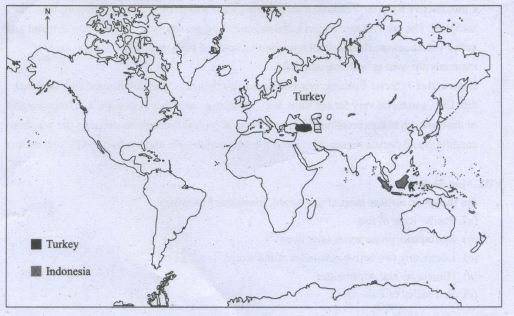
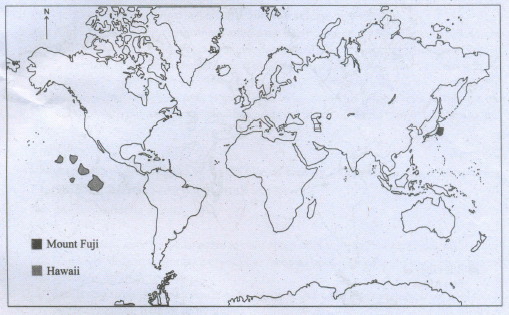
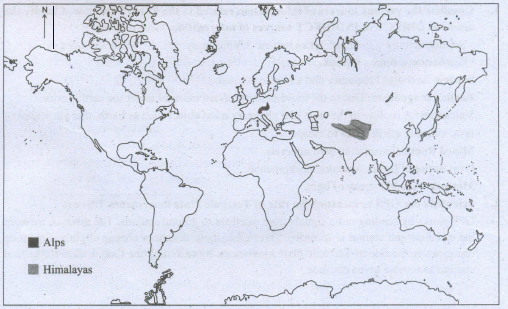
August – October
September – November
October – December
November – January
15.
The statistical study of human population is ___________.
Demography
Morphology
Etymology
Seismography
16.
(i) Under the Magadha king the mahamatriyas functioned as secretaries to the ministers.
(ii) Accounts of Megasthanes titled Indica is a useful record about Mauryan polity and society.
(iii) Nanda's attempt to build an imperial structure was cut short by Ashoka who founded the Mauryan kingdom.
(iv) According to tradition, towards the end of his life Chandragupta became an ardent follower of Buddhism.
(i) is correct
(ii) is correct
(i) and (ii) are correct
(iii) and (iv) are correct
17.
Odes was contributed by ___________
Pliny the Elder
Livy
Horace
Tacitus
18.
In the south, a Sultanate was established in_________
Tuticorin
Nagapattinam
Madurai
Palani
19.
Decline of_________ helped to move towards urbanisation.
Trade
Feudalism
Freedom
Population
20.
In 1999 mobile banks were used in_________
USA
Europe
21.
The life of people became meaningful through_________
Fundamental Rights
Civil Rights
Political Rights
Cultural Rights
22.
Shotoku Taishi was the leader of___________family
Soga
Fujiwaras
Daimyos
Shogunate
23.
Seljuq Turks came from_________
Central America
Central Asia
Central Australia
Central Europe
24.
Consider the following statements.
1. There are four major processes involved in the water cycle.
2. The ground water gets collected below the earth's surface
3. The Northern hemisphere holds 81% of land
4. The ocean floor is flat
1 and 2 are correct
2 and 3 are correct
2 is correct
2, 3 and 4 are correct
25.
Which of the following statements are true?
i) The state Human Rights commission was established in 1993.
ii) It has the power of a civil court.
iii) It's power extend beyond the state.
iv) It can also recommend compensation to victims.
i and ii are true
i and iii are true
i, ii and iii are true
i, ii and iv are true
26.
The coldest biome on Earth is
Tundra
Taiga
Desert
Oceans
27.
Which sailor was the first to cross the Equator?
Henry, the Navigator
Lopo Gonzalves
Lopo Gonzalves
Christopher Columbus
28.
The founder of Han dynasty was_______
Wu Ti
Hung Chao
Liu Pang
Mangu Khan
29.
The redness of the red clay soil is due to the presence of_______________
iron oxide
carbon
copper
magnesium
30.
Tropical cyclones in India is known as _________
baguios
willy willy
hurricanes
Cyclones
31.
Democracy as a government of the people, by the people and for the people defined by ____________.
Mahatma Gandhi
Jawaharlal Nehru
Abraham Lincoln
Herbert Baker
32.
The discovery of _______ marked the beginning of the second phase in the history of civilisations.
Iron
Gold
Copper
Bronze
33.
The sixth deadliest natural disaster due to Tsunami caused in the year_____________.
1996
1998
2000
2004
34.
These waves are the fastest of all the Earthquake waves.
P - waves
S - waves
L - waves
None of the above
35.
(i) Barter was the primary mode of exchange.
(ii) Spices including pepper and precious stones were exported.
(iii) The Sangam Age saw the first urbanization in Tamilagam.
(iv) People in the Sangam Age had no faith in religion.
(i) is correct
(i) is correct (ii) incorrect
(i) is correct (iv) incorrect
(i), (ii), (iii) correct (iv) incorrect
36.
______ are stone artefacts of small size
Microliths
Bifaces
Acheulian
core
37.
_____ did not give much attention to the life after death.
The Sumerians
The Babylonians
The Egyptians
The Chinese
38.
Which one of the following is not in Primary Sector
Agriculture
Manufacturing
Mining
Fishery
39.
Sex-ratio means
the ratio between adult-male and adult female in a population
the ratio between female and male in a population
the relationship between male of female
the number of females per thousand males
40.
Abraham Lincoln was the President of the ________.
USA
UK
USSR
India
41.
_____ clouds are called 'Sheep clouds'
Alto-cumulus
Alto-Stratus
Nimbo-stratus
Cirro-stratus
42.
The name of the script used in the Sangam Age
English
Devanagari
Tamil-Brahmi
Grantha
43.
Deposits of fine silt blown by wind is called as
Loess
Barchans
Hamada
Ripples
44.
The earliest signs to denote words through pictures
Logographic
Pictographic
Ideographic
Stratigraphic
45.
The point of origin of an Earthquake is called the ________.
epicentre
focus
seismic wave
magnitude
46.
______ inscriptions datable to third century BCE refer to the Cheras, Cholas and Pandyas in ancient Tamilagam.
Pulakesin
Ashoka
Chandragupta
Dhanananda
47.
Democracy and Cemmunlsom
48.
What do the extent and nature of the migrant streams depend?
49.
What are the functions of Panchayat Union?
50.
Write a note on Krishi Karman award to TamiINadu
51.
What is a travelogue?
52.
Mention the problems of Urbanisation.
53.
How did the permanent settlement (1793) affect the cultivators?
54.
Write about the Great Railroad strike of 1877.
55.
Mention the importance of the victory of the Americans at Yorktown.
56.
Highlight any two important results of Industrial Revolution.
57.
Distinguish between Colonialism and Imperialism.
58.
Name the different methods to represent the Earth.
59.
List out the 12 corporations in Tamil Nadu.
60.
Tabulate the productivity of paddy from 1965 to 2015.
61.
What happened under Oligarchy in Greece?
62.
Why did the first Persian attack on Greece fail?
63.
What is Classical World?
64.
Explain the terms Valankai and Idankai?
65.
Mention the several power centres which came up after the fall of the Chola empire.
66.
Fall of Constantinople
Who moved towards the Italian City states?
67.
Write a note on a) Lopo Gonçalves b) Bartholomew Diaz
68.
What is considered a hotspot?
69.
Why do we say that money, a store of value?
70.
What are Extended rights?
71.
What is Hypsometric curve?
72.
Write about the Right against exploitation.
73.
What is ancient money?
74.
What is an ecosystem?
75.
What do you mean by the ocean salinity?
76.
Write a brief note on sea waves.
77.
The Great Wall of China.
78.
Pacific Ring of Fire - Most seismically and volcanically active. Why?
79.
Mention the land features carved by a river in its upper course
80.
For comparing the development of various countries, total income is not an useful measure. How?
81.
Cuddalore and Nagapattinam are always affected by cyclones. Why?
82.
Who are called employees?
83.
Write a short note on "State Parties".
84.
What do you mean by "Republic"?
85.
What kind of life Mahavira and Buddha live?
86.
What are fossils?
87.
What do you know about the Hero stones of the Post-Sangam Age?
88.
What was the main factor for the development of early civilisations?
89.
What is Egyptian civilisation known for?
90.
What do you know of Ajathasatru?
91.
The Tamil rulers were independent of Mauryan authority. What explanation would you offer.
92.
Define :
a) Moraine
b) Drumlin
c) Esker
93.
What do you mean by a hanging valley?
94.
What are ox-bow lakes?
95.
Hammurabi Code is an important legal document. Explain.
96.
Domestication of animals is a milestone in Human history. Explain.
97.
Locate the following on the world outline map.
1. Prairies
2. Downs
3. Tundra Biomes
4. Equatorial Biomes
98.
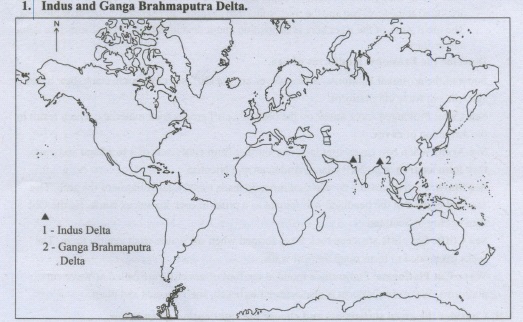
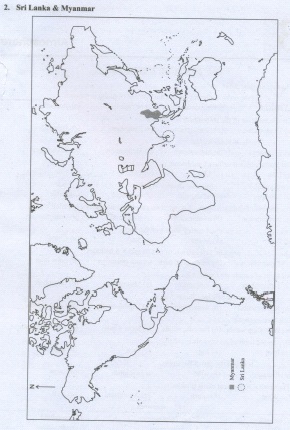
Indus and Ganga Brahmaputra Delta
99.
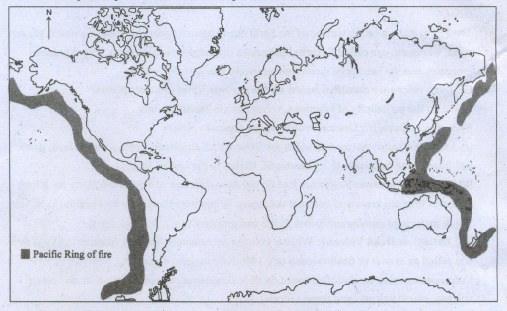
On the given outline map of the world, mark the following:
a. Pacific Ring of fire
b. Earthquake prone zones (any two)
c. Locate any two active volcanoes of the world.
d. Himalayas and Alps ranges
e. Rift valley of East Africa.
100.
Mention about the Unitary feature of Indian constitution.
101.
How is Earthquake caused?
102.
Write down the differences between unitary form of government and federal form of government.
103.
What are the three sectors of an economy?
104.
Expand the following:
1. NNP
2. PCI
105.
What are the indicators of development?
106.
Distinguish between two-party system and the multi-party system.
107.
Give Abraham Lincoln’s definition for democracy.
108.
Write about the hidden treasure of Indus civilization.
109.
Mention the rules to ensure Road Safety for children.
110.
How different factors contribute to road accidents?
111.
Write note the Parliamentary form of Government.
112.
Write a short note on "Red Tea".
113.
Mention the Role of Ripon and Munroe in Madras Presidency.
114.
What are Farmer Producer Organisations (FPOs)?
115.
Write a note on Grid reference.
116.
What is 'Migration'? and explain its types.
117.
Explain the term 'Indentured Labour'.
118.
The Industrial Revolution began in England first. Why?
119.
How did the American war of Independence end in the declaration of independence?
120.
Study your area and write down about its settlement pattern.
121.
Highlight the contribution of Greece to World Civilization
122.
Write a note on the following:
Hampi
123.
Explain the term Renaissance.
124.
Explain the relationship between Money and Price.
125.
What are the functions of SHRC?
126.
What is mentioned by Nehru about Baghdad in his "Glimpses of World History"?
127.
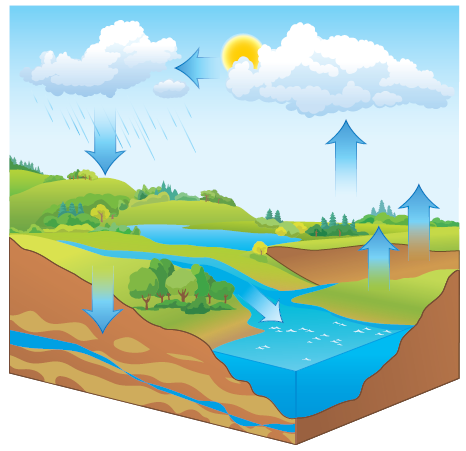
What does this picture depict? Write a note on the processes involved in it.
128.
Write a note on Fresh Water
129.
Write a paragraph on the functions of an ecosystem.
130.
Explain the origin of the river and its course.
131.
Describe sustainability of Development.
132.
The river channels in the lower course are wider than the upper course
133.
Give an account of Mobilisation and Democratic Participation.
134.
Though democracy in India has been appreciated worldwide for its working there is still a lot of scope for improvement - Discuss.
135.
Give reasons for the decline of Buddhism.
136.
Give an account of 'Tsunami'
137.
Explain the "Archaeological sites".
138.
Discuss the Neolithic culture in Tamil Nadu
139.
Explain the employment structure of India.
140.
Assertion (A): A stable biosphere has to be conserved.
Reason (R): The loss of biodiversity affects land, water, air etc.
a) Both assertion (A) and reason (R) are true; R explains A
b) Both assertion(A) and reason (R) are true; R does not explain A
c) A is true; R is false
d) Both A and R are false
Both assertion (A) and reason (R) are true; R explains A
Both assertion(A) and reason (R) are true; R does not explain A
A is true; R is false
Both A and R are false
141.
Assertion (A): Parties shape public opinion.
Reason (R): They raise and highlight issues of importance.
(a) Both (A) and (R) are true and (R) explains (A)
(b) Both (A) and (R) are true and (R) does not explain (A)
(c) (A) is correct and (R) is false
(d) (A) is false and (R) is true
Both (A) and (R) are true and (R) explains (A)
Both (A) and (R) are true and (R) does not explain (A)
(A) is correct and (R) is false
(A) is false and (R) is true
1.
(d)
Uganda
2.
(c)
Madras
3.
(a)
6
4.
(b)
Vedic
5.
(a)
15th July to 7th July
6.
(d)
Dutch
7.
(b)
civilise
8.
(c)
To increase the speed of weaving
9.
(c)
Stay away from glass, windows, outside doors and walls and anything that could fall.
10.
(c)
Labour Day
11.
(a)
Common Sense
12.
(b)
District Collector
13.
(a)
121 crore
14.
(c)
October – December
15.
(a)
Demography
16.
(b)
(ii) is correct
17.
(c)
Horace
18.
(c)
Madurai
19.
(b)
Feudalism
20.
(b)
Europe
21.
(a)
Fundamental Rights
22.
(a)
Soga
23.
(b)
Central Asia
24.
(c)
2 is correct
25.
(d)
i, ii and iv are true
26.
(a)
Tundra
27.
(b)
Lopo Gonzalves
28.
(c)
Liu Pang
29.
(a)
iron oxide
30.
(d)
Cyclones
31.
(c)
Abraham Lincoln
32.
(a)
Iron
33.
(d)
2004
34.
(a)
P - waves
35.
(d)
(i), (ii), (iii) correct (iv) incorrect
36.
(a)
Microliths
37.
(a)
The Sumerians
38.
(b)
Manufacturing
39.
(d)
the number of females per thousand males
40.
(a)
USA
41.
(a)
Alto-cumulus
42.
(c)
Tamil-Brahmi
43.
(a)
Loess
44.
(b)
Pictographic
45.
(b)
focus
46.
(b)
Ashoka
47.
| S.No | Democracy | Communism |
|---|---|---|
| 1 | Democracy is based on the principle of equality and Freedom. | Communism is based on a common ownership mainly concerned with equality and fairness. |
| 2 | Private ownership is allowed citizen have certain legislature and freedom which are protected by the constitution. E.g. India. | Here the government has complete control over the production and distribution of goods and all the resources shared equally in the society. E.g. China, North Korea |
48.
The extent and nature of these migrant streams would essentially depend on:
(i) Pressures and aspirations experienced by people at the origin of migration.
(ii) Constraints imposed on mobility at the origin of migration.
(iii) Opportunities at the destination and availability of information regarding these opportunities.
(iv) The cost of migration.
49.
The functions of the Panchayat Union are:
(i) Supply of drinking water
(ii) Maintenance of Village Health Centres
(iii) Maintenance of the roads
(iv) Establishment of Maternity Homes
(v) Establishment of Public fair
(vi) Establishment of Veterinary hospitals
(vii) Maintenance of Social forest
(viii) Repairing of Primary School buildings
50.
(i) Tamil Nadu has the highest GDP in India according to 2017
(ii) Tamil Nadu tops in food grain production in 2015 - 2016 Prime Minister presented the Krishi Karman award to Tamil Nadu.
(iii) Mettur dam has the highest storage of water in Tamilnadu for agricultural Purpose.
51.
A travelogue includes all the information required by a tourist like communication, transportation, hotels, tourist spots, health centres, ATM, petrol stations etc.
52.
(i) As the town expands, it mounts more pressure on transport system, water supplies, sewage and profuse disposal.
(ii) The overall development creates problems like air pollution, water pollution, traffic congestion and noise pollution etc.,
(iii) This disturbed environment affects the human beings as mental illness, heart troubles, breathing problems etc.
53.
(i) According to the Permanent Settlement, the British dealt with the landlords or the Zamindars directly.
(ii) These Zamindars were given total freedom to do what they liked with their tenants.
(iii) As a result the cultivators were reduced to the position of mere tenants.
54.
(i) After the Civil War, workers organized strikes in U.S.A. One major strike was the Great Railroad Strike of 1877.
(ii) Wage cuts in the railroad industry, in the context of a prolonged economic depression, led to the strike.
(iii) It began in West Virginia and spread to three additional states over a period of 45 days.
(iv) It was crushed by a combination of vigilantes, National Guardsmen, and Federal Army.
55.
(i) Washington attacked Yorktown, with a combined American and French troops.
(ii) Cornwallis, who took up a defensive position in Yorktown, was cut off from the sea by the French fleet.
(iii) On 19 October 1781 Cornwallis surrendered.
(iv) Peace of Paris was signed. Great Britain agreed to the independence of the United States.
(v) The British forces departed from Yorktown in 1781.
56.
(i) Expansion of trade.
(ii) The Production of more food.
(iii) Emergence of factory workers as a new class.
(iv) Development in transport and communication.
57.
| Colonialism | Imperialism |
| Colonialism is a process of domination involving the subjugation of one people by another. | Imperialism involves political and economic control over a dependent territory. |
| The term colony came from the Latin word 'Colonus' meaning farmer. | The term imperialism is derived from Latin term 'imperium' meaning to command. |
| Colonialism usually involves the transfer of population to a new territory, where the arrivals live as permanent settlers. | Imperialism means draw attention to the way one country exercises power over another whether through settlement, sovereignty or indirect mechanisms of control. |
58.
(i) A map is the basic tool of a geographer. It illustrates the earth's surface clearly and effectively through a combination of drawings, words and symbols.
(ii) A map projection is a way of showing the spherical shaped earth on a flat piece of paper.
(iii) A map projection is a systematic transformation of the latitudes and longitudes of location from the surface of a sphere or an ellipsoid into locations on a plane.
(iv) A Globe is a spherical model of earth. Globe serves similar purposes to maps but unlike maps do not disturb the surface that they portray except to scale it down. A globe of earth is called terrestrial globe.
59.
In Tamil Nadu there are 12 Corporations. They are,
a) Chennai
b) Kovai
c) Madurai
d) Trichy
e) Tirunelveli
f) Salem
g) Erode
h) Vellore
i) Tuticorin
j) Tirupur
k) Tanjore
l) Dindigul.
60.
The productivity of rice - 1965 - 66 - 1409 kgs per hectare.
1975 - 76 - 2372 kgs per hectare.
1985 - 86 - 2712 kgs per hectare
2014 - 15 - 4429 kgs per hectare
In the past 50 years, the productivity of paddy has increased more than three times.
61.
(i) Under Oligarchy, the new rich exploited the smaller landholders.
(ii) So this republic was soon replaced by some ambitious men who administered tyrannically
62.
(i) The first Persian attack on Greece failed.
(ii) This was due to the fact that Persian army suffered from disease and lack of food, during its march.
(iii) During the second attack, they avoided the land route and came by sea.
63.
(i) Classical World comprises ancient Greece and Rome.
(ii) Classical Age refers to the inter-locking civilizations of ancient Greece and ancient Rome, known as Graeco-Roman World
64.
(i) In South India, groups of castes were vertically divided into right (valankai) and left-hand (idankai) castes.
(ii) Each group included castes at different levels in the caste hierarchy, like merchants, landowning castes and professional castes.
(iii) This division was found throughout south India, but we have more comprehensive information on the right and left-hand castes in the Tamil region.
65.
(i) Further to the South, the Pandya kings again sought to regain the glory they had lost under the Cholas.
(ii) Many brilliant Pandya kings like Jatavarman Sundara Pandyan ruled at the end of the 13th century.
(iii) Further to the north was the Hoysala kingdom, with its capital at Belur.
(iv) The Kakatiyas ruled from Warangal (Telangana) while the Yadavas ruled in Devagiri.
(v) These states did not exist in peaceful cooperation, and the region was beset by many internal wars and conflicts.
66.
Following the Turkish occupation, a number of scholars, artists and artisans left Constantinople moving towards the Italian city states.
67.
(a) Lopo Gonçalves:
(i) Lopo Gonçalves was the first sailor to cross the equator. Till then sailors did not dare to venture beyond, as they harboured fears about boiling waters and sea monsters.
(b) Bartholomew Diaz:
(i) ventured further down the African coast reaching Cape point or the southern tip of Africa in 1487 A.D. He named it the Cape of Storms as he encountered fierce storms there. King John II of Portugal renamed it as Cape of Good Hope as it provided hope to reach India by sea.
68.
An ecological region that has lost more than 70% of its original habitat is considered a hotspot.
69.
(i) Money is used as a store of purchasing power.
(ii) It can be used to finance future payments.
70.
The Child Rights, SC and ST rights, Women rights, Right to information Act (RTI) and Labour laws come under Extended rights.
71.
(i) Hypsometric curve is a graphic representation which shows the height of a certain place found on land and the height of ocean features at sea.
(ii) 'Hypso' means height in Greek.
72.
(i) It is against the law to employ children below 14 years of age in mines, factories or other occupations.
(ii) Neither contractor nor an employer can force a worker to do a job against their will.
73.
The metals such as silver, gold and copper were used first. They were called ancient currency.
74.
(i) An ecosystem is a community, where all living organisms live and interact with one another and also with their non-living environment such as land, soil, air, water etc.
(ii) Ecosystems range in size from the smallest units (Eg: bark of a tree) that can sustain life to the global ecosystem or ecosphere. (Eg: Cropland, Pond ecosystem, Forest ecosystem, Desert ecosystem etc.).
(iii) Biosphere harbours all ecosystems on the earth and sustains life forms including mankind.
75.
(i) The degree of concentration of salts in the sea water is called salinity.
(ii) It is usually expressed in terms of parts per thousand (ppt or ‰).
(iii) Salinity varies both horizontally and vertically.
(iv) The influence of temperature on ocean salinity depends upon the heating up of the surface water, which varies from tropics to polar regions
76.
(i) Of all the movements of the oceans, sea waves are considered to be the strongest.
(ii) Sea waves are ripples on water caused when winds blow over the sea.
(iii) The height of these waves depends on the speed of wind, its duration and the direction from which they blow.
(iv) Sometimes waves are also caused by tremors felt on the ocean floor.
(v) Such waves are quite destructive and called Tsunami
77.
(i) Between 8th and 7th centuries BC(BCE) the warring states in China built defensive walls to protect themselves from enemies from the north.
(ii) During Qin dynasty the separated walls were connected and consequently the wall.
(iv) This wall is considered to be one of the wonders of the world, stretched from east to west for about 5000 kilometres.
(v) Served to keep nomadic tribes out. Now it is 6700 kilometers in length.
78.
The Ring of Fire is a ring of volcanoes around the Pacific Ocean. These volcanoes result from subduction of oceanic plates beneath lighter continental plates, A subduction zone is a place where one plate of oceanic lithosphere is shoved under another plate. As it is shoved into the hotter mantle the plate heats up. The addition of volatiles such as water to the hot overlying mantle causes partial melting and the production of magma. This magma rises up through the over-lying plate to erupt at the surface. Hence, the Pacific Ring of Fire is most seismically and volcanically active.
79.
'V' shaped valleys, Gorges, Canyons, rapids, pot holes, spurs and waterfalls.
80.
Since the countries have different populations comparing total income will not be suggestive of what an average person is likely to earn. So, for comparing the development of various countries total income is not an useful measure.
81.
(i) Coastal zone is exposed to natural forces including cyclones and Tsunamis.
(ii) Cuddalore and Nagapattinam are situated on the Sea-Shore.
(iii) Cuddalore and Nagapattinam are vulnerable to storms.
(iv) During Summer Bay of Bengal subject to intense heat cause to raise the humid and unstable air masses that produce cyclone.
82.
Those who are engaged in economic activities, in whatever capacity -high (or) low are called employees.
83.
Other than the seven national parties, most of the major parties of the country are classified by the Election Commission as 'state parties'. These are commonly referred to as regional parties. A party is recognised as a state party by the Election Commission of India based on certain percentage of votes secured or a certain number of seats won in the Assembly or Lok Sabha elections.
84.
A state in which supreme power is held by the people and their elected representatives and which has an elected (or) nominated President rather than a Monarch.
e.g., India, Australia.
85.
Mahavira and Buddha lived a life of purity and exemplified simplicity and self-denial.
86.
The bodies of plants and animals that fall on the sedimentary rock deposits get embedded in the layers and form fossils.
87.
(i) Hero stones of the Post-Sangam Age and the Pallava period occur in large numbers in pastoral regions especially around the Chengam region near Thiruvannamalai district.
(ii) These hero stones have inscriptions and the images of warriors and names of heroes.
88.
(i) As a result of domestication and cultivating plants, there was an excess food production.
(ii) The surplus food production was a main factor for the development of early civilisations.
89.
As one of the oldest civilisations, the Egyptian civilisation is known for its monumental architecture, art, sciences and crafts at a very early age.
90.
1. Ajathasatru, the son of Bimbisara is said to have murdered his father and ascended the throne in 493 BCE.
2. He expanded his territory through military conquests.
3. He strengthened the Rajagriha fort and also built another fort at Pataligrama on the Ganges.
91.
(i) The Tamil rulers were independent of Mauryan authority because Ashokan inscriptions found in present day Odisha, Karnataka, Telangana and Andhra Pradesh are not seen in Tamil Nadu and Kerala.
(ii) So we can conclude the status of Tamil rulers.
92.
Moraine:
(i) Landforms formed by the glacial deposits of valley (or) continental glaciers are termed as moraines.
(ii) They are of various shapes and sizes, like ground, terminal and lateral moraines, etc.
Drumlin: Drumlins are deposits of glacial moraines that resemble giant inverted teaspoons (or) half cut eggs.
Esker: Long narrow ridges composed of boulders gravel and sand deposited by streams of melting water which run parallel to a glacier are called eskers.
93.
These are valleys eroded by tributary glacier and that hangs over the main valley
94.
(i) Meanders in due course of time become almost a complete circle with narrow necks
(ii) This in turn gets abandoned and forms a lake. This is called an Ox-bow lake
95.
(i) Hammurabi Code is an important legal document that specifies the laws related to various crimes.
(ii) It has 282 provisions specifying cases related to family rights, trade, slavery, taxes and wages.
(iii) It is carved on a stone, which portrays Hammurabi as receiving the code from the Sun god Shamash.
(iv) It was a compilation of old laws based on retributive principles.
(v) The 'eye for eye' and 'tooth for tooth' form of justice is used in the Hammurabi Code.
96.
(i) Animal domestication developed as part of symbiotic life.
(ii) Dogs may have been domesticated first.
(iii) Friendly animals were gradually domesticated sheep and goat were domesticated around 10,000 BC in South West Asia.
(iv) Oxen were used in Sumerian civilisation for tilling the land.
(v) Mehrgarh in Pakistan has evidence of sheep, goat and cattle domestication in the Neolithic period.
97.

98.
a)
b)
99.
a) Pacific Ring of fire: It is a major area and an arc in the basin of the Pacific ocean where many earthquakes and volcanic eruptions occur.
(b) Earthquake-prone zones (any two): Turkey, Indonesia
(c) Locate any two active volcanoes of the world: Hawaii, Mount Fuji
(d) Himalayas and Alps ranges
100.
Unitary features of Indian constitution are
(1) Strong Centre
(2) Central Government's control over state territory
(3) Single Constitution.
(4) Flexibility of the Constitution
(5) Unequal representation of states
(6) Emergency Provisions
(7) Single citizenship
(8) Single Integrated Judiciary
(9) All India Services
(10) Appointment of Governor by the central government.
101.
(i) Earthquake is a sudden vibration of the part of the earth caused by plate movements.
(ii) It occurs along the plate boundaries.
(iii) The place inside the earth where earthquake originates is focus.
(iv) The point on the earth's surface above the focus is epicentre.
(v) The damage caused by the earthquake is the highest near the epicentre.
(vi) The earthquake is measured by an instrument is called Seismograph.
(vii) It is recorded in Richter scale.
102.
| S.No. | Unitary form of government | Federal form of government |
|---|---|---|
| 1 | This government is a sovereign state governed as a single entity. |
The classification of governments into unitary and federal is based on the nature of relations between the national government and the regional governments. |
| 2 | The central government is supreme and the administrative divisions exercise only powers that the central government has delegated to them. |
Powers are divided. |
| 3 | Suitable for small countries. | More suitable for bigger countries. |
| 4 | There is no conflict of authority and responsibility. It will make prompt decisions and take speedy action. |
It is good for economic and cultural progress. |
103.
The economy is classified into three sectors.
1. Primary (or) Agriculture sector,
2. Secondary (or) Industrial sector
3. Tertiary (or) Service sector.
104.
(i) NNP - Net National Product
(ii) PCI - Per Capita Income
105.
The major indicators to measure the level of economic development are
1. Net National Product (NNP),
2. Per Capita Income (PCI),
3. Purchasing Power Parity (PPP),
3. Human Development Index (HDI).
106.
| Two party system | Multi-party system |
|---|---|
| Two party system in which only two major parties exist, for example, USA, UK. | Multi-party system in which there are more than two political parties, for example India, Sri Lanka, France and Italy. |
107.
Abraham Lincoln defines democracy as a government of the people, by the people and for the people
108.
1. The Indus civilisation and its urban features started declining from about 1900 BC.
2. Charges in climate, decline of the trade with Mesopotamia and drying up or flooding of the river Indus. foreign invasion were some of the reasons attributed to the collapse of this civilisation and for the migration of people on the southern and eastern directions.
3. It did not completely disappear.
4. It continued as rural culture.
109.
Rules to Ensure Road Safety for chlldren
It is impportant for children to know about road safety rules and regulatioins. Here are a few
basic road safety rules for children.
i) Know Your Signals
ii) Stop, Look and Cross
iii) Pay Attention - Listen
iv) Don't Run on Roads
v) Always Use Sidewalks
vi) Never Stick Hands outside the Vehicle
vii) Never cross Road at Bends
viii) Don't Rush.
110.
The different factors contribute to road accident are,
i) Drivers: Over speeding, rash driving, violation of rules, failure to understand signs, fatigue, alcohol.
ii) Pedestrians: Carelessness, illiteracy, crossing at wrong places, jaywalkers.
iii) Passengers: Projecting their body parts outside vehicles, talking to drivers, alighting and boarding vehicles from the wrong side, travelling on footboards, catching a running bus etc.,
iv) Vehicles: Failure of brakes or steering, tyre burst, insufficient headlights, overloading.
v) Road Conditions: Potholes, damaged roads, eroded roads merging of rural roads with highways and illegal speed breakers.
vi) Weather conditions: Fog, snow, heavy rainfall, wind storms, hail storms.
111.
Parliamentary form of Government
(i) The parliamentary system of government is the one in which the executive is responsible to the legislature for its policies and acts.
(ii) It is also known as cabinet government or responsible government or Westminster model of government and is prevalent in Britain, Japan, Canada, India among others.
Features of Parliamentary form of government
(i) Nominal and Real Executives.
(ii) Majority Party Rule
(iii) Collective Responsibility
(iv) Double Membership
(v) Leadership of the Prime Minister
Merill of the parliamentary form of government
(i) Harmony between Legislature and Executive.
(ii) Responsible Government
(iii) Prevents Dictatorship.
(iv) Wide Representation.
Demerits of the parliamentary form of government
(i) Unstable Government.
(ii) No Continuity of Policies.
(iii) Dictatorship of the Cabinet.
(iv) Against Separation of Powers.
112.
(i) "Red Tea" is a very well known novel written by Paul Harris Daniel.
(ii) The novel portraits the slavery life of plantation workers in Valparai.
(iii) This novel depicts the blood stained history of the workers that is hidden behind the green cover of the hills.
(iv) This novel has been translated in Tamil by R. Murugavel in the name "Eriyum Panikkaadu" (எரியும் பனிக்காடு)
(v) The story starts with Karupan migrating to the hills with his wife in search of survival.
(vi) The narrator of this story is Dr. Daniel, who comes there to treat the plantation employees.
113.
a) Ripon
(i) Lord Ripon was the one who introduced the Local Self Government in 1882.
(ii) He was advocating for the decentralization of administration.
(iii) He tried to remove obstacles in the sphere of Local Self government by his resolution of 1882.
(iv) Under him a large number of Tahsildars had quasi - judicial powers in their sub - districts, along with revenue collection.
b) Munroe
(i) He was all for administration in the local language.
(ii) He was against the practice of appointing to administrative posts and the judiciary those who were not fluent with the local lexicon (language).
(iii) He felt that Indians ought to be allowed to dispense justice by themselves.
114.
(i) In April 2013, the Government of India issued a National Policy and Process Guidelines on formation of FPOs.
(ii) The year 2014 was observed as the "Year of Farmer Producer Organisations" by the Government of India.
(iii) Its main idea of promoting and strengthening member based institutions of farmers.
(iv) It aimed at engaging the farmer companies to procure agricultural products and sell them.
(v) Supply of inputs such as seed, fertilizer and machinery, market linkages, training & networking and financial and technical advice are also among the major activities of FPO.
115.
(i) The location of a place can be simply defined by its latitude and longitude.
(ii) In normal practice, latitude is stated first and then comes the longitude.
(iii) The latitude and longitude of a place can be expressed in units of degree, minutes and seconds.
(iv) A grid is a set of lines with alphanumeric codes for defining a location on a map in many topographical sheets.
(v) The lines that run horizontally from left to right of the map are known as northings.
(vi) The lines that run vertically from the top to the bottom of the map are called eastings.
(vii) The points at which the vertical and horizontal lines of the grid intersect are called coordinates which are identified by numbers or letters.
116.
(i) Migration is defined as the permanent or semi-permanent change of home of an individual or a group of people over a significant distance from their place of birth.
(ii) The causes of migration may be physical (climate, drought, flood, earthquake, volcanic eruption, epidemics etc.), social inequalities, economic opportunities, technology, education, cultural clashes, war or political issues.
(iii) There are two types of migration:
(a) Internal Migration
The movement of people within a country i.e. between states, districts, villages, etc is called as Internal migration.
(b) International Migration
The movement of people from one country to another, across international borders is called as International migration.
117.
(i) The Indentured Labour System was a form of debt bondage.
(ii) By this system 3.5 million Indians were transported to various British colonies to provide labour for the plantations (mainly sugar).
(iii) It started from 1843, the year of abolition of slavery in India and continued until 1920.
(iv) This resulted in the development of a large Indian diaspora, which spread from the Indian Ocean (Reunion and Mauritius) to the Pacific Ocean (Fiji), as well as contributing to the growth of Indo-Caribbean and Indo-African population.
(v) The Indenture system was a penal contract system.
(vi) The contract made punishable the refusal of an indentured labourer to work or his abstention from work, or his defiance of the orders of his master or absconding.
118.
The Industrial Revolution began in England first because, it had certain objective conditions. They were:
(i) England had abundant resources and possessed colonies, with India being "the brightest jewel in the British Crown".
(ii) Access to coal, iron and raw cotton from the colonies.
(iii) England possessed the required infrastructure for textiles, developed by immigrant artisans from the Netherlands.
(iv) England had a developed banking system, a growing entrepreneurial class, and potential investors.
(v) Encouragement of the Royal Society of England for scientific discoveries and inventions.
(vi) Political stability of England to bestow its full attention to industrial growth.
119.
(i) Initially the colonies did not begin fighting for the sake of independence. Their grievances were taxation and restrictions on trade.
(ii) George Washington was the Commander-in-Chief of the colonies and their battle cry was 'No Taxation without Representation'.
(iii) On 5 September 1774, the first Continental Congress met in Philadelphia. The Congress adopted a Declaration of American Rights.
(iv) The Battle of Bunker Hill signaled the outbreak of the American war of Independence.
(v) The second Continental Congress met on 10 May 1775 at Philadelphia. It organised the army gathered around Boston as the continental army and placed it under the command of George Washington.
(vi) As the war progressed, the Continental Congress assumed the functions of government. A committee was formed to explore the possibility of foreign aid.
(vii) On 17 June 1775 the Battle of Bunker Hill, the first major battle was fought in Massachusetts. Soon the British forces retreated from Boston.
(viii) On June 7, 1776 Richard Henry Lee of Virginia moved a resolution for independence.
(ix) After much debate the Declaration of Independence, drafted by Thomas Jefferson, was adopted by the Congress on July 4, 1776. This day is celebrated by the Americans as Independence Day.
120.
(i) A settlement pattern refers to the way that buildings and houses are distributed in a rural settlement.
(ii) Settlement patterns are of interest to geographers, historians and anthropologists for the insight they offer in how a community has developed over time.
Linear : In a linear settlement pattern, the buildings are arranged in lines. These lines often follow the route of a road or body of water.
Dispersed : In a dispersed settlement pattern, the buildings are scattered over a wide area. Dispersed settlement patterns are often associated with agricultural activity and are frequently surrounded by farmland.
Nucleated: In a nucleated settlement pattern, the buildings are grouped around a central core. Nucleated settlement patterns are usually associated with patterns of agriculture in which the settlement is surrounded by two or three fields, and each field divided into strips that were formed by individual farmers.
121.
(i) The ancient Greeks created the world's first democracy. Athens started on with a monarchy and then advanced to an oligarchy until it finally reached a democracy.
(ii) The Greek Alphabet was the first alphabet in the western sense of the word, featuring distinct letters for vowels and consonants.
(iii) The first library in the world, the library of Alexandria was actually built in Egypt.
(iv) The Olympic games started in ancient Greece specially in the city of Olympia.
(v) Science and Mathematics - Eratosthenes was the first mathematician to calculate the circumference of the Earth. Aristarchus, Archimedes and Hipparchus were great mathematicians and scientists.
(vi) One of the common examples of Greek Architecture in the modern world is the Column or Pillar.
(vii) Greek mythology has pervaded nearly every form of popular culture imaginable. Many Greek myths have been adapted into modern novels, movies, TV, shows etc.
(viii) The first lighthouse in the world was located in the Greek controlled Egyptian Kingdom of Alexandria.
(ix) The democratic people of ancient Greece, especially Athens, were the first to employ trial by jury as we know it today.
122.
Hampi:
(i) There are groups of monuments in Hampi.
(ii) It is a UNESCO World Heritage site located in east-central Karnataka.
(iii) It became the centre of the Hindu Vijayanagara Empire capital in the 14th century.
(iv) Located in Karnataka near the modern-era city of Hosapete, Hampi's ruins are spread over 4,100 hectares.
(v) Hampi continues to be an important religious centre, housing the Virupaksha Temple, an active Adi Shankara-linked monastery and various monuments belonging to the old city.
123.
(i) The Italian city-states were centres of cultural activities since the fourteenth century.
(ii) With the coming of the scholars and artists from Constantinople, there was a surge of enthusiasm and interest in studying classical literature and art of Greeks and Romans.
(iii) This creative upsurge was reflected in their writings, art, architecture and music.
(iv) This cultural florescence is known as the renaissance.
(v) The origin of the word renaissance is from the Italian word 'renascita' meaning rebirth.
(vi) It is called renaissance because there was a rebirth or revival of classical Greek and Latin literature.
(vii) Many scholars in Italy went in search of manuscripts of classical literature.
(viii) Greek scholar Manuel Chrysoloras who taught Greek classics in Italy, Guarino and Giovanni Aurispa, to name just a few, visited Constantinople several times to collect Greek manuscripts.
(ix) Later they printed what they collected.
(x) This provided stimulus to the flowering of renaissance.
124.
(i) The relationship between money and price is connected with the Monetary policy.
(ii) There is a close relationship between the growth of money supply and inflation.
(iii) Price controls play a very important role in a country's economic stability.
(iv) This role is played by RBI.
(v) Currency is the medium of exchange in a country.
(vi) The Indian currency is called the Indian Rupee (INR).
(vii) In a country the foreign currency is called foreign exchange.
(viii) Purchasing capacity of all currencies in the world are compared using the US dollar as the standard currency.
(ix) This value differs from country to country.
(x) Most of the international trade transactions are carried out in US dollar
125.
The functions of SHRC are
(i) The SHRC shall enquire into violation of human rights in respect of matters specified in the state and concurrent lists.
(ii) Its objectives and duties are the same as NHRC, but confined only to the state. It has a chairman and two members.
(iii) It has the power of a civil court and can take cognizance of cases if received.
(iv) It can also recommend compensation to victims.
126.
(i) Baghdad- a city known as the city of Arabian Nights, was a vast city of palaces and public offices and schools and colleges, and great shops and parks and gardens.
(ii) The merchants carried on a vast trade with the East and West.
(iii) Visitors came to Baghdad from all over the world especially learned men and students and artists
127.
This picture depicts Water Cycle.
The three major processes involved in the water cycle are a)
Evaporation,
b) Condensation,
c) Precipitation.
Evaporation is the process by which water is converted from its liquid state to the gaseous state, usually as a result of the sun's warming rays.
Condensation occurs as the vapour rises into the atmosphere, creating clouds and fog. Once clouds are formed, advection (the movement of water in its various states) occurs through the atmosphere. Without advection, the water would evaporate and precipitate at the same place only.
Precipitation occurs when the vapour that condensed comes back out of the sky as rain, snow, sleet, hail. Most of it comes back to the ground or body of water. Thus water moves across land and is stored in lakes or reservoirs for human uses.
128.
(i) Rain water is considered to be the purest form of water, as it contains very less proportion of salts when compared to the oceans and seas.
(ii) Hence it is called fresh water.
(iii) A major part of fresh water is found in the frozen state in the form of ice caps and glaciers.
(iv) Around 0.5 to 1% of it, is found in the liquid state as rivers, streams, lakes, ponds etc.
(v) Surface water may also penetrate through porous rocks and gets collected beneath the Earth's surface.
(vi) This is called groundwater
129.
(i) The living organisms form an interacting set of flora and fauna which are organized into trophic levels, food chains and food webs.
(ii) The functioning of an ecosystem depends on the pattern of the energy flow, as it helps in the distribution and circulation of the organic and inorganic matter within an ecosystem.
(iii) Energy flow generally takes place in a hierarchical order in an ecosystem through various levels.
(iv) These levels are called trophic levels.
(v) The chain of transformation of energy from one group of organisms to another, through various trophic levels is called a food chain.
(vi) A system of interlocking and interdependent food chains is called a food web.
130.
Rivers generally originate from mountains and end in a sea or lake. The whole path that a river
flows through is called its course. The course of a river is divided into:
(i) The upper course
(ii) The middle course and
(iii) The lower course
(i) The Upper Course: Erosion is the most dominant action of river in the upper course. In this course, a river usually tumbles down the steep mountain slopes. The steep gradient increases the velocity and the river channel performs erosion with great force to widen and deepen its valley; The land features carved by a river in its upper course are V-shaped valleys, gorges, canyons, rapids, potholes, spurs, and waterfalls.
(ii) The Middle Course: The river enters the plain in its middle course. The volume of water increases with the confluence of many tributaries and thus increases the load of the river. Thus, the predominant action of a river is transportation. Deposition also occurs due to the sudden decrease in velocity. The river in the middle course develops some typical landforms like alluvial fans, flood plains, meanders, ox-bow lakes etc.,
(iii) The Lower course: The river, moving downstream across a broad, level plain is loaded with debris, brought down from its upper and middle courses. Large deposits of sediments are found at the level bed and the river, splits into a number of channels called distributaries. The main work of the river here is deposition and it develops typical landforms like delta and estuary.
131.
Sustainable economic development is taken to mean development without damaging the environment and not compromising with the needs of the future generation. The consequences of environmental degradation do not respect national or state boundaries. Sustainability of development is comparatively a new area of knowledge in which scientists, economists, philosophers and other social scientists are working together. Natural resources can be divided into renewable resources and non-renewable resources. Groundwater is an example of a renewable resource. The question arises as to how sustainable development is possible if the resources are over-used rather than getting replenished. Nonrenewable resources get exhausted after certain number of years of extracting and using them and they cannot be replenished. To achieve real sustainability, we need to balance economic, social and environmental sustainability in equal harmony. In general, the question of development or progress is continuous. At all times, as a member of society and as individuals, we need to ask where we want to go, what we wish to become and what our goals are.
132.
(i) The river channels of the upper course has more energy gradient then the channels of lower course.
(ii) As the river flows in the lower course it corrodes sideways and makes it wider.
133.
Mobilising people towards socially productive activities that lead to the overall betterment of people's lives is essential. Sometimes earthquakes, tsunamis, floods and other such natural disasters on a massive scale occur and people's immediate mobilisation for evacuation and emergency relief becomes most essential.
Democratic Participation: Democracy can succeed only when smaller local groups and, in fact, every citizen can take action that supports the tax and revenue collection systems, observance of national norms in environmental protection, cleanliness, health and hygiene, sanitary drives and immunisation programmes like pulse polio. However, we must keep in mind that there is no better form of government than Democratic government. To create a better society and nation, the people of India along with the union and state governments should come together to fight against the miseries of human life.
134.
Though democracy in India has been appreciated worldwide for its working, there is still a lot of scope for improvement. The above-mentioned steps must be taken to ensure smooth functioning of democracy in the country.
Indian democracy can be successful and vibrant only when its citizens imbibe and reflect in their behavior the basic democratic values like equality, freedom, social justice, accountability and respect for all. Their mindset, thinking and behavior are expected to be in tune with the essential conditions of democracy. They have to appreciate the opportunities for their desired roles like participation, making the system accountable, fulfilling obligations, and playing proactive roles to actualize the goals of democracy.
135.
Buddhism declined in India due to the following reasons:
1. Buddhism was popular in the beginning because it was preached in people's language (Pali). The later texts were written in Sanskrit, which was difficult for the common people to understand.
2. The split in Buddhism into Hinayana and Mahayana was another vital reason. Image worship in Mahayana made no difference between Hinduism and Buddhism.
3. Buddhism lost its royal patronage during the reign of Guptas.
4. Further, the invasions of Huns and Turks almost wiped out Buddhism.
136.
The word 'Tsunami' is a Japanese term, meaning harbour waves. It is adapted to describe large seismically generated sea waves caused by Earthquakes, submarine explosions and landslides. These waves travel at a great speed (more than 500 km per hour) and the length of the waves exceeds 600 km. These waves reach to a height of more than 15 m near the sea shore and are capable of causing destruction along the coastal area.
The 2004 Indian Ocean Earthquake that caused tsunami is the sixth-deadliest natural disaster which travelled at a speed of 6.00 km per hour with an estimated death toll of 2,80,000. The Earthquake which occurred near Indonesia at 00.58 hours took nearly 7 hours to reach Chennai.
137.
(i) Archaeological excavation refers to systematically digging a site to recover material evidence for exploring and interpreting societies of the past.
(ii) Archaeological excavations at the early historic sites are the source of evidence of the activities of the Sangam Age people.
(iii) Excavations at Arikkamedu, Azhagankulam, Uraiyur, Kanchipuram, Kaveripoompattinam, Korkai, Vasavasamudram, Keezhadi, Kodumanal in Tamil Nadu, and. Pattanam in Kerala provide the evidence we have of this period.
(iv) Arikkamedu, near Puducherry, is a Sangam Age port, excavated by the Archaeological Survey of India (ASI). British archaeologist, Robert Eric Mortimer Wheeler, French Archaeologist, J.M. Casal, and Indian archaeologists, A. Ghosh and Krishna Deva, excavated this site. They found evidence of a planned town, warehouse, streets, tanks and ring wells.
138.
(i) The culture that domesticated animals and cultivated crops is called Neolithic.
(ii) It is known as the New Stone Age. The Neolithic people used polished stone axes called celts.
(iii) Cattle rearing was their main occupation. They lived in small villages with houses made of thatched roof and walls plastered with clay.
(iv) Evidence of Neolithic village is found at Payyampalli in Vellore district and a few sites in the Dharmapuri region.
(v) Payyampalli is a village in Vellore district of Tamil Nadu. The earliest evidence for the domestication of animals and cultivation of plants is found at this site, which was excavated by the Archaeological Survey of India.
(vi) Evidence for pottery making and cultivation of horse gram and green gram has been found in this village.
(vii) These Neolithic sites were part of the Southern Neolithic Culture of India. They are mainly concentrated in the Andhra Pradesh and Karnataka regions.
(viii) The Neolithic people used stone axes fitted on a wooden handle.
(ix) These polished stone axes are worshipped in many village temples of Tamil Nadu even today.
139.
(i) The nature of employment in India is multi-dimensional. Some get employment throughout the year; some others get employed for only a few months in a year.
(ii) The economy is classified into three sectors: primary or agriculture sector, secondary or industrial sector and tertiary or service sector.
(iii) The structure of employment denotes the number of workers engaged in different sectors of the economy.
(iv) Though the occupational pattern varies from one country to another, one can find in developing countries like India that a large workforce will be engaged in primary sector, while a small proportion in secondary and tertiary sectors.
(v) Whereas, in well-developed countries, the proportion of workforce engaged in agriculture will be very small and a majority of labour force will be in the industrial and tertiary sectors.
(vi) Employment has always featured as an important element of development policy in India.
(vii) Employment growth has increased at an average rate of 2% during the past four decades since 1972-73.
140.
Both assertion (A) and reason (R) are true; R explains A
141.
(a) Both (A) and (R) are true and (R) explains (A)

9th Standard Syllabus & Materials
9th Standard
TN 9th Tamil உள்ளத்தின் சீர் - திருக்குறள் Important Questions And Answers Study Material - QB365 Set A
NEW9th Standard
TN 9th Tamil உள்ளத்தின் சீர் - மணிமேகலை Important Questions And Answers Study Material - QB365 Set A
NEW9th Standard
TN 9th Tamil உள்ளத்தின் சீர் - ஏறு தழுவுதல் Important Questions And Answers Study Material - QB365 Set A
NEW9th Standard
TN 9th Tamil உயிருக்கு வேர் - தண்ணீர் Important Questions And Answers Study Material - QB365 Set A



Tamilnadu Stateboard 9th Standard Subjects
Tamilnadu Stateboard Standards




