
 100% FREE ACCESS
9th Standard Syllabus & Materials
9th Standard
TN 9th Tamil உள்ளத்தின் சீர் -கற்கண்டு (இலக்கணம்) - தொடர் இலக்கணம், ஆகுபெயர் Important Questions And Answers Study Material - QB365 Set A
NEW9th Standard
TN 9th Tamil உள்ளத்தின் சீர் -விரிவானம் (துணைப்பாடம்) - தாய்மைக்கு வறட்சி இல்லை! Important Questions And Answers Study Material - QB365 Set A
NEW9th Standard
TN 9th Tamil உள்ளத்தின் சீர் -கவிதை பேழை (செய்யுள்) - மார்கழி பெருவிழா Important Questions And Answers Study Material - QB365 Set A
NEW9th Standard
TN 9th Tamil உயிருக்கு வேர்-இலக்கணம் - பகுபத உறுப்பிலக்கணம் Important Questions And Answers Study Material - QB365 Set A
NEW9th Standard
TN 9th Tamil அமுதென்று பேர் - இலக்கணம்-எழுத்து -அளபெடை Important Questions And Answers Study Material - QB365 Set A
NEW9th Standard
TN 9th Tamil அமுதென்று பேர்-துணைப்பாடம் - ஆறாம்திணை Important Questions And Answers Study Material - QB365 Set A

Published on: 12/02/2020
9th Standard Social Science All Chapter Important Annual Questions-I- 2019-2020
Download Tamil Nadu 9th Standard Social Science question papers, model tests, one-mark questions, important questions, and public exam papers in PDF format. Free study materials and answer keys for TN State Board students.
Questions + Answers key
Take MCQ Social Science Test
1.
Of the international migrants ___________ percent are women.
85
25
15
20
2.
James Munroe was the Governor of _________ Presidency.
Calcutta
Bombay
Madras
None of the above
3.
Out of the following, which is not a food crop
Bajra
Ragi
Maize
Coconut
4.
The Secondary sector of the economy produces ____________from raw materials.
Semi-finished goods
Finished goods
Economic goods
raw materials
5.
The name Cape of Good Hope was given by___________
Bartholomew Diaz
King John II
Henry the Navigator
Vasco da Gama
6.
In educational loans the________is the main borrower.
parent
Student
7.
General Tang was a / an__________
Chinese
Japanese
Roman
Arab
8.
________was the second stronghold of Ala-ud-din Khalji's expanding Kingdom
Daulatabad
Delhi
Madurai
Bidar
9.
_______is the Greek city-state which resisted the Persians to the end.
Acropolis
Sparta
Athens
Rome
10.
Which country has single party system?
USA
UK
Cuba
France
11.
A system of government by one person with absolute power
Aristocracy
Theocracy
Democracy
Autocracy
12.
Inscription that mentions the Cheras
Pugalur
Girnar
Pulimankombai
Madurai
13.
______ refers to the area covering Egypt, Israel-Palestine and Iraq.
Great Rift Valley
Fertile Crescent
Solo river
Neander Valley
14.
Mention the major rea one of Road accidents
15.
What is National Ayush Movement?
16.
Explain the Quinary Activities.
17.
Highlight any two important results of Industrial Revolution.
18.
Name the Urban local governments.
19.
What are the major factors responsible for female migrants in India?
20.
Democracy in Nepal
21.
Why was money invented?
22.
What is Biosphere?
23.
What is hydrological cycle?
24.
Write about the military expeditions of Malik Kafur.
25.
What do the internal processes generate?
26.
What do you know about the Hero stones of the Post-Sangam Age?
27.
What was the main factor for the development of early civilisations?
28.
State the salient features of the Ziggurats.
29.
How different factors contribute to road accidents?
30.
What are Farmer Producer Organisations (FPOs)?
31.
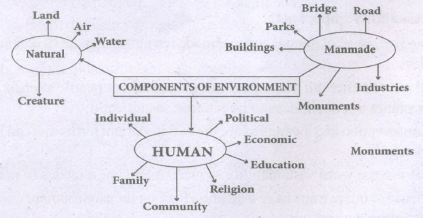
Explain the classification of Environment.
(a) Natural Environment
(b) Human Environment
(c) Man made Environment
32.
What were the effects of Industrial Revolution of England on India?
33.
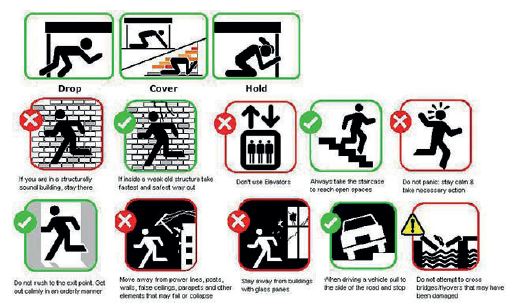
1. Why do you think you should cover your head with one hand and hold the table with the other during an earthquake?
2. During an earthquake, why should we exit through staircase and not use elevators?
3. Suppose you are in a room of a strong building without any furniture when an earthquake occurs. What would you do to protect yourself from the earthquake?
4. Reason out why should you stay away from buildings with glass panes during an earthquake.
34.
Describe the major problems & challenges faced by the local self governments.
35.
Discuss the patterns of migration
36.
Write about the merits of unitary form of government.
37.
Explain the relationship between Money and Price.
38.
What was the impact of the Ming empire on China?
39.
Discuss how Renaissance, Reformation and Geographical discoveries heralded the modern age?
40.
The river channels in the lower course are wider than the upper course
41.
Give an account of Mobilisation and Democratic Participation.
42.
Discuss the Neolithic culture in Tamil Nadu
43.
What is your opinion about democracy in India?
44.
Consider the following statements.
Assertions (A): Rights and duties are the two sides of the same coin.
Reason (R): We have a right to freedom of religions. We have to promote harmony and the spirit of the people of other religions.
a) Both A and R are correct and R explains A
b) Both A and R are correct but R does not explain A
c) A is correct but R is false
d) A is false but R is correct
both A and R are correct and R explains A
both A and R are correct but R does not explain A
A is correct but R is false
A is false but R is correct
45.
What are the de-merits of federal form government?
46.
What do you do if you are indoors during an earthquake?
1.
(c)
15
2.
(c)
Madras
3.
(d)
Coconut
4.
(b)
Finished goods
5.
(b)
King John II
6.
(b)
Student
7.
(d)
Arab
8.
(a)
Daulatabad
9.
(c)
Athens
10.
(c)
Cuba
11.
(d)
Autocracy
12.
(a)
Pugalur
13.
(b)
Fertile Crescent
14.
The major reasons of road accident are
i) Negligence in driving
ii) Drunk and drive
iii) Overlooking the other vehicles
iv) High speed
v) Improper driving training and
vi) Non-stop long driving
15.
(i) The National Ayush Movement scheme is implemented by the central government.
(ii) Its main aim is to save and extend the life of many medicinal herbs that grow only in the forest.
(iii) This scheme is carried out with 60:40 shares from the central and state governments
16.
(i) The activities that focus on the creation, rearrangement, and interpretation of new and existing ideas are called quinary activities.
(ii) It includes the highest levels of decision making in a society or economy.
(iii) Eg. Senior business executives, scientists and policy makers in the Government.
17.
(i) Expansion of trade.
(ii) The Production of more food.
(iii) Emergence of factory workers as a new class.
(iv) Development in transport and communication.
18.
(i) Urban local governments are Corporation, Municipality and Town Panchayat
(ii) The area where more than 10,000 people are living is called a Town Panchayat
(iii) Municipalities were constituted in India for the first time in Chennai in 1688
(iv) Municipal Corporation are established in big cities.
19.
(i) Among female migrants, 70 % in India and 51 % in Tamil Nadu report marriage as their reason for migration, in 2011.
(ii) Marriage and the movement associated with marriage appear to be a major factor responsible for women's mobility in India and in Tamil Nadu.
20.
April Revolution and democracy in Nepal.
i) On April 2006, the leaders of Nepal vibrant pre-democracy civil society movement "Seven Party Alliance" (SPA) called for a million strong demonstration.
ii) It was stage at seven different points along the Ring road encircling the capital Kathmandu.
iii) People demanded end to the autocratic rule of monarchy and restoration of total democracy.
iv) The king Gyanendra stepped down paving the way for democracy in Nepal.
21.
(i) The barter system flourished wherever civilizations thrived.
(ii) This system was active not only within a civilization, but also among civilizations.
(iii) As years went by, there were issues found in barter system.
(iv) To solve these issues, they fixed a common item with a standard value, for the effective exchange of goods.
(v) It was usually in the form of some metal.
(vi) Hence, the metals can be termed as the first form of money.
22.
(i) Biosphere, the fourth sphere of the Earth, is a life supporting layer that exists on the earth's surface.
(ii) This layer on earth encompasses the Lithosphere, Hydrosphere and Atmosphere.
(iii) It includes flora and fauna that thrive on or near the earth's surface.
(iv) Biosphere harbours all ecosystems on the earth and sustains life forms including mankind
23.
(i) The Earth's water is not static.
(ii) It is always in motion.
(iii) This continuous movement of water on, above and below the earth's surface is called the Hydrological Cycle.
(iv) The three major processes involved in the water cycle are evaporation, condensation and precipitation.
24.
The first ten years of the 1300 AD(CE) Alauddin Khalji's slave and commander Malik Kafur was sent on military expedition to south India.
25.
(i) The internal processes generate heat and eject materials from deep below the Earth's crust.
(ii) Internal radioactivity in the principal source of power for this process.
26.
(i) Hero stones of the Post-Sangam Age and the Pallava period occur in large numbers in pastoral regions especially around the Chengam region near Thiruvannamalai district.
(ii) These hero stones have inscriptions and the images of warriors and names of heroes.
27.
(i) As a result of domestication and cultivating plants, there was an excess food production.
(ii) The surplus food production was a main factor for the development of early civilisations.
28.
1. The Ziggurats were at the city centre on a platform and appeared like steep pyramids, with staircases leading to the top.
2. Around this temple were complexes of ceremonial courtyards, shrines, burial chambers for the priests and priestesses, ceremonial banquet halls, along with workshops, granaries storehouses and administrative buildings.
29.
The different factors contribute to road accident are,
i) Drivers: Over speeding, rash driving, violation of rules, failure to understand signs, fatigue, alcohol.
ii) Pedestrians: Carelessness, illiteracy, crossing at wrong places, jaywalkers.
iii) Passengers: Projecting their body parts outside vehicles, talking to drivers, alighting and boarding vehicles from the wrong side, travelling on footboards, catching a running bus etc.,
iv) Vehicles: Failure of brakes or steering, tyre burst, insufficient headlights, overloading.
v) Road Conditions: Potholes, damaged roads, eroded roads merging of rural roads with highways and illegal speed breakers.
vi) Weather conditions: Fog, snow, heavy rainfall, wind storms, hail storms.
30.
(i) In April 2013, the Government of India issued a National Policy and Process Guidelines on formation of FPOs.
(ii) The year 2014 was observed as the "Year of Farmer Producer Organisations" by the Government of India.
(iii) Its main idea of promoting and strengthening member based institutions of farmers.
(iv) It aimed at engaging the farmer companies to procure agricultural products and sell them.
(v) Supply of inputs such as seed, fertilizer and machinery, market linkages, training & networking and financial and technical advice are also among the major activities of FPO.
31.
(a) Natural Environment:
Natural components of environment such as Lithosphere, atmosphere, hydrosphere and biosphere.
(b) Human Environment:
This is the interaction between man as an individual, with his family, occupation and society. It is also related to various cultural aspects such as education, religion, economics and politics.
(c) Man made Environment:
(i) This has been created by man himself for the purpose of fulfilling his needs and to make his life more convenient and easy.
(ii) For example, building, transport, park, industries, monument, etc.
(iii) To bring an equilibrium between man and the environment, man has to study the distribution of population, availability of resources, development in technology etc.
32.
1. In the first quarter of eighteenth century, in the context of Indian cotton manufactures flooding in England, a law was enacted prohibiting the use of Indian calicoes and silk.
2. The invention of flying shuttle by John Kay and the inventions of Hargreaves, Arkwright and Crompton within thirty years accelerated the process of spinning and weaving.
3. When the British established their foothold in Bengal as a territorial power the loot from Bengal and the Carnatic provided the required capital and helped accomplish industrial revolution in England.
4. The weavers of Bengal suffered at the hands of the Company's officials and their agents insisted on payment of a transit duty for the commodities they carried from one place to another and later for cultivation of commercial crops required for British industries in England
5. The English deliberately destroyed Indian industry by dumping Indian markets with their machine-made cheap cotton piece goods.
6. Because of loss of market for hand-woven cotton goods. India lost her old industrial position and became an exporter of raw material.
7. By the first quarter of the nineteenth century the export of Dacca muslin to England stopped.
8. Even the export of raw cotton from India had steadily dwindled owing to the competition from U.S.A.
9. Weavers who were eking out an independent livelihood were thrown out of employment because of flooding of British factory-made cheap cotton fabrics in Indian markets.
10. To escape starvation deaths, peasants and artisans had to move out of the country opting to work on plantations in British Empire Colonies as indentured labourers under wretched service and living conditions.
33.
1. It is mainly to protect the head and neck from gently damaged.
2. Because the earthquake likely to knock out electrical power, the elevator machinery will not work.
3. If doors are opened, stand under a door way or in a comer inside the room. Cover your face and head with your arms.
4. At jolting of the earthquake bursting and breaking of wall, glass panes may happen. So it is better to be away from it.
34.
Problems and challenges facing the local self governments.
(i) Local self governments are the crucial basis for our democracy.
(ii) The Constitutional status of local self governments adds more significance to their functioning.
(iii) There are a few critical concerns in the working of local self governments in India.
(iv) Major problems and challenges may be mentioned as below.
1. Lack of clear demarcation of powers and functions of local bodies.
2. Allocation of funds and needs assessment are not matched.
3. Combined with accountability, the local self governments demand for more autonomy and economic freedom may be addressed.
4. Role of caste, class and religion in decision making at the local self governments.
5. Poor accountability of elected members and officials at the grassroots of democracy.
35.
Suresh: What is the reason for population change?
Subash: Change in population occurs due to birth, death and migration.
Suresh: What is migration?
Subash: Birds, Animals and Man move from one place to another.
Suresh: Why do people migrate?
Subash: To search for Job, Education, Marriage, etc.
Suresh: How can migrants be calculated?
Subash: By place of birth and place of residence.
Suresh: How is it calculated in Tamil Nadu?
Subash: According to the census of 2011, there was 7.2 crore people in Tamil Nadu of these 3.13 crore people were counted as migrants.
36.
Merits of unitary form of government
(i) Suitable for small countries.
(ii) There is no conflict of authority and responsibility.
(iii) A unitary government will make prompt decisions and take speedy action.
(iv) A unitary government is less expensive.
(v) Amendments to the constitution are easy.
(vi) There is unity, uniformity of law, policy and administration.
37.
(i) The relationship between money and price is connected with the Monetary policy.
(ii) There is a close relationship between the growth of money supply and inflation.
(iii) Price controls play a very important role in a country's economic stability.
(iv) This role is played by RBI.
(v) Currency is the medium of exchange in a country.
(vi) The Indian currency is called the Indian Rupee (INR).
(vii) In a country the foreign currency is called foreign exchange.
(viii) Purchasing capacity of all currencies in the world are compared using the US dollar as the standard currency.
(ix) This value differs from country to country.
(x) Most of the international trade transactions are carried out in US dollar
38.
(i) The Ming Empire, which replaced the Mongol empire, consciously discouraged industry and foreign trade in order to concentrate on agriculture.
(ii) This resulted in China lagging behind in the 16th century. Other parts of Eurasia, building on the techniques of the Chinese, began to march ahead.
39.
(i) The Italian humanist Petrarch's Canzoniere, German theologian Martin Luther's Ninety-five theses and Portugal Prince Henry's Navigation School heralded the dawn of the modern era.
(ii) The Holy Roman Empire and the Roman Church became weak and discredited.
(iii) In their place nation states, new Churches that emphasized individual faith, and a commercial revolution based on mercantilism emerged.
(iv) The modern era was characterized by freedom of thought, individualism, rationalism, and economic and scientific progress.
(v) The changes ushered in were the Renaissance, Reformation and Geographical Discoveries.
40.
(i) The river channels of the upper course has more energy gradient then the channels of lower course.
(ii) As the river flows in the lower course it corrodes sideways and makes it wider.
41.
Mobilising people towards socially productive activities that lead to the overall betterment of people's lives is essential. Sometimes earthquakes, tsunamis, floods and other such natural disasters on a massive scale occur and people's immediate mobilisation for evacuation and emergency relief becomes most essential.
Democratic Participation: Democracy can succeed only when smaller local groups and, in fact, every citizen can take action that supports the tax and revenue collection systems, observance of national norms in environmental protection, cleanliness, health and hygiene, sanitary drives and immunisation programmes like pulse polio. However, we must keep in mind that there is no better form of government than Democratic government. To create a better society and nation, the people of India along with the union and state governments should come together to fight against the miseries of human life.
42.
(i) The culture that domesticated animals and cultivated crops is called Neolithic.
(ii) It is known as the New Stone Age. The Neolithic people used polished stone axes called celts.
(iii) Cattle rearing was their main occupation. They lived in small villages with houses made of thatched roof and walls plastered with clay.
(iv) Evidence of Neolithic village is found at Payyampalli in Vellore district and a few sites in the Dharmapuri region.
(v) Payyampalli is a village in Vellore district of Tamil Nadu. The earliest evidence for the domestication of animals and cultivation of plants is found at this site, which was excavated by the Archaeological Survey of India.
(vi) Evidence for pottery making and cultivation of horse gram and green gram has been found in this village.
(vii) These Neolithic sites were part of the Southern Neolithic Culture of India. They are mainly concentrated in the Andhra Pradesh and Karnataka regions.
(viii) The Neolithic people used stone axes fitted on a wooden handle.
(ix) These polished stone axes are worshipped in many village temples of Tamil Nadu even today.
43.
(i) India has a Parliamentary form of democracy.
(ii) The Indian Parliament comprises the elected representatives of people.
(iii) It makes the laws for the country.
(iv) The participation of people in the decision making and the consent of citizens are the two important elements of Parliamentary form of government in India.
(v) India is the largest democratic country in the world.
(vi) Democracy in India works on five basic principles.
(vii) These are sovereign, socialist, secular, democratic and republic.
(viii) Every citizen of India who is not less than 18 years of age can exercise their right to vote in India.
(ix) There is no discrimination based on a person's caste, creed, religion, gender and education when it comes to providing the right to vote.
44.
a) Both A and R are correct and R explains A
45.
De-merits of federal form of government are,
(a) Federal government in weaker when compared to the unitary government.
(b) Federal government is more expensive.
(c) Provincial tendencies are very common
(d) Lack of uniformity in Administration
(e) Threat to national unity
(f) Distribution powers between centre and states lead to conflict
(g) Double Citizenship
(h) Rigid constitution cannot be amended easily for the changing needs.
(I) The state governments sometimes place hindrances in the foreign policy.
46.
During earthquake if you are indoor:
(i) DROP to the ground; take COVER by getting under a sturdy table or other piece of furniture and HOLD ON until the shaking stops. If there is no table or desk near you, cover your face and head with your arms and crouch in an inside corner of the building.
(ii) Protect yourself by staying under the lintel of an inner door, in the corner of a room, under a table or even under a bed.
(iii) Stay away from glass windows, outside doors and walls, and anything that could fall, (such as lighting fixtures or furniture).
(iv) Stay inside until the shaking stops and afterwards it is safe to go outside.

9th Standard Syllabus & Materials
9th Standard
TN 9th Tamil உள்ளத்தின் சீர் - திருக்குறள் Important Questions And Answers Study Material - QB365 Set A
NEW9th Standard
TN 9th Tamil உள்ளத்தின் சீர் - மணிமேகலை Important Questions And Answers Study Material - QB365 Set A
NEW9th Standard
TN 9th Tamil உள்ளத்தின் சீர் - ஏறு தழுவுதல் Important Questions And Answers Study Material - QB365 Set A
NEW9th Standard
TN 9th Tamil உயிருக்கு வேர் - தண்ணீர் Important Questions And Answers Study Material - QB365 Set A



Tamilnadu Stateboard 9th Standard Subjects
Tamilnadu Stateboard Standards




