
 100% FREE ACCESS
9th Standard Syllabus & Materials
9th Standard
TN 9th Tamil உள்ளத்தின் சீர் -கற்கண்டு (இலக்கணம்) - தொடர் இலக்கணம், ஆகுபெயர் Important Questions And Answers Study Material - QB365 Set A
NEW9th Standard
TN 9th Tamil உள்ளத்தின் சீர் -விரிவானம் (துணைப்பாடம்) - தாய்மைக்கு வறட்சி இல்லை! Important Questions And Answers Study Material - QB365 Set A
NEW9th Standard
TN 9th Tamil உள்ளத்தின் சீர் -கவிதை பேழை (செய்யுள்) - மார்கழி பெருவிழா Important Questions And Answers Study Material - QB365 Set A
NEW9th Standard
TN 9th Tamil உயிருக்கு வேர்-இலக்கணம் - பகுபத உறுப்பிலக்கணம் Important Questions And Answers Study Material - QB365 Set A
NEW9th Standard
TN 9th Tamil அமுதென்று பேர் - இலக்கணம்-எழுத்து -அளபெடை Important Questions And Answers Study Material - QB365 Set A
NEW9th Standard
TN 9th Tamil அமுதென்று பேர்-துணைப்பாடம் - ஆறாம்திணை Important Questions And Answers Study Material - QB365 Set A

Published on: 12/02/2020
9th Standard Social Science All Chapter Annual Important Questions-I- 2020
Download Tamil Nadu 9th Standard Social Science question papers, model tests, one-mark questions, important questions, and public exam papers in PDF format. Free study materials and answer keys for TN State Board students.
Questions + Answers key
Take MCQ Social Science Test
1.
The driving force among men to migration is
work
employment
tourism
both a and b
2.
Panchayats are constituted wherever the population of the village is
2000
200
500
1000
3.
In 2011, nearly __________ of the women were involved in agriculture
35%
55%
25%
45%
4.
A synoptic chart means ________
Weather map
Travelogue
Thematic map
General maps
5.
At the Confluence of river this pattern is developed _____________
Star like
Triangular
Nebular
Circular
6.
The term "South East - Asia' has been used since the_______
First World War
Civil War
Second World War
Cold War
7.
The Latin word 'Colonus' means_______
farmer
colony
taxes
slavery
8.
John Loudon Mc Adam became famous for ___________
Railways
Roads
Machines
Steam Boat
9.
Which of the following statements belongs to responding to earthquake?
Avoid, any place where police or security forces action is in progress.
Know the height of your street above sea level and the distance of your street from the coast.
Stay away from glass, windows, outside doors and walls and anything that could fall.
Before opening a door, feel it with the back of your hand.
10.
Who produced the first batch of automobiles in France?
Louis Renault
Armand Peugeot
Thomas Alva Edison
McAdam
11.
Lafayette, Thomas Jefferson and Mirabeau wrote the __________
Declaration of Independence
Declaration of Pilnitz
Declaration of Rights of Man and Citizen
Human Rights Charter
12.
The 73rd and 74th constitutional Amendment Acts, was enacted during the year in __________.
1992
1995
1997
1990
13.
During 2015, ___________ of illiterates were migrants from Tamil Nadu.
7%
175%
23%
9%
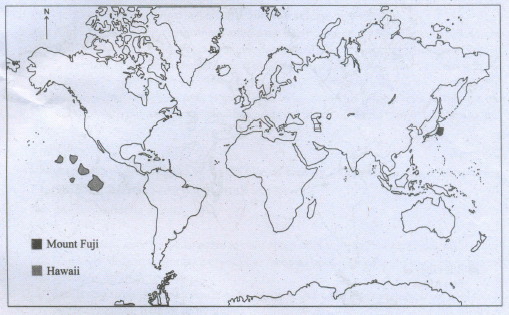
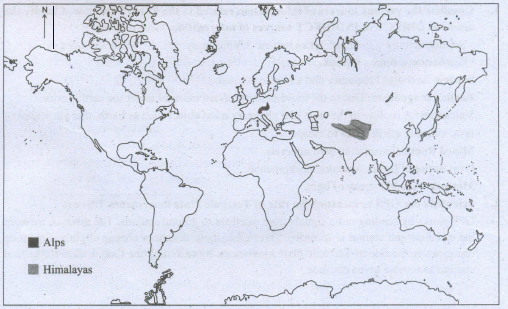
14.
Out of the following, which is not a food crop
Bajra
Ragi
Maize
Coconut
15.
The Secondary sector of the economy produces ____________from raw materials.
Semi finished goods
Finished goods
Economic goods
raw materials
16.
A major source of revenue to the Roman state was_________
Agriculture
Exports
Taxes
Slaves trade
17.
'Nayakas' were __________officers.
Administritive
Special
Military
Police
18.
Zwingli worked from_______
Zurich
Genoa
Rome
Spain
19.
Zebra and goat come under __________consumers.
Primary
Secondary
Tertiary
None of the above
20.
In educational loans the________is the main borrower.
parent
Student
21.
UDHR played a crucial role in promoting_________
Individual Rights
Fundamental Rights
Human Rights
None of the above
22.
After conquering Egypt, the Ottomans assumed the title of___________
King
Caliph
Emperor
Raja
23.
Hideyoshi was a_________
Noble
Trader
Peasant
Warrior
24.
'Apartheid' was followed by____________
South Sudan
South Africa
Nigeria
Egypt
25.
Why is the usage of rainforest biomes for large scale agriculture unsustainable?
because it is too wet
because the temperature is too warm.
because the soil is too thin
because the soil is poor
26.
The School of Athens was painted by
Raphael
Michelangelo
Albrecht Durer
Leonardo da Vinci
27.
____________was the Roman Governor responsible for the crucifixion of Jesus.
Innocent I
Hildebrand
Leo I
Pontius Pilate
28.
The enrolment for higher education in the highest in _______ in India.
Kerala
Tamil Nadu
West Bengal
Maharashtra
29.
The redness of the red clay soil is due to the presence of_______________
iron oxide
carbon
copper
magnesium
30.
This is the wettest place of India.
Mawsynram
Western Ghats
Shillong
Pune
31.
Kudavolai system was a very notable and unique feature of the village administration of ___________
Cheras
Cholas
Pandyas
Pallavas
32.
The discovery of _______ marked the beginning of the second phase in the history of civilisations.
Iron
Gold
Copper
Bronze
33.
_____________is a vent (or) and opening on the surface of the earth.
Volcano
Tsunami
Earthquake
None of the above
34.
The movement of tectonic plates is due to __________________ energy from the mantle
Atomic energy
Hydro energy
Wind energy
Thermal energy
35.
(i) Bullion means precious metal available in the form of ingots. (correct)
(ii) Punch-marked coins are the earliest coins used in India. (correct).
(iii) Non-Tamil literary sources also offer information on early Tamil society. (correct)
(iv) Millets were cultivated in the wet lands (incorrect)
(i) is correct
(i) & (ii) are correct
(i), (ii) & (iii) are correct
(iv) is correct
36.
______ are tools used for scraping the surfaces
Lunates
Triangles
Scrapers
Cists
37.
_______ were the contemporaries of the people of Indus and Egyptian civilisation.
The Egyptians
The Sumerians
The Romans
The Indus people
38.
Which is the correct sequence of various sectors in GDP of India in the descending order?
Primary sector, Secondary sector, Tertiary sector
Primary sector, Tertiary sector, Secondary sector
Tertiary sector, Secondary sector, Primary sector
Secondary sector, Tertiary sector, Primary sector
39.
Thermal plant emits large quantity of _______, which pollutes the environment
Oxygen
Nitrogen
Carbon
Carbon dioxide
40.
The meaning of Franchise is
Right to elect
Right to vote for the poor
Right to vote
Right to vote for the rich
41.
Tri-ratnas are the three priniciples taught by
Buddha
Mahavira
Lao-tze
Confucius
42.
The lowest layer of the atmosphere is__________.
Troposphere
Stratosphere
Exosphere
Mesosphere
43.
Deposits of fine silt blown by wind is called as
Loess
Barchans
Hamada
Ripples
44.
What is the correct chronological order of four civilisations of Mesopotamia
Sumerians - Assyrians - Akkadians - Babylonians
Babylonians - Sumerians - Assyrians - Akkadians
Sumerians - Akkadians - Babylonians - Assyrians
Babylonians - Assyrians - Akkadians - Sumerians
45.
_______ is genetically closest to humans
Gorilla
Chimpanzee
Orang-utan
Great Apes
46.
Dictatorship and Monarality
47.
Mention the percentage of migrants in India as well as in Tamil Nadu.
48.
What are the functions of Panchayat Union?
49.
Write a note on Farmer Producer Organizations (FPOs) in Tamil Nadu.
50.
Mention the disadvantages of Remote sensing.
51.
Mention about the official population policy implemented in 1952.
52.
How did the company government use the surplus capital in England?
53.
What were the demands of the Chartism?
54.
Who was Patriots and Loyalists?
55.
Attempt a note on Haymarket Massacre.
56.
Explain Home Charges
57.
The distance between two cities A and B is 5 km. It is represented by a line of 5 cm on the map. Calculate the distance and give the answer in RF.
58.
Give the two important recommendations of L.M. Singhri Committee (1986).
59.
Who monitors the quantity and quality of ground water?
60.
What was witnessed by the period of Principate?
61.
Why did the first Persian attack on Greece fail?
62.
What is Classical World?
63.
Mention the several power centres which came up after the full of the Chola empire.
64.
"Gangaiyum Kadaramum konda Cholan". Who was he?
65.
Fall of Constantinople
Who captured Constantinople?
66.
Write about Zwingli and Calvin
67.
Explain the following terms
a) Herbivorous
b) Carnivorus
c) Ommivorous
d) Scavengers
68.
What is ATM?
69.
What is NHRC?
70.
What is Hypsometric curve?
71.
Define: POCSO
72.
Why were coins of low value printed in large quantities?
73.
What is Biosphere?
74.
What are the factors that generate the ocean currents?
75.
Contribution of Arabs to Science and Technology
76.
Pacific Ring of Fire - Most seismically and volcanically active. Why?
77.
Mention the land features carved by a river in its upper course
78.
What do you mean by Human Resource Development?
79.
Cuddalore and Nagapattinam are always affected by cyclones. Why?
80.
What does structure of employment denote?
81.
Mention the merits and demerits of Indirect elections.
82.
What do you mean by "Republic"?
83.
What kind of life Mahavira and Buddha live?
84.
What is Hydrosphere?
85.
What does Erytbrean sea refer to?
86.
What was the main factor for the development of early civilisations?
87.
The Indus civilisation is known as Harappan civilisation rather than Indus. Why?
88.
What do you know of Ajathasatru?
89.
Overseas interactions brought glory to ancient Tamilagam. Give examples in support.
90.
What do you mean by a hanging valley?
91.
How does a cave differ from a sea arch?
92.
What do you mean by biological weathering?
93.
State the salient features of the Ziggurats.
94.
Write a note on the impact of pastoralism on the prehistoric people in Tamil Nadu.
95.
Locate the following on the world outline map.
1. Priairies
2. Downs
3. Tundra Biomes
4. Equatorial Biomes
96.
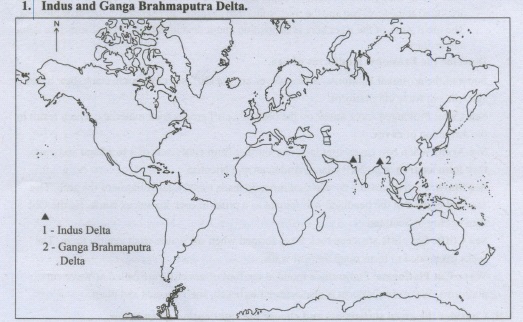
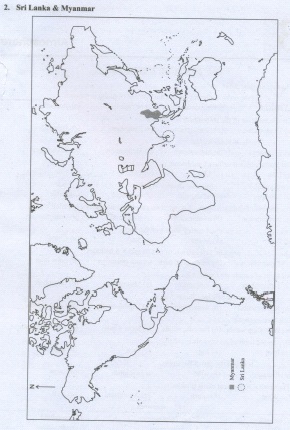
Indus and Ganga Brahmaputra Delta
97.
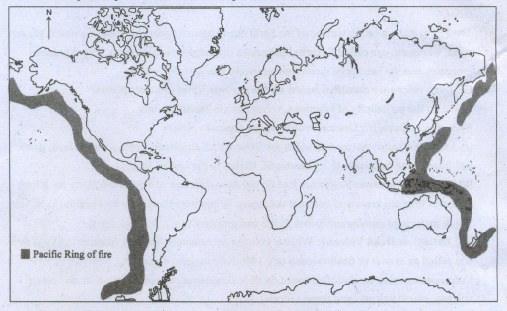
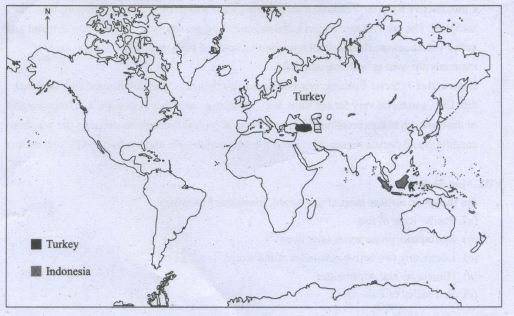
On the given outline map of the world, mark the following:
a. Pacific Ring of fire
b. Earthquake prone zones (any two)
c. Locate any two active volcanoes of the world.
d. Himalayas and Alps ranges
e. Rift valley of East Africa.
98.
What are the de-merits of federal form government?
99.
How is Earthquake caused?
100.
What are the merits of a federal government?
101.
Expand the following:
1. NNP
2. PCI
102.
Give the meaning of a political party
103.
Distinguish between direct and indirect democracy.
104.
Mention the rules to ensure Road Safety for children.
105.
How different factors contribute to road accidents?
106.
Write note the Parliamentary form of Government.
107.
Write a short note on "Red Tea".
108.
Write a Note on Periyar.
109.
Write about ammaalvari journey towards Organic farming?
110.
What are the colour codes used with map symbols.
111.
How can we conserve forests?
112.
Write a note on the famines which occurred in British India.
113.
Mention the main attributes of the Industrial Revolution.
114.
How did the American war of Independence end in the declaration of independence?
115.
Study your area and write down about its settlement pattern.
116.
Highlight the contribution of Greece to World Civilization
117.
Write a note on the following:
Darasuram Temple
118.
Explain the term Renaissance.
119.
How is currency printed in India?
120.
Democracy- Development - Fundamental Rights - establish a positive link among these three factors.
121.
Write about Feudalism.
122.
Explain the terms a) Continental Rise b) Oceanic ridge
123.
Write a note on Fresh Water
124.
Explain the various components of ecosystem
125.
Explain the origin of the river and its course.
126.
Describe sustainability of Development.
127.
Tertiary sector is in top position in the world now. Justify
128.
Write in detail what kind of environmental problems you face in your locality.
129.
The river channels in the lower course are wider than the upper course
130.
Give an account of Mobilisation and Democratic Participation.
131.
Though democracy in India has been appreciated worldwide for its working there is still a lot of scope for improvement - Discuss.
132.
Give reasons for the decline of Buddhism.
133.
Give an account of 'Tsunami'
134.
Explain the "Archaeological sites".
135.
Discuss the Neolithic culture in Tamilnadu
136.
Compare the Indus Civilization with Tamil Civilization.
137.
Compare the employment conditions prevailing in the organised and unorganised sectors.
138.
Assertion (A): Parties shape public opinion.
Reason (R): They raise and highlight issues of importance.
(a) Both (A) and (R) are true and (R) explains (A)
(b) Both (A) and (R) are true and (R) does not explain (A)
(c) (A) is correct and (R) is false
(d) (A) is false and (R) is true
Both (A) and (R) are true and (R) explains (A)
Both (A) and (R) are true and (R) does not explain (A)
(A) is correct and (R) is false
(A) is false and (R) is true
1.
(d)
both a and b
2.
(c)
500
3.
(b)
55%
4.
(a)
Weather map
5.
(c)
Nebular
6.
(c)
Second World War
7.
(a)
farmer
8.
(b)
Roads
9.
(c)
Stay away from glass, windows, outside doors and walls and anything that could fall.
10.
(b)
Armand Peugeot
11.
(c)
Declaration of Rights of Man and Citizen
12.
(a)
1992
13.
(a)
7%
14.
(d)
Coconut
15.
(b)
Finished goods
16.
(d)
Slaves trade
17.
(c)
Military
18.
(a)
Zurich
19.
(a)
Primary
20.
(b)
Student
21.
(c)
Human Rights
22.
(b)
Caliph
23.
(c)
Peasant
24.
(b)
South Africa
25.
(a)
because it is too wet
26.
(a)
Raphael
27.
(d)
Pontius Pilate
28.
(b)
Tamil Nadu
29.
(a)
iron oxide
30.
(a)
Mawsynram
31.
(b)
Cholas
32.
(a)
Iron
33.
(a)
Volcano
34.
(d)
Thermal energy
35.
(c)
(i), (ii) & (iii) are correct
36.
(c)
Scrapers
37.
(b)
The Sumerians
38.
(c)
Tertiary sector, Secondary sector, Primary sector
39.
(d)
Carbon dioxide
40.
(c)
Right to vote
41.
(b)
Mahavira
42.
(a)
Troposphere
43.
(a)
Loess
44.
(c)
Sumerians - Akkadians - Babylonians - Assyrians
45.
(b)
Chimpanzee
46.
| S.No. | Dictatorship | Monarchy |
|---|---|---|
| 1 | Dictatorship is an office that has been taken through force. | Monarchy is resign that passed from one generation to another. |
| 2 | A Dictatorship is termed as a government rule by one person or commands who is know as the Dictator. E.g. Uganda, Zimbawe, | Monarchy is the rule of the king or green as an emperor. E.g.Britan, Australia. |
47.
(i) The percentage of migrants was 37 percent in the country.
(ii) It was at a much higher rate in Tamil Nadu at 43 percent.
48.
The functions of the Panchayat Union are:
(i) Supply of drinking water
(ii) Maintenance of Village Health Centres
(iii) Maintenance of the roads
(iv) Establishment of Maternity Homes
(v) Establishment of Public fair
(vi) Establishment of Veterinary hospitals
(vii) Maintenance of Social forest
(viii) Repairing of Primary School buildings
49.
(i) Small and marginal farmers in Tamil Nadu will be benefited from FPOs.
(ii) Each of the producers' groups have been given an investment grant of Rs. 5 lakh to purchase farm equipment.
(iii) Apart from using the equipment within the group, these can also be rented out to other farmers.
(iv) The government also has a contract farming policy.
50.
(i) It is difficult to prepare large scale maps from obtained satellite data.
(ii) The technique is very expensive for small areas requiring one time analysis.
51.
(i) India has an official population policy implemented in 1952.
(ii) India was the first country to announce such a policy.
(iii) The main objective of this policy was to slow down the rate of population growth, through promotion of various birth control measures.
52.
(i) The company government decided to make a massive investment in railroads, the posted system irrigation, modem banking and education with its surplus capital.
(ii) The capital exported was predominantly for railway construction.
(iiii) The railways helped to move British troops quickly across the country.
(iv) It also enabled the conquest of the Indian market to the maximum extent.
53.
(i) Known as Chartism, this working class movement was active between 1836 and 1848.
(ii) The Chartists called for voting rights to every man over twenty-one years of age, secret ballot (voting), abolition of property qualification for members of the parliament, annual parliamentary elections and equal representation.
54.
(i) Americans were divided among themselves as Patriots and Loyalists.
(ii) About two-thirds of the people who supported the war were Patriots.
(iii) The Patriots fought for independence and the Loyalists supported the British.
(iv) The Patriots were better organized than the loyalists.
55.
(i) A labour protest took place on 4 May 1886 at Hay market square in Chicago.
(ii) It began as a peaceful rally in support of workers striking for an eight hour day resulted in the killing of several workers by the police.
(iii) To commemorate the Haymarket Affair 1 May 1887 is observed as the Labour day or May day or International Workers Day.
56.
(i) Home charges - the dividends on East Indias stock, interest on debt, savings from salaries and the pensions of officers and establishments and buildings in the India office, London, transporting cost of British troops to and from India.
(ii) This drain of wealth in the form of Home charges in course of time rose to 16 million pounds per year.
57.
Given earth's distance is =5 km
Given represented line distance is = 5 cm
5 km = 500000 cm
Representative fraction (RF) = \(\frac{\text { Distance on the map }}{\text { Distance on the ground }}\)
RF.\(=\frac{5 cm}{50 km}=\frac{5 cm}{500000 cm}\)
RF = 5 : 500000
RF = 1 : 100000
58.
(i) Rajiv Gandhi government in 1986 appointed a committee on "Revitalisation of Panchayati Raj institutions for Democracy and Development".
(ii) It was under the Chairmanship of L.M. Singhri.
(iii) Its recommendations were
1. Constitutional recognition to the Panchayati Raj institutions.
2. A new chapter should be added in the constitution of India.
3. Nyaya Panchayats should be created for a cluster of villages.
59.
(i) The Union Water Board is constantly monitoring the level and nature of ground water.
(ii) This continuous monitoring has categorized the Panchayat Union in terms of the amount of groundwater used.
60.
(i) The period witnessed a great influx of luxury goods such as silk, spices, and gems from the east.
(ii) Cities were built on a grand scale, with temples, theatres, stadia and colosseum, gymnasia, aqueducts, baths and markets.
(iii) The rich people distracted the attention of the poor by organizing games and contests in circuses.
(iv) Gladiators were forced to fight and kill each other.
61.
(i) The first Persian attack on Greece failed.
(ii) This was due to the fact that Persian army suffered from disease and lack of food, during its march.
(iii) During the second attack, they avoided the land route and came by sea. 3.
62.
(i) Classical World comprises ancient Greece and Rome.
(ii) Classical Age refers to the inter-locking civilizations of ancient Greece and ancient Rome, known as Graeco- Roman World
63.
(i) Further to the South, the Pandya kings again sought to regain the glory they had lost under the Cholas.
(ii) Many brilliant Pandya kings like Jatavarman Sundara Pandyan ruled at the end of the 13th century.
(iii) Further to the north was the Hoysala kingdom, with its capital at Belur.
(iv) The Kakatiyas ruled from Warangal (Telangana) while the Yadavas ruled in Devagiri.
(v) These states did not exist in peaceful cooperation, and the region was beset by many internal wars and conflicts.
64.
(i) Rajendra I earned the title "the Chola who had conquered the Ganga and Kadaram".
(ii) He sent naval expeditions against the Sailendra Kingdom of Sri Vijaya (in Indonesia), Kadaram (Kedah) and Ceylon.
(iii) So he was given the title Gangaiyum Kadaramum konda Cholan
65.
In 1453 A.D. Constantinople, the capital of the Byzantine Empire, was captured by the Ottoman Turks.
66.
(i) Zwingli of Switzerland and John Calvin of Geneva followed Martin Luther.
(ii) Zwingli worked from Zurich and was against all forms of rituals.
(iii) John Calvin also opposed all forms of display of wealth.
(iv) Calvin codified his views in his book Institutes of Christian Religion.
(v) He believed that Church should be independent of political control on religious matters.
(vi) Calvinism became more popular
67.
a)Herbivorous: A herbivores is an animal that gets its energy from eating plants and only plants. Many herbivores have special digestive systems that let them digest all kinds of plants including grasses. Eg., deer, rabbits, cows, sheep, goats, elephants, giraffes, horses and pandas.
b) Carnivores: A Carnivore is an animal that gets food from killing and eating other animals. Or they scavenge their dead flesh. Eg., Hyenas, Wolves, Mountains lions, Polar Bears.
c) Omnivores: An omnivore is a kind of animal that eats either other animals or plants. Eg. Raccoons, pigs, rats, chickens, crows etc.
d) Scavengers: Scavengers feed partly or wholly on the bodies of dead animals. Eg., Jackals, Leopards, Lions, Vulture etc.
68.
(i) ATM means Automated Teller Machine.
(ii) One can easily withdraw the necessary amount from ATM with the help of an ATM Debit card.
(iii) One can easily withdraw money needed at any time at ATMs located everywhere.
69.
(i) The National Human Right Commission (NHRC) is an autonomous body constituted on 12th October 1993 under the protection of Human Rights Act, 1993.
(ii) It consists of a chairman and few other members.
(iii) NHRC is responsible for the protection and promotion of human rights in India.
(iv) The Act defines the right relating to life, liberty, equality and dignity of the individual guaranteed by the Constitution or embodied in the international covenants.
70.
(i) Hypsometric curve is a graphic representation which shows the height of a certain place found on land and the height of ocean features at sea.
(ii) 'Hypso' means height in Greek.
71.
It protect children's from sexual exploitation and abuse, When they are forced or persuaded to take part in sexual activities physically or mentally.
72.
(i) As days went by, issues arose while trade prospered, there were insufficient reserves of gold and silver.
(ii) Mines also had a limited reserve of these metals.
(iii) An alternative was found and coins were made using metals with lesser value.
(iv) These were used to buy and sell goods of lesser value.
73.
(i) Biosphere, the fourth sphere of the Earth, is a life supporting layer that exists on the earth's surface.
(ii) This layer on earth encompasses the Lithosphere, Hydrosphere and Atmosphere.
(iii) It includes flora and fauna that thrive on or near the earth's surface.
(iv) Biosphere harbours all ecosystems on the earth and sustains life forms including mankind
74.
The factors that generate ocean currents are:
(i) Earth's rotation
(ii) Prevailing winds and
(iii) Differences in temperature and salinity of ocean water
75.
(i) Arabs were more interested in scholarly pursuits.
(ii) They had a scientific spirit of inquiry.
(iii) In some subjects like medicine and mathematics, they learnt much from India.
(iv) Many Arab students went to Takshashila, which was still a great university for specialized medicine.
(v) Sanskrit books on medicine and other subjects were translated into Arabic.
(vi) In medicine and surgery, Arab physicians and surgeons earned a great reputation.
76.
The Ring of Fire is a ring of volcanoes around the Pacific Ocean. These volcanoes result from subduction of oceanic plates beneath lighter continental plates, A subduction zone is a place where one plate of oceanic lithosphere is shoved under another plate. As it is shoved into the hotter mantle the plate heats up. The addition of volatiles such as water to the hot overlying mantle causes partial melting and the production of magma. This magma rises up through the over-lying plate to erupt at the surface. Hence, the Pacific Ring of Fire is most seismically and volcanically active.
77.
'V' shaped valleys, Gorges, Canyons, rapids, pot holes, spurs and waterfalls.
78.
Human Resource Development means the development of a person's physical and mental abilities through education, health care and training.
79.
(i) Coastal zone is exposed to natural forces including cyclones and Tsunamis.
(ii) Cuddalore and Nagapattinam are situated on the Sea-Shore.
(iii) Cuddalore and Nagapattinam are vulnerable to storms.
(iv) During Summer Bay of Bengal subject to intense heat cause to raise the humid and unstable air masses that produce cyclone.
80.
Structure of employment denotes number of workers engaged in different sectors of the economy.
81.
Merits:
(i) Indirect elections are less expensive.
(ii) It is more suited to elections in large countries.
Demerits:
(i) If the number of voters is very small, there exists the possibility of corruption, bribery, horse trading and other unfair activities.
(ii) It is less democratic because people do not have a direct opportunity to elect, but they instead do it through their representatives. So, this may not reflect the true will of the people.
82.
A state in which supreme power is held by the people and their elected representatives and which has an elected (or) nominated President rather than a Monarch.
e.g., India, Australia.
83.
Mahavira and Buddha lived a life of purity and exemplified simplicity and self-denial.
84.
The Hydrosphere is the watery part of the Earth's surface including oceans, rivers, lakes and water vapour.
85.
(i) Erythrean sea refers to the waters around the red sea.
(ii) It makes references to the Sangam Age, Ports of Muciri, Thondi, Korkai and Kumari as well as the Cheras and the Pandyas.
86.
(i) As a result of domestication and cultivating plants, there was an excess food production.
(ii) The surplus food production was a main factor for the development of early civilisations.
87.
(i) The Indus valley civilisation is also known as the Harappan civilisation since Harappa was the first site to be discovered.
(ii) This civilisation is known as Harappan civilisation rather than Indus valley civilisation, since it extended beyond the Indus river valley.
88.
1. Ajathasatru, the son of Bimbisara is said to have murdered his father and ascended the throne in 493 BCE.
2. He expanded his territery through military conquests.
3. He strengthened the Rajagriha fort and also built another fort at Pataligrama on the Ganges.
89.
(i) Tamil country had connections with countries overseas both in the east and west.
(ii) Roman ships used monsoon winds to cross the Western Sea or the Arabian Sea to connect Tamilagam with the Western world.
(iii) Spices including pepper, ivory, and precious stones were exported.
(iv) Metal including gold, silver and copper and precious stones were imported.
90.
These are valleys eroded by tributary glacier and that hangs over the main valley
91.
| Sea cave | Sea Arch |
| Prolonged wave attack on the base of a cliff erodes rock materials which result in the formation of caves. | When two caves approach one another from either side of a headland and Unite, they form an arch. e.g., Neil Island, Andaman & Nicobar |
92.
Biological weathering occurs due to the penetration and expansion of plant roots, earth worms, burrowing animals (rabbits, rats) and some human activities.
93.
1. The Ziggurats were at the city centre on a platform and appeared like steep pyramids, with staircases leading to the top.
2. Around this temple were complexes of ceremonial courtyards, shrines, burial chambers for the priests and priestesses, ceremonial banquet halls, along with workshops, granaries storehouses and administrative buildings.
94.
1. The people in the Iron Age practiced agriculture, domesticated animals.
2. Cattle rearing was an important occupation of these people.
3. They domesticated cattle and sheep.
4. They lived in small villages.
95.

96.
a)
b)
97.
a) Pacific Ring of fire: It is a major area and an arc in the basin of the Pacific ocean where many earthquakes and volcanic eruptions occur.
(b) Earthquake-prone zones (any two): Turkey, Indonesia
(c) Locate any two active volcanoes of the world: Hawaii, Mount Fuji
(d) Himalayas and Alps ranges
98.
De-merits of federal form of government are,
(a) Federal government in weaker when compared to the unitary government.
(b) Federal government is more expensive.
(c) Provincial tendencies are very common
(d) Lack of uniformity in Administration
(e) Threat to national unity
(f) Distribution powers between centre and states lead to conflict
(g) Double Citizenship
(h) Rigid constitution cannot be amended easily for the changing needs.
(I) The state governments sometimes place hindrances in the foreign policy.
99.
(i) Earthquake is a sudden vibration of the part of the earth caused by plate movements.
(ii) It occurs along the plate boundaries.
(iii) The place inside the earth where earthquake originates is focus.
(iv) The point on the earth's surface above the focus is epicenter.
(v) The damage caused by the earthquake is the highest near the epicenter.
(vi) The earthquake is measured by an instrument is called Seismograph.
(vii) It is recorded in Richter scale.
100.
The merits of federal government are
(a) Reconciliation of local autonomy with national unity.
(b) Division power between centre and states leads to administrative efficiency.
(c) It gives rise to big states.
d) Distribution powers checks the despotism of central government.
(e) More suitable for bigger countries
(f) It is good for economic and cultural progress.
101.
(i) NNP - Net National Product
(ii) PCI - Per Capita Income
102.
(i) A political party is an organisation formed by a group of people with a certain ideology and agenda to contest elections and hold power in the government.
(ii) A political party has three components: a leader, active members and the followers.
103.
| Direct democracy | Indirect democracy |
|---|---|
| When the people themselves directly express their will on public affairs, the type of government is called pure or direct democracy. e.g., Ancient Greek city-states, Switzerland | When the people express their will on public affairs, through their elected representatives, the type of government is called indirect or representative democracy. e.g., The prevailing system of democracy in India, USA and UK |
104.
Rules to Ensure Road Safety for chlldren
It is impportant for children to know about road safety rules and regulatioins. Here are a few
basic road safety rules for children.
i) Know Your Signals
ii) Stop, Look and Cross
iii) Pay Attention - Listen
iv) Don't Run on Roads
v) Always Use Sidewalks
vi) Never Stick Hands outside the Vehicle
vii) Never cross Road at Bends
viii) Don't Rush.
105.
The different factors contribute to road accident are,
i) Drivers: Over speeding, rash driving, violation of rules, failure to understand signs, fatigue, alcohol.
ii) Pedestrians: Carelessness, illiteracy, crossing at wrong places, jaywalkers.
iii) Passengers: Projecting their body parts outside vehicles, talking to drivers, alighting and boarding vehicles from the wrong side, travelling on footboards, catching a running bus etc.,
iv) Vehicles: Failure of brakes or steering, tyre burst, insufficient headlights, overloading.
v) Road Conditions: Potholes, damaged roads, eroded roads merging of rural roads with highways and illegal speed breakers.
vi) Weather conditions: Fog, snow, heavy rainfall, wind storms, hail storms.
106.
Parliamentary form of Government
(i) The parliamentary system of government is the one in which the executive is responsible to the legislature for its policies and acts.
(ii) It is also known as cabinet government or responsible government or Westminster model of government and is prevalent in Britain, Japan, Canada, India among others.
Features of Parliamentary form of government
(i) Nominal and Real Executives.
(ii) Majority Party Rule
(iii) Collective Responsibility
(iv) Double Membership
(v) Leadership of the Prime Minister
Merill of the parliamentary form of government
(i) Harmony between Legislature and Executive.
(ii) Responsible Government
(iii) Prevents Dictatorship.
(iv) Wide Representation.
Demerits of the parliamentary form of government
(i) Unstable Government.
(ii) No Continuity of Policies.
(iii) Dictatorship of the Cabinet.
(iv) Against Separation of Powers.
107.
(i) "Red Tea" is a very well known novel written by Paul Harris Daniel.
(ii) The novel portraits the slavery life of plantation workers in Valparai.
(iii) This novel depicts the blood stained history of the workers that is hidden behind the green cover of the hills.
(iv) This novel has been translated in Tamil by R. Murugavel in the name "Eriyum Panikkaadu" (எரியும் பனிக்காடு)
(v) The story starts with Karupan migrating to the hills with his wife in search of survival.
(vi) The narrator of this story is Dr. Daniel, who comes there to treat the plantation employees.
108.
(i) E.V. Ramasamy Periyar was the Chairman of the Erode Municipality for many years from 1917.
(ii) During his tenure in Erode Municipality, EVR worked effectively for drinking water supply and provision and Health facilities to the people.
(iii) He only provided the piped water supply first in India.
(iv) He was a member of the District Board and Secretary ofthe Water Works Committee and Plague Committee.
(v) He gave a proposal to expand the municipality by adjoining Neighboring areas but it came into existence only in 1980.
109.
(i) When Green Revolution was spreading throughout the nation, Nammalvar started his life journey towards organic farming.
(ii) He resigned his regional Agricultural Developmental Officer post for this purpose.
(iii) He believed in the youth the future generation of India.
(iv) Nearly 6000 youth had completed training in organic farming in his Vanagam Farm.
(v) He spent most of his days in struggles for organic farming and travels campaigning for the same.
(vi) He used only public transport.
(vii) He felt that this was his small role in reducing environmental pollution.
110.
(i) Brown: land or earth features - contour lines, eroded areas, prominent rock outcrops, sand areas and dunes, secondary or gravel roads
(ii) Ligbt Blue: water features - canals, coastlines, dams, lakes, marshes, swamps and levees, ponds, rivers and water towers.
(iii) Dark Blue: national waterways
(iv) Green: vegetation features - cultivated fields, golf courses, nature and game reserve boundaries, orchards and vineyards, recreation grounds, woodland
(v) Black: construction features - roads, tracks, railways, buildings, bridges, cemeteries, communication towers, dam walls, excavations and mine dumps, telelphone lines, power lines, windpumps, boundaries
(vi) Red: construction features - national, arterial and main roads, lighthouses and marine lights
(vii) Pink: international boundaries
111.
(i) Conservation of forests can be done through the regulation of cutting of trees.
(ii) Control over forest fire: Through regular monitoring and controlling the movement of the people forest fire can be prevented.
(iii) Reforestation and atrore tation: Reforestation involves the replanting or regeneration of areas of forest which have previously been damaged or destroyed. Sometimes forests are able to regenerate naturally. Afforestation is the process of planting trees or sowing seeds on barren land devoid of any trees to create a forest.
(iv) Proper use of forest products: We depend on forests for our survival from the air we breathe, to the wood we use.
Besides providing habitats for animals and livelihoods for humans, forest products are one of the most essential things in our day to day life. Therefore we must use forest products properly.
(v) Sutainable forest manaaement: The use of forest and forest lands in a way and at a rate, that maintains their biodiversity, productivity, regeneration capacity, vitality and their potential to fulfill the global levels should not cause damage to other eco systems.
112.
(i) The policy of free trade and the forcible collection of land revenue resulted in the out break of famines.
(ii) The Odisha famine of 1866-67 was a severe and terrible event.
(iii) The famines of 1876-78 known as the Great famine of 1876-78 caused a large migration of agricultural labourers and artisans from Southern India to British colonies.
(iv) Here they worked as indentured labourers on plantations.
(v) In the Madras Presidency, the famine of 1876- 78 was preceded by droughts.
(vi) The situation was made worse because of the colonial government's policy of laissez faire in the trade of food grains.
(vii) Two of the worst famine-afflicted areas in the Madras Presidency were the district of Ganjam and Vizagapatnam. They continued to export grains throughout the famine.
(viii)These famines were typically followed by various infectious diseases.
(ix) The memory of this famine is still preserved in various folk songs and ballads.
(x) The Bengal famine of 1770 as well as 1943 of British India took a heavy toll of human lives.
113.
The main attributes of the Industrial Revolution were technological, socio-economic and cultural.
(i) Use of new basic materials: iron and steel
(i) Use of new energy sources: coal, electricity, petroleum
(iii) Invention of new machines such as the spinning jenny and the power loom that increased the production with a minimum expending of human energy
(iv) Emergence of a new organization known as the factory system, which entailed increased division of labour and specialisation of work
(v) Development in transportation and communication
(vi) Increasing application of science to industry
(vii) The use of new technology
114.
(i) Initially the colonies did not begin fighting for the sake of independence. Their grievances were taxation and restrictions on trade.
(ii) George Washington was the Commender-in-Chief of the colonies and their battle cry was 'No Taxation without Representation'.
(iii) On 5 September 1774, the first Continental Congress met in Philadelphia. The Congress adopted a Declaration of American Rights.
(iv) The Battle of Bunker Hill signaled the outbreak of the American war of Independence.
(v) The second Continental Congress met on 10 May 1775 at Philadelphia. It organised the army gathered around Boston as the continental army and placed it under the command of George Washington.
(vi) As the war progressed, the Continental Congress assumed the functions of government. A committee was formed to explore the possibility of foreign aid.
(vii) On 17 June 1775 the Battle of Bunker Hill, the first major battle was fought in Massachusetts. Soon the British forces retreated from Boston.
(viii) On June 7, 1776 Richard Henry Lee of Virginia moved a resolution for independence.
(ix) After much debate the Declaration of Independence, drafted by Thomas Jefferson, was adopted by the Congress on July 4, 1776. This day is celebrated by the Americans as Independence Day.
115.
(i) A settlement pattern refers to the way that buildings and houses are distributed in a rural settlement.
(ii) Settlement patterns are of interest to geographers, historians and anthropologists for the insight they offer in how a community has developed over time.
Linear : In a linear settlement pattern, the buildings are arranged in lines. These lines often follow the route of a road or body of water.
Dispersed : In a dispersed settlement pattern, the buildings are scattered over a wide area. Dispersed settlement patterns are often associated with agricultural activity and are frequently surrounded by farmland.
Nucleated: In a nucleated settlement pattern, the buildings are grouped around a central core. Nucleated settlement patterns are usually associated with patterns of agriculture in which the settlement is surrounded two or three fields, and each field divided into strips that were formed b individual farmers.
116.
(i) The ancient Greeks created the world's first democracy. Athens started on with a monarchy and then advanced to an oligarchy until it finally reached a democracy.
(ii) The Greek Alphabet was the first alphabet in the western sense of the word, featuring distinct letters for vowels and consonants.
(iii) The first library in the world, the library of Alexandria was actually built in Egypt.
(iv) The Olympic games started in ancient Greece specially in the city of Olympia.
(v) Science and Mathematics - Eratosthenes was the first mathematician to calculate the circumference of the Earth. Aristarchus, Archimedes and Hipparchus were great mathematicians and scientists.
(vi) One of the common examples of Greek Architecture in the modular world is the Column in Pillar.
(vii) Greek mythology has pervaded nearly every form of popular culture imaginable. Many Greek myths have been adapted into modem novels, movies, TV, shows etc.
(viii) The first lighthouse in the world was located in the Greek controlled Egyptian Kingdom of Alexandria.
(ix) The democratic people of ancient Greece, especially Athens, were the first to employ trial by jury as we know it today.
117.
Darasuram Temple:
(i) Darasuram is a panchayat town, located 3 kilometres from Kumbakonam in Thanjavur District, Tamilnadu.
(ii) The town is known for the Airavateswara temple constructed by Raja Raja Chola II in the 12th century A.D.
(iii) The temple is recognised UNESCO World Heritage Monument.
(iv) Darasuram temple is a storehouse of art and architecture.
(v) The vimana is 85 feet high.
(vi) With heavily ornamented pillars accurate in detail and richly sculpted walls, the Airavateswara at Darasuram is a classic example of Chola art and architecture
118.
(i) The Italian city-states were centres of cultural activities since the fourteenth century.
(ii) With the coming of the scholars and artists from Constantinople, there was a surge of enthusiasm and interest in studying classical literature and art of Greeks and Romans.
(iii) This creative upsurge was reflected in their writings, art, architecture and music.
(iv) This cultural florescence is known as the renaissance.
(v) The origin of the word renaissance is from the Italian word 'renascita' meaning rebirth.
(vi) It is called renaissance because there was a rebirth or revival of classical Greek and Latin literature.
(vii) Many scholars in Italy went in search of manuscripts of classical literature.
(viii) Greek scholar Manuel Chrysoloras who taught Greek classics in Italy, Guarino and Giovanni Aurispa, to name just a few, visited Constantinople several times to collect Greek manuscripts.
(ix) Later they printed what they collected.
(x) This provided stimulus to the flowering of renaissance.
119.
(i) In 1925, the British government established a government press at Nasik in Maharashtra.
(ii) Currencies were printed three years later.
(iii) In 1974, a press was started in Dewas, Madhya Pradesh.
(iv) In the 1990's two more presses were started in Mysuru, Karnataka and Salboni in West Bengal to print bank notes.
(v) The Reserve Bank of India has the authority to decide the value of currency to be printed and how the amount should reach its destination safely.
(vi) Though the RBI has the power to print up to ten thousand rupee notes, at present a maximum of upto rupees two thousand is printed.
120.
(i) Democracy has an important role to play in promoting sustainable development.
(ii) Free and fair elections, independent media, accountable government as well as other basic democratic principles are all critical components of an environment and conducive to growth.
(iii) In a direct democracy the people decide on the policy initiatives directly.
(iv) Democracy is very much responsible and important over the development of a nation.
(v) In a democratic country the citizens are force to express their views and opinions on decisions taken by government.
(vi) This makes the government take more responsible decisions and they go with majority people.
(vii) All these actions can be carried on with the help of the fundamental rights generated by the constitution of India with legal background.
121.
(i) Feudalism was born out of chaos and disorder in the society.
(ii) Under Feudalism the king was the head of the feudal regime.
(iii) Immediately after him were the great nobles, known as dukes, counts, earls.
(iv) The relationship was one of a vassal.
(v) The nobles in turn had vassals of their own, dividing and distributing their fief to lesser nobles called viscounts or barons.
(vi) Last in this order were the knights, whose fiefs cannot be divided.
(vii) At the bottom were the villeins or serfs.
(viii) In the feudal system which centred around vassalage, there was no idea of equality or freedom.
(ix) There were only rights and obligations.
(x) The Bishops, Abbots and Cardinals and the Church came under this socio-political structure.
(xi) The nobility and the clergy did not do any physical work only peasants and artisans were taxed.
(xii) They new class traders formed guilds, became wealthy enough to defy even the nobles and the kings.
(xiii) This development led to the end of Feudalism.
122.
a) Continental Rise
(i) At the base of the continental slope is a gently sloping layer of sediments which merge into the deep-sea floor.
(ii) This underwater feature found between continental slope and abyssal plains is called the continental rise.
(iii) It consists of submarine fans which are similar to the alluvial fans found on land.
b) Oceanic Ridge
(i) Oceanic ridge is a continuous submarine mountain chain.
(ii) They are made of young basaltic rock formed when two tectonic plates moves apart.
(iii) The mid-ocean ridge is probably the most extensive single feature of the earth's topography.
(iv) Two of the most well known mid- ocean ridges are the Mid-Atlantic Ridge and the East Pacific Ridge.
(v) The Mid-Atlantic Ridge is the largest unbroken oceanic ridge.
123.
(i) Rain water is considered to be the purest form of water, as it contains very less proportion of salts when compared to the oceans and seas.
(ii) Hence it is called fresh water.
(iii) A major part of fresh water is found in the frozen state in the form of ice caps and glaciers.
(iv) Around 0.5 to 1% of it, is found in the liquid state as rivers, streams, lakes, ponds etc.
(v) Surface water may also penetrate through porous rocks and gets collected beneath the Earth's surface.
(vi) This is called groundwater
124.
(i) An ecosystem consists of three basic components, namely
a) Abiotic components,
b) Biotic components and,
c) Energy components
a) Abiotic Components
Abiotic components include the non-living, inorganic, physical and chemical factors in the environment. Eg. Land, Air ,Water, Calcium, Iron etc.
b) Biotic Components
(i) Biotic components include plants, animals and micro organisms.
(ii) Biotic components can be classified into three categories: (1) Producers, (2) Consumers and (3) Decomposers.
(iii) Producers are self nourishing components of the ecosystem. Hence they are called Autotrophs.
(iv) They are found both on land and water. Eg. Plants, Algae, Bacteria etc.
(v) Consumers are those that depend on producers, directly or indirectly. Hence they are called Heterotrophs.
(vi) Decomposers are some organisms that are incapable of preparing its own food. They live on dead and decaying plants and animals. Hence they are called Saprotrophs.
c) Energy Components
(i) All organisms in the biosphere use energy to work and convert one form of energy into another.
(ii) The Sun is the ultimate source of energy for the biosphere as a whole.
(iii) The producers, consumers and the decomposers contribute a lot to the energy flow in an ecosystem.
125.
Rivers generally originate from mountains and end In a sea or lake. The whole path that a river
flows through is called its course. The course of a river is divided into:
(i) The upper course
(ii) The middle course and
(iii) The lower course
(i) The Upper Course: Erosion is the most dominant action of river in the upper course. In this course, a river usually tumbles down the steep mountain slopes. The steep gradient increases the velocity and the river channel performs erosion with great force to widen and deepen its valley; The land' features carved by a river in its upper course are V-shaped valleys, gorges, canyons, rapids, potholes, spurs, and waterfalls.
(ii) The Middle Course: The river enters the plain in its middle course. The volume of water increases with the confluence of many tributaries and thus increases the load of the river. Thus, the predominant action of a river is transportation. Deposition also occurs due to the sudden decrease in velocity. The river in the middle course develops some typical landforms like alluvial fans, flood plains, meanders, ox-bow lakes etc.,
(iii) The Lower course: The river, moving downstream across a broad, level plain is leaded with debris, brought down from its upper and middle courses. Large deposits of sediments are found at the level bed and the river, splits into a number of channels called distributaries. The main work of the river here is deposition and it develops typical landforms like delta and estuary.
126.
Sustainable economic development is taken to mean development without damaging the environment and not compromising with the needs of the future generation. The consequences of environmental degradation do not respect national or state boundaries. Sustainability of development is comparatively a new area of knowledge in which scientists, economists, philosophers and other social scientists are working together. Natural resources can be divided into renewable resources and non-renewable resources. Groundwater is an example of a renewable resource. The question arises as to how sustainable development is possible if the resources are over-used rather than getting replenished. Nonrenewable resources get exhausted after certain number of years of extracting and using them and they cannot be replenished. To achieve real sustainability, we need to balance economic, social and environmental sustainability in equal harmony. In general, the question of development or progress is continuous. At all times, as a member of society and as individuals, we need to ask where we want to go, what we wish to become and what our goals are.
127.
(i) Tertiary sector in the service sector. The basic characteristics of this sector is offering the knowledge instea of producing products.
(ii) Service sector in the key factor for the social, economic growth of a country.
(iii) It controls the work pattern and output of the primary and secondary sectors. So tertiary sector is in top position in the world now.
128.
In my locality i found the following environmental problems:
1. Air pollution: As there are a number of vehicles in my area the air pollution in very high Whenever I walk on the road, I could smell the carbon dust emitted from the vehicle.
2. Water pollution: Previously we could get clear water from our taps. Now the water is muddy and polluted.
3. Soil Pollution: Because of the incrase of air pollution we could find the soil polluted in our area.
129.
(i) The river channels of the upper course has more energy gradiant then the channels of lower course.
(ii) As the river flows in the lower course it corrodes sideways and makes it wider.
130.
Mobilising people towards socially productive activities that lead to the overall betterment of people's lives is essential. Sometimes earthquakes, tsunamis, floods and other such natural disasters on a massive scale occur and people's immediate mobilisation for evacuation and emergency relief becomes most essential.
Democratic Participation: Democracy can succeed only when smaller local groups and, in fact, every citizen can take action that supports the tax and revenue collection systems, observance of national norms in environmental protection, cleanliness, health and hygiene, sanitary drives and immunisation programmes like pulse polio. However, we must keep in mind that there is no better form of government than Democratic government. To create a better society and nation, the people of India along with the union and state governments should come together to fight against the miseries of human life.
131.
Though democracy in India has been appreciated worldwide for its working, there is still a lot of scope for improvement. The above-mentioned steps must be taken to ensure smooth functioning of democracy in the country.
Indian democracy can be successful and vibrant only when its citizens imbibe and reflect in their behavior the basic democratic values like equality, freedom, social justice, accountability and respect for all. Their mindset, thinking and behavior are expected to be in tune with the essential conditions of democracy. They have to appreciate the opportunities for their desired roles like participation, making the system accountable, fulfilling obligations, and playing proactive roles to actualize the goals of democracy.
132.
Buddhism declined in India due to the following reasons:
1. Buddhism was popular in the beginning because it was preached in people's language (Pali). The later texts were written in Sanskrit, which was difficult for the common people to understand.
2. The split in Buddhism into Hinayana and Mahayana was another vital reason. Image 0" worship in Mahayana made no difference between Hinduism and Buddhism.
3. Buddhism lost its royal patronage during the reign of Guptas.
4. Further, the invasions of Huns and Turks almost wiped out Buddhism.
133.
The word 'Tsunami' is a Japanese term, meaning harbour waves. It is adapted to describe large seismically generated sea waves caused by Earthquakes, submarine explosions and landslides. These waves travel at a great speed (more than 500 km per hour) and the length of the waves exceeds 600 km. These waves reach to a height of more than 15 m near the sea shore and are capable of causing destruction along the coastal area.
The 2004 Indian Ocean Earthquake that caused tsunami is.the sixth-deadliest natural disaster which travelled at a speed of 6.00km per hour with an estimated death toll of 2,80,000. The Earthquake which occurred near Indonesia at 00.58 hours took nearly 7 hours to reach Chennai.
134.
(i) Archaeological excavation refers to systematically digging a site to recover material evidence for exploring and interpreting societies of the past.
(ii) Archaeological excavations at the early historic sites are the source of evidence of the activities of the Sangam Age people.
(iii) Excavations at Arikkamedu, Azhagankulam, Uraiyur, Kanchipuram, Kaveripoom pattinam, Korkai, Vasavasamudram, Keezhadi, Kodumanal in Tamil Nadu, and. Pattanam in Kerala provide the evidence we have of this period.
(iv) Arikkamedu, near Puducherry, is a Sangam Age port, excavated by the Archaeological Survey of India (ASI). British archaeologist, Robert Eric Mortimer Wheeler, French Archaeologist, J.M. Casal, and Indian archaeologists, A. Ghosh and Krishna Deva, excavated this site. They found evidence of a planned town, warehouse, streets, tanks and ring wells.
135.
(i) The culture that domesticated animals and cultivated crops is called Neolithic.
(ii) It is known as the New Stone Age. The Neolithic people used polished stone axes called celts.
(iii) Cattle rearing was their main occupation. They lived in small villages with houses made of thatched roof and walls plastered with clay.
(iv) Evidence of Neolithic village is found at Payyampalli in Vellore district and a few sites in the Dharmapuri region.
(v) Payyampalli is a village in Vellore district of Tamil Nadu. The earliest evidence for the domestication of animals and cultivation of plants is found at this site, which was excavated by the Archaeological Survey of India.
(vi) Evidence for pottery making and cultivation of horse gram and green gram has been found in this village.
(vii) These Neolithic sites were part of the Southern Neolithic Culture of India. They are mainly concentrated in the Andhra Pradesh and Karnataka regions.
(viii) The Neolithic people used stone axes fitted on a wooden handle .
(ix) These polished stone axes are worshipped in many village temples of Tamil Nadu even today.
136.
(i) The similarity of the graffiti found on the megalithic burial pots of South India with the Indus script and the identical place names of Tamil Nadu and Indus region of Pakistan are presented as arguments to establish the relationship between the Indus civilisation and Tamil culture
(ii) Researchers like Father Henry Heras, Asko Parpola and Iravatham Mahadevan find similarity between the Indus script and the Dravidian Tamil language.
(iii) Archaeological evidence points out that several groups of people have been living in Tamil Nadu and South India continuously from the Mesolithic period.
(iv) A few groups from the Indus region might have migrated into southern India.
(v) Some of the ideas and technologies of the Indus civilisations had reached South India in the Iron Age.
(vi) The carnelian beads, shell bangles and bronze mirrors found in the Megalithic/Early Historic sites of Tami Nadu were first introduced by the people of the Indus civilisation, More research is needed to arrive at any definite conclusion in this matter.
(vii) The towns of ancient Tamilagam such as Arikkamedu, Uraiyur and Keezhadi that flourished are part of the second urbanisation of India and these towns are much different from the Indus cities. These towns emerged approximately 1,200 years after the decline of the Indus civilisation.
137.
| S.No | Organised Sector | Unorganised Sector |
| 1 | The organised sector is one that is incorporated with the appropriate authority or government and follows its rules and regulations |
In the unorganised sector the employment terms are not fixed and regular. |
| 2 | Banks, railways insurance, industry and so on are called as organised sector. |
House hold manufacturing activity, and small scale industry small jobs such as selling on the street, doing rePair work. |
| 3 | The employees in this sector are provided with job security. |
Employment is not secure. |
| 4 | It gives good salary fixed working hours, paid holidays medical allowances and insurance. |
They do not have paid leave, holiday due to sickness, jobs here are low paid and often not regular. |
138.
(a) Both (A) and (R) are true and (R) explains (A)

9th Standard Syllabus & Materials
9th Standard
TN 9th Tamil உள்ளத்தின் சீர் - திருக்குறள் Important Questions And Answers Study Material - QB365 Set A
NEW9th Standard
TN 9th Tamil உள்ளத்தின் சீர் - மணிமேகலை Important Questions And Answers Study Material - QB365 Set A
NEW9th Standard
TN 9th Tamil உள்ளத்தின் சீர் - ஏறு தழுவுதல் Important Questions And Answers Study Material - QB365 Set A
NEW9th Standard
TN 9th Tamil உயிருக்கு வேர் - தண்ணீர் Important Questions And Answers Study Material - QB365 Set A



Tamilnadu Stateboard 9th Standard Subjects
Tamilnadu Stateboard Standards




