
 100% FREE ACCESS
9th Standard Syllabus & Materials
9th Standard
TN 9th Tamil உள்ளத்தின் சீர் -கற்கண்டு (இலக்கணம்) - தொடர் இலக்கணம், ஆகுபெயர் Important Questions And Answers Study Material - QB365 Set A
NEW9th Standard
TN 9th Tamil உள்ளத்தின் சீர் -விரிவானம் (துணைப்பாடம்) - தாய்மைக்கு வறட்சி இல்லை! Important Questions And Answers Study Material - QB365 Set A
NEW9th Standard
TN 9th Tamil உள்ளத்தின் சீர் -கவிதை பேழை (செய்யுள்) - மார்கழி பெருவிழா Important Questions And Answers Study Material - QB365 Set A
NEW9th Standard
TN 9th Tamil உயிருக்கு வேர்-இலக்கணம் - பகுபத உறுப்பிலக்கணம் Important Questions And Answers Study Material - QB365 Set A
NEW9th Standard
TN 9th Tamil அமுதென்று பேர் - இலக்கணம்-எழுத்து -அளபெடை Important Questions And Answers Study Material - QB365 Set A
NEW9th Standard
TN 9th Tamil அமுதென்று பேர்-துணைப்பாடம் - ஆறாம்திணை Important Questions And Answers Study Material - QB365 Set A

Published on: 11/09/2019
Biosphere
Download Tamil Nadu 9th Standard Social Science question papers, model tests, one-mark questions, important questions, and public exam papers in PDF format. Free study materials and answer keys for TN State Board students.
Questions + Answers key
Take MCQ Social Science Test
1.
Narrate the given food web of Arctic Tundra in your own words.
2.
What is meant by loss of biodiversity?
3.
What does the term ‘biodiversity’ mean?
4.
What is Biosphere?
5.
Tropical vegetation and Desert vegetation.
6.
_____________ is an aquatic biome that is found where fresh water and salt water mix.
7.
___________ is a system of interlocking and independent food chains.
8.
An area where animals, plants and micro organisms live and interact with one another is known as _________
9.
A: Hotspots are the regions characterised by numerous endemic plants and animal species living in a vulnerable environment.
R: To manage and focus on conservation work more effectively, researchers identified hotspots.
a) Both assertion (A) and reason(R) are true; R explains A
b) Both assertion(A) and reason(R) are true; R does not explain A
c) A is true; R is false
d) Both A and R are false
10.
A: Heterotrophs do not produce their own food.
R: They depend on autotrophs for their nourishment.
a) Both assertion (A) and reason(R) are true; R explains A
b) Both assertion(A) and reason(R) are true; R does not explain A
c) A is true; R is false
d) Both A and R are false
11.
Why is the usage of rainforest biomes for large scale agriculture unsustainable?
because it is too wet
because the temperature is too warm.
because the soil is too thin
because the soil is poor
12.
Nutrients are recycled in the atmosphere with the help of certain microorganisms, referred to as
Producers
Decomposers
Consumers
None of the above
13.
The coldest biome on Earth is
Tundra
Taiga
Desert
Oceans
14.
Explain about the aquatic biomes on Earth.
1.
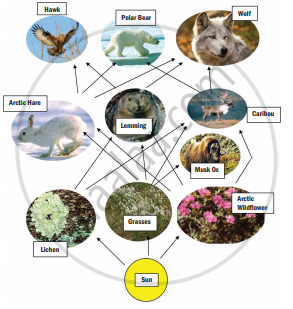
It is a well-balanced food web. This region gets slanting sunrays means very little sunlight in which lichens, grasses, and wildflowers grow and form the first trophic level as a producer. In the second trophic level herbivores who depend on the producers for survival like Arctic Hare, Musk ox, Lemming is the primary consumers. Carnivores who eat the herbivore are-Hawk, Polar Bear and Wolf. They are above the herbivores in a food pyramid. They are secondary consumers.
2.
(i) The extinction of species (flora and fauna) due to human and natural influences is called loss of biodiversity.
(ii) The biodiversity loss has a great impact on mankind and also affects land, water, air etc.
(iii) Habitat destruction due to deforestation, population explosion, pollution and global warming are the major cause for loss of biodiversity.
(iv) Sometimes, habitat loss is so severe or happens so quickly that it results in a species being eliminated from the planet.
3.
(i) Biodiversity refers to a wide variety of living organisms, which live in a habitat.
(ii) It is highly influenced by topography, climate as well as human activities.
4.
(i) Biosphere, the fourth sphere of the Earth, is a life supporting layer that exists on the earth's surface.
(ii) This layer on earth encompasses the Lithosphere, Hydrosphere and Atmosphere.
(iii) It includes flora and fauna that thrive on or near the earth's surface.
(iv) Biosphere harbours all ecosystems on the earth and sustains life forms including mankind
5.
| S.No | Tropical vegetation | Desert vegetation |
| (i) | Human settlements are found scattered here. | Human settlements is sparse. |
| (ii) | They sustain their livelihood through gathering, fishing, lumbering and shifting cultivation. |
Tribal people who live here practice food gathering and hunting. |
| (iii) | The chief trees found here are rubber, bamboo, ebony, etc | Drought resistant thorny scrubs and bushes, palms are found here |
6.
()
Coral reef
7.
()
Food web
8.
()
Ecosystem
9.
b) Both assertion(A) and reason (R) are true; R does not explain A
10.
a) Both assertion (A) and reason(R) are true; R explains A
11.
(a)
because it is too wet
12.
(d)
None of the above
13.
(a)
Tundra
14.
Aquatic biome is a group of living organisms that live and interact with one another and its aquatic environment for nutrients and shelter. It is broadly classified as fresh water biomes and marine biomes.
A. Fresh water Biomes:
(i) Fresh water biomes comprises lakes, ponds, rivers, streams, wetlands etc.
(ii) It is influenced by various abiotic components such as the volume of water, water flow, composition of oxygen, temperature, etc.
(iii) Humans rely on freshwater biomes for drinking water, crop irrigation, sanitation and industry.
(iv) Water lily, lotus, duckweeds etc. are the common plants found here.
(v) Trout, salmon, turtles, crocodiles etc. are the animals found here.
B. Marine Biomes:
(i) They are the largest aquatic biomes on earth.
(ii) They are continuous bodies of salt water and provide a wide range of habitats for marine plants and animals.
(ii) Coral reefs are a second kind of marine biomes within the ocean.
(iv) Estuaries, coastal areas where salt water and fresh water mix, form a third unique marine biome.
(v) As water provides maximum mobility to marine organisms, nutrients are circulated more quickly and efficiently here than the terrestrial biomes.
(vi) Apart from animals, plants such as kelp, algae, phytoplankton etc. also grow in water.
(vii) Some of the threats and issues to aquatic biomes are overfishing, pollution and rise in sea level.

9th Standard Syllabus & Materials
9th Standard
TN 9th Tamil உள்ளத்தின் சீர் - திருக்குறள் Important Questions And Answers Study Material - QB365 Set A
NEW9th Standard
TN 9th Tamil உள்ளத்தின் சீர் - மணிமேகலை Important Questions And Answers Study Material - QB365 Set A
NEW9th Standard
TN 9th Tamil உள்ளத்தின் சீர் - ஏறு தழுவுதல் Important Questions And Answers Study Material - QB365 Set A
NEW9th Standard
TN 9th Tamil உயிருக்கு வேர் - தண்ணீர் Important Questions And Answers Study Material - QB365 Set A



Tamilnadu Stateboard 9th Standard Subjects
Tamilnadu Stateboard Standards




