
 100% FREE ACCESS
9th Standard Syllabus & Materials
9th Standard
TN 9th Tamil உள்ளத்தின் சீர் -கற்கண்டு (இலக்கணம்) - தொடர் இலக்கணம், ஆகுபெயர் Important Questions And Answers Study Material - QB365 Set A
NEW9th Standard
TN 9th Tamil உள்ளத்தின் சீர் -விரிவானம் (துணைப்பாடம்) - தாய்மைக்கு வறட்சி இல்லை! Important Questions And Answers Study Material - QB365 Set A
NEW9th Standard
TN 9th Tamil உள்ளத்தின் சீர் -கவிதை பேழை (செய்யுள்) - மார்கழி பெருவிழா Important Questions And Answers Study Material - QB365 Set A
NEW9th Standard
TN 9th Tamil உயிருக்கு வேர்-இலக்கணம் - பகுபத உறுப்பிலக்கணம் Important Questions And Answers Study Material - QB365 Set A
NEW9th Standard
TN 9th Tamil அமுதென்று பேர் - இலக்கணம்-எழுத்து -அளபெடை Important Questions And Answers Study Material - QB365 Set A
NEW9th Standard
TN 9th Tamil அமுதென்று பேர்-துணைப்பாடம் - ஆறாம்திணை Important Questions And Answers Study Material - QB365 Set A

Published on: 04/09/2019
Lithosphere – II Exogenetic Processes
Download Tamil Nadu 9th Standard Social Science question papers, model tests, one-mark questions, important questions, and public exam papers in PDF format. Free study materials and answer keys for TN State Board students.
Questions + Answers key
Take MCQ Social Science Test
1.
Stacks are formed by ___________.
Wave erosion
River erosion
Glacial erosion
Wind deposition
2.
Deposits of fine silt blown by wind is called as
Loess
Barchans
Hamada
Ripples
3.
_______ is seen in the lower course of the river
Rapids
Alluvial fan
Delta
Gorges
4.
The process of the levelling up of land by means of natural agents.
aggradation
degradation
gradation
none
5.
The disintegration or decomposition of rocks is generally called as
weathering
erosion
transportation
deposition
6.
Glaciers do not form deep narrow valleys. Why?
7.
Snowline of Alps is 2700 metre whereas the snowline of Greenland is just 600 mts. Find out the reason.
8.
What are wave cut platforms?
9.
Mention the various features formed by wind erosion
10.
Give a detailed account on the three orders of landforms
11.
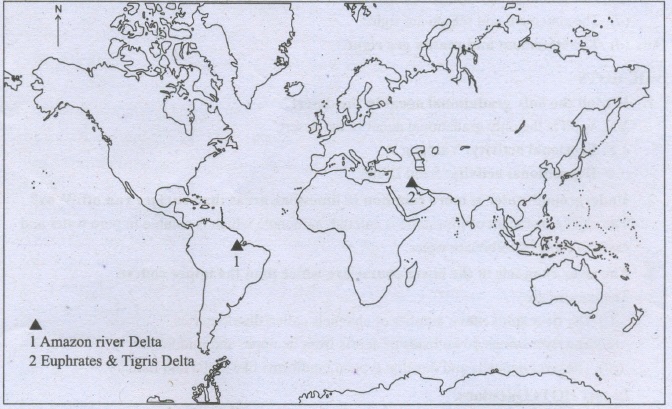
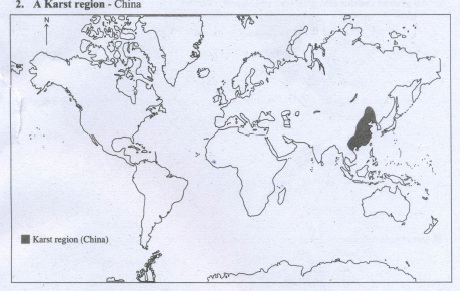
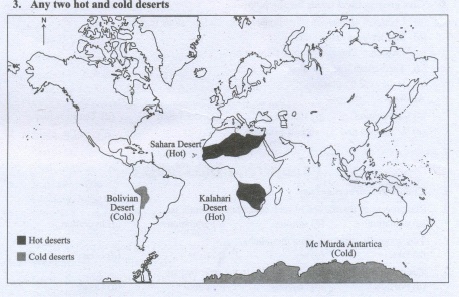
On the given outline map of the world, mark the following.
1. Any two deltas
2. A Karst region
3. Any two hot and cold deserts
1.
(a)
Wave erosion
2.
(a)
Loess
3.
(c)
Delta
4.
(c)
gradation
5.
(a)
weathering
6.
(i) A valley is made deeper by a stream of water (or) a river as it flows from the high land.
(ii) The valleys are either 'U' shaped or 'V' shaped.
(iii) The glacier debris get deposited in the low lying areas. So glaciers do not form deep narrow valleys.
7.
On tropical mountains, the snowline may be as high as 500 mts, but when traced poleward it descends to 2700 mts in the European Alps to 600 meters in Greenland and just to sea level near the poles.
8.
Flat surface found at the foot of the sea cliffs are called as wave cut platforms, wave cut platform is also referred as beach, shelf, terrace and plain.
9.
The erosional landforms of wind: Mushroom rocks, Inselbergs and Yardangs
The Depositional Landforms of wind: Sand dunes, Barchans and loess.
10.
Major landforms:
(i) First order landforms : Continents & Oceans
(ii) Second order landforms : Mountains, Plateaus, and plains minor land forests
(iii) Third order landforms : Deltas, Fjords coasts, Sand dunes, Beaches, Valleys, Cirques, Mushroom rocks, Limestone rocks.
First order landforms:
Continents:
(i) It is a very large area of land.
(ii) One of the seven large land masses on the earth's surface, surrounded by sea. Asia, Africa, Europe, North America, South America, Australia and Antarctica.
Oceans: A very large expanse of sea, Atlantic ocean, Arctic ocean, Pacific ocean, Indian ocean and Antarctic ocean.
Second order landforms: Mountains, Plateaus and Plains.
Mountains: A large natural elevation of the earth's surface, rising abruptly from the surrounding level. e.g., Himalayas.
Plateaus: An area of fairly level high ground. e.g., Tibetan plateau.
Plains: A large area of flat land. e.g., Coastal plains.
Third order landforms: Deltas, Fjords, Sand dunes, Beaches, Valleys, Cirques, Mushroom rocks; Limestone rocks.
Deltas: A triangular shaped low lying area formed by the river at its mouth is called Delta.
Fjords: These are glacial valleys that are partly submerged in the sea.
Sand Dunes: In deserts, huge amount of sand gets deposited. These mounds (or) hills of sand are called sand dunes.
Beaches: Sand and gravel are moved and deposited by waves along the shore to form Beaches.
Valleys: A low area of land between hills (or) mountains typically with a river (or) stream flowing through it.
Cirques: The glacier erodes the steep side walls of the mountain and forms bowl shaped arm chair. It is termed as cirque.
Mushroom rocks: By the constant wearing down action of wind the bottom of the rock gets eroded away to form a mushroom like structure. This is called Mushroom rock (or) Pedestal rock.
Limestone rocks: The underground water creates distinct landforms in limestone regions called Karst Topography. It consists of calcite, aragonite.
11.
a)
b)
c)

9th Standard Syllabus & Materials
9th Standard
TN 9th Tamil உள்ளத்தின் சீர் - திருக்குறள் Important Questions And Answers Study Material - QB365 Set A
NEW9th Standard
TN 9th Tamil உள்ளத்தின் சீர் - மணிமேகலை Important Questions And Answers Study Material - QB365 Set A
NEW9th Standard
TN 9th Tamil உள்ளத்தின் சீர் - ஏறு தழுவுதல் Important Questions And Answers Study Material - QB365 Set A
NEW9th Standard
TN 9th Tamil உயிருக்கு வேர் - தண்ணீர் Important Questions And Answers Study Material - QB365 Set A



Tamilnadu Stateboard 9th Standard Subjects
Tamilnadu Stateboard Standards




