
 100% FREE ACCESS
9th Standard Syllabus & Materials
9th Standard
TN 9th Tamil உள்ளத்தின் சீர் -கற்கண்டு (இலக்கணம்) - தொடர் இலக்கணம், ஆகுபெயர் Important Questions And Answers Study Material - QB365 Set A
NEW9th Standard
TN 9th Tamil உள்ளத்தின் சீர் -விரிவானம் (துணைப்பாடம்) - தாய்மைக்கு வறட்சி இல்லை! Important Questions And Answers Study Material - QB365 Set A
NEW9th Standard
TN 9th Tamil உள்ளத்தின் சீர் -கவிதை பேழை (செய்யுள்) - மார்கழி பெருவிழா Important Questions And Answers Study Material - QB365 Set A
NEW9th Standard
TN 9th Tamil உயிருக்கு வேர்-இலக்கணம் - பகுபத உறுப்பிலக்கணம் Important Questions And Answers Study Material - QB365 Set A
NEW9th Standard
TN 9th Tamil அமுதென்று பேர் - இலக்கணம்-எழுத்து -அளபெடை Important Questions And Answers Study Material - QB365 Set A
NEW9th Standard
TN 9th Tamil அமுதென்று பேர்-துணைப்பாடம் - ஆறாம்திணை Important Questions And Answers Study Material - QB365 Set A

Published on: 31/07/2019
Lithosphere – II Exogenetic Processes
Download Tamil Nadu 9th Standard Social Science question papers, model tests, one-mark questions, important questions, and public exam papers in PDF format. Free study materials and answer keys for TN State Board students.
Questions + Answers key
Take MCQ Social Science Test
1.
This generally originate from mountains
lake
sea
river
ocean
2.
________ erosion is responsible for the formation of cirque
wind
glacial
river
underground water
3.
Which one of the following is not a depositional feature of a glacier?
cirque
Moraines
Drumlins
Eskers
4.
_______ is seen in the lower course of the river
Rapids
Alluvial fan
Delta
Gorges
5.
The disintegration or decomposition of rocks is generally called as
weathering
erosion
transportation
deposition
6.
What are "Pot Holes"?
7.
Glaciers do not form deep narrow valleys. Why?
8.
List out any four karst topographical areas found in India.
9.
What are ox-bow lakes?
10.
Sea Cave and Sea Arch
11.
Spit and bar
12.
Longitudinal and Transverse sand dunes
13.
Delta and Estuary.
14.
In limestone regions, surface drainage is rarely found
15.
The snow line is at the sea level in Polar regions
16.
Chemical weathering is predominant in hot and humid zones
17.
The river channels in the lower course are wider than the upper course
18.
Is wind the only gradational agent in the desert?
19.
Write a note on weathering classify and explain.
20.
On the given outline map of the world, mark the following.
1. Any two deltas
2. A Karst region
3. Any two hot and cold deserts
21.
Carbonation
22.
Granular disintegration
23.
Cliff
24.
Eskers
25.
Distributaries
1.
(c)
river
2.
(b)
glacial
3.
(a)
cirque
4.
(c)
Delta
5.
(a)
weathering
6.
Due to the river action, cylindrical holes are drilled vertically in the river bed with varying depth and diametre.
7.
(i) A valley is made deeper by a stream of water (or) a river as it flows from the high land.
(ii) The valleys are either 'U' shaped or 'V' shaped.
(iii) The glacier debris get deposited in the low lying areas. So glaciers do not form deep narrow valleys.
8.
(i) Guptadham caves - Western Bihar
(ii) Pandav caves Pachmarhi Madhya Pradesh
(iii) Kutumsar - Bastar district in Chhattisgarh
(iv) Borra caves of Visakhapatnam - Andhra Pradesh
9.
(i) Meanders in due course of time become almost a complete circle with narrow necks
(ii) This in turn gets abandoned and forms a lake. This is called an Ox-bow lake
10.
| Sea Cave | Arch |
| Prolonged wave attack on the base of a cliff erodes rock materials which result in the formation of caves. | When two caves approach one another from either side of a headland and unite, they form an arch. e.g., Neil Island, Andaman and Nicobar |
11.
| Spit | Bar |
| A spit is a ridge (or) embankment of sediment attached to the land on one end and terminating in open water on the other end. Spits are common at the mouth of estuaries. e.g., Kakinada Spit. | A bar is an elongated deposit of sand, shingle (or) mud found in the sea almost parallel to the shoreline |
12.
| Longitudinal | Transverse sand dunes |
| Longitudinal dunes are long narrow ridges of sand, which extend in a direction parallel to the prevailing winds. These dunes are called Seifs in Sahara. | Transverse dunes are asymmetrical in shape. They are formed by alternate slow and fast winds that blow from the same direction. |
13.
| S.No. | Delta | Estuary |
| (i) | A triangular shaped low lying area formed by the river at its mouth is called Delta | Estuary is formed where the rivers meets the sea. |
| (ii) | Deltas have fine deposits of sediments enriched with minerals eg. Cauvery Delta. | Deposition of silt by the river is not possible here in the estuaries delta eg, Narmada and Tapti. |
14.
(i) The rain water mixes with CO2 and enters into limestone region it dissolves and destroys much of the limestone.
(ii) Subterranean drainage may limit surface water with few to no rivers.
(iii) The ability of water to penetrate the rock lowers. Joints and bedding planes make the rock permeable.
So surface drainage is rarely found
15.
The snow line is at the sea level in Polar regions because higher the latitude lower the Snow line from sea level
16.
Chemical weathering takes place through the processes of oxidation, carbonation, solution, and hydration. The agents of Chemical weathering are Oxygen, Carbon dioxide, Hydrogen and water.
17.
(i) The river channels of the upper course has more energy gradient then the channels of lower course.
(ii) As the river flows in the lower course it corrodes sideways and makes it wider.
18.
(i) As the desert are with little or no rainfall, wind is the only gradational agent.
(ii) Mechanical weathering is the dominant activity as there are limited plants.
19.
Weathering is the disintegration and decomposition of materials of the earth's crust by their exposure to atmosphere.
There are three types of weathering,
(a) Physical weathering,
(b) Chemical weathering
(c) Biological weathering
Physical weathering: It is the breakdown of rocks without changing their chemical composition, through the action of physical forces. The constant freezing and thawing of rocks during the night and day leads to the expansion and contraction of rocks. Cracks are formed and disintegration occurs eventually. Exfoliation, block disintegration, granular disintegration etc., are the different types of weathering.
Chemical weathering: Disintegration and decomposition of rocks due to chemical reactions is called Chemical Weathering. This is predominantly high in the hot and humid regions such as the equatorial, tropical and subtropical zones. Chemical weathering takes place through the processes of oxidation, carbonation, solution, and hydration. The agents of Chemical weathering are Oxygen, Carbon dioxide and Hydrogen.
Biological weathering: Biological weathering occurs due to the penetration and expansion of plant roots, earthworms, burrowing animals (rabbits, rats) and some human activities
20.
a)
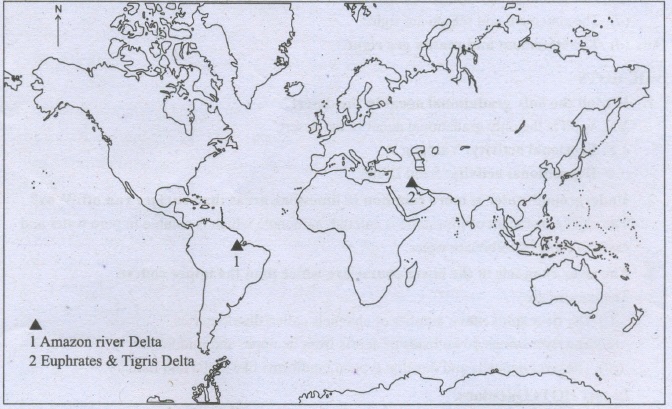
b)
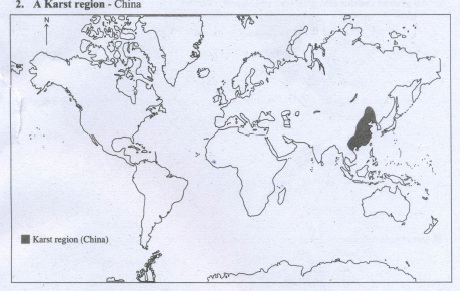
c)
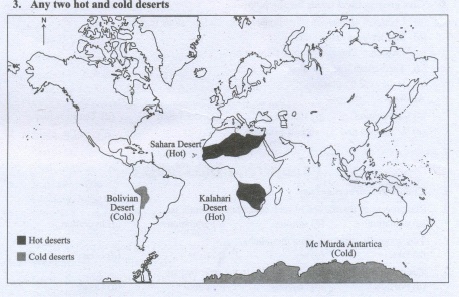
21.
Mixing of water with CO2
22.
Due to the action of temperature
23.
action of sea wave
24.
glacial action
25.
Lower course of river

9th Standard Syllabus & Materials
9th Standard
TN 9th Tamil உள்ளத்தின் சீர் - திருக்குறள் Important Questions And Answers Study Material - QB365 Set A
NEW9th Standard
TN 9th Tamil உள்ளத்தின் சீர் - மணிமேகலை Important Questions And Answers Study Material - QB365 Set A
NEW9th Standard
TN 9th Tamil உள்ளத்தின் சீர் - ஏறு தழுவுதல் Important Questions And Answers Study Material - QB365 Set A
NEW9th Standard
TN 9th Tamil உயிருக்கு வேர் - தண்ணீர் Important Questions And Answers Study Material - QB365 Set A



Tamilnadu Stateboard 9th Standard Subjects
Tamilnadu Stateboard Standards




