
 100% FREE ACCESS
9th Standard Syllabus & Materials
9th Standard
TN 9th Tamil உள்ளத்தின் சீர் -கற்கண்டு (இலக்கணம்) - தொடர் இலக்கணம், ஆகுபெயர் Important Questions And Answers Study Material - QB365 Set A
NEW9th Standard
TN 9th Tamil உள்ளத்தின் சீர் -விரிவானம் (துணைப்பாடம்) - தாய்மைக்கு வறட்சி இல்லை! Important Questions And Answers Study Material - QB365 Set A
NEW9th Standard
TN 9th Tamil உள்ளத்தின் சீர் -கவிதை பேழை (செய்யுள்) - மார்கழி பெருவிழா Important Questions And Answers Study Material - QB365 Set A
NEW9th Standard
TN 9th Tamil உயிருக்கு வேர்-இலக்கணம் - பகுபத உறுப்பிலக்கணம் Important Questions And Answers Study Material - QB365 Set A
NEW9th Standard
TN 9th Tamil அமுதென்று பேர் - இலக்கணம்-எழுத்து -அளபெடை Important Questions And Answers Study Material - QB365 Set A
NEW9th Standard
TN 9th Tamil அமுதென்று பேர்-துணைப்பாடம் - ஆறாம்திணை Important Questions And Answers Study Material - QB365 Set A

Published on: 25/10/2019
GEO - Man and Environment
Download Tamil Nadu 9th Standard Social Science question papers, model tests, one-mark questions, important questions, and public exam papers in PDF format. Free study materials and answer keys for TN State Board students.
Questions + Answers key
Take MCQ Social Science Test
1.
Gradual increase of the earth's temperature by the Greenhouse gases in the atmosphere is called ________.
Acid rain
thermal pollution
Global warming
Deforestation
2.
The Secondary sector of the economy produces ____________from raw materials.
Semi-finished goods
Finished goods
Economic goods
raw materials
3.
The extraction of valuable minerals and other geological minerals from the earth, is ___________.
Fishing
Lumbering
Mining
Agriculture
4.
The statistical study of human population is ___________.
Demography
Morphology
Etymology
Seismography
5.
The 'World Population Day' is observed on _____________ every year.
August 11th
September 11th
July 11th
January 11th
6.
All external influences and factors that affect the growth and development of living organisms is ___________.
Environment
Ecosystem
Biotic factors
Abiotic factors
7.
Northern Russia
8.
Monuments
9.
Better living conditions
10.
Natural disaster
11.
Cruciform settlement
12.
Loudspeaker
13.
What is Smog?
14.
What is population change?
15.
What is demography?
16.
Migration towards cities are the main cause for the birth of slums. Justify.
17.
What is Greenhouse effect?
18.
What is 'black death'?
19.
Land Pollution and Noise Pollution.
20.
Water pollution and light pollution
21.
Metropolitan and Mega cities
22.
Fracking affect the environment.
23.
Sustainable development growth has been set to protect the planet.
24.
Population growth has to be brought under control.
25.
Acid rain destroys the ecosystem.
26.
Reforestation is encouraged throughout the world.
27.
Describe the patterns of rural settlement with neat diagrams.
28.
Explain the factors affecting the distribution of population.
29.
On the outline map of Tamil Nadu mark the following.
1. A metropolitan city
2. A district with 7857 people per sq. km.
3. Gulf of Mannar
4. Palk Strait
30.
Assertion(A): Urbanisation is one of the environmental issues.
Reason(R): As the town expands, it mounts more pressure on transport system, water supplies leading to air pollution, water pollution etc.
a) (A) and (R) are correct, (R) explain (A)
b) (A) and (R) are correct, (R) does not explain (A)
c) Both (A) and (R) are correct
d) Both (A) and (R) are wrong
31.
Assertion(A): Deforestation results in floods and drought .
Reason(R): Under deforestation trees are cut down clearing the forests.
a) Both A and R are correct
b) Both A and R are wrong
c) A is correct but R does not explain A
d) A and R are correct and A explains R
1.
(c)
Global warming
2.
(b)
Finished goods
3.
(c)
Mining
4.
(a)
Demography
5.
(c)
July 11th
6.
(a)
Environment
7.
Low density
8.
Man - Made
9.
Pull factor
10.
Push factor
11.
T- shaped settlement
12.
noise pollution
13.
(i) Smog is a mixture of smoke, gases and chemicals.
(ii) It causes a smoky dark atmosphere, especially over cities.
(iii) It decreases visibility and creates haze throughout the area.
14.
Population change refers to an increase or decrease in the population of an area influenced by the number of births, deaths and migration.
15.
(i) In ancient Greek, 'demos' means people and 'graphia' means study of measurement.
(ii) So 'Demography' is the statistical study of human population.
16.
(i) Many people move to urban areas primarily because cities promise more jobs better schools for poor's children and diverse income opportunities than subsistence farming in rural areas.
(ii) Urbanization drives economic growth and causes people to seek working and investment opportunities in urban areas.
(iii) Local governments are unable to manage urbanisation and migrant workers without an affordable place to live in, dwell in slums.
(iv) The UN-Habitat reports that 43% of urban population in developing countries and 78% of those in the least developed countries are slum dwellers.
(v) Lack of affordable low cost housing and poor planning encourages the supply side of slums.
(vi) Some of the slums in today's world are a product of urbanisation brought by colonialism.
(vii) Urban poverty, encourages the formation and demand for slums.
(viii) Major natural disasters in poor nations often lead to migration of disaster affected from their to unaffiliated areas, the creation of temporary tent cities and slums.
17.
(i) The green house effect is the process by which radiation from a planet's atmosphere warms the planets' surface to a temperature above what it would be without its atmosphere.
(ii) If a planet's atmosphere contains radiatively active gases they will radiate energy in all directions.
18.
(i) Natural Disaster or man-made disaster such as famine, war, landslides, earthquake, Tsunami, epidemics, extreme weather, etc.
(ii) The black death is estimated to have killed 30 - 60 percent of Europe's total population during the 14th century.
(iii) The dominant explanation for black death is attributed to the break of plague.
19.
| Land Pollution | Noise Pollution |
| (i) Land pollution is contaminating the land surface of the earth through dumping of urban waste matter. | (i) Noise pollution is basically a problem of urban areas, industrial areas, transport areas due to bombardment, traffic etc. |
| (ii) It arises from the breakage of underground storage tanks, application of pesticides and percolation of contaminated surface water, oil and fuel dumping. | (ii) It has an impact on the habitat of animals migration and health of inhabitants. |
| (iii) One of the preventive measures. Inorganic wastes can be separated, reclaimed and recycled. | (iii) One of the control measures planting trees along the compound walls to protect houses. |
20.
| Water Pollution | Light pollution |
| (i) Water pollution is any chemical, physical or biological change in the quality of water. | (i) Light pollution is an unwanted consequence of outdoor lighting. |
| (ii) The water bodies including ponds, lakes, rivers, groundwater and oceans are contaminated by the chemical wastes | (ii) It includes such effects as sky glow, light trespass and glare. |
| (iii) Causes of water pollution are diarrhoea, lung cancer, liver related problems, kidney diseases, etc. | (iii) It is caused by streetlights, parking lot lights, floodlights, signs, sports field etc., |
21.
| Metropolitan | Megacities |
| Cities accommodating population between 10 lakhs and 50 lakhs are metropolitan cities. Example: Madurai |
Cities with more than 50 lakhs population are called megacities. Example: Chennai |
22.
(i) Fracking not only pollutes water and air but also pollutes the soil.
(ii) The oil spills during fracking can harm the soil and the surrounding vegetation.
(iii) The use of high pressure at the time of soil extraction and the storage of waste water on site may cause earthquakes.
23.
"Sustainable development is development that meets the needs of the present without compromising the ability of future generations to meet their own needs".
24.
(i) The population growth increases when there are more births and immigration.
(ii) Unemployment, Social defence, Deforestation and Urbanisation are the mandate of population growth.
25.
(i) Acid rain has many ecological effects, but none is greater than its impact on lakes, streams, wetlands and other aquatic environments.
(ii) Acid rain makes water acidic, and causes them to absorb the aluminium that makes its way from soil into lakes and streams.
(iii) It limits the nutrients available to the plants and expose them to toxic substances that are released from soil.
26.
(i) Planting new trees can help to reduce the amount of CO2 in the air.
(ii) Gases like Carbon dioxide and methane are major contributors to the changing climate.
(iii) Reforestation is an effective mitigation strategy to fight global warming.
(iv) Reforestation can help to restore what the erosion has damaged.
27.
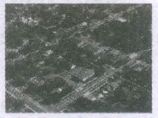
Patterns of rural settlements:
| (i) Rectangular pattern: Rectangular pattern of settlements are found in plain areas or valleys. The roads are rectangular and cut each other at right angles. |
 |
| (ii) Linear pattern : In a linear pattern, the houses are located along a road, railway line and along the edge of the river valley. |
.JPG) |
| (iii) Circular or Semicircular pattern : The pattern of settlement that is found around the lakes, ponds and sea coasts are called circular or semicircular pattern. |
.JPG) |
| (iv) Star-like pattern: Where several metalled or unmetalled roads converge, star-shaped settlements develop. |
.JPG) |
| (v) Triangular pattern: Triangular patterns of rural settlement generally develop at the confluence of rivers |
.JPG) |
| (vi) T-Shaped, V-Shaped, Cross-Shaped or Cruciform settlements: T-shaped settlements develop at tri-junctions of the roads (T) while V-shaped where two roads converge with the third one and Cruciform settlements develop on the crossroads which extend in all four directions. |
.JPG) |
| (vii) Nebular pattern: The arrangement of roads is almost circular which ends at the central location or nucleus of the settlement around the house of the main landlord of the village or around a mosque, temple or church. |
.JPG) |
28.
Population distribution refers to the way in which people are spread out across the earth's surface.
The world population is not uniformly distributed, owing to the following factors.
(a) Physical factors: It includes temperature, rainfall, Soil, relief, water, natural vegetation, distribution of minerals and availability of energy resources.
(b) Historical factors: Regions with historical importance (river valley civilizations, war and constant invasions fall under historical factors responsible for population distribution.
(c) Economic factors: Educational institutions, employment opportunities, manufacturing industries, luxurious amenities, trade and commerce and other facilities encourage dense population in an area.
29.
.JPG)
30.
(A) and (R) are correct, (R) explain (A)
31.
A and R are correct and A explain R

9th Standard Syllabus & Materials
9th Standard
TN 9th Tamil உள்ளத்தின் சீர் - திருக்குறள் Important Questions And Answers Study Material - QB365 Set A
NEW9th Standard
TN 9th Tamil உள்ளத்தின் சீர் - மணிமேகலை Important Questions And Answers Study Material - QB365 Set A
NEW9th Standard
TN 9th Tamil உள்ளத்தின் சீர் - ஏறு தழுவுதல் Important Questions And Answers Study Material - QB365 Set A
NEW9th Standard
TN 9th Tamil உயிருக்கு வேர் - தண்ணீர் Important Questions And Answers Study Material - QB365 Set A



Tamilnadu Stateboard 9th Standard Subjects
Tamilnadu Stateboard Standards




