
 100% FREE ACCESS
9th Standard Syllabus & Materials
9th Standard
TN 9th Tamil உள்ளத்தின் சீர் -கற்கண்டு (இலக்கணம்) - தொடர் இலக்கணம், ஆகுபெயர் Important Questions And Answers Study Material - QB365 Set A
NEW9th Standard
TN 9th Tamil உள்ளத்தின் சீர் -விரிவானம் (துணைப்பாடம்) - தாய்மைக்கு வறட்சி இல்லை! Important Questions And Answers Study Material - QB365 Set A
NEW9th Standard
TN 9th Tamil உள்ளத்தின் சீர் -கவிதை பேழை (செய்யுள்) - மார்கழி பெருவிழா Important Questions And Answers Study Material - QB365 Set A
NEW9th Standard
TN 9th Tamil உயிருக்கு வேர்-இலக்கணம் - பகுபத உறுப்பிலக்கணம் Important Questions And Answers Study Material - QB365 Set A
NEW9th Standard
TN 9th Tamil அமுதென்று பேர் - இலக்கணம்-எழுத்து -அளபெடை Important Questions And Answers Study Material - QB365 Set A
NEW9th Standard
TN 9th Tamil அமுதென்று பேர்-துணைப்பாடம் - ஆறாம்திணை Important Questions And Answers Study Material - QB365 Set A

Published on: 04/02/2020
9th Standard Social Science Important Questions
Download Tamil Nadu 9th Standard Social Science question papers, model tests, one-mark questions, important questions, and public exam papers in PDF format. Free study materials and answer keys for TN State Board students.
Questions + Answers key
Take MCQ Social Science Test
1.
In Tamil Nadu, migrants account for ___________ percent in rural areas.
38
41
28
50
2.
The Communlty Development Programme was introduced in the year_________.
1950
1952
1953
1954
3.
Cholam cultivation takes place in TamilNadu is.
7% land area
1% land area
12% land area
9% land area
4.
__________was the first state adopted Balwan Rai Mehta Committee's recommendations.
Andhra Pradesh
Rajasthan
Bihar
Maharashtra
5.
The foundation for map making in India was laid during the period _____________
Aryan
Vedic
Gupta
Chola
6.
Palk Bay is the home of
Coconut trees
Vegetables
Mangrove trees
Mango trees
7.
In 1898, Philippines became the colony of_______
England
America
Portugal
France
8.
Java and Sumatra were occupied by the______
Spanish
British
French
Dutch
9.
Siemens a well known company in __________.
France
Germany
U.S.A
England
10.
Which of the following statements is untrue?
'Stop, Drop, Roll’ is for fire.
‘Drop, Cover, Hold’ is for an earthquake
‘If seawater recedes back, run to higher places’ is for flood.
‘If gunshots are heard, drop to the ground and cover the head with hand’ is for riot.
11.
Which of the following was used as fuel in olden days to smelt iron?
Coke
Charcoal
Firewood
Paper
12.
The moderate liberals who wanted to retain Louis XVI as a limited monarchy were called ________
Girondins
Jacobins
Emigres
Royalists
13.
______________ has recorded the maximum number of emigrants
Ramanathapuram
Coimbatore
Chennai
Vellore
14.
Both agricultural productivity and food productivity has
decreased
not stable
remained stable
increased
15.
The 'World Population Day' is observed on _____________ every year.
August 11th
September 11th
July 11th
January 11th
16.
The Roman Republic was governed by the ________
Plebeians
Patricians
Lawyers
Philosophers
17.
Arab Muslim merchants had been trading in the ports of the west coast, especially_________
Tamil Nadu
Karnataka
Kerala
Goa
18.
Decline of_________ helped to move towards urbanisation.
Trade
Feudalism
Freedom
Population
19.
The life supporting layer is known as
Atmosphere
Hydrosphere
Lithosphere
Biosphere
20.
One rupee and two rupee notes were first printed in India in the year_______
1917
1927
21.
Which of the following statements are true?
(i) The general declaration of Human Rights by UDHR is not a legally binding document
(ii) UDHR has a political and moral importance.
(i) is correct (ii) is wrong
(i) is wrong (ii) is correct
Both (i) and (ii) are wrong
Both (i) and (ii) are correct
22.
In ceramics___________excelled.
Japan
Arabia
Spain
China
23.
The central or high Middle Ages witnessed__________
rapid development
territorial expansion
urban growth
all of the above
24.
The height of the waves depends on________
speed of wind
Its duration
the direction
All of the above
25.
What is the time limit to get the information from RTI Act 2005?
20 days
25 days
30 days
35 days
26.
Nutrients are recycled in the atmosphere with the help of certain microorganisms, referred to as
Producers
Decomposers
Consumers
None of the above
27.
Who wrote the book Institutes of Christian Religion?
Martin Luther
Zwingli
John Calvin
Cervantes
28.
_______is the Greek city-state which resisted the Persians to the end.
Acropolis
Sparta
Athens
Rome
29.
The process of dissolution of rock substances in water is________
oxidation
solution
gradation
hydration
30.
Humidity of the atmosphere is measured by the wet and dry bulb thermometer called _________
Anemometer
Thermometer
Hygrometer
Barometer
31.
Kudavolai was the system of voting followed during the _______________________ period in Tamil Nadu.
Chera
Chola
Pandya
Pallava
32.
This is the dominant form of government in the contemporary world.
Oligarchy
Monarchy
Theocracy
Democracy
33.
The doctrines and rituals of the Zoroastrians have much similarity to those of the _______.
Buddhism
Vedas
Jainism
Taoism
34.
The movement of tectonic plates is due to __________________ energy from the mantle
Atomic energy
Hydro energy
Wind energy
Thermal energy
35.
The word 'Igneous' is derived from the _____________ word.
Arabic
Roman
Latin
Sanskrit
36.
________is an ornament made in precious stone where images are carved on the surface.
Cameo
Intaglio
Chronicle
Papyrus
37.
______ are tools used for scraping the surfaces
Lunates
Triangles
Scrapers
Cists
38.
_______ were the contemporaries of the people of Indus and Egyptian civilisation.
The Egyptians
The Sumerians
The Romans
The Indus people
39.
We take age group _______ years for computation of the workforce.
12–60
15–60
21–65
5–14
40.
Among the following states which state have the literacy rate (2011) higher than national average
Andhra Pradesh
Uttar Pradesh
Tamil Nadu
None of these
41.
The grant of universal franchise creates
Social equality
Economic equality
Political equality
Legal equality
42.
The Magadha king influenced by the teachings of Mahavira
Dhanananda
Chandragupta
Bimbisara
Shishunaga
43.
The Monsoons are _________
Prevailing winds
Periodic winds
local winds
none of the above
44.
Inscription that mentions the Cheras
Pugalur
Girnar
Pulimankombai
Madurai
45.
The earliest signs to denote words through pictures
Logographic
Pictographic
Ideographic
Stratigraphic
46.
________ layer is made up of liquid iron
Inner core
Outer core
Mantle
Crust
47.
_______ is genetically closest to humans
Gorilla
Chimpanzee
Orang-utan
Great Apes
48.
Historic Transition in Bhutan.
49.
What do the extent and nature of the migrant streams depend?
50.
When are the meetings of the Gram Sabha conducted?
51.
What is National Ayush Movement?
52.
Mention the disadvantages of Remote sensing.
53.
Why do we observe the World Population Day?
54.
How did European colonisation of Africa take place without any outbreak of war?
55.
How was Thomas Newcomen helpful to the British Mine owners.
56.
What was the role played by Cornwallis in the American war of independence?
57.
Highlight any two important results of Industrial Revolution.
58.
Distinguish between Colonialism and Imperialism.
59.
What are the components of a map?
60.
List out the salient features of Tamil Nadu Panchayat Raj Act 1994.
61.
Migration towards cities are the main cause for the birth of slums. Justify.
62.
Who monitors the quantity and quality of ground water?
63.
Narrate the given food web of Arctic Tundra in your own words.
64.
Write about the reign of Alexander, the Great
65.
What happened under Oligarchy in Greece?
66.
Why did the first Persian attack on Greece fail?
67.
Why did the European trading companies enter into contracts with the Indian merchants?
68.
What were Karkhanas?
69.
Fall of Constantinople
Who captured Constantinople?
70.
What subjects were taught in the Italian universities?
71.
In India where do we find hot spots?
72.
How is the major portion of the savings in banks used?
73.
What is meant by political rights?
74.
What is Hypsometric curve?
75.
'All are equal before law'. But we have enacted a separate law for women - Justify
76.
What is meant by foreign exchange?
77.
What do you mean by the ocean salinity?
78.
What do you mean by the term Hydrosphere?
79.
How was Feudalism organized in the Middle Ages?
80.
Pacific Ring of Fire - Most seismically and volcanically active. Why?
81.
State the other erosional features of Karst regions in other parts of the world
82.
What do you mean by Human Resource Development?
83.
Cuddalore and Nagapattinam are always affected by cyclones. Why?
84.
Mention the recent trends in the working pattern of the employees.
85.
What do you know about Voters Verified Paper Audit Trail?
86.
What is Democracy?
87.
Mention the five important works of Confucius.
88.
What are fossils?
89.
What is Ptolemy's Geography?
90.
What was the main factor for the development of early civilisations?
91.
The Indus civilisation is known as Harappan civilisation rather than Indus. Why?
92.
Highlight the steps taken by Ashoka to spread Buddhism.
93.
How important are coins as a source of evidence for the study of Sangam Age?
94.
Mention the various features formed by wind erosion
95.
Define :
a) Moraine
b) Drumlin
c) Esker
96.
Mention the three courses of a river with any two landforms associated to each course.
97.
Hammurabi Code is an important legal document. Explain.
98.
List out the features of Megalithic Burial types.
99.
Locate the following on the world outline map.
1. Prairies
2. Downs
3. Tundra Biomes
4. Equatorial Biomes
100.
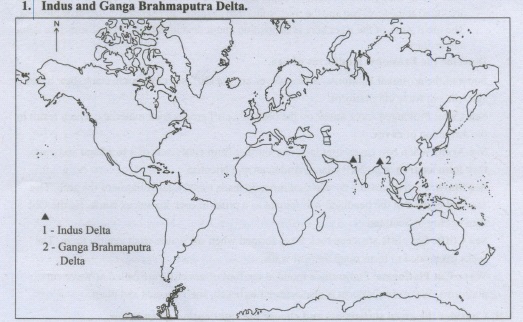
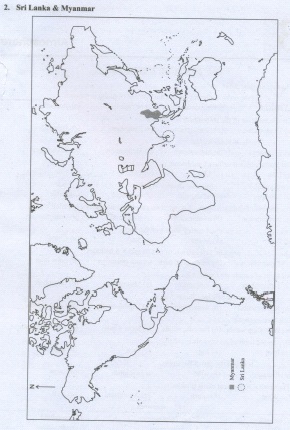
Indus and Ganga Brahmaputra Delta
101.
On the given outline map of the world, mark the following:
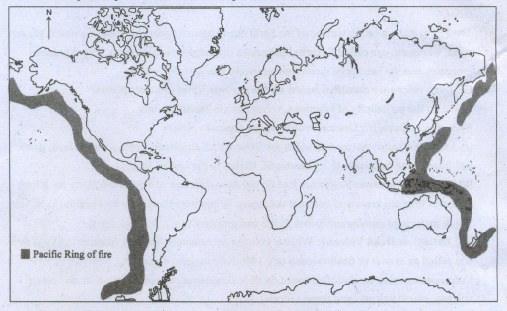
a. Pacific Ring of fire
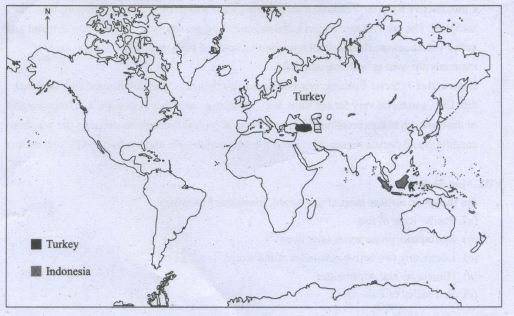
b. Earthquake prone zones (any two)
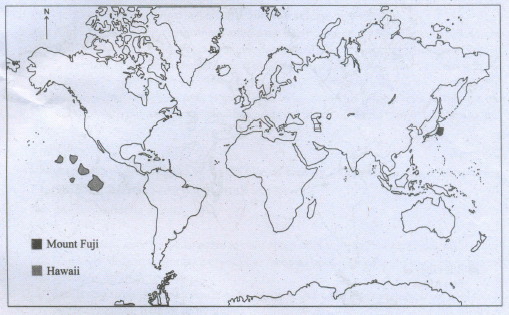
c. Locate any two active volcanoes of the world.
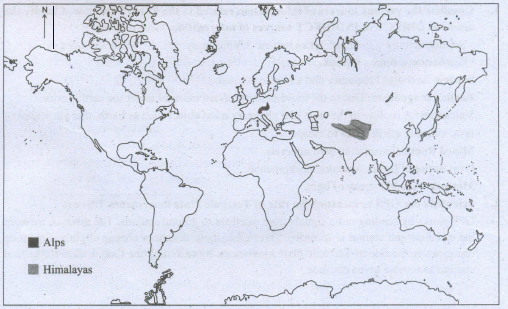
d. Himalayas and Alps ranges
e. Rift valley of East Africa.
102.
What are the de-merits of federal form government?
103.
Mention the causes for fire? What are the problems caused by fire?
104.
What are the merits of a federal government?
105.
Why are children and old age (above 60 years) are not considered for computation of workforce?
106.
Why human resources is considered as the foremost resource of any country?
107.
What are the indicators of development?
108.
Distinguish between two-party system and the multi-party system.
109.
Give Abraham Lincoln’s definition for democracy.
110.
Mention the rules to ensure Road Safety for children.
111.
How different factors contribute to road accidents?
112.
Write note the Parliamentary form of Government.
113.
Explain the concept of migration.
114.
Write about the Gandhi's Concept of Gram Swaraj.
115.
Write a note on Micro Irrigation
116.
How is remote sensing useful in disaster management?
117.
How to dispose a Waste?
118.
Write a note on the famines which occurred in British India.
119.
Mention the development in textiles due to industrial revolution in Great Britain.
120.
Ring out the impact of the French Revolution.
121.
Highlight the contribution of Greece to World Civilization
122.
Write a note on the following:
Persian wheel
123.
Explain the term Renaissance.
124.
How is currency printed in India?
125.
Explain the Right to Information Act (RTI).
126.
Write about Chengiz Khan.
127.
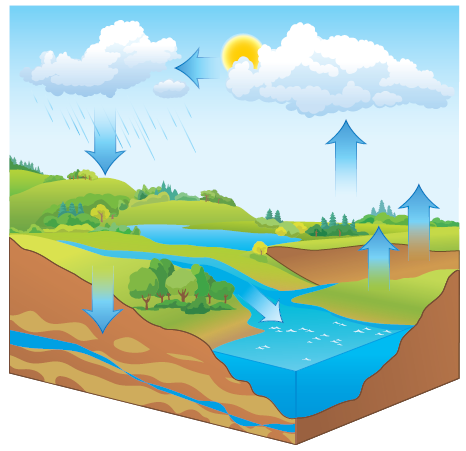
What does this picture depict? Write a note on the processes involved in it.
128.
Explain the various components of ecosystem
129.
Describe the Erosional landforms of Sea
130.
Describe sustainability of Development.
131.
The river channels in the lower course are wider than the upper course
132.
Give an account of Mobilisation and Democratic Participation.
133.
Though democracy in India has been appreciated worldwide for its working there is still a lot of scope for improvement - Discuss.
134.
Explain the teachings of Lao-Tse (Taoism).
135.
Give an account of 'Tsunami'
136.
Give an account of "Emergence of towns and ports".
137.
Domestication of Animals and plants. A milestone in Human History. Explain
138.
How did the Egyptians excel in art and architecture? Explain.
139.
Compare the employment conditions prevailing in the organised and unorganised sectors.
140.
Pacific ocean and Atlantic ocean
1.
(b)
41
2.
(b)
1952
3.
(a)
7% land area
4.
(b)
Rajasthan
5.
(b)
Vedic
6.
(c)
Mangrove trees
7.
(b)
America
8.
(d)
Dutch
9.
(b)
Germany
10.
(a)
'Stop, Drop, Roll’ is for fire.
11.
(b)
Charcoal
12.
(a)
Girondins
13.
(c)
Chennai
14.
(d)
increased
15.
(c)
July 11th
16.
(b)
Patricians
17.
(c)
Kerala
18.
(b)
Feudalism
19.
(d)
Biosphere
20.
(a)
1917
21.
(d)
Both (i) and (ii) are correct
22.
(d)
China
23.
(d)
all of the above
24.
(d)
All of the above
25.
(c)
30 days
26.
(d)
None of the above
27.
(c)
John Calvin
28.
(c)
Athens
29.
(b)
solution
30.
(c)
Hygrometer
31.
(b)
Chola
32.
(d)
Democracy
33.
(b)
Vedas
34.
(d)
Thermal energy
35.
(c)
Latin
36.
(a)
Cameo
37.
(c)
Scrapers
38.
(b)
The Sumerians
39.
(b)
15–60
40.
(c)
Tamil Nadu
41.
(a)
Social equality
42.
(c)
Bimbisara
43.
(b)
Periodic winds
44.
(a)
Pugalur
45.
(b)
Pictographic
46.
(a)
Inner core
47.
(b)
Chimpanzee
48.
(a) The fourth king of Bhutan Jigme Singye Wangchuck travelled to all the 20 districts of the tiny kingdom.
(b) The purpose of the travel is to explain the importance of historic transition to the people of Bhutan.
(c) Transition from the hereditary monarchy to the Parliamentary Democracy.
(d) In 2006 the king as abdicated the throne 34 years after ascending it. Now Bhutan is a Parliamentary Democracy and King Jigme a constitutional monarch.
49.
The extent and nature of these migrant streams would essentially depend on:
(i) Pressures and aspirations experienced by people at the origin of migration.
(ii) Constraints imposed on mobility at the origin of migration.
(iii) Opportunities at the destination and availability of information regarding these opportunities.
(iv) The cost of migration.
50.
(i) The meetings of the Gram Sabha are conducted in four times a year. They are given below:
(a) January 26 - Republic Day
(b) May 1 -Labourers Day
(c) August 15 - Independence Day
(d) October 2 - Gandhi Jayanthi
51.
(i) The National Ayush Movement scheme is implemented by the central government.
(ii) Its main aim is to save and extend the life of many medicinal herbs that grow only in the forest.
(iii) This scheme is carried out with 60:40 shares from the central and state governments
52.
(i) It is difficult to prepare large scale maps from obtained satellite data.
(ii) The technique is very expensive for small areas requiring one time analysis.
53.
(i) The World Population Day is observed on 11th July every year.
(ii) It seeks to raise awareness of global population issues.
(iii) The United Nations Development Programme started celebrating this event from the year 1989.
54.
(i) The interior of Africa was unexplored.
(ii) After 1875, European penetration and colonisation began on a large scale.
(iii) The Berlin Colonial Conference of 1884-85 resolved to divide Africa into spheres of influence of the various European powers.
(iv) European Colonisation of Africa was thus accomplished smoothly without any outbreak of war amongst major European powers.
55.
(i) In the 18th Century, British mine-owners were faced with the problem of water seeping into the mines.
(ii) Water had to be removed to extract coal.
(iii) So they employed labourers to pump the water out. But it cost a lot of money.
(iv) It was at that juncture the British engineer, Thomas Newcomen invented a contrivance to pump the water out of mines.
56.
(i) Cornwallis' military action in the American War of Independence was praiseworthy.
(ii) He inflicted defeats on the American army in a few battles though finally he had to surrender his army at Yorktown.
(iii) Despite the defeat, Cornwallis retained the confidence of successive British governments and continued to enjoy an active career.
57.
(i) Expansion of trade.
(ii) The Production of more food.
(iii) Emergence of factory workers as a new class.
(iv) Development in transport and communication.
58.
| Colonialism | Imperialism |
| Colonialism is a process of domination involving the subjugation of one people by another. | Imperialism involves political and economic control over a dependent territory. |
| The term colony came from the Latin word 'Colonus' meaning farmer. | The term imperialism is derived from Latin term 'imperium' meaning to command. |
| Colonialism usually involves the transfer of population to a new territory, where the arrivals live as permanent settlers. | Imperialism means draw attention to the way one country exercises power over another whether through settlement, sovereignty or indirect mechanisms of control. |
59.
A map should include the following components namely, the title, scale, direction, grid reference, projection, legend, conventional signs and symbols
60.
The salient features of the Tamil Nadu Panchayat Raj Act of 1994-
(i) A three tier system,
(ii) Gram Sabha
(iii) Establishment of Election Commission
(iv) Constitution of Finance Commission
(v) Reservation of Seats for SS/ST's proportionate to their population.
(vi) One third reservation of seats for women and
(vii) Constitution of District Planning Committees.
61.
(i) Many people move to urban areas primarily because cities promise more jobs better schools for poor's children and diverse income opportunities than subsistence farming in rural areas.
(ii) Urbanization drives economic growth and causes people to seek working and investment opportunities in urban areas.
(iii) Local governments are unable to manage urbanisation and migrant workers without an affordable place to live in, dwell in slums.
(iv) The UN-Habitat reports that 43% of urban population in developing countries and 78% of those in the least developed countries are slum dwellers.
(v) Lack of affordable low cost housing and poor planning encourages the supply side of slums.
(vi) Some of the slums in today's world are a product of urbanisation brought by colonialism.
(vii) Urban poverty, encourages the formation and demand for slums.
(viii) Major natural disasters in poor nations often lead to migration of disaster affected from their to unaffiliated areas, the creation of temporary tent cities and slums.
62.
(i) The Union Water Board is constantly monitoring the level and nature of ground water.
(ii) This continuous monitoring has categorized the Panchayat Union in terms of the amount of groundwater used.
63.
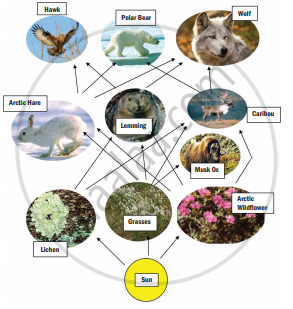
It is a well-balanced food web. This region gets slanting sunrays means very little sunlight in which lichens, grasses, and wildflowers grow and form the first trophic level as a producer. In the second trophic level herbivores who depend on the producers for survival like Arctic Hare, Musk ox, Lemming is the primary consumers. Carnivores who eat the herbivore are-Hawk, Polar Bear and Wolf. They are above the herbivores in a food pyramid. They are secondary consumers.
64.
(i) Under Alexander the Great, the Greeks were able to establish a kingdom in Macedonia.
(ii) This kingdom succeeded in annexing two historic empires of Egypt and the Middle East.
(iii) But the entire period of Alexander's reign was spent on wars.
(iv) The Greek school of Science, Mathematics and Philosophy reached its peak in the Greek-Egyptian city of Alexandria.
65.
(i) Under Oligarchy, the new rich exploited the smaller landholders.
(ii) So this republic was soon replaced by some ambitious men who administered tyrannically
66.
(i) The first Persian attack on Greece failed.
(ii) This was due to the fact that Persian army suffered from disease and lack of food, during its march.
(iii) During the second attack, they avoided the land route and came by sea.
67.
(I) The European trading companies realized that they could not function in India without the services of the rich and influential merchants.
(ii) So they entered into contracts with them to supply the goods that they wanted and also to lift the imports which they brought in from Europe.
68.
(i) Larger manufacturing units, employing many craftsmen, are called Karkhanas.
(ii) Karkhanas were set up under Mughal State.
69.
In 1453 A.D. Constantinople, the capital of the Byzantine Empire, was captured by the Ottoman Turks.
70.
(i) Italian universities taught humanities namely language, grammar, rhetoric, history and ethics which prepared the students for public life, commerce and administration.
(ii) The study of humanities was so popular in the Italian Universities. Students from all over the world flocked there
71.
Hotspots in India are the Himalayas, Western Ghats, Indo-Burma Region and Sundaland
72.
A major portion of the savings in banks are used for the development of industries, economic growth and various development schemes for the welfare of the poor
73.
(i) Political rights exercised in the formation and administration of a government.
(ii) They are given to the citizens by law.
(iii) These rights give power to the citizens to participate either directly or indirectly in the administration.
74.
(i) Hypsometric curve is a graphic representation which shows the height of a certain place found on land and the height of ocean features at sea.
(ii) 'Hypso' means height in Greek.
75.
(i) It refers to equality before law and equal protection of law.
(ii) There was a strong voice against this inhuman practice among workers for a long time.
(iii) Women's rights under the constitution of India mainly includes equality, dignity and freedom from discrimination. Additionally, India has various statutes governing the rights
of women.
76.
(i) Currency is the medium of exchange in a country.
(ii) The Indian currency is called the Indian Rupee.
(iii) In a country the foreign currency is called foreign exchange.
(iv) Purchasing capacity of all currencies in the world are compared using the US dollar as the standard currency.
(v) This value differs from country to country.
(vi) Most of the international trade transactions are carried out in US dollar.
77.
(i) The degree of concentration of salts in the sea water is called salinity.
(ii) It is usually expressed in terms of parts per thousand (ppt or ‰).
(iii) Salinity varies both horizontally and vertically.
(iv) The influence of temperature on ocean salinity depends upon the heating up of the surface water, which varies from tropics to polar regions
78.
Hydrosphere consists of water in various forms found on the earth. It is held on land as glaciers, ice caps, ground water, river, lakes and also as the water vapour in air.
79.
(i) The king, supposed to represent God on earth was at the head of the feudal regime.
(ii) Immediately after him were the great nobles, known as dukes, counts, earls.
(iii) The king gives the land to the landlords.
(iv) The landlords get the land and accept to fight for the king.
(v) The landlords divide the land and distribute it to the viscounts or barons.
(vi) Last in this order were the knights, whose fiefs could not be divided.
(vii) At the bottom were the villeins or serfs.
80.
The Ring of Fire is a ring of volcanoes around the Pacific Ocean. These volcanoes result from subduction of oceanic plates beneath lighter continental plates, A subduction zone is a place where one plate of oceanic lithosphere is shoved under another plate. As it is shoved into the hotter mantle the plate heats up. The addition of volatiles such as water to the hot overlying mantle causes partial melting and the production of magma. This magma rises up through the over-lying plate to erupt at the surface. Hence, the Pacific Ring of Fire is most seismically and volcanically active.
81.
Swallow Holes, Uvalas, Dolines, Poljes are the other erosional features
82.
Human Resource Development means the development of a person's physical and mental abilities through education, health care and training.
83.
(i) Coastal zone is exposed to natural forces including cyclones and Tsunamis.
(ii) Cuddalore and Nagapattinam are situated on the Sea-Shore.
(iii) Cuddalore and Nagapattinam are vulnerable to storms.
(iv) During Summer Bay of Bengal subject to intense heat cause to raise the humid and unstable air masses that produce cyclone.
84.
The trends are
(a) Increasing self-employment.
(b) Firms using fewer full-time employees and tending to offer more short-term contracts.
(c) There has been a growth in part-time employment.
85.
(i) Voters Verified Paper Audit Trail (VVPAT) is the way forward to enhance credibility and transparency of the election process.
(ii) This system was first introduced in 2014 General election.
86.
(i) Democracy is a form of government that allows people to choose their rulers.
(ii) Only leaders elected by people should rule the country.
(iii) People have freedom to express views, freedom to organise and freedom to protest.
87.
(i) The Book of Records
(ii) The Book of odes
(iii) The Book of changes
(iv) The spring and Autumn Annals
(v) The Book of History.
88.
The bodies of plants and animals that fall on the sedimentary rock deposits get embedded in the layers and form fossils.
89.
Ptolemy's Geography is a Gazetteer and atlas of Roman times providing geographical details of the Roman Empire in the Second Century CE.
90.
(i) As a result of domestication and cultivating plants, there was an excess food production.
(ii) The surplus food production was a main factor for the development of early civilisations.
91.
(i) The Indus valley civilisation is also known as the Harappan civilisation since Harappa was the first site to be discovered.
(ii) This civilisation is known as Harappan civilisation rather than Indus valley civilisation, since it extended beyond the Indus river valley.
92.
1. Ashoka became an ardent Buddhist after meeting the Buddhist monk Upagupta and propounded his Dharma.
2. The only true conquest he proclaimed is the conquest of self and the conquest of men's hearts by the dhamma or dharma.
3. He sent his son Mahendra and his daughter Sanghamitra to Ceylon to spread his message of Dharma there.
93.
(i) Coins as a medium of exchange were introduced for the first time in the Sangam Age.
(ii) The coins of the Cheras, the Cholas and the Pandyas, punch-marked coins, and Roman coins form another important source of evidence from the Sangam Age.
(iii) Sometimes coins were protected as a precious wealth.
94.
The erosional landforms of wind: Mushroom rocks, Inselbergs and Yardangs
The Depositional Landforms of wind: Sand dunes, Barchans and loess.
95.
Moraine:
(i) Landforms formed by the glacial deposits of valley (or) continental glaciers are termed as moraines.
(ii) They are of various shapes and sizes, like ground, terminal and lateral moraines, etc.
Drumlin: Drumlins are deposits of glacial moraines that resemble giant inverted teaspoons (or) half cut eggs.
Esker: Long narrow ridges composed of boulders gravel and sand deposited by streams of melting water which run parallel to a glacier are called eskers.
96.
The course of a river is divided into
(i) The Upper course - V shaped valleys, gorges
(ii) The middle course - Alluvial fans, flood plains
(iii) The lower course - Delta and Estuary
Associated landforms
i) Waterfalls - The upper course
ii) Oxbow lakes - The middle course
iii) Deltas - The lower course
97.
(i) Hammurabi Code is an important legal document that specifies the laws related to various crimes.
(ii) It has 282 provisions specifying cases related to family rights, trade, slavery, taxes and wages.
(iii) It is carved on a stone, which portrays Hammurabi as receiving the code from the Sun god Shamash.
(iv) It was a compilation of old laws based on retributive principles.
(v) The 'eye for eye' and 'tooth for tooth' form of justice is used in the Hammurabi Code.
98.
1. In Megalithic period people buried the dead bodies with grave goods in the cists.
2. Urns or pottery jars were used for burning the dead and also they used sarcophagi made of terracotta.
3. Dolmens, table like stone structures were erected as funerary monuments. Menhirs pillar are like stones erected as part of the burials or memorials.
4. Port holes are holes found in the cists and dolmens on one side.
99.

100.
a)
b)
101.
a) Pacific Ring of fire: It is a major area and an arc in the basin of the Pacific ocean where many earthquakes and volcanic eruptions occur.
(b) Earthquake-prone zones (any two): Turkey, Indonesia
(c) Locate any two active volcanoes of the world: Hawaii, Mount Fuji
(d) Himalayas and Alps ranges
102.
De-merits of federal form of government are,
(a) Federal government in weaker when compared to the unitary government.
(b) Federal government is more expensive.
(c) Provincial tendencies are very common
(d) Lack of uniformity in Administration
(e) Threat to national unity
(f) Distribution powers between centre and states lead to conflict
(g) Double Citizenship
(h) Rigid constitution cannot be amended easily for the changing needs.
(I) The state governments sometimes place hindrances in the foreign policy.
103.
(i) Wildfires occur when vegetated areas are set alight and are particularly common during hot and dry periods.
(ii) They can occur in forests, grasslands, bush and deserts, and with sufficient wind can rapidly spread.
(iii) Fires can lead to the destruction of buildings, wooden bridges and poles, power, transmission and telecommunication lines, warehouses of containing oil products and other fuel. It causes injury to people and animals.
(iv) The most common causes of fires are lightning strikes, sparks during arid conditions, the eruption of volcanoes, and man-made fires arising from deliberate arson or accidents.
(v) A side-effect of wildfires that also threatens inhabited areas is smoke.
(vi) Fires create large quantities of smoke, which can be spread far by wind and poses a respiratory hazard.
104.
The merits of federal government are
(a) Reconciliation of local autonomy with national unity.
(b) Division of power between centre and states leads to administrative efficiency.
(c) It gives rise to big states.
(d) Distribution of powers checks the despotism of central government.
(e) More suitable for bigger countries
(f) It is good for economic and cultural progress.
105.
(i) Persons who are less than 15 years are considered as children and person who have crossed 60 years are old people.
(ii) They are excluded as they are not physically fit to undertake productive occupation.
106.
(i) Human resource is necessary for the progress of any country.
(ii) It refers to the collective abilities of people which can be utilised in the production sector.
(iii) It is invested with good education and health.
(iv) Therefore investment in education and health can result in a high rate of returns in the future.
107.
The major indicators to measure the level of economic development are
1. Net National Product (NNP),
2. Per Capita Income (PCI),
3. Purchasing Power Parity (PPP),
3. Human Development Index (HDI).
108.
| Two party system | Multi-party system |
|---|---|
| Two party system in which only two major parties exist, for example, USA, UK. | Multi-party system in which there are more than two political parties, for example India, Sri Lanka, France and Italy. |
109.
Abraham Lincoln defines democracy as a government of the people, by the people and for the people
110.
Rules to Ensure Road Safety for chlldren
It is impportant for children to know about road safety rules and regulatioins. Here are a few
basic road safety rules for children.
i) Know Your Signals
ii) Stop, Look and Cross
iii) Pay Attention - Listen
iv) Don't Run on Roads
v) Always Use Sidewalks
vi) Never Stick Hands outside the Vehicle
vii) Never cross Road at Bends
viii) Don't Rush.
111.
The different factors contribute to road accident are,
i) Drivers: Over speeding, rash driving, violation of rules, failure to understand signs, fatigue, alcohol.
ii) Pedestrians: Carelessness, illiteracy, crossing at wrong places, jaywalkers.
iii) Passengers: Projecting their body parts outside vehicles, talking to drivers, alighting and boarding vehicles from the wrong side, travelling on footboards, catching a running bus etc.,
iv) Vehicles: Failure of brakes or steering, tyre burst, insufficient headlights, overloading.
v) Road Conditions: Potholes, damaged roads, eroded roads merging of rural roads with highways and illegal speed breakers.
vi) Weather conditions: Fog, snow, heavy rainfall, wind storms, hail storms.
112.
Parliamentary form of Government
(i) The parliamentary system of government is the one in which the executive is responsible to the legislature for its policies and acts.
(ii) It is also known as cabinet government or responsible government or Westminster model of government and is prevalent in Britain, Japan, Canada, India among others.
Features of Parliamentary form of government
(i) Nominal and Real Executives.
(ii) Majority Party Rule
(iii) Collective Responsibility
(iv) Double Membership
(v) Leadership of the Prime Minister
Merill of the parliamentary form of government
(i) Harmony between Legislature and Executive.
(ii) Responsible Government
(iii) Prevents Dictatorship.
(iv) Wide Representation.
Demerits of the parliamentary form of government
(i) Unstable Government.
(ii) No Continuity of Policies.
(iii) Dictatorship of the Cabinet.
(iv) Against Separation of Powers.
113.
(i) In any settlement-village or town change in population occurs due to birth, death and migration.
(ii) Of these three components of population change, birth and death is clearly identifiable events while migration poses the maximum amount of problem with regards to its definition and measurement.
(iii) As almost everyone keeps moving most of the time, it is not easy to define which of these moves have to be classified as migratory moves.
(iv) In the Census of lndia, migration is enumerated on two bases - Place of birth and Place of residence.
114.
(i) Gandhi really wanted 'Swaraj', The self rule by the people of India who represent the rural mass.
(ii) He observed "India's soul lives in the village".
(iii) He dreamt of village republics in term of Panchayat in the free India.
(iv) Mahatma Gandhi advocated Panchayat Raj, a decentralized form of government where each village is responsible for its own affairs.
(v) Gandhi's ideal village should be basically self-reliant, making provision for all necessities of life, food clothing, clean water, sanitation, housing, education and other requirements, including government and self-defense.
(vi) According to Gandhi Gram Swaraj should be a complete republic, independent of its neighbor.
(vii) Every village should be a democracy in which they will not depend even on neighbor for major needs.
115.
(i) Micro irrigation technology is a very good remedial to tackle shortage in irrigational water.
(ii) This irrigation technology helps to have a higher yield when compared to the traditional irrigational methods.
(iii) As only required amount of water is supplied at regular intervals, it increases the ability of water usage and productivity of the crop resulting in reduction of labour expenses and weed growth in the field.
(iv) The government has taken many measures to implement micro irrigation for proper distribution of water to crops that require more water.
116.
(i) Remote sensing technology is highly used in disaster management to study the effects of earthquakes, tsunamis, cyclones, volcanic eruption, floods and wildfires.
(ii) The preliminary data is retrieved from satellites like LANDSAT, CARTOSAT, OCEANSAT, etc.
(iii) Fire and flood details can be extracted and delivered to relevant authorities within two hours of satellite image capture.
(iv) E.g. major earthquakes in China and New Zealand, bushfire in Victoria and floods in Kerala.
(v) Dynamic phenomena such as flood, movement of wild animals, shoreline changes, finding lost ships and planes.
(vi) Researchers use satellite imageries for these.
117.
(i) Do not litter your surroundings. Use a proper waste bin to store your wastes.
(ii) People should practise to segregate degradable and non-degradable wastes and should dispose them in proper coloured bins. Wastage is generally classified into three types. They are
(a) Wet Waste: It comes from the kitchen/cooking/food, etc.
(b) Dry Recyclable Waste: Such as newspapers, cardboard, packing plastics, bottles, cans, etc., should go to a different bin
(e) Rejected Waste: which does not belong to the above two categories, including bio waste like diapers and bandages, etc.
(d) Sewage: sewage sludge is produced by waste water treatment processes. Due to rapid urbanization, there has been an increase in municipal waste water.
(e) Electronic Waste (e-waste):
(i) It can be defined as any electrical goods, devices or components that you no longer want or have already thrown away. For example, computers, televisions, mobiles and fax machines.
(ii) This waste can take many years to break down.
(iii) It can contain toxic chemicals such as mercury, lead and lithium that leach into the ground and cause illness.
(iv) Instead of sending e-waste to the dump, components from electronics can be reused to make new products.
118.
(i) The policy of free trade and the forcible collection of land revenue resulted in the outbreak of famines.
(ii) The Odisha famine of 1866-67 was a severe and terrible event.
(iii) The famines of 1876-78 known as the Great famine of 1876-78 caused a large migration of agricultural labourers and artisans from Southern India to British colonies.
(iv) Here they worked as indentured labourers on plantations.
(v) In the Madras Presidency, the famine of 1876-78 was preceded by droughts.
(vi) The situation was made worse because of the colonial government's policy of laissez-faire in the trade of food grains.
(vii) Two of the worst famine-afflicted areas in the Madras Presidency were the district of Ganjam and Vizagapatnam. They continued to export grains throughout the famine.
(viii) These famines were typically followed by various infectious diseases.
(ix) The memory of this famine is still preserved in various folk songs and ballads.
(x) The Bengal famine of 1770 as well as 1943 of British India took a heavy toll of human lives.
119.
(i) In 1733 John Kay invented the 'Flying Shuttle' increasing the speed of the weaving of cloth. In 1767 James Hargreaves invented 'the spinning jenny' which spun eight threads at one and the same time.
(ii) Richard Arkwright invented the 'waterframe' which used water power in the place of manpower.
(iii) In 1779 Samuel Crompton invented his 'spinning mule' which included a combination of both the 'spinning jenny' and the 'water frame'. It spun hundreds of threads simultaneously.
(iv) Eli Whitney invented the cotton gin in 1793. Removing the seed from the cotton increased the productivity manifold.
(v) Textile manufacture was at the heart of the Industrial Revolution. Over a span of fifty years, the textile manufacturing industry in Britain witnessed a transformation in the method of production from handmade to machine-made goods.
(vi) The newly invented machines enabled factories to produce textile goods in large quantities.
(vii) Derbyshire, Lancashire, Cheshire, Staffordshire, Nottinghamshire, and Yorkshire became the major factory centres.
(viii) The most notable was Manchester which had more than 50 mills in 1802.
120.
(i) The French Revolution had many lasting results.
(ii) It marked the end of the system of absolute monarchy in France.
(iii) All feudal privileges were abolished and the power of clergy was curbed.
(iv) The Revolution united the people of different sections and paved the way for the enhanced power of the state.
(v) It also led to the growth of feelings of nationalism and the emergence of an assertive middle class.
(vi) Revolution upheld the theory of people's sovereignty and laid the foundation for the birth of liberal constitutional governments in Europe.
(vii) Liberty, equality, and fraternity became the watchwords of freedom-loving people all over the world.
(viii) It inspired many latter-day political movements for the establishment of liberal democracy in Europe and elsewhere.
121.
(i) The ancient Greeks created the world's first democracy. Athens started on with a monarchy and then advanced to an oligarchy until it finally reached a democracy.
(ii) The Greek Alphabet was the first alphabet in the western sense of the word, featuring distinct letters for vowels and consonants.
(iii) The first library in the world, the library of Alexandria was actually built in Egypt.
(iv) The Olympic games started in ancient Greece specially in the city of Olympia.
(v) Science and Mathematics - Eratosthenes was the first mathematician to calculate the circumference of the Earth. Aristarchus, Archimedes and Hipparchus were great mathematicians and scientists.
(vi) One of the common examples of Greek Architecture in the modern world is the Column or Pillar.
(vii) Greek mythology has pervaded nearly every form of popular culture imaginable. Many Greek myths have been adapted into modern novels, movies, TV, shows etc.
(viii) The first lighthouse in the world was located in the Greek controlled Egyptian Kingdom of Alexandria.
(ix) The democratic people of ancient Greece, especially Athens, were the first to employ trial by jury as we know it today.
122.
Persian wheel:
(i) The Persian wheel is a mechanical water lifting device.
(ii) It is usually operated by draught animals like bullocks, buffaloes or camels.
(iii) It is used to lift water from water sources typically open wells.
(iv) Since it was used in Persia, it got the name Persian wheel.
123.
(i) The Italian city-states were centres of cultural activities since the fourteenth century.
(ii) With the coming of the scholars and artists from Constantinople, there was a surge of enthusiasm and interest in studying classical literature and art of Greeks and Romans.
(iii) This creative upsurge was reflected in their writings, art, architecture and music.
(iv) This cultural florescence is known as the renaissance.
(v) The origin of the word renaissance is from the Italian word 'renascita' meaning rebirth.
(vi) It is called renaissance because there was a rebirth or revival of classical Greek and Latin literature.
(vii) Many scholars in Italy went in search of manuscripts of classical literature.
(viii) Greek scholar Manuel Chrysoloras who taught Greek classics in Italy, Guarino and Giovanni Aurispa, to name just a few, visited Constantinople several times to collect Greek manuscripts.
(ix) Later they printed what they collected.
(x) This provided stimulus to the flowering of renaissance.
124.
(i) In 1925, the British government established a government press at Nasik in Maharashtra.
(ii) Currencies were printed three years later.
(iii) In 1974, a press was started in Dewas, Madhya Pradesh.
(iv) In the 1990s two more presses were started in Mysuru, Karnataka and Salboni in West Bengal to print banknotes.
(v) The Reserve Bank of India has the authority to decide the value of currency to be printed and how the amount should reach its destination safely.
(vi) Though the RBI has the power to print up to ten-thousand-rupee notes, at present a maximum of up to rupees two thousand is printed.
125.
(i) The Right to Information Act is a revolutionary act that aims to promote transparency in government institutions in India.
(ii) This act was enacted in October 2005.
(iii) A common man can demand any government organization to provide information.
(iv) The information must be provided within thirty days.
(v) If not, a fee will be collected as penalty from the concerned official.
(vi) It is one of the most powerful laws of the country.
(vii) This act is people friendly; even an illiterate person can ask any Public Information Officer to write it down for him.
(viii) All government agencies like Municipal Corporations, Government departments, Government Schools, Road Authorities, etc., come under this Act.
126.
(i) Mongols' remarkable leader was Chengiz Khan.
(ii) He was a great military genius.
(iii) His religion was Shamanism, a worship of the "Everlasting Blue Sky".
(iv) Mongols' hold over Russia for about 300 years made Russia technologically backward from the rest of Europe until the end of Middle Ages.
127.
This picture depicts Water Cycle.
The three major processes involved in the water cycle are a)
Evaporation,
b) Condensation,
c) Precipitation.
Evaporation is the process by which water is converted from its liquid state to the gaseous state, usually as a result of the sun's warming rays.
Condensation occurs as the vapour rises into the atmosphere, creating clouds and fog. Once clouds are formed, advection (the movement of water in its various states) occurs through the atmosphere. Without advection, the water would evaporate and precipitate at the same place only.
Precipitation occurs when the vapour that condensed comes back out of the sky as rain, snow, sleet, hail. Most of it comes back to the ground or body of water. Thus water moves across land and is stored in lakes or reservoirs for human uses.
128.
(i) An ecosystem consists of three basic components, namely
a) Abiotic components,
b) Biotic components and,
c) Energy components
a) Abiotic Components
Abiotic components include the non-living, inorganic, physical and chemical factors in the environment. Eg. Land, Air, Water, Calcium, Iron etc.
b) Biotic Components
(i) Biotic components include plants, animals and microorganisms.
(ii) Biotic components can be classified into three categories: (1) Producers, (2) Consumers and (3) Decomposers.
(iii) Producers are self-nourishing components of the ecosystem. Hence they are called Autotrophs.
(iv) They are found both on land and water. Eg. Plants, Algae, Bacteria etc.
(v) Consumers are those that depend on producers, directly or indirectly. Hence they are called Heterotrophs.
(vi) Decomposers are some organisms that are incapable of preparing its own food. They live on dead and decaying plants and animals. Hence they are called Saprotrophs.
c) Energy Components
(i) All organisms in the biosphere use energy to work and convert one form of energy into another.
(ii) The Sun is the ultimate source of energy for the biosphere as a whole.
(iii) The producers, consumers and the decomposers contribute a lot to the energy flow in an ecosystem.
129.
Some of the erosional landforms of sea waves are sea cliff, sea cave, arch, stack, beach, bar and spit and wave cut platform.
Sea Cave: Prolonged wave attack on the base of a cliff erodes rock materials, which result in the formation of caves.
Sea Arch: When two caves approach one another from either side of a headland and unite, they form an arch. e.g., Neil Island, Andaman and Nicobar.
Sea Stack: Further erosion by waves ultimately leads to the total collapse of the arch. The seaward portion of the headland will remain as a pillar of rock known as stack. Eg the Old man of Hoy in Scotland.
Sea Cliffs: Sea cliffs are steep rock faces formed when sea waves dash against them. The rocks get eroded to form steep vertical walls.
Wave Cut Platforms: Flat surface found at the foot of sea cliffs are called as wave-cut platforms. Wave cut platform is also referred as beach, shelf, terrace and plain.
130.
Sustainable economic development is taken to mean development without damaging the environment and not compromising with the needs of the future generation. The consequences of environmental degradation do not respect national or state boundaries. Sustainability of development is comparatively a new area of knowledge in which scientists, economists, philosophers and other social scientists are working together. Natural resources can be divided into renewable resources and non-renewable resources. Groundwater is an example of a renewable resource. The question arises as to how sustainable development is possible if the resources are over-used rather than getting replenished. Nonrenewable resources get exhausted after certain number of years of extracting and using them and they cannot be replenished. To achieve real sustainability, we need to balance economic, social and environmental sustainability in equal harmony. In general, the question of development or progress is continuous. At all times, as a member of society and as individuals, we need to ask where we want to go, what we wish to become and what our goals are.
131.
(i) The river channels of the upper course has more energy gradient then the channels of lower course.
(ii) As the river flows in the lower course it corrodes sideways and makes it wider.
132.
Mobilising people towards socially productive activities that lead to the overall betterment of people's lives is essential. Sometimes earthquakes, tsunamis, floods and other such natural disasters on a massive scale occur and people's immediate mobilisation for evacuation and emergency relief becomes most essential.
Democratic Participation: Democracy can succeed only when smaller local groups and, in fact, every citizen can take action that supports the tax and revenue collection systems, observance of national norms in environmental protection, cleanliness, health and hygiene, sanitary drives and immunisation programmes like pulse polio. However, we must keep in mind that there is no better form of government than Democratic government. To create a better society and nation, the people of India along with the union and state governments should come together to fight against the miseries of human life.
133.
Though democracy in India has been appreciated worldwide for its working, there is still a lot of scope for improvement. The above-mentioned steps must be taken to ensure smooth functioning of democracy in the country.
Indian democracy can be successful and vibrant only when its citizens imbibe and reflect in their behavior the basic democratic values like equality, freedom, social justice, accountability and respect for all. Their mindset, thinking and behavior are expected to be in tune with the essential conditions of democracy. They have to appreciate the opportunities for their desired roles like participation, making the system accountable, fulfilling obligations, and playing proactive roles to actualize the goals of democracy.
134.
(i) The cause of human unhappiness in the world is human selfishness. Selfishness creates unlimited human desires, which can never be satisfied.
(ii) In nature, all the things act in a natural way. The law of human conduct must correspond with nature.
(iii) Humans live a life under the regulation of someone. This is because they have acquired knowledge and have not remained innocent. On the basis of their acquired knowledge, they have built up an urban civilisation and have made themselves unhappy.
135.
The word 'Tsunami' is a Japanese term, meaning harbour waves. It is adapted to describe large seismically generated sea waves caused by Earthquakes, submarine explosions and landslides. These waves travel at a great speed (more than 500 km per hour) and the length of the waves exceeds 600 km. These waves reach to a height of more than 15 m near the sea shore and are capable of causing destruction along the coastal area.
The 2004 Indian Ocean Earthquake that caused tsunami is the sixth-deadliest natural disaster which travelled at a speed of 6.00 km per hour with an estimated death toll of 2,80,000. The Earthquake which occurred near Indonesia at 00.58 hours took nearly 7 hours to reach Chennai.
136.
(i) The Sangam Age saw the first urbanization in Tamilagam.
(ii) Cities developed and they had brick buildings, roof tiles, ring wells and planned towns, streets, and store houses.
(iii) The towns worked as ports and artisanal centres. Arikkamedu, Kaveripoompattinam, Azhagankulam and Korkai on the east coast and Pattanam in Kerala were port centres. Kanchipuram, Uraiyur, Karur, Madurai and Kodumanal were inland trade centres.
(iv) Many goods and commodities were produced in these centres and were exported to various regions.
(v) Though few in number, large towns appeared in the Sangam Age.
(vi) Small villages however were found in many areas. Bronze vessels, beads, shell bangles, glass beads, pottery with names of people written in Tamil-Brahmi script were found at these sites.
137.
(i) Rice was probably cultivated in India and China around 7000 BCE or even earlier.
(ii) Wheat and barley were cultivated at Mehrgarh in northwestern part of the Indian subcontinent (Pakistan) before 6000 BCE.
(iii) Animal domestication developed as part of symbiotic life.
(iv) Dogs may have been domesticated first. Friendly animals were gradually domesticated. Sheep and goat were domesticated around 10,000 BCE in Southwest Asia.
(v) Oxen were used in Sumerian civilisation for tilling the land. Mehrgarh in Pakistan has evidence of sheep, goat and cattle domestication in the Neolithic period.
138.
(i) The Egyptians excelled in art and architecture. Their writing is also a form of art.
(ii) Numerous sculptures, painting and carvings attest to the artistic skills of Egyptians.
(iii) The pyramids are massive monuments built as tombs of mourning to the Pharaohs.
(iv) The great pyramids near Cairo are known as the Giza Pyramids.
(v) Pyramids are considered to be one of the wonders of the world, and they were built between 2575 and 2465 BCE.
(vi) These monuments display the engineering, architectural and human resource management skills of the Egyptians.
(vii) The Great Sphinx of Giza is a massive limestone image of a lion with a human head.
(viii) It is dated to the time of Pharaoh Khafre. It is one of the largest sculptures of the world and measures seventy three metres in length and twenty metres in height.
139.
| S.No | Organised Sector | Unorganised Sector |
| 1 | The organised sector is one that is incorporated with the appropriate authority or government and follows its rules and regulations |
In the unorganised sector the employment terms are not fixed and regular. |
| 2 | Banks, railways insurance, industry and so on are called as organised sector. |
Household manufacturing activity, and small scale industry small jobs such as selling on the street, doing repair work. |
| 3 | The employees in this sector are provided with job security. |
Employment is not secure. |
| 4 | It gives good salary fixed working hours, paid holidays medical allowances and insurance. |
They do not have paid leave, holiday due to sickness, jobs here are low paid and often not regular. |
140.
| S. No. | Pacific ocean | Atlantic ocean |
| (i) | Pacific ocean is spread between the western coast of America to the far east coast (China) | Atlantic ocean is spread between Europe and eastern coast of America |
| (ii) | It has less sea traffic | It has served as an important sea route for trade in the earlier countries and has contributed to the discovery of America |
| (iii) | It is larger in Size | It has stronger ocean currents |
| (iv) | Deepest point - Mariana Trench (10,924 m) | Deepest point - Puerto Rico Trench (8,605 m) |

9th Standard Syllabus & Materials
9th Standard
TN 9th Tamil உள்ளத்தின் சீர் - திருக்குறள் Important Questions And Answers Study Material - QB365 Set A
NEW9th Standard
TN 9th Tamil உள்ளத்தின் சீர் - மணிமேகலை Important Questions And Answers Study Material - QB365 Set A
NEW9th Standard
TN 9th Tamil உள்ளத்தின் சீர் - ஏறு தழுவுதல் Important Questions And Answers Study Material - QB365 Set A
NEW9th Standard
TN 9th Tamil உயிருக்கு வேர் - தண்ணீர் Important Questions And Answers Study Material - QB365 Set A



Tamilnadu Stateboard 9th Standard Subjects
Tamilnadu Stateboard Standards




