
 100% FREE ACCESS
9th Standard Syllabus & Materials
9th Standard
TN 9th Tamil உள்ளத்தின் சீர் -கற்கண்டு (இலக்கணம்) - தொடர் இலக்கணம், ஆகுபெயர் Important Questions And Answers Study Material - QB365 Set A
NEW9th Standard
TN 9th Tamil உள்ளத்தின் சீர் -விரிவானம் (துணைப்பாடம்) - தாய்மைக்கு வறட்சி இல்லை! Important Questions And Answers Study Material - QB365 Set A
NEW9th Standard
TN 9th Tamil உள்ளத்தின் சீர் -கவிதை பேழை (செய்யுள்) - மார்கழி பெருவிழா Important Questions And Answers Study Material - QB365 Set A
NEW9th Standard
TN 9th Tamil உயிருக்கு வேர்-இலக்கணம் - பகுபத உறுப்பிலக்கணம் Important Questions And Answers Study Material - QB365 Set A
NEW9th Standard
TN 9th Tamil அமுதென்று பேர் - இலக்கணம்-எழுத்து -அளபெடை Important Questions And Answers Study Material - QB365 Set A
NEW9th Standard
TN 9th Tamil அமுதென்று பேர்-துணைப்பாடம் - ஆறாம்திணை Important Questions And Answers Study Material - QB365 Set A

Published on: 12/02/2020
9th Standard Social Science All Chapter Important Creative Questions-II-2020
Download Tamil Nadu 9th Standard Social Science question papers, model tests, one-mark questions, important questions, and public exam papers in PDF format. Free study materials and answer keys for TN State Board students.
Questions + Answers key
Take MCQ Social Science Test
1.
Of the international migrants ___________ percent are women.
85
25
15
20
2.
James Munroe was the Governor of _________ Presidency.
Calcutta
Bombay
Madras
None of the above
3.
The third largest river in India
Cauvery
Godavari
Krishna
Mahanadhi
4.
The foundation for map making in India was laid during the period _____________
Aryan
Vedic
Gupta
Chola
5.
The percentage of people in a given population who can read and write a language refer to _____________
Infant mortality
Literacy rate
Sex ratio
Population density
6.
The Capital of the French government in India-China was________
Annam
Tongking
Hanoi
Lovos
7.
Albuquerque belonged to_____
Spain
Portugal
Italy
England
8.
Siemens a well known company in __________.
France
Germany
U.S.A
England
9.
‘Drop, Cover, Hold’ is a mock drill a vowal for
Fire
Earthquake
Tsunami
Riot
10.
Who produced the first batch of automobiles in France?
Louis Renault
Armand Peugeot
Thomas Alva Edison
McAdam
11.
Thomas Paine’s famous pamphlet was ______.
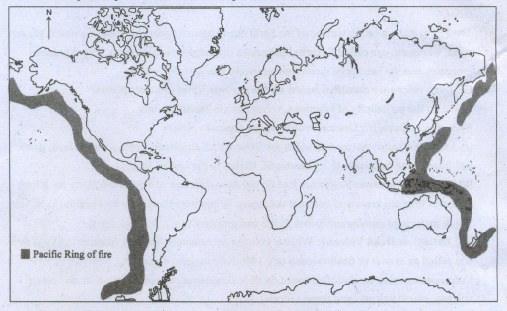
Common Sense
Rights of Man
Bill of Rights
Abolition of Slavery
12.
The 73rd and 74th constitutional Amendment Acts, was enacted during the year in __________.
1992
1995
1997
1990
13.
______________ has recorded the maximum number of emigrants
Ramanathapuram
Coimbatore
Chennai
Vellore
14.
Irrigated land surface out of cultivable land is
27%
57%
28%
49%
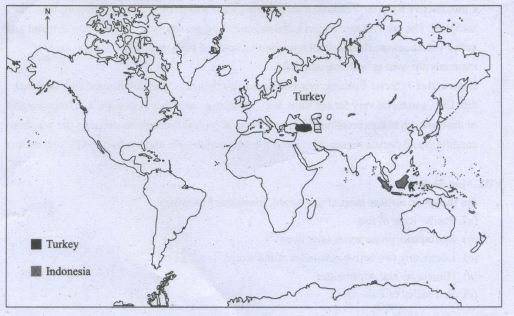
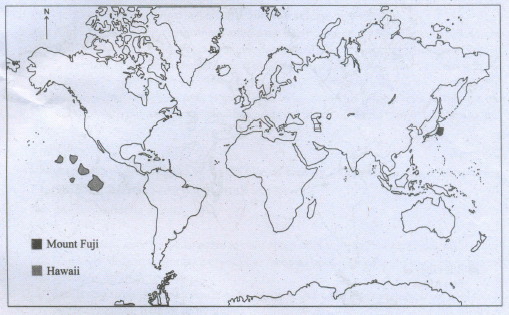
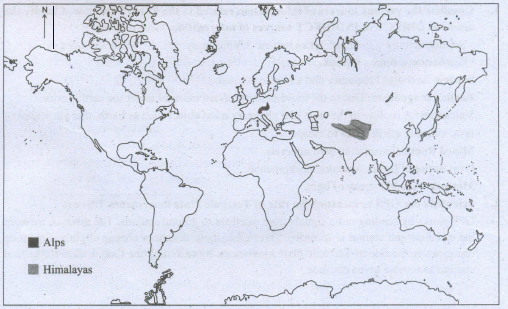
15.
The 'World Population Day' is observed on _____________ every year.
August 11th
September 11th
July 11th
January 11th
16.
Julius Caesar took power in ________B.C.
40
51
49
38
17.
In the south, a Sultanate was established in_________
Tuticorin
Nagapattinam
Madurai
Palani
18.
Decline of_________ helped to move towards urbanisation.
Trade
Feudalism
Freedom
Population
19.
The life supporting layer is known as
Atmosphere
Hydrosphere
Lithosphere
Biosphere
20.
In 1999 mobile banks were used in_________
USA
Europe
21.
NCW was constituted to safeguard________
Children
Labourers
Students
Women
22.
Seljuq Turks came from_________
Central America
Central Asia
Central Australia
Central Europe
23.
The central or high Middle Ages witnessed__________
rapid development
territorial expansion
urban growth
all of the above
24.
Marine resources consists of_______resources.
Biological
Mineral
Energy
All of the above
25.
_____________right exercises in the formation and administration of a government
Social
Economic
Political
Cultural
26.
Why is the usage of rainforest biomes for large scale agriculture unsustainable?
because it is too wet
because the temperature is too warm.
because the soil is too thin
because the soil is poor
27.
Which sailor was the first to cross the Equator?
Henry, the Navigator
Lopo Gonzalves
Lopo Gonzalves
Christopher Columbus
28.
The Peloponnesian War was fought between ______and______
Greeks and Persians
Plebeians and Patricians
Spartans and Athenians
Greeks and Romans
29.
This generally originate from mountains
lake
sea
river
ocean
30.
This is the wettest place of India.
Mawsynram
Western Ghats
Shillong
Pune
31.
Which country has single party system?
USA
UK
Cuba
France
32.
(i) Monastries and temples served the purpose imparting-education.
(ii) Nalanda was a great monastry built by the Magadha empire.
(iii) Nalanda became the most renowned seat of learning.
(iv) Fees were charged to the students.
(i) is correct
(ii) is correct
(iii) is correct
(i), (ii), (iii) are correct (iv) is incorrect
33.
_____________is a vent (or) and opening on the surface of the earth.
Volcano
Tsunami
Earthquake
None of the above
34.
The word 'Igneous' is derived from the_____________word.
Arabic
Roman
Latin
Sanskrit
35.
(i) Barter was the primary mode of exchange.
(ii) Spices including pepper and precious stones were exported.
(iii) The Sangam Age saw the first urbanization in Tamilagam.
(iv) People in the Sangam Age had no faith in religion.
(i) is correct
(i) is correct (ii) incorrect
(i) is correct (iv) incorrect
(i), (ii), (iii) correct (iv) incorrect
36.
The beginning of history writing can be traced to the ancient________
Greeks
Egyptians
Romans
Africans
37.
_______ times were mostly egalitarian in nature.
Mesolithic
Neolithic
Palaeolithic
Iron Age
38.
Which is the correct sequence of various sectors in GDP of India in the descending order?
Primary sector, Secondary sector, Tertiary sector
Primary sector, Tertiary sector, Secondary sector
Tertiary sector, Secondary sector, Primary sector
Secondary sector, Tertiary sector, Primary sector
39.
Which one of the following country is not a G-8 country?
Japan
Canada
Russia
India
40.
NOTA was introduced in the year
2012
2013
2014
2015
41.
Select the odd one
India
USA
France
Vatican
42.
Identify the founder of a new sect who exemplified simplicity and self-denial.
Buddha
Lao-tze
Confucius
Zoroster
43.
_______ reflects radio waves
Exosphere
Ionosphere
Mesosphere
Stratosphere
44.
Inscription that mentions the Cheras
Pugalur
Girnar
Pulimankombai
Madurai
45.
________ erosion is responsible for the formation of cirque
wind
glacial
river
underground water
46.
The Harappans did not have the knowledge of
Gold and Elephant
Horse and Iron
Sheep and Silver
Ox and Platinum
47.
The point of origin of an Earthquake is called the ________.
epicentre
focus
seismic wave
magnitude
48.
_______ is genetically closest to humans
Gorilla
Chimpanzee
Orang-utan
Great Apes
49.
Democracy and Cemmunlsom
50.
Mention the percentage of migrants in India as well as in Tamil Nadu.
51.
Mention important functions of the Mayor.
52.
Write a note on Farmer Producer Organizations (FPOs) in Tamil Nadu.
53.
Mention the three types of map symbols.
54.
Why is Sustainability important?
55.
Write about the Berlin conference of 1884-85.
56.
Mention the causes for the growth of labour unions?
57.
Mention the three major revolution In the second half of the eighteenth century in the modern world
58.
What was the condition of labourer's houses during Industrial Revolution?
59.
Distinguish between Colonialism and Imperialism.
60.
What are the components of remote sensing?
61.
Name the Urban local governments.
62.
Migration towards cities are the main cause for the birth of slums. Justify.
63.
Who monitors the quantity and quality of ground water?
64.
Narrate the given food web of Arctic Tundra in your own words.
65.
What was witnessed by the period of Principate?
66.
Write a note on Socrates
67.
What happened under Oligarchy in Greece?
68.
How was the economic condition of the peasantry during Medieval period of lndia?
69.
When was the Mughal rule consolidated in India?
70.
Fall of Constantinople
What was promoted by them?
71.
What subject were taught in the Italian universities?
72.
Write a note on Biodiversity.
73.
Why do we say that money, a store of value?
74.
What are Extended rights?
75.
Why is earth called a Blue planet?
76.
What are the contributions to labourers by B.R. Ambetkar?
77.
What is spice route? Why was it called so?
78.
Write a brief note on sea waves.
79.
What are the factors that generate the ocean currents?
80.
Contribution of Arabs to Science and Technology
81.
Pacific Ring of Fire - Most seismically and volcanically active. Why?
82.
What are wave cut Platforms?
83.
What is the end result of Development?
84.
Cuddalore and Nagapattinam are always affected by cyclones. Why?
85.
What does structure of employment denote?
86.
Is weathering a pre-requisite in the formation of soil
87.
Mention the merits and demerits of Indirect elections.
88.
Mention the salient features of Democracy.
89.
What kind of life Mahavira and Buddha live?
90.
What do the internal processes generate?
91.
Discuss about the Tamil Traders and Sailors.
92.
Why were the Levalloisian tools called so?
93.
The term civilization is used to distinguish the Urban society from early forms of societies. Why?
94.
Highlight the steps taken by Ashoka to spread Buddhism.
95.
Overseas interactions brought glory to ancient Tamilagam. Give examples in support.
96.
How does a cave differ from a sea arch?
97.
What are ox-bow lakes?
98.
Define weathering.
99.
Write a note on the Great Wall of China.
100.
Enumerate the distinctive characteristics of Neanderthals.
101.
Locate the following on the world outline map.
1. Priairies
2. Downs
3. Tundra Biomes
4. Equatorial Biomes
102.
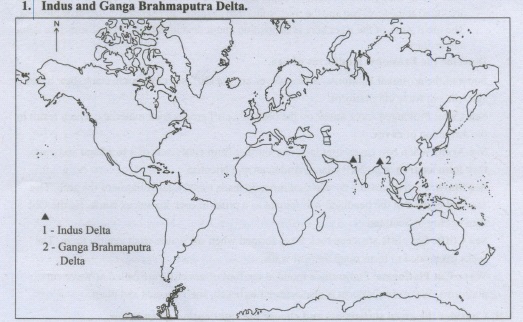
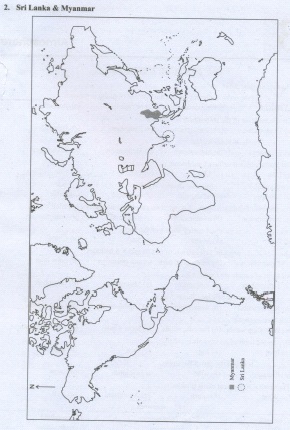
Indus and Ganga Brahmaputra Delta
103.
On the given outline map of the world, mark the following:
a. Pacific Ring of fire
b. Earthquake prone zones (any two)
c. Locate any two active volcanoes of the world.
d. Himalayas and Alps ranges
e. Rift valley of East Africa.
104.
Mention about the Unitary feature of Indian constitution.
105.
What should be done during a fire.
106.
Write down the differences between unitary form of government and federal form of government.
107.
What is labour force of the economy?
108.
Why NNP is not considered as an useful measure to compare a country’s development with other countries?
109.
What are the indicators of development?
110.
Distinguish between two-party system and the multi-party system.
111.
Give Abraham Lincoln’s definition for democracy.
112.
Write about the hidden treasure of Indus civilization.
113.
Mention the rules to ensure Road Safety for children.
114.
How different factors contribute to road accidents?
115.
Write note the Parliamentary form of Government.
116.
Explain the concept of migration.
117.
Write about the Gandhi's Concept of Gram Swaraj.
118.
Write about ammaalvari journey towards Organic farming?
119.
Explain the Global Navigation Satellite System (GNSS).
120.
Do to dispose a Waste?
121.
Explain the term 'Indentured Labour'.
122.
The Industrial Revolution began in England first. Why?
123.
Ring out the impact of the French Revolution.
124.
Highlight the contribution of Greece to World Civilization
125.
Write a note on the following:
Persian wheel
126.
Explain the term Renaissance.
127.
What are educational loans?
128.
What are the functions of SURC?
129.
Iron and Steel industries became highly organised in China - Prove.
130.
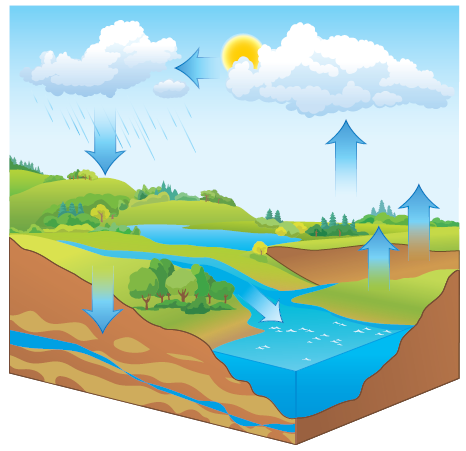
What does this picture depict? Write a note on the processes involved in it.
131.
Explain the various components of ecosystem
132.
Describe the Erosional landforms of Sea
133.
Describe sustainability of Development.
134.
Give an account of Mobilisation and Democratic Participation.
135.
Though democracy in India has been appreciated worldwide for its working there is still a lot of scope for improvement - Discuss.
136.
Give reasons for the decline of Buddhism.
137.
Give an account of 'Tsunami'
138.
Give an account of "Emergence of towns and ports".
139.
Domestication of Animals and plants. A milestone in Human History. Explain
140.
Explain the employment structure of India.
141.
Assertion (A): India has a parliamentary form of democracy.
Reason (R): The Indian Parliament comprises the elected representatives of people.
(a) Both (A) and (R) are true and (R) explains (A)
(b) Both (A) and (R) are true (A) explains (R)
(c) (A) is correct and (R) is false
(d) (A) is false and (R) is true
Both (A) and (R) are true and (R) explains (A)
Both (A) and (R) are true (A) explains (R)
(A) is correct and (R) is false
(A) is false and (R) is true
142.
Pacific ocean and Atlantic ocean
1.
(c)
15
2.
(c)
Madras
3.
(a)
Cauvery
4.
(b)
Vedic
5.
(b)
Literacy rate
6.
(c)
Hanoi
7.
(b)
Portugal
8.
(b)
Germany
9.
(b)
Earthquake
10.
(b)
Armand Peugeot
11.
(a)
Common Sense
12.
(a)
1992
13.
(c)
Chennai
14.
(a)
27%
15.
(c)
July 11th
16.
(c)
49
17.
(c)
Madurai
18.
(b)
Feudalism
19.
(d)
Biosphere
20.
(b)
Europe
21.
(d)
Women
22.
(b)
Central Asia
23.
(d)
all of the above
24.
(d)
All of the above
25.
(c)
Political
26.
(a)
because it is too wet
27.
(b)
Lopo Gonzalves
28.
(c)
Spartans and Athenians
29.
(c)
river
30.
(a)
Mawsynram
31.
(c)
Cuba
32.
(i), (ii), (iii) are correct (iv) is incorrect
33.
(a)
Volcano
34.
(c)
Latin
35.
(d)
(i), (ii), (iii) correct (iv) incorrect
36.
(a)
Greeks
37.
(a)
Mesolithic
38.
(c)
Tertiary sector, Secondary sector, Primary sector
39.
(d)
India
40.
(c)
2014
41.
(d)
Vatican
42.
(a)
Buddha
43.
(c)
Mesosphere
44.
(a)
Pugalur
45.
(b)
glacial
46.
(b)
Horse and Iron
47.
(b)
focus
48.
(b)
Chimpanzee
49.
| S.No | Democracy | Communism |
|---|---|---|
| 1 | Democracy is based on the principle of equality and Freedom. | Communism is based on a common ownership mainly concerned with equality and fairness. |
| 2 | Private ownership is allowed citizen have certain legislature and freedom which are protected by the constitution. E.g. India. | Here the government has complete control over the production and distribution of goods and all the resources shared equally in the society. E.g. China, North Korea |
50.
(i) The percentage of migrants was 37 percent in the country.
(ii) It was at a much higher rate in Tamil Nadu at 43 percent.
51.
(i) He is elected by the people.
(ii) He is a link between the members of the corporation and the government.
(iii) He presides over the meeting of the corporation council.
(iv) He receives the dignitaries from the foreign countries.
52.
(i) Small and marginal farmers in Tamil Nadu will be benefited from FPOs.
(ii) Each of the producers' groups have been given an investment grant of Rs. 5 lakh to purchase farm equipment.
(iii) Apart from using the equipment within the group, these can also be rented out to other farmers.
(iv) The government also has a contract farming policy.
53.
(i) Point Symbols - Buildings, dipping tanks, trigonometrical beacons
(ii) Line Symbols - Railways, roads, power lines, telephone lines
(iii) Area Symbols - Cultivated lands, ponds, orchards and vineyards
54.
(i) The excessive usage of natural and manmade resources deplete its availability for the future generation.
(ii) We need to look after our planet, our resources and our people to ensure that we can hand over our planet to our children to live in true sustainability.
(iii) Hence conservation and awareness are the two important terms that can bring sustainability to our living.
(iv) When we use the word sustainability to mean maintain, it means to maintain it forever.
(v) This is because our actions have a lasting effect on the environment and we should protect it for our future generations.
55.
(i) Berlin conference of 1884-85 is also known as the Congo Conference or West Africa Conference.
(ii) It met to decide all issues connected with the Congo River basin in Central Africa.
(iii) The conference proposed by Portugal to discuss its claim to control the Congo river basin was rejected.
(iv) It declared the Congo River basin to be neutral and guaranteed freedom for trade and shipping for all states in the basin.
56.
The difficult working conditions in the factories, long hours of work, low wages, exploitation of women and children contributed to the growth of labour unions.
57.
The three major revolutions were
(a) The American Revolution - which helped to end the pre-capitalist feudal past.
(b) The Industrial Revolution - which laid the foundations for capitalism.
(c) The French Revolution - which affected the life and society in the whole of continental Europe.
58.
(i) The houses were tiny, dirty and sickly for the labouring class.
(ii) Workers had no time to clean or change their own atmosphere even if they wished to, led to the out break of typhoid, cholrea and small pox.
59.
| Colonialism | Imperialism |
| Colonialism is a process of domination involving the subjugation of one people by another. | Imperialism involves political and economic control over a dependent territory. |
| The term colony came from the Latin word 'Colonus' meaning former. | The term imperialism is derived from Latin term 'imperium' meaning to command. |
| Colonialism usually involves the transfer of population to a new territory, where the arrivals live as permanent settlers. | Imperialism means draw attention to the way one country exercises power over another whether through settlement, sovereignty or indirect machanisms of control. |
60.
Components of remote sensing are
(i) Energy source
(ii) Transmission path
(iii) Target
(iv) Sensor
61.
(i) Urban local governments are Corporation, Municipality and Town Panchayat
(ii) The area where more than 10,000 people are living is called a Town Panchayat
(iii) Municipalities were constituted in India for the first time in Chennai in 1688
(iv) Municipal Corporation are established in big cities.
62.
(i) Many people move to urban areas primarily because cities promise more jobs better schools for poor's children and diverse income opportunities then subsistence forming in rural areas.
(ii) Urbanization drives economic growth and causes people to seek working and investment opportunities in urban areas.
(iii) Local governments are unable to manage urbanisation and migrant workers without an affordable place to live in, dwell in slums.
(iv) The VN.Habitat reports that 43% of urban population in developing countries and 78% of those in the least developed countries are slum dwellers.
(v) Lack of affordable low cost housing and poor planning encourages the supply side of slums.
(vi) Some of the slums in to-days world are a product of urbanisation brought by colonialism.
(vii) Urban poverty, encourages the formation and demand for slums.
(viii) Major natural disasters in poor nations often lead to migration of disaster affected form his to unaffiliated areas, the creation of temporary tent city and slums.
63.
(i) The Union Water Board is constantly monitoring the level and nature of ground water.
(ii) This continuous monitoring has categorized the Panchayat Union in terms of the amount of groundwater used.
64.
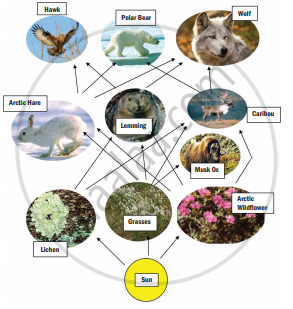
It is a well-balanced food web. This region gets slanting sunrays means very little sunlight in which lichens, grasses, and wildflowers grow and form the first trophic level as a producer. In the second trophic level herbivores who depend on the producers for survival like Arctic Hare, Musk ox, Lemming is the primary consumers. Carnivores who eat the herbivore are-Hawk, Polar Bear and Wolf. They are above the herbivores in a food pyramid. They are secondary consumers.
65.
(i) The period witnessed a great influx of luxury goods such as silk, spices, and gems from the east.
(ii) Cities were built on a grand scale, with temples, theatres, stadia and colosseum, gymnasia, aqueducts, baths and markets.
(iii) The rich people distracted the attention of the poor by organizing games and contests in circuses.
(iv) Gladiators were forced to fight and kill each other.
66.
(i) Socrates was a great thinker of the Pericles Era.
(ii) The Athenian government, after Pericles, did not like Socrates' way of finding truth.
(iii) He was accused of corrupting the youth.
(iv) The jury found Socrates guilty and sentenced him to die by drinking hemlock (a poison).
67.
(i) Under Oligarchy, the new rich exploited the smaller landholders.
(ii) So this republic was soon replaced by some ambitious men who administered tyrannically
68.
(i) The economic condition of the bulk of the peasantry, was poor.
(ii) They generally lived only at a very basic level of subsistence.
(iii) Poor peasants sold themselves and their families into slavery.
(iv) The shipping lists of the Dutch East India Company regularly mention men and women slaves who
69.
(i) The consolidation of Muslim rule under the Mughals in the north, beginning in 1526 A.D. (C.E.) with the defeat of the Ibrahim Lodi by Babur.
(ii) At its height, the Mughal empire stretched from Kabul to Gujarat to Bengal, from Kashmir to south India
70.
Their presence and encouragement promoted the study of classical literature and art of Greeks and Romans.
71.
(i) Italian universities taught humanities namely language, grammar, rhetoric, history and ethics which prepared the students for public life, commerce and administration.
(ii) The study of humanities was so popular in the Italian Universities. Students from all over the world flocked there
72.
a) Biodiversity:
(i) Biodiversity or biological diversity refers to a wide variety of living organisms (plants, animals and other micro organisms) which live in a habitat.
(ii) It is highly influenced by topography climate as well as human activities.
(iii) It represents the strength of the biological resources of a place on earth.
(iv) In biodiversity, each species, no matter how big or small, has an important role to play in the ecosystem.
(v) It maintains the ecological balance and facilitates social benefits such as tourism, education, research etc. over an area.
b) Loss of biodiversity
(i) The extinction of species (flora and fauna) due to human and natural influences is called loss of biodiversity.
(ii) The biodiversity loss has a great impact on mankind and also affects land, water, air etc.
(iii) Habitat destruction due to deforestation, population explosion, pollution and global warming are the major cause for loss of biodiversity.
(iv) Sometimes, habitat loss is so severe or happens so quickly that it results in a species being eliminated from the planet.
(v) Scientists are still trying to decide what caused the mass extinction of dinosaurs.
73.
(i) Money is used as a store of purchasing power.
(ii) It can be used to finance future payments.
74.
The Child rights, SC and ST rights, Women rights, Right to information Act (RTI) and Labour laws come under Extended rights.
75.
(i) One of the most indispensable natural resources on earth is water.
(ii) The Earth is also called the Blue planet, as it holds water in abundance.
(iii) Thus stands unique among all other planets
76.
Dr.B.R. Ambedkar's contribution to labourers.
(i) Reduction in Factory Working Hours (8 hours a day)
(ii) Compulsory Recognition of Trade Unions
(iii) Employment Exchange in India
(iv) Employees State Insurance (ESI)
(v) Minimum Wages
(vi) Coal and Mica Mines Provident Fund
77.
(i) Pepper, spices, pearls, gems, rubies and muslin clothes were exported from the eastern sea of Tamil Nadu. Pepper and spices took a major share of the exports.
(ii) Thus this route came to be called as the spice route.
78.
(i) Of all the movements of the oceans, sea waves are considered to be the strongest.
(ii) Sea waves are ripples on water caused when winds blow over the sea.
(iii) The height of these waves depends on the speed of wind, its duration and the direction from which they blow.
(iv) Sometimes waves are also caused by tremors felt on the ocean floor.
(v) Such waves are quite destructive and called Tsunami
79.
The factors that generate ocean currents are:
(i) Earth's rotation
(ii) Prevailing winds and
(iii) Differences in temperature and salinity of ocean water
80.
(i) Arabs were more interested in scholarly pursuits.
(ii) They had a scientific spirit of inquiry.
(iii) In some subjects like medicine and mathematics, they learnt much from India.
(iv) Many Arab students went to Takshashila, which was still a great university for specialized medicine.
(v) Sanskrit books on medicine and other subjects were translated into Arabic.
(vi) In medicine and surgery, Arab physicians and surgeons earned a great reputation.
81.
The Ring of Fire is a ring of volcanoes around the Pacific Ocean. These volcanoes result from subduction of oceanic plates beneath lighter continental plates, A subduction zone is a place where one plate of oceanic lithosphere is shoved under another plate. As it is shoved into the hotter mantle the plate heats up. The addition of volatiles such as water to the hot overlying mantle causes partial melting and the production of magma. This magma rises up through the over-lying plate to erupt at the surface. Hence, the Pacific Ring of Fire is most seismically and volcanically active.
82.
Flat surface found at the foot of the sea cliffs are called as wave cut platform. It is also referred as Beach, shelf, terrace. and plain.
83.
(i) Development increases the quality of life.
(ii) People will have higher incomes, better education, better health and nutrition, less poverty and more equality of opportunity.
84.
(i) Coastal zone is exposed to natural forces including cyclones and Tsunamis.
(ii) Cuddalore and Nagapattinam are situated on the Sea-Shore.
(iii) Cuddalore and Nagapattinam are vulnerable to storms.
(iv) During Summer Bay of Bengal subject to intense heat cause to raise the humid and unstable air masses that produce cyclone.
85.
Structure of employment denotes number of workers engaged in different sectors of the economy.
86.
(i) Yes, weathering a pre-requisite in the formation of soil.
(ii) The rock materials in due course of time are weathered further to form soil.
(iii) Soil is a mixture of disintegrated rock material.
87.
Merits:
(i) Indirect elections are less expensive.
(ii) It is more suited to elections in large countries.
Demerits:
(i) If the number of voters is very small, there exists the possibility of corruption, bribery, horse trading and other unfair activities.
(ii) It is less democratic because people do not have a direct opportunity to elect, but they instead do it through their representatives. So, this may not reflect the true will of the people.
88.
(i) Elected representatives of people and final decision-making power to the representatives.
(ii) Free and fair elections.
(iii) Universal adult franchise with each vote having equal value.
(iv) Fundamental rights and protection of individual freedom.
89.
Mahavira and Buddha lived a life of purity and exemplified simplicity and self-denial.
90.
(i) The internal processes generate heat and eject materials from deep below the Earth's crust.
(ii) Internal radio activity in the principal source of power for this process.
91.
As seafaring people, Tamil traders and sailors established commercial and cultural links across the seas and merchants from foreign territories also visited the Tamil region.
92.
(i) The lithic tool - making tradition of the Levalloisian belonged to this period.
(ii) Levalloisian tools are the implements made after preparing the core.
(iii) These tools are found in Europe and Central and Western Asia.
(iv) The Levalloisian tools are the implements made after preparing the core. It was named after the town of Levallois in France.
93.
(i) The Urban society practised crafts, engaged in trade and exchange, adopted science and technology and formed political organisation.
(ii) Hence the term civilisation is used to distinguish them from the early forms of societies.
94.
1. Ashoka became an ardent Buddhist after meeting the Buddhist monk Upagupta and propounded his Dharma.
2. The only true conquest he proclaimed is the conquest of self and the conquest of men's hearts by the dhamma or dharma.
3. He sent his son Mahendra and his daughter Sanghamitra to Ceylon to spread his messege of Dharma there.
95.
(i) Tamil country had connections with countries overseas both in the east and west.
(ii) Roman ships used monsoon winds to cross the Western Sea or the Arabian Sea to connect Tamilagam with the Western world.
(iii) Spices including pepper, ivory, and precious stones were exported.
(iv) Metal including gold, silver and copper and precious stones were imported.
96.
| Sea cave | Sea Arch |
| Prolonged wave attack on the base of a cliff erodes rock materials which result in the formation of caves. | When two caves approach one another from either side of a headland and Unite, they form an arch. e.g., Neil Island, Andaman & Nicobar |
97.
(i) Meanders in due course of time become almost a complete circle with narrow necks
(ii) This is turn gets abandoned and forms a lake. This is called an Ox-bow lake
98.
(i) Weathering is the disintegration and decomposition of materials of the earth's crust by their exposure to atmosphere.
(ii) The nature and magnitude of weathering differs from place to place and region to region.
99.
(i) The Great Wall of China, one of the wonders of the world, was a massive effort undertaken for the protection of China from the Mongols.
(ii) In 220 BCE, under Qin Shi Huang, earlier fortifications were connected by walls as a form of defence against invasions.
(iii) It was built from third century BCE until 17th century CE.
(iv) It ran for over 20,000 kilometres covering the hills and plains, from the border of Korea in the east to the Ordos Desert in the west.
100.
(i) The people of Middle Palaeolithic culture were called Neanderthals.
(ii) They buried the dead people systematically.
(iii) They were the first human ancestors to mourn death properly and bury the dead.
(iv) They did not have needles, sewn clothes and warm houses essential for survival in colder climates.
101.

102.
a)
b)
103.
a) Pacific Ring of fire: It is a major area and an arc in the basin of the Pacific ocean where many earthquakes and volcanic eruptions occur.
(b) Earthquake-prone zones (any two): Turkey, Indonesia
(c) Locate any two active volcanoes of the world: Hawaii, Mount Fuji
(d) Himalayas and Alps ranges
104.
Unitary features of Indian constitution are
(1) Strong Centre
(2) Central Government's control over state territory
(3) Single Constitution.
(4) Flexibility of the Constitution
(5) Unequal representation of states
(6) Emergency Provisions
(7) Single citizenship
(8) Single Integrated Judiciary
(9) All India Services
(10) Appointment of Governor by the central government.
105.
(i) Stay calm.
(ii) Pull the nearest fire alarm or call 112.
(iii) Give your name and location of the fire. Do not hang up until the police dispatcher tells you to do so.
(iv) Leave the building immediately.
(v) Inform others as you pass them to leave the building immediately.
(vi) Walk don't run to the nearest exit.
(vii) Never use elevators an elevator may become a trap.
106.
| S.No. | Unitary form of government | Federal form of government |
|---|---|---|
| 1 | This government is a sovereign state governed as a single entity. |
The classification of governments into unitary and federal is based on the nature of relations between the national government and the regional governments. |
| 2 | The central government is supreme and the administrative divisions exercise only powers that the central government has delegated to them. |
Powers are divided. |
| 3 | Suitable for small countries. | More suitable for bigger countries. |
| 4 | There is no conflict of authority and responsibility. It will make prompt decisions and take speedy action. |
It is good for economic and cultural progress. |
107.
(i) Labour force of the economy is the number of people in the country who work and are also capable of working.
(ii) We take the age group of 15-60 years for the computation of work force.
108.
(i) The Net National Product (NNP) is considered as a true measure of national output. It is also known as national income.
(ii) A rise in per capita income means an increase in aggregate real output. Hence, this is a better indicator than national income for measuring development.
(iii) For measuring a country's development, its income is considered to be one of the most important factors. Countries with higher income are considered to be more developed than those with lesser income.
(iv) So, income itself is considered to be one of the indicators of economic development.
109.
The major indicators to measure the level of economic development are
1. Net National Product (NNP),
2. Per Capita Income (PCI),
3. Purchasing Power Parity (PPP),
3. Human Development Index (HDI).
110.
| Two party system | Multi-party system |
|---|---|
| Two party system in which only two major parties exist, for example, USA, UK. | Multi-party system in which there are more than two political parties, for example India, Srilanka, France and Italy. |
111.
Abraham Lincoln defines democracy as a government of the people, by the people and for the people
112.
1. The Indus civilisation and its urban features started declining from about 1900 BC.
2. Charges in climate, decline of the trade with Mesopotamia and drying up or flooding of the river Indus. foreign invasion were some of the reasons attributed to the collapse of this civilisation and for the migration of people on the southern and eastern directions.
3. It did not completely disappear.
4. It continued as rural culture.
113.
Rules to Ensure Road Safety for chlldren
It is impportant for children to know about road safety rules and regulatioins. Here are a few
basic road safety rules for children.
i) Know Your Signals
ii) Stop, Look and Cross
iii) Pay Attention - Listen
iv) Don't Run on Roads
v) Always Use Sidewalks
vi) Never Stick Hands outside the Vehicle
vii) Never cross Road at Bends
viii) Don't Rush.
114.
The different factors contribute to road accident are,
i) Drivers: Over speeding, rash driving, violation of rules, failure to understand signs, fatigue, alcohol.
ii) Pedestrians: Carelessness, illiteracy, crossing at wrong places, jaywalkers.
iii) Passengers: Projecting their body parts outside vehicles, talking to drivers, alighting and boarding vehicles from the wrong side, travelling on footboards, catching a running bus etc.,
iv) Vehicles: Failure of brakes or steering, tyre burst, insufficient headlights, overloading.
v) Road Conditions: Potholes, damaged roads, eroded roads merging of rural roads with highways and illegal speed breakers.
vi) Weather conditions: Fog, snow, heavy rainfall, wind storms, hail storms.
115.
Parliamentary form of Government
(i) The parliamentary system of government is the one in which the executive is responsible to the legislature for its policies and acts.
(ii) It is also known as cabinet government or responsible government or Westminster model of government and is prevalent in Britain, Japan, Canada, India among others.
Features of Parliamentary form of government
(i) Nominal and Real Executives.
(ii) Majority Party Rule
(iii) Collective Responsibility
(iv) Double Membership
(v) Leadership of the Prime Minister
Merill of the parliamentary form of government
(i) Harmony between Legislature and Executive.
(ii) Responsible Government
(iii) Prevents Dictatorship.
(iv) Wide Representation.
Demerits of the parliamentary form of government
(i) Unstable Government.
(ii) No Continuity of Policies.
(iii) Dictatorship of the Cabinet.
(iv) Against Separation of Powers.
116.
(i) In any settlement-village or town change in population occurs due to birth, death and migration.
(ii) Of these three components of population change, birth and death is clearly identifiable events while migration poses the maximum amount of problem with regards to its definition and measurement.
(iii) As almost everyone keeps moving most of the time, it is not easy to define which of these moves have to be classified as migratory moves.
(iv) In the Census of lndia, migration is enumerated on two bases - Place of birth and Place of residence.
117.
(i) Gandhi really wanted 'Swaraj', The self rule by the people of India who represent the rural mass.
(ii) He observed "India's soul lives in the village".
(iii) He dreamt of village republics in term of Panchayat in the free India.
(iv) Mahatma Gandhi advocated Panchayat Raj, a decentralized form of government where each village is responsible for its own affairs.
(v) Gandhi's ideal village should be basically self-reliant, making provision for all necessities of life, food clothing, clean water, sanitation, housing, education and other requirements, including government and self-defense.
(vi) According to Gandhi Gram Swaraj should be a complete republic, independent of its neighbor.
(vii) Every village should be a democracy in which they will not depend even on neighbor for major needs.
118.
(i) When Green Revolution was spreading throughout the nation, Nammalvar started his life journey towards organic farming.
(ii) He resigned his regional Agricultural Developmental Officer post for this purpose.
(iii) He believed in the youth the future generation of India.
(iv) Nearly 6000 youth had completed training in organic farming in his Vanagam Farm.
(v) He spent most of his days in struggles for organic farming and travels campaigning for the same.
(vi) He used only public transport.
(vii) He felt that this was his small role in reducing environmental pollution.
119.
(i) In the 2151 century, GNSS has become a part of our lives to promote the safety and convenience of transport.
(ii) Global Navigation Satellite System (GNSS) is a satellite system connected with a small electronic receiver or tracker to locate, monitor and track a user's vehicle wherever in the world.
(iii) It can also set up instant alerts when a driver of a vehicle speeds or deviates from a particular area.
(iv) GNSS applications are used in tracking or mapping vehicles, ships and aircraft.
(v) A group of satellites (Space Segment) working with a network of ground stations (Control Segment) provide location data.
(vi) The receiver (User Segment) converts satellite signals into location, speed and time data.
(vii) Examples of GNSS:
(a) Europe's Galileo
(b) USA's NAVSTAR Global Positioning System (GPS)
(c) Russia's Global'naya Navigatsionnaya Sputnikovaya Sistema (GLONASS)
(d) China's BeiDou Navigation Satellite System
(e) India's NAVIC satellite system
120.
(i) Do not litter your surroundings. Use a proper waste bin to store your wastes.
(ii) People should practise to segregate degradable and non-degradable wastes and should dispose them in proper coloured bins. Wastage is generally classified into three types. They are
(a) Wet Waste: It comes from the kitchen/cooking/food, etc.
(b) Dry Recyclable Waite: Such as newspapers, cardboard, packing plastics, bottles, cans, etc., should go to a different bin
(e) Rejected Waste: which does not belong to the above two categories, including bio waste like diapers and bandages, etc.
(d) Sewage: sewage slude is produced by waste water treatment processes. Due to rapid urbanization, there has been an increase in municipal waste water.
(e) Electronic Waite (e-waste):
(i) It can be defined as any electrical goods, devices or components that you no longer want or have already thrown away. For example, computers, televisions, mobiles and fax machines.
(ii) This waste can take many years to break down.
(iii) It can contain toxic chemicals such as mercury, lead and lithium that leach into the ground and cause illness.
(iv) Instead of sending e-waste to the dump, components from electronics can be reused to make new products.
121.
(i) The Indentured Labour System was a form of debt bondage.
(ii) By this system 3.5 million Indians were transported to various British colonies to provide labour for the plantations (mainly sugar).
(iii) It started from 1843, the year of abolition of slavery in India and continued until 1920.
(iv) This resulted in the development of a large Indian diaspora, which spread from the Indian Ocean (Reunion and Mauritius) to Pacific Ocean (Fiji), as well as contributing to the growth of Indo-Caribbean and Indo-African population.
(v) The Indenture system was a penal contract system.
(vi) The contract made punishable the refusal of an indentured labourer to work or his abstention from work, or his defiance of the orders of his master or absconding.
122.
The Industrial Revolution began in England first because, it had certain objective conditions. They were:
(i) England had abundant resources and possessed colonies, with India being "the brightest jewel in the British Crown".
(ii) Access to coal, iron and raw cotton from the colonies.
(iii) England possessed the required infrastructure for textiles, developed by immigrant artisans from the Netherlands.
(iv) England had a developed banking system, a growing entrepreneurial class, and potential investors.
(v) Encouragement of the Royal Society of England for scientific discoveries and inventions.
(vi) Political stability of England to bestow its full attention to industrial growth.
123.
(i) The French Revolution had may lasting results.
(ii) It marked the end of the system of absolute monarchy in France.
(iii) All feudal privileges were abolished and the power of clergy was curbed.
(iv) The Revolution united the people of different sections and paved the way for the enhanced power of the state.
(v) It also led to the growth of feelings of nationalism and the emergence of an assertive middle class.
(vi) Revolution up held the theory of people's sovereignty and laid the foundation for the birth of liberal constitutional governments in Europe.
(vii) Liberty, equality, and fraternity became the watchwords of freedom loving people all over the world.
(viii) It inspired many later day political movements for the establishment of liberal democracy in Europe and elsewhere.
124.
(i) The ancient Greeks created the world's first democracy. Athens started on with a monarchy and then advanced to an oligarchy until it finally reached a democracy.
(ii) The Greek Alphabet was the first alphabet in the western sense of the word, featuring distinct letters for vowels and consonants.
(iii) The first library in the world, the library of Alexandria was actually built in Egypt.
(iv) The Olympic games started in ancient Greece specially in the city of Olympia.
(v) Science and Mathematics - Eratosthenes was the first mathematician to calculate the circumference of the Earth. Aristarchus, Archimedes and Hipparchus were great mathematicians and scientists.
(vi) One of the common examples of Greek Architecture in the modular world is the Column in Pillar.
(vii) Greek mythology has pervaded nearly every form of popular culture imaginable. Many Greek myths have been adapted into modem novels, movies, TV, shows etc.
(viii) The first lighthouse in the world was located in the Greek controlled Egyptian Kingdom of Alexandria.
(ix) The democratic people of ancient Greece, especially Athens, were the first to employ trial by jury as we know it today.
125.
Persian wheel:
(i) The Persian wheel is a mechanical water lifting device.
(ii) It is usually operated by draught animals like bullocks, buffaloes or camels .
(iii) It is used to lift water from water sources typically open wells.
(iv) Since it was used in Persia got the name Persian wheel.
126.
(i) The Italian city-states were centres of cultural activities since the fourteenth century.
(ii) With the coming of the scholars and artists from Constantinople, there was a surge of enthusiasm and interest in studying classical literature and art of Greeks and Romans.
(iii) This creative upsurge was reflected in their writings, art, architecture and music.
(iv) This cultural florescence is known as the renaissance.
(v) The origin of the word renaissance is from the Italian word 'renascita' meaning rebirth.
(vi) It is called renaissance because there was a rebirth or revival of classical Greek and Latin literature.
(vii) Many scholars in Italy went in search of manuscripts of classical literature.
(viii) Greek scholar Manuel Chrysoloras who taught Greek classics in Italy, Guarino and Giovanni Aurispa, to name just a few, visited Constantinople several times to collect Greek manuscripts.
(ix) Later they printed what they collected.
(x) This provided stimulus to the flowering of renaissance.
127.
(i) Educational loan attempts to meet the educational aspirations of the society.
(ii) A student is the main borrower.
(iii) A parent, spouse or sibling can be the co-applicant.
(iv) It is offered to students who want to pursue higher education in India or overseas.
(v) It can be taken for a full time, part-time or vocational course and Graduation or Post Graduation.
(vi) There is no security required for the loan amount up to 4 lakhs.
(vii) The loan is repaid by the student generally after the employment.
(viii)Students can apply through "Vidya Lakshmi Portal Education Loan Scheme.
128.
The functions of SHRC are
(i) The SHRC shall enquire into violation of human rights in respect of matters specified in the state and concurrent lists.
(ii) Its objectives and duties are the same as NHRC, but confined only to the state. It has a chairman and two members.
(iii) It has the power of a civil court and can take cognizance of cases if received.
(iv) It can also recommend compensation to victims.
129.
(i) Iron and Steel industries became highly organised.
(ii) The quantity of iron China produced in 1078 A.D. exceeded 114,000 tons (England produced only 68,000 tons even in 1788).
(iii) China excelled in ceramics and porcelain-making.
(vi) This technique was not known to Europe for another 700 years.
(v) Gun powder was in use by 1044.
130.
This picture depicts Water Cycle.
The three major processes involved in the water cycle area)
Evaporation,
b) Condensation
c) Precipitation.
Evaporation is the process by which water is converted from its liquid state to the gaseous state, usually as a result of the sun's warming rays.
Condensation occurs as the vapour rises into the atmosphere, creating clouds and fog. Once clouds are formed, advection (the movement of water in its various states) through thatmosphere. Without advection, the water would evaporate and precipitate at the same place only.
Precipitation occurs when the vapour that condensed comes back out of the sky as rain, snow, sleet, hail. Most of it comes back to the ground or body of water. Thus water moves across land and is stored in lakes or reservoirs for human uses.
131.
(i) An ecosystem consists of three basic components, namely
a) Abiotic components,
b) Biotic components and,
c) Energy components
a) Abiotic Components
Abiotic components include the non-living, inorganic, physical and chemical factors in the environment. Eg. Land, Air ,Water, Calcium, Iron etc.
b) Biotic Components
(i) Biotic components include plants, animals and micro organisms.
(ii) Biotic components can be classified into three categories: (1) Producers, (2) Consumers and (3) Decomposers.
(iii) Producers are self nourishing components of the ecosystem. Hence they are called Autotrophs.
(iv) They are found both on land and water. Eg. Plants, Algae, Bacteria etc.
(v) Consumers are those that depend on producers, directly or indirectly. Hence they are called Heterotrophs.
(vi) Decomposers are some organisms that are incapable of preparing its own food. They live on dead and decaying plants and animals. Hence they are called Saprotrophs.
c) Energy Components
(i) All organisms in the biosphere use energy to work and convert one form of energy into another.
(ii) The Sun is the ultimate source of energy for the biosphere as a whole.
(iii) The producers, consumers and the decomposers contribute a lot to the energy flow in an ecosystem.
132.
Some of the erosional landforms of sea waves are sea cliff, sea cave, arch, stack, beach, bar and spit and wave cut platform.
Sea Cave: Prolonged wave attack on the base of a cliff erodes rock materials, which result in the formation of caves.
Sea Arch: When two caves approach one another from either side of a headland and unite, they form an arch. e.g., Neil Island, Andaman and Nicobar.
Sea Stack: Further erosion by waves ultimately leads to the total collapse of the arch. The seaward portion of the headland will remain as a pillar of rock known as stack. Eg the Old man of Hoy in Scotland.
Sea Cliffs: Sea cliffs are steep rock faces formed when sea waves dash against them. The rocks get eroded to form steep vertical walls.
Wave Cut Platforms: Flat surface found at the foot of sea cliffs are called as wave-cut platforms. Wave cut platform is also referred as beach, shelf, terrace and plain.
133.
Sustainable economic development is taken to mean development without damaging the environment and not compromising with the needs of the future generation. The consequences of environmental degradation do not respect national or state boundaries. Sustainability of development is comparatively a new area of knowledge in which scientists, economists, philosophers and other social scientists are working together. Natural resources can be divided into renewable resources and non-renewable resources. Groundwater is an example of a renewable resource. The question arises as to how sustainable development is possible if the resources are over-used rather than getting replenished. Nonrenewable resources get exhausted after certain number of years of extracting and using them and they cannot be replenished. To achieve real sustainability, we need to balance economic, social and environmental sustainability in equal harmony. In general, the question of development or progress is continuous. At all times, as a member of society and as individuals, we need to ask where we want to go, what we wish to become and what our goals are.
134.
Mobilising people towards socially productive activities that lead to the overall betterment of people's lives is essential. Sometimes earthquakes, tsunamis, floods and other such natural disasters on a massive scale occur and people's immediate mobilisation for evacuation and emergency relief becomes most essential.
Democratic Participation: Democracy can succeed only when smaller local groups and, in fact, every citizen can take action that supports the tax and revenue collection systems, observance of national norms in environmental protection, cleanliness, health and hygiene, sanitary drives and immunisation programmes like pulse polio. However, we must keep in mind that there is no better form of government than Democratic government. To create a better society and nation, the people of India along with the union and state governments should come together to fight against the miseries of human life.
135.
Though democracy in India has been appreciated worldwide for its working, there is still a lot of scope for improvement. The above-mentioned steps must be taken to ensure smooth functioning of democracy in the country.
Indian democracy can be successful and vibrant only when its citizens imbibe and reflect in their behavior the basic democratic values like equality, freedom, social justice, accountability and respect for all. Their mindset, thinking and behavior are expected to be in tune with the essential conditions of democracy. They have to appreciate the opportunities for their desired roles like participation, making the system accountable, fulfilling obligations, and playing proactive roles to actualize the goals of democracy.
136.
Buddhism declined in India due to the following reasons:
1. Buddhism was popular in the beginning because it was preached in people's language (Pali). The later texts were written in Sanskrit, which was difficult for the common people to understand.
2. The split in Buddhism into Hinayana and Mahayana was another vital reason. Image 0" worship in Mahayana made no difference between Hinduism and Buddhism.
3. Buddhism lost its royal patronage during the reign of Guptas.
4. Further, the invasions of Huns and Turks almost wiped out Buddhism.
137.
The word 'Tsunami' is a Japanese term, meaning harbour waves. It is adapted to describe large seismically generated sea waves caused by Earthquakes, submarine explosions and landslides. These waves travel at a great speed (more than 500 km per hour) and the length of the waves exceeds 600 km. These waves reach to a height of more than 15 m near the sea shore and are capable of causing destruction along the coastal area.
The 2004 Indian Ocean Earthquake that caused tsunami is.the sixth-deadliest natural disaster which travelled at a speed of 6.00km per hour with an estimated death toll of 2,80,000. The Earthquake which occurred near Indonesia at 00.58 hours took nearly 7 hours to reach Chennai.
138.
(i) The Sangam Age saw the first urbanization in Tamilagam.
(ii) Cities developed and they had brick buildings, roof tiles, ring wells and planned towns, streets, and store houses.
(iii) The towns worked as ports and artisanal centres. Arikkamedu, Kaveripoompattinam, Azhagankulam and Korkai on the east coast and Pattanam in Kerala were port centres. Kanchipuram, Uraiyur, Karur, Madurai and Kodumanal were inland trade centres.
(iv) Many goods and commodities were produced in these centres and were exported to various regions.
(v) Though few in number, large towns appeared in the Sangam Age.
(vi) Small villages however were found in many areas. Bronze vessels, beads, shell bangles, glass beads, pottery with names of people written in Tamil-Brahmi script were found at these sites.
139.
(i) Rice was probably cultivated in India and China around 7000 BCE or even earlier.
(ii) Wheat and barley were cultivated at Mehrgarh in northwestern part of the Indian subcontinent (Pakistan) before 6000 BCE.
(iii) Animal domestication developed as part of symbiotic life.
(iv) Dogs may have been domesticated first. Friendly animals were gradually domesticated. Sheep and goat were domesticated around 10,000 BCE in Southwest Asia.
(v) Oxen were used in Sumerian civilisation for tilling the land. Mehrgarh in Pakistan has evidence of sheep, goat and cattle domestication in the Neolithic period.
140.
(i) The nature of employment in India is multi-dimensional. Some get employment throughout the year; some others get employed for only a few months in a year.
(ii) The economy is classified into three sectors: primary or agriculture sector, secondary or industrial sector and tertiary or service sector.
(iii) The structure of employment denotes the number of workers engaged in different sectors of the economy.
(iv) Though the occupational pattern varies from one country to another, one can find in developing countries like India that a large work force will be engaged in primary sector, while a small proportion in secondary and tertiary sectors.
(v) Whereas, in well-developed countries, the proportion of workforce engaged in agriculture will be very small and a majority of labour force will be in the industrial and tertiary sectors.
(vi) Employment has always featured as an important element of development policy in India.
(vii) Employment growth has increased at an average rate of 2% during the past four decades since 1972-73.
141.
(a) Both (A) and (R) are true and (R) explains (A)
142.
| S.No | Pacific ocean | Atlantic ocean |
| (i) | Pacific ocean is spread between the western coast of America to the fareast coast (China) | Atlantic ocean is spread between Europe and eastern coast of America |
| (ii) | It has less sea traffic | It has served as an important sea route for trade in the earlier countries and has contributed to the discovery of America |
| (iii) | It is larger in Size | It has stronger ocean currents |
| (iv) | Deepest point - Mariana Trench (10,924 m | Deepest point - Puerto Rico Trench (8,605 m) |

9th Standard Syllabus & Materials
9th Standard
TN 9th Tamil உள்ளத்தின் சீர் - திருக்குறள் Important Questions And Answers Study Material - QB365 Set A
NEW9th Standard
TN 9th Tamil உள்ளத்தின் சீர் - மணிமேகலை Important Questions And Answers Study Material - QB365 Set A
NEW9th Standard
TN 9th Tamil உள்ளத்தின் சீர் - ஏறு தழுவுதல் Important Questions And Answers Study Material - QB365 Set A
NEW9th Standard
TN 9th Tamil உயிருக்கு வேர் - தண்ணீர் Important Questions And Answers Study Material - QB365 Set A



Tamilnadu Stateboard 9th Standard Subjects
Tamilnadu Stateboard Standards




