
 100% FREE ACCESS
9th Standard Syllabus & Materials
9th Standard
TN 9th Tamil உள்ளத்தின் சீர் -கற்கண்டு (இலக்கணம்) - தொடர் இலக்கணம், ஆகுபெயர் Important Questions And Answers Study Material - QB365 Set A
NEW9th Standard
TN 9th Tamil உள்ளத்தின் சீர் -விரிவானம் (துணைப்பாடம்) - தாய்மைக்கு வறட்சி இல்லை! Important Questions And Answers Study Material - QB365 Set A
NEW9th Standard
TN 9th Tamil உள்ளத்தின் சீர் -கவிதை பேழை (செய்யுள்) - மார்கழி பெருவிழா Important Questions And Answers Study Material - QB365 Set A
NEW9th Standard
TN 9th Tamil உயிருக்கு வேர்-இலக்கணம் - பகுபத உறுப்பிலக்கணம் Important Questions And Answers Study Material - QB365 Set A
NEW9th Standard
TN 9th Tamil அமுதென்று பேர் - இலக்கணம்-எழுத்து -அளபெடை Important Questions And Answers Study Material - QB365 Set A
NEW9th Standard
TN 9th Tamil அமுதென்று பேர்-துணைப்பாடம் - ஆறாம்திணை Important Questions And Answers Study Material - QB365 Set A

Published on: 19/08/2019
Download Tamil Nadu 9th Standard Social Science question papers, model tests, one-mark questions, important questions, and public exam papers in PDF format. Free study materials and answer keys for TN State Board students.
Questions + Answers key
Take MCQ Social Science Test
1.
Tri-ratnas are the three principles taught by
Buddha
Mahavira
Lao-tze
Confucius
2.
_______ reflects radio waves
Exosphere
Ionosphere
Mesosphere
Stratosphere
3.
The name of the script used in the Sangam Age
English
Devanagari
Tamil-Brahmi
Grantha
4.
The preservation process of dead body in ancient Egypt
Sarcophagus
Hyksos
Mummification
Polytheism
5.
_______ is genetically closest to humans
Gorilla
Chimpanzee
Orang-utan
Great Apes
6.
Scientists use GPS to measure the rate of Tectonic Plate movements. Discuss.
7.
How are clouds formed?
8.
Define atmosphere.
9.
Elaborate the term “Tri-ratnas”.
10.
What do you mean by biological weathering?
11.
State the salient features of the Ziggurats.
12.
List out the features of Megalithic Burial types.
13.
Will you have the right to equality under dictatorship? What would be the attitude regarding public opinion in such a country?
14.
Describe the structure of the Earth
15.
The history of humans is closely related to the history of the earth. Elucidate.
16.
Weather and climate
17.
Core and crust
18.
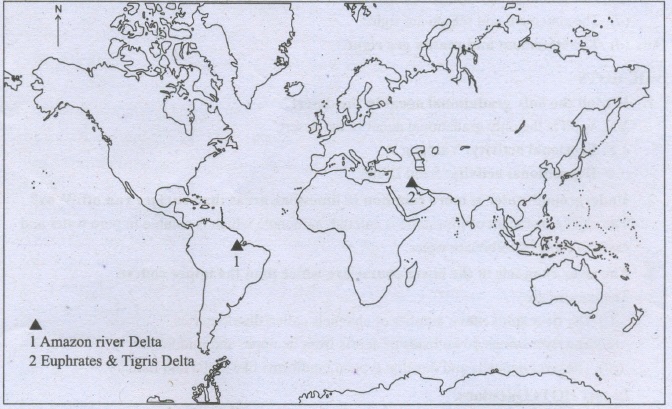
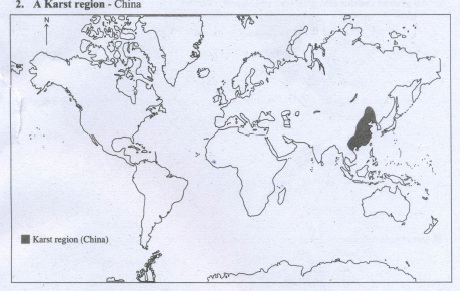
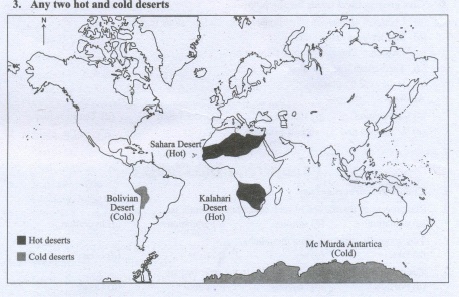
On the given outline map of the world, mark the following.
1. Any two deltas
2. A Karst region
3. Any two hot and cold deserts
19.
Distinguish between direct and indirect democracy.
20.
Earthquake
21.
Stalactites
22.
Arikkamedu
23.
Images on stone and bone
24.
Gilgamesh
25.
__________________parties are an essential part of Democracy.
26.
Buddhism was split into two as_______ and _______ .
27.
________ is the study of the interpretation of the material cultural remains.
28.
Agriculture was the main occupation of the _________ .
1.
(b)
Mahavira
2.
(c)
Mesosphere
3.
(c)
Tamil-Brahmi
4.
(c)
Mummification
5.
(b)
Chimpanzee
6.
GPS works by sending radio signals from satellites to ground stations. The distance between the satellites and station is recorded. Over time, these distances change slightly. Scientists can measure the rate of Tectonic Plate movements by recording the time it takes for ground stations to move a given distance.
7.
(i) A visible mass of condensed water vapour floating in the air above the ground level is called is cloud.
(ii) Cool moisture laden air gets collected around particles like dust, salt content from the sea, smoke, etc, and forms clouds.
(iii) Sometimes mixing warmer and cooler air also produces clouds.
8.
(i) The blanket of air that surrounds the Earth is called the atmosphere.
(ii) It is held close to the earth by gravitational attraction.
(iii) Atmosphere plays on important role in predicting weather phenomenon.
(iv) It is a mixture of gases, water vapour and dust particles in different proportion.
9.
The three principles of Jainism are known as Tri-ratnas. They are Right faith, Right knowledge, Right action.
10.
Biological weathering occurs due to the penetration and expansion of plant roots, earthworms, burrowing animals (rabbits, rats) and some human activities.
11.
1. The Ziggurats were at the city centre on a platform and appeared like steep pyramids, with staircases leading to the top.
2. Around this temple were complexes of ceremonial courtyards, shrines, burial chambers for the priests and priestesses, ceremonial banquet halls, along with workshops, granaries storehouses and administrative buildings.
12.
1. In Megalithic period people buried the dead bodies with grave goods in the cists.
2. Urns or pottery jars were used for burning the dead and also they used sarcophagi made of terracotta.
3. Dolmens, table like stone structures were erected as funerary monuments. Menhirs pillar are like stones erected as part of the burials or memorials.
4. Port holes are holes found in the cists and dolmens on one side.
13.
(i) I will not have the right equality under dictatorship. Because the dictator is a political leader who rules the state with absolute power.
(ii) In such a country the public opinions are suppressed. People will be given less rights or no rights.
14.
The outer surface and inner core of the Earth are totally different in their nature and structure. The structure of the Earth's interior is divided into three layers namely the crust, the mantle and the core.
Crust: Crust is the outer layer of the Earth, where we live. It is the skin of our Earth, which ranges between 5 to 30 km. It is the solid and rigid layer of the Earth. The thickness of the crust is greater below the continents than the ocean floor. The crust is classified as continental crust and oceanic crust. The major elements of crust are Silica (Si) and Aluminium (Al) and thus, it is termed as SIAL.
Mantle: The interior part beneath the crust is called mantle, which is about 2,900 km thick. The major elements of the mantle are Silica (Si) and Magnesium (Mg) and hence it is also termed as SIMA. In the upper part of the mantle. the rock remains solid, whereas, in the lower part of the mantle, rocks are in molten form. This molten rock inside the Earth is called 'magma'.
Core: The core is the innermost and hottest layer of the Earth which lies below the mantle. It is composed mainly of Nickel (Ni) and Iron (Fe). Hence it is called NIFE.
The core is divided into Solid inner core and Liquid outer core. The presence of large quantities of iron in the core is responsible for the Earth's gravitational force. As the Earth rotates on its axis, the liquid outer core spins over the solid inner core and generates the Earth's magnetic field. This is responsible for the functioning of the magnetic compass. Due to high pressure, the materials in the inner core are unable to move and hence remain solid.
15.
(i) The history of humans is closely related to the history of the earth.
(ii) The earth contains geological, archaeological and biological records of historical times in its upper layers.
(iii) They are important for reconstructing the history of the earth and various living organisms.
(iv) The fossil bones of the human ancestors are embedded in the earth's layers.
(v) Palaeoanthropologists and archaeologists excavate the soil and rock layers on the earth and extract evidence about human ancestors.
(vi) These layers and the fossils are scientifically dated to study the various stages in human evolution and prehistory.
(vii) Through the gathered evidence they attempt to understand the evolution of human history and developments in a chronological order.·
(viii) The earth was formed approximately 4.54 billion years ago.
(ix) Gradually conditions emerged for the growth of organisms. Then plants and animals came into being and thereby foundation was laid for the evolution of humans. The long span of time in earth's history is divided into eras, periods and epochs by the Geologists. Thus the history of humans is closely related to the history of the earth.
16.
| S.No. | Weather | Climate |
| (i) | Weather is the study of atmospheric conditions for short duration over small areas. | It is the study of the average weather condition observed over a long period of time for a larger area. |
| (ii) | The weather changes very often hour to hour and day to day. | Climate is more (or) less permanent and remains the same always. |
| (iii) | Study of weather is called meteorology. | Study of climate is called climatology. |
| (iv) | A place can experience different types of weather conditions in a day. |
A place can experience almost the same type of climate. |
17.
| S.No | Core | Crust |
| (i) | The core is the innermost and hottest layer of the Earth. |
Crust is the outer layer of the Earth where we live. |
| (ii) | It lies below the mantle. | It ranges between 5 to 30 km. |
| (iii) | It is composed mainly of Nickel and Iron. | It is the solid and rigid layer of the Earth. |
| (iv) | Hence it is called NIFE. | The elements of the crust are Silica and Aluminium. It is termed as SIAL. |
18.
a)
b)
c)
19.
| Direct democracy | Indirect democracy |
|---|---|
| When the people themselves directly express their will on public affairs, the type of government is called pure or direct democracy. e.g., Ancient Greek city-states, Switzerland | When the people express their will on public affairs, through their elected representatives, the type of government is called indirect or representative democracy. e.g., The prevailing system of democracy in India, USA and UK |
20.
Seismograph
21.
karst topography
22.
a Sangam Age port
23.
Venus
24.
The oldest written story on Earth
25.
()
Political
26.
()
Hinayana & Mahayana
27.
()
Archaeology
28.
()
Mesopotamians

9th Standard Syllabus & Materials
9th Standard
TN 9th Tamil உள்ளத்தின் சீர் - திருக்குறள் Important Questions And Answers Study Material - QB365 Set A
NEW9th Standard
TN 9th Tamil உள்ளத்தின் சீர் - மணிமேகலை Important Questions And Answers Study Material - QB365 Set A
NEW9th Standard
TN 9th Tamil உள்ளத்தின் சீர் - ஏறு தழுவுதல் Important Questions And Answers Study Material - QB365 Set A
NEW9th Standard
TN 9th Tamil உயிருக்கு வேர் - தண்ணீர் Important Questions And Answers Study Material - QB365 Set A



Tamilnadu Stateboard 9th Standard Subjects
Tamilnadu Stateboard Standards




