
 100% FREE ACCESS
9th Standard Syllabus & Materials
9th Standard
TN 9th Tamil உள்ளத்தின் சீர் -கற்கண்டு (இலக்கணம்) - தொடர் இலக்கணம், ஆகுபெயர் Important Questions And Answers Study Material - QB365 Set A
NEW9th Standard
TN 9th Tamil உள்ளத்தின் சீர் -விரிவானம் (துணைப்பாடம்) - தாய்மைக்கு வறட்சி இல்லை! Important Questions And Answers Study Material - QB365 Set A
NEW9th Standard
TN 9th Tamil உள்ளத்தின் சீர் -கவிதை பேழை (செய்யுள்) - மார்கழி பெருவிழா Important Questions And Answers Study Material - QB365 Set A
NEW9th Standard
TN 9th Tamil உயிருக்கு வேர்-இலக்கணம் - பகுபத உறுப்பிலக்கணம் Important Questions And Answers Study Material - QB365 Set A
NEW9th Standard
TN 9th Tamil அமுதென்று பேர் - இலக்கணம்-எழுத்து -அளபெடை Important Questions And Answers Study Material - QB365 Set A
NEW9th Standard
TN 9th Tamil அமுதென்று பேர்-துணைப்பாடம் - ஆறாம்திணை Important Questions And Answers Study Material - QB365 Set A

Published on: 08/08/2019
Download Tamil Nadu 9th Standard Social Science question papers, model tests, one-mark questions, important questions, and public exam papers in PDF format. Free study materials and answer keys for TN State Board students.
Questions + Answers key
Take MCQ Social Science Test
1.
From which language was the term “Democracy” derived?
Greek
Latin
Persian
Arabic
2.
The ________ is the chief energy source of the Earth.
Sun
Moon
Stars
Clouds.
3.
Inscription that mentions the Cheras
Pugalur
Girnar
Pulimankombai
Madurai
4.
The Bronze image suggestive of the use of lost-wax process known to the Indus people
Jar
Priest king
Dancing girl
Bird
5.
________ layer is made up of liquid iron
Inner core
Outer core
Mantle
Crust
6.
_______ is genetically closest to humans
Gorilla
Chimpanzee
Orang-utan
Great Apes
7.
Groundwater is an example of __________ resource.
8.
In 2017, there were _________ recognised national parties
9.
________ is a collection of sacred literature of different epochs, containing prayers, confessions and myths
10.
_______ refers to systematically digging a site to recover material evidence for exploring societies of the past.
11.
The early form of writing of the Egyptians is known as _______.
12.
______ is an object or tool made or modified by humans
13.
Define atmosphere.
14.
Define weathering.
15.
List out the features of Megalithic Burial types.
16.
Discuss the multi-party system.
17.
How does democracy lead to a peaceful and a harmonious life among the citizens? Explain.
18.
The river channels in the lower course are wider than the upper course
19.
Differentiate between renewable and non-renewable resources
20.
Define the terms Hieroglyphics and Cuneiform with their main features.
21.
Describe the structure of the Earth
22.
On the given outline map of the world, mark the following.
1. Any two deltas
2. A Karst region
3. Any two hot and cold deserts
23.
What is ‘Solar Power’?
24.
Earthquake
25.
1972
26.
National party
27.
Bahubali
28.
Wind Vane
29.
The Great Bath
1.
(a)
Greek
2.
(a)
Sun
3.
(a)
Pugalur
4.
(c)
Dancing girl
5.
(a)
Inner core
6.
(b)
Chimpanzee
7.
()
renewable
8.
()
Seven
9.
()
Zend Avesta
10.
()
Archaeological excavations
11.
()
Hieroglyphic
12.
()
Artefact
13.
(i) The blanket of air that surrounds the Earth is called the atmosphere.
(ii) It is held close to the earth by gravitational attraction.
(iii) Atmosphere plays on important role in predicting weather phenomenon.
(iv) It is a mixture of gases, water vapour and dust particles in different proportion.
14.
(i) Weathering is the disintegration and decomposition of materials of the earth's crust by their exposure to atmosphere.
(ii) The nature and magnitude of weathering differs from place to place and region to region.
15.
1. In Megalithic period people buried the dead bodies with grave goods in the cists.
2. Urns or pottery jars were used for burning the dead and also they used sarcophagi made of terracotta.
3. Dolmens, table like stone structures were erected as funerary monuments. Menhirs pillar are like stones erected as part of the burials or memorials.
4. Port holes are holes found in the cists and dolmens on one side.
16.
Merits:
(i) In a huge population country all the people can be represented by multiple parties.
(ii) Particular groups can form their own parties.
(iii) People will have multiple options to vote.
Demerits:
(i) Votes will be scattered.
(ii) It will develop groupism.
(iii) When there is absolute majority there will be coalition government.
17.
(i) In democracy Fundamental Rights are safeguarded to all the people.
(ii) All the People have equal rights.
(iii) People from all walks of life are treated equally.
(iv) People can elect their own leader.
18.
(i) The river channels of the upper course has more energy gradient then the channels of lower course.
(ii) As the river flows in the lower course it corrodes sideways and makes it wider.
19.
| Renewable resources | Non-renewable resources |
| Renewable resources are pollution free and environment friendly. These resources take a short time for renewal. Example: Solar energy, wind energy, water, wood, paper. |
Non-renewable resources pollute and damage the environment. Million of years are needed for the formation of these resources. Example: Metals, glass, fossil fuels (coal, petroleum, natural gas, diesel) |
20.
1. The writing of Egyptians were called hieroglyphic.
2. This form of writing used a pictogram based system.
3. Hieroglyphic was used in inscriptions on seals and other objects.
4. Many texts and books were written using this script.
5. The Egyptian writing system was deciphered by the French scholar Francois Champollion cuneiform.
6. Cuneiform is the Sumerian writing system.
7. The shape of the letter is in the form of wedge and hence it is called cuneiform
8. It is one of the earliest scripts of the world.
9. The epic of Gilgamesh was written in this script.
10 The Sumerians used this script for commercial transactions and writing letters and stories.
11. The clay tablets contain loads of information on the Sumerian civilisation.
21.
The outer surface and inner core of the Earth are totally different in their nature and structure. The structure of the Earth's interior is divided into three layers namely the crust, the mantle and the core.
Crust: Crust is the outer layer of the Earth, where we live. It is the skin of our Earth, which ranges between 5 to 30 km. It is the solid and rigid layer of the Earth. The thickness of the crust is greater below the continents than the ocean floor. The crust is classified as continental crust and oceanic crust. The major elements of crust are Silica (Si) and Aluminium (Al) and thus, it is termed as SIAL.
Mantle: The interior part beneath the crust is called mantle, which is about 2,900 km thick. The major elements of the mantle are Silica (Si) and Magnesium (Mg) and hence it is also termed as SIMA. In the upper part of the mantle. the rock remains solid, whereas, in the lower part of the mantle, rocks are in molten form. This molten rock inside the Earth is called 'magma'.
Core: The core is the innermost and hottest layer of the Earth which lies below the mantle. It is composed mainly of Nickel (Ni) and Iron (Fe). Hence it is called NIFE.
The core is divided into Solid inner core and Liquid outer core. The presence of large quantities of iron in the core is responsible for the Earth's gravitational force. As the Earth rotates on its axis, the liquid outer core spins over the solid inner core and generates the Earth's magnetic field. This is responsible for the functioning of the magnetic compass. Due to high pressure, the materials in the inner core are unable to move and hence remain solid.
22.
a)
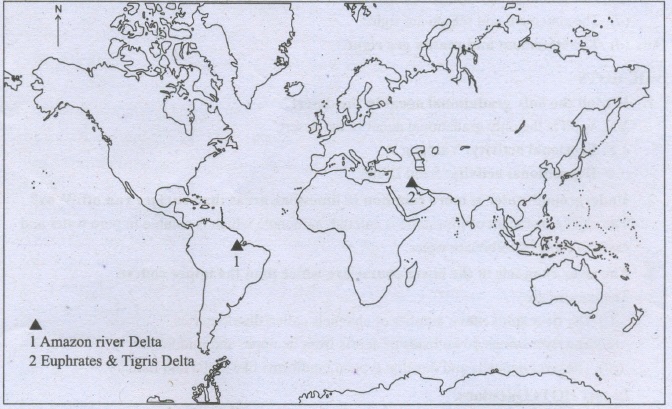
b)
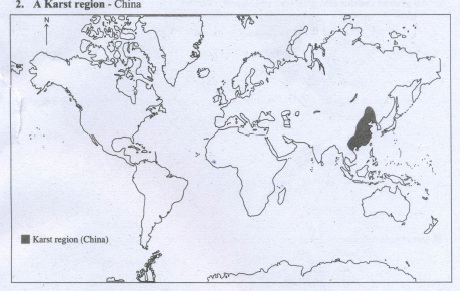
c)
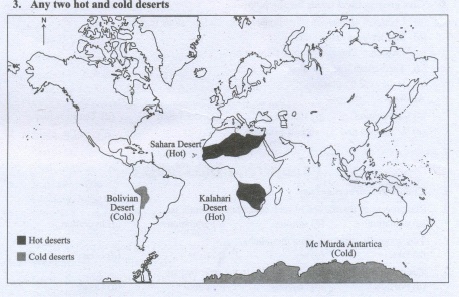
23.
(i) Solar power is the conversion of energy from sunlight into electricity either directly using photovoltaic cells or indirectly using concentrated solar power.
(ii) Solar panels absorb the sunlight as a source of energy to generate electricity.
(iii) A solar electric system can reliably produce electricity for our home and offices.
24.
Seismograph
25.
Wild life Protection Act
26.
Seven
27.
tallest Jaina statue
28.
direction of wind
29.
Mohenjo-Daro

9th Standard Syllabus & Materials
9th Standard
TN 9th Tamil உள்ளத்தின் சீர் - திருக்குறள் Important Questions And Answers Study Material - QB365 Set A
NEW9th Standard
TN 9th Tamil உள்ளத்தின் சீர் - மணிமேகலை Important Questions And Answers Study Material - QB365 Set A
NEW9th Standard
TN 9th Tamil உள்ளத்தின் சீர் - ஏறு தழுவுதல் Important Questions And Answers Study Material - QB365 Set A
NEW9th Standard
TN 9th Tamil உயிருக்கு வேர் - தண்ணீர் Important Questions And Answers Study Material - QB365 Set A



Tamilnadu Stateboard 9th Standard Subjects
Tamilnadu Stateboard Standards




