
 100% FREE ACCESS
9th Standard Syllabus & Materials
9th Standard
TN 9th Tamil உள்ளத்தின் சீர் -கற்கண்டு (இலக்கணம்) - தொடர் இலக்கணம், ஆகுபெயர் Important Questions And Answers Study Material - QB365 Set A
NEW9th Standard
TN 9th Tamil உள்ளத்தின் சீர் -விரிவானம் (துணைப்பாடம்) - தாய்மைக்கு வறட்சி இல்லை! Important Questions And Answers Study Material - QB365 Set A
NEW9th Standard
TN 9th Tamil உள்ளத்தின் சீர் -கவிதை பேழை (செய்யுள்) - மார்கழி பெருவிழா Important Questions And Answers Study Material - QB365 Set A
NEW9th Standard
TN 9th Tamil உயிருக்கு வேர்-இலக்கணம் - பகுபத உறுப்பிலக்கணம் Important Questions And Answers Study Material - QB365 Set A
NEW9th Standard
TN 9th Tamil அமுதென்று பேர் - இலக்கணம்-எழுத்து -அளபெடை Important Questions And Answers Study Material - QB365 Set A
NEW9th Standard
TN 9th Tamil அமுதென்று பேர்-துணைப்பாடம் - ஆறாம்திணை Important Questions And Answers Study Material - QB365 Set A

Published on: 18/01/2019
3rd Term Important Five Mark Questions
Download Tamil Nadu 9th Standard Social Science question papers, model tests, one-mark questions, important questions, and public exam papers in PDF format. Free study materials and answer keys for TN State Board students.
Questions + Answers key
Take MCQ Social Science Test
1.
What were the effects of Industrial Revolution of England on India?
2.
Enumerate the causes for the Second Industrialization in the USA.
3.
Explain the process of colonisation in Africa
4.
Discuss the economic impact of British Rule in India.
5.
Highlight the contribution of French Philosophers to the Revolution of 1789.
6.
“Taxation without Representation” led to the outbreak of American War of Independence – Explain
7.
Reason out why should you stay away from buildings with glass panes during an earthquake.
8.
Suppose you are in a room of a strong building without any furniture when and earthquake occurs. What would you do to protect yourself from the earthquake?
9.
During and earthquake, why should we exit through staircase and not use elevators?
10.
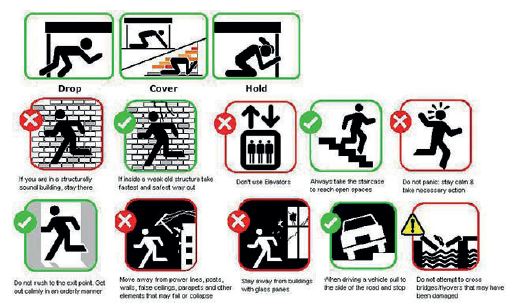
1. Why do you think you should cover your head with one hand and hold the table with the other during an earthquake?
2. During an earthquake, why should we exit through staircase and not use elevators?
3. Suppose you are in a room of a strong building without any furniture when an earthquake occurs. What would you do to protect yourself from the earthquake?
4. Reason out why should you stay away from buildings with glass panes during an earthquake.
11.
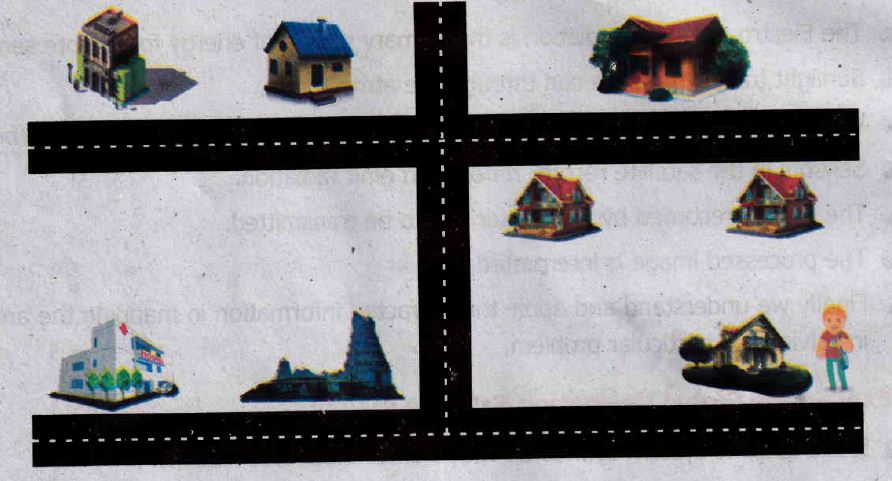
Imagine you are a cartographer. Draw the map of your area.
12.
Can you imagine a world without satellites?
13.
Bhuvan has tremendous uses for scientists, policy makers and the general public. Justify.
14.
Explain the major uses of GPS? Explain about any one.
15.
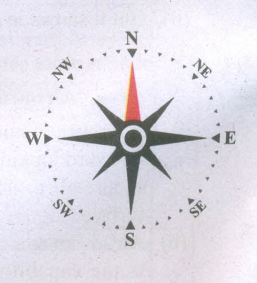
Write a note on directions with relevant diagram.
16.
What do you mean by the term 'scale of the map'? Explain its classification.
17.
Describe the major problems & challenges faced by the local self governments.
18.
Write in details about the salient features of the 73rd & 74th Constitutional Amendment Act (1992).
19.
Analyse the educational qualification of migrants from Tamil Nadu in 2015.
20.
Elucidate about some of the interesting findings on migration in Tamil Nadu.
21.
Discuss the patterns of migration
22.
State the aims of migration policies.
23.
Describe the patterns of rural settlement with neat diagrams.
24.
Explain the factors affecting the distribution of population.
25.
Write about the presidential form of government and what is the difference between presidential and parliamentary forms of government.
26.
Write about the merits of unitary form of government.
27.
Tabulate the crops grown in Tamil Nadu
28.
Discuss about the source of irrigation for agriculture.
29.
What are the problems faced by using groundwater for agriculture?
30.
Give a note on the water resources of Tamil Nadu.
31.
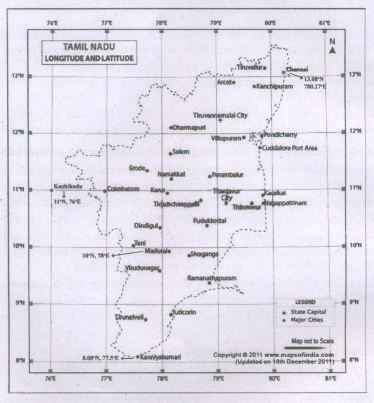
With the help of an atlas, mark the following on the outline map of Tamil Nadu.
a) The latitude and longitude of Chennai.
b) Mark the city located at 100N, 780E.
c) Locate the city approximately on 110N and 760E.
d) Find the latitude and longitude of Kanyakumari and mark it.
32.
On the outline map of Tamil Nadu mark the following.
1. A metropolitan city
2. A district with 7857 people per sq. km.
3. Gulf of Mannar
4. Palk Strait
33.
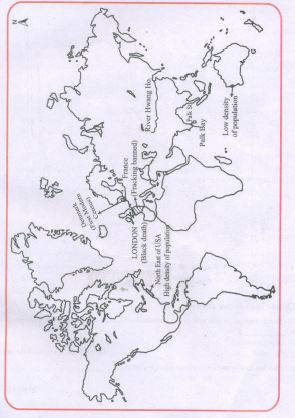
On the outline map of the world mark the following.
1. England - A country affected by 'black death'.
2. Denmark - First country where the modern census was conducted.
3. River Hwang Ho.
1.
1. In the first quarter of eighteenth century, in the context of Indian cotton manufactures flooding in England, a law was enacted prohibiting the use of Indian calicoes and silk.
2. The invention of flying shuttle by John Kay and the inventions of Hargreaves, Arkwright and Crompton within thirty years accelerated the process of spinning and weaving.
3. When the British established their foothold in Bengal as a territorial power the loot from Bengal and the Carnatic provided the required capital and helped accomplish industrial revolution in England.
4. The weavers of Bengal suffered at the hands of the Company's officials and their agents insisted on payment of a transit duty for the commodities they carried from one place to another and later for cultivation of commercial crops required for British industries in England
5. The English deliberately destroyed Indian industry by dumping Indian markets with their machine-made cheap cotton piece goods.
6. Because of loss of market for hand-woven cotton goods. India lost her old industrial position and became an exporter of raw material.
7. By the first quarter of the nineteenth century the export of Dacca muslin to England stopped.
8. Even the export of raw cotton from India had steadily dwindled owing to the competition from U.S.A.
9. Weavers who were eking out an independent livelihood were thrown out of employment because of flooding of British factory-made cheap cotton fabrics in Indian markets.
10. To escape starvation deaths, peasants and artisans had to move out of the country opting to work on plantations in British Empire Colonies as indentured labourers under wretched service and living conditions.
2.
1. A shift from manual labour based to more technical and machine based manufacturing industry marked the industrial revolution in the United States.
2. Samuel Slater, a citizen of England having worked at a cotton mill from the age of 10 had gained enough experience to operate a mill.
3. On learning that Americans were interested in the new techniques, Slater departed for New York in 1789 illegally. Slater offered his service to Moses Brown, who had earlier made an unsuccessful attempt to operate a mill.
4. Brown agreed and in consequence the mill became operational in 1793 being the first water-powered roller spinning textile mill in America.
5. By 1800, Slater's mill had been duplicated by many other entrepreneurs as Slater grew wealthier and his techniques became more and more popular.
6. Andrew Jackson, the U.S. President hailed him as Father of the American Industrial revolution.
7. In the Nineteenth Century America began to show technological innovation.
8. Robert Fulton established the steamboat service on the Hudson River.
9. Samuel E. B. Morse invented the telegraph and Elias Howe invented the sewing machine. This was the main cause for the industrialisation.
10. In 1869 the first transcontinental railroad was completed to transport people, raw materials and products.
11. The invention of electric bulb of Thomas Alva Edison and telephone by Alexander Graham Bell changed the world beyond recognition.
3.
(i) Until the last quarter of the nineteenth century Africa, South of the Sahara was almost unknown to the outside world.
(ii) The interior of Africa was unexplored.
(iii) After 1875 European penetration and colonisation began on a large scale.
(iv) European colonisation of Africa was thus accomplished smoothly without any outbreak of war against major European powers.
(v) This invasion, occupation, colonisation and annexation of African territories by European powers between 1881 and 1914, the era of Imperialism is called the scramble for Africa.
or the partition of Africa.
4.
(i) Lord Cornwallis created Zamindars and Landlords for the first time in India and collected revenue. This settlement made with the Zamindars was called as the permanent settlement.
(ii) The Ryotwari system was a different revenue system introduced in south India.
(iii) Under this system the peasant was the proprietor and paid tax on land. The government deal with him directly. He was entitled to remain in possession of land acquired by him, so long as he paid the land revenue.
(iv) As no credit facilities were provided by the state they had to depend on money lenders to borrow money.
(v) The colonial state pursued a policy of commercialization of agriculture.
(vi) The peasant's bid to clear his debt and to pay up the revenue dues to the state instead of producing for home consumption, the peasants began to raise crop for the market.
(vi) Even than the money earmarked for irrigation was meagre, but due to the initiative of some well meaning British officials and engineers irrigation became possible in certain areas, but they collected more taxes.
(vii) The policy of free trade and the forcible collection of land revenue resulted in the out break of famines.
(viii) The Indentured labour system was a form of debt bondage, by which many Indians were transported to various British colonies.
5.
There were many notable thinkers and writers in France in the eighteenth century. The important among them were
1. Voltaire
2. Jean Jacques Rousseau
3. Montesquieu
VOLTAIRE:
(i) He was the most famous writer of the time on rationalistic and scientific subjects.
(ii) He criticised the church in his writings.
(iii) His famous work was 'Candide'.
(iv) He is said to have once exclaimed "I disapprove of what you say, but I will defend to the death your right to say it".
JEAN JACQUES ROUSSEAU:
(i) Another, great writer a contemporary of Voltaire but younger than him.
(ii) His political theory set the minds of many afire with new ideas and new resolves.
(iii) His ideas played an important part in preparing the people of France for the great revolution.
(iv) He famously said in his book Social contract "Man is born free, but is everywhere in chains".
(v) He argued that the laws are binding only when they are supported by the general will of the people.
MONTESQUIEU:
(i) Montesquieu who wrote, 'The personal letters' and 'The spirit of the laws' also defended liberty.
(ii) He put forward the theory of separation of powers.
(iii) The liberty of the individual would be best protected only in a government where the powers of its three organs, viz, legislature, executive and judiciary were separate.
(iv) It would put in place the necessary checks and balances to prevent any one organ from assuming more Power to itself.
ENCYCLOPAEDIA:
(i) An encyclopaedia also came out in Paris about this time and this was full of articles Diderot by and Jean d'Alembert.
(ii) These philosophers and thinkers opposed religious intolerance and political and social privileges. They succeeded in provoking large numbers of ordinary people to think and act.
6.
(i) The Seven years war of 1756 - 63 between Britain and France had center on the control of colonies especially in North America.
(ii) Britain defeated France and took control of Canada.
(iii) But the war cost the English heavily.
(iv) The British ministers proposed that the American colonists pay some of the cost of the war.
(v) So a series of taxes were imposed on the colonists.
| 1764 | Sugar Act |
| 1765 | Stamp Act |
| 1767 | Townshend Act |
| 1764 | Currency Act |
| 1766 | Declaratory Act |
(vi) The American colonists protested against all the above taxes.
(vii) The British Parliament did not give representation to the colonists.
(viii) The colonies did not begin fighting for the sake of independence.
(ix) Their grievances were taxation and restrictions on trade.
(x) They challenged the right of the British parliament to tax them against their will.
(xi) George Washington became the commander-in-chief of the colonists army.
(xii) "No taxation without representation" was their famous battle cry.
7.
8.
9.
10.
1. It is mainly to protect the head and neck from gently damaged.
2. Because the earthquake likely to knock out electrical power, the elevator machinery will not work.
3. If doors are opened, stand under a door way or in a comer inside the room. Cover your face and head with your arms.
4. At jolting of the earthquake bursting and breaking of wall, glass panes may happen. So it is better to be away from it.
11.
12.
It is difficult to imagine a World without satellites, because of the following reasons:
(i) Navigation and communication is possible only because of satellites.
(ii) GPS is an important benefit of satellites.
(iii) In Science, we do very many things with the help of satellites.
13.
(i) Bhuvan (Sanskrit for Earth) is a free internet based computer application launched by the Indian Space Research Organization (ISRO) on August 12th 2009.
(ii) It enables visualization of Indian Remote Sensing (IRS) images taken over a year ago, by ISRO's seven satellites, including CartoSat-1 and CartoSat-2.
(iii) Using Bhuvan connected to Internet, one can explore places of interest, scenes of events in the news or parts around the world they may never visit in person, by either entering the names of places or co-ordinates (latitudes and longitudes).
(iv) Bhuvan has tremendous uses for scientists, academicians, policy makers or the general public
14.
(i) GPS technology has tremendous applications in everything from mobile phones, watches, bulldozers, shipping containers and ATMs.
(ii) The main purpose of GPS is to help in providing accurate transport data (distance, route and direction).
(iii) It helps in military searches and rescue in wars.
(iv) It can work as a reliable tourist guide.
(v) GPS helps during accident and rescue efforts speeding the delivery of emergency services and disaster relief.
(vi) Weather forecasting, earthquake monitoring and environmental protection can be done effectively by using GPS.
15.
(i) Maps are drawn normally with north orientation.
(ii) North direction in a map is always towards the North Pole of the earth.
(iii) If you position yourself looking at the North Pole, on your right will be the east; your left will be the west; at your back, will be south.
(iv) These four main directions are called the cardinal directions.
(v) Direction is usually indicated on a map by a North-South line, with the North direction represented by an arrow head.
(vi) The memory technique to recall cardinal direction is the sentence.
| Never | Eat | Soggy | Wheaties |
| North | East | South | West |
16.
(i) Scale is one of the components of map.
(ii) Scale makes it possible to reduce the size of the whole earth to show it on a piece of paper.
(iii) A scale is a ratio between the actual distance on the map to the actual distance on the ground.
(iv) Scales can be represented in three methods.
(v) They are the
(a) Statement,
(b) Representative Fraction (R.F) and
(c) Linear or Graphical scale methods.
(a) Statement Scale:
The statement scale describes the relationship of map distance to ground distance in words, such as one centimetre to ten kilometres. It is expressed as 1 cm = 10 km.
What do you mean by the term
(i) It describes the proportion or ratio of the map distance to ground distance. It is usually abbreviated as R.F. It is stated as 1/100000 or 1:100000
(ii) This means that one unit on the map represents 100,000 of the same unit on the ground.
(iii) This unit may be an inch or a centimetre or any other linear measurement unit.
(b) Representative Fraction (R.F.) = \(\frac{Distance \ on \ the \ map}{Distance \ on \ the \ Ground}\)
(c) Linear (or) Graphical scale: In geography, a linear scale is represented by a straight line divided into equal parts (Primary and secondary) to show what these markings represent on the actual ground. This scale helps in the direct measurement of distance on the map.
17.
Problems and challenges facing the local self governments.
(i) Local self governments are the crucial basis for our democracy.
(ii) The Constitutional status of local self governments adds more significance to their functioning.
(iii) There are a few critical concerns in the working of local self governments in India.
(iv) Major problems and challenges may be mentioned as below.
1. Lack of clear demarcation of powers and functions of local bodies.
2. Allocation of funds and needs assessment are not matched.
3. Combined with accountability, the local self governments demand for more autonomy and economic freedom may be addressed.
4. Role of caste, class and religion in decision making at the local self governments.
5. Poor accountability of elected members and officials at the grassroots of democracy.
18.
Salient features of the 73rd and 74th Constitutional Amendment Acts (1992)
(i) Panchayats and Municipalities will be "Institutions of Self Government".
(ii) Basic Units of Democratic System - Grama Sabhas (Villages) and Ward Committees (Municipalities) comprising all the adult members registered.
(iii) Three tier system of panchayats at village, intermediate block/taluk/mandal and district levels. Smaller states with population below 2 million only two tiers.
(iv) Seats at all levels filled by direct election.
(v) Seats reserved for SCs and STs at all levels in proportion to their population.
(vi) One third of the total number of seats-reserved for women. One third of the seats reserved for SCs and STs also reserved for women. One third of offices of Chairpersons at all levels reserved for women.
(vii) Uniform five year term and election to constitute new bodies to be completed before the expiry of the term. In the event of dissolution, elections compulsorily within six months.
19.
(i) In Tamil Nadu the study reveals that in 2015 about 7% were illiterates, 30% had completed schooling ie class 10;10% had completed class 12, 15% had undergone vocational training. 11% were graduates, 12% were professionally qualified and 11% were postgraduates.
(ii) The study clearly reveals various occupation undertaken by migrants which refers to highly skilled occupation on the one hand and low skilled occupation on the other with large number of semi-skilled occupations in between.
20.
(i) Change in population occurs due to births, deaths and migration.
(ii) Almost everyone keeps moving most of the time, it is not easy to define which of these moves have to be classified as migratory moves.
(iii) According to the census of 2011 the population was 7.2 crore in Tamil Nadu.
(iv) 3.13 crore people were counted as migrants.
(v) The mobility of population in rural areas is greater than in urban areas.
(vi) Mobility is usually associated with male rather than female.
(vii) The poorer sections of the people migrate for survival but migrations from better off sections is to improve their living standards
(viii) Of the International migrants 15% are women while 85% are men.
21.
Suresh: What is the reason for population change?
Subash: Change in population occurs due to birth, death and migration.
Suresh: What is migration?
Subash: Birds, Animals and Man move from one place to another.
Suresh: Why do people migrate?
Subash: To search for Job, Education, Marriage, etc.
Suresh: How can migrants be calculated?
Subash: By place of birth and place of residence.
Suresh: How is it calculated in Tamil Nadu?
Subash: According to the census of 2011, there was 7.2 crore people in Tamil Nadu of these 3.13 crore people were counted as migrants.
22.
To reduce the volume of migration:
1. As a large part of migration is a reflection of poverty and insecurity faced by large sections of the rural people, the focus of intervention has to be in rural areas.
2. Rural development policies to reduce poverty and insecurity would be essential to reduce migration.
To redirect the migrant streams:
1. Redirection of migrant stream occurring from cities is a desirable policy option.
2. This policy can help in reducing spatial inequalities by suitable strategies.
3. This can develop a more dispersed pattern of urbanisation.
23.
Patterns of rural settlements:
| (i) Rectangular pattern: Rectangular pattern of settlements are found in plain areas or valleys. The roads are rectangular and cut each other at right angles. |
 |
| (ii) Linear pattern : In a linear pattern, the houses are located along a road, railway line and along the edge of the river valley. |
.JPG) |
| (iii) Circular or Semicircular pattern : The pattern of settlement that is found around the lakes, ponds and sea coasts are called circular or semicircular pattern. |
.JPG) |
| (iv) Star-like pattern: Where several metalled or unmetalled roads converge, star-shaped settlements develop. |
.JPG) |
| (v) Triangular pattern: Triangular patterns of rural settlement generally develop at the confluence of rivers |
.JPG) |
| (vi) T-Shaped, V-Shaped, Cross-Shaped or Cruciform settlements: T-shaped settlements develop at tri-junctions of the roads (T) while V-shaped where two roads converge with the third one and Cruciform settlements develop on the crossroads which extend in all four directions. |
.JPG) |
| (vii) Nebular pattern: The arrangement of roads is almost circular which ends at the central location or nucleus of the settlement around the house of the main landlord of the village or around a mosque, temple or church. |
.JPG) |
24.
Population distribution refers to the way in which people are spread out across the earth's surface.
The world population is not uniformly distributed, owing to the following factors.
(a) Physical factors: It includes temperature, rainfall, Soil, relief, water, natural vegetation, distribution of minerals and availability of energy resources.
(b) Historical factors: Regions with historical importance (river valley civilizations, war and constant invasions fall under historical factors responsible for population distribution.
(c) Economic factors: Educational institutions, employment opportunities, manufacturing industries, luxurious amenities, trade and commerce and other facilities encourage dense population in an area.
25.
Presidential form of government
(i) The American President is both the head of the state and the head of government. As the head of state, he occupies a ceremonial position.
(ii) The president is elected by an electoral college for a fixed tenure of four years.
(iii) He governs with the help of a cabinet or a smaller body called' Kitchen Cabinet' . It is only an advisory body.
(iv) The President and his secretaries are not responsible to the Congress for their acts.
(v) The legislative, executive and judicial powers of the government are separated.
(vi) It is also known as non-responsible or non-parliamentary or fixed executive system of government.
Difference between Presidential and Parliamentary form of government
| No. | Presidential Form of Government | Parliamentary form of Government |
|---|---|---|
| 1 | President is directly elected by the people. | Prime Minister is the leader of majority party. |
| 2 | President is supreme | Central Legislature is supreme |
| 3 | Separation of Powers | Absence of Separation Powers Centralisation |
| 4 | Independent branches | Independent branches with Overlapping functions |
| 5 | President-head of the Government | Prime Minister-head of the Government |
| 6 | Separation of Powers | Centralisation |
| 7 | Independent branches | Independent branches with Overlapping functions |
| 8 | Individual Leadership | Collective leadership |
| 9 | President is not accountable to Congress | Collective and Individual Responsibility. |
26.
Merits of unitary form of government
(i) Suitable for small countries.
(ii) There is no conflict of authority and responsibility.
(iii) A unitary government will make prompt decisions and take speedy action.
(iv) A unitary government is less expensive.
(v) Amendments to the constitution are easy.
(vi) There is unity, uniformity of law, policy and administration.
27.
(i) All cultivated crops can be classified as food crops and non-food crops.
(ii) 57% of the total land under food grains cultivation is irrigated.
(iii) In 2014-15, 59 percentage of food crops and 50 percentage of non food crops were irrigated in Tamil Nadu.
(iv) Paddy cultivation is carried out at a large scale of 30 percent cultivated land area and other food crops in 12 percent area.
(v) Millets are cultivated in a very low percentage of area.
(vi) Cholam cultivation in 7 percent land area, cumbu in one percent and ragi in 1.7 percent.
(vii) Millets occupy 6 percent in the year 2014 - 2015.
(viii) Coconut farming leads in non-food crops (7% land). Groundnut is grown in 6% and cotton is 3% of the cultivated land.
28.
(i) There are no perennial rivers in Tamil Nadu.
(ii) Tamil Nadu receives the required water from northeast and southwest monsoon.
(iii) When the southwest monsoon rains are high in the catchment areas of Cauvery River in Karnataka, dams there get filled and in turn Cauvery River in Tamil Nadu gets water.
(iv) Northeast monsoon is a major source of water for Tamil Nadu.
(v) The northeast monsoon rains are stored in reservoirs, lakes and tanks for cultivation.
(iv) We see that agriculture in Tamil Nadu is dependent on ground water.
29.
(i) Agriculture in Tamil Nadu is dependent on ground water.
(ii) Use of ground water for agriculture creates many hardships too.
(iii) The Union Water Board is constantly monitoring the level and nature of ground water.
(iv) This continuous monitoring has categorized the panchayat union in terms of the amount of groundwater used.
(v) 139 blocks are identified as excessive users of ground water.
(vi) Only 136 blocks have enough quantity and quality water for usage.
(vii) It is very urgent and necessary to regulate the usage of underground water.
30.
(i) Northeast monsoon is a major source of water for Tamil Nadu.
(ii) The northeast monsoon rains are stored in reservoirs, lakes, pond and wells for cultivation.
(iii) Conventional water bodies like lakes, ponds and canals provide water for agriculture in Tamil Nadu.
(iv) 2,239 canals run through Tamil Nadu covering a length of 9,750 km.
(v) There are 7,985 small lakes, 33,142 large lakes, 15 lakh open wells and there are 3,54,000 bore wells in the state where agriculture is carried out with the help of these water resources.
31.
32.
.JPG)
33.

9th Standard Syllabus & Materials
9th Standard
TN 9th Tamil உள்ளத்தின் சீர் - திருக்குறள் Important Questions And Answers Study Material - QB365 Set A
NEW9th Standard
TN 9th Tamil உள்ளத்தின் சீர் - மணிமேகலை Important Questions And Answers Study Material - QB365 Set A
NEW9th Standard
TN 9th Tamil உள்ளத்தின் சீர் - ஏறு தழுவுதல் Important Questions And Answers Study Material - QB365 Set A
NEW9th Standard
TN 9th Tamil உயிருக்கு வேர் - தண்ணீர் Important Questions And Answers Study Material - QB365 Set A



Tamilnadu Stateboard 9th Standard Subjects
Tamilnadu Stateboard Standards




