
 100% FREE ACCESS
11th Standard Syllabus & Materials
11th Standard
TN 11th Tamil இயற்கை வேளாண்மை,சுற்றுச்சூழல் -செய்யுள் - மனோன்மணீயம் Important Questions And Answers Study Material - QB365 Set A
NEW11th Standard
TN 11th Tamil என்னுயிர் என்பேன் -துணைப்பாடம் - இசைத்தமிழர் இருவர் Important Questions And Answers Study Material - QB365 Set A
NEW11th Standard
TN 11th Tamil மொழி கலை -செய்யுள் - ஒவ்வொரு புல்லையும் Important Questions And Answers Study Material - QB365 Set A
NEW11th Standard
TN 11th Tamil பீடு பெற நில் - இலக்கணம் - பகுபத உறுப்புகள் Important Questions And Answers Study Material - QB365 Set A
NEW11th Standard
TN 11th Tamil பீடு பெற நில் - துணைப்பாடம் - வாடிவாசல் Important Questions And Answers Study Material - QB365 Set A
NEW11th Standard
TN 11th Tamil பீடு பெற நில் - செய்யுள் - குறுந்தொகை Important Questions And Answers Study Material - QB365 Set A

Published on: 01/08/2018
In this question paper, some of the important one mark, two and five marks questions from the chapter Algebra are covered. The questions are prepared from the book back and previous year questions.
Please click here to get the answer of this question paper
Download Tamil Nadu 11th Standard Business Maths and Statistics question papers, model tests, one-mark questions, important questions, and public exam papers in PDF format. Free study materials and answer keys for TN State Board students.
Questions + Answers key
Take MCQ Business Maths and Statistics Test
1.
Let p(n) be the statement "n2 + n is even". If P(k) is true, then show that P(k+1) is true.
2.
If p(n) is the statement "12n + 3" is a multiple of 5, then show that P (3) is false, whereas P(6) is true.
3.
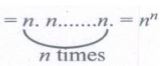
In how many ways can n prizes be given to n boys, when a boy may receive any number of prizes?
4.
If the letters of the word are arranged as in dictionary, find the rank of the word "AGAIN".
5.
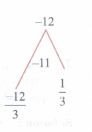
Solve : \(\frac { (2x+1)! }{ (x+2)! } .\frac { (x-1)! }{ (2x-1)! } =\frac { 3 }{ 5 } \)
6.
Resolve into partial factors:\(\frac { x+4 }{ ({ x }^{ 2 }-4)(x+1) } \)
7.
Expand the following by using binomial theorem.\({ \left( x+\frac { 1 }{ { x }^{ 2 } } \right) }^{ 6 }\)
8.
Expand the following by using binomial theorem.\(\left( x+\frac { 1 }{ y } \right) ^{ 7 }\)
9.
Resolve into partial fractions for the following : \(\frac{x+2}{(x-1)(x+3)^2}\)
10.
Resolve into partial fractions for the following : \(\frac{x^2-6 x+2}{x^2(x+2)}\)
11.
Resolve into partial fractions for the following : \(\frac{x^2-3}{(x+2)\left(x^2+1\right)}\)
12.
13.
The number of ways to arrange the letters of the word "CHEESE" is ______.
120
240
720
6
14.
The value of (5C0 + 5C1) + (5C1 + 5C2) + (5C2 + 5C3) + (5C3 + 5C4) + (5C4 + 5C5 ) is ________.
26-2
25-1
28
27
15.
There are 10 true or false questions in an examination. Then these questions can be answered in ______.
240 ways
120 ways
1024 ways
100 ways
16.
The number of parallelograms that can be formed from a set of four parallel lines intersecting another set of three parallel lines is _________.
18
12
9
6
17.
For all n > 0, nC1 + nC2 + nC3 + ... +nCn is equal to _______
2n
2n- 1
n2
n2 - 1
18.
If n is a positive integer, then the number of terms in the expansion (x + a)n is _______.
n
n + 1
n-1
2n
19.
The greatest positive integer which divide n(n + 1) (n + 2) (n + 3) for n \(\in\) N is ________.
2
6
20
24
20.
The number of ways selecting 4 players out of 5 is _______.
4!
20
25
5
21.
The value of n, when nP2 = 20 is _______.
3
6
5
4
22.
In how many ways can 10 beads of different colours form a necklace?
23.
How many permutations can be made out of the letters of the word "TRIANGLE" beginning with T?
24.
Show that 10P3 = 9 P3 + 3. 9P2
1.
P(n): "n2 + n is even"
Given that P(k) is true.
\(\Rightarrow \) k2 + k is even
\(\Rightarrow \) k2 + k = 2\(\lambda \) for some \(\lambda \) ....(1)
To prove that P (k + 1) is true.
P (k + 1) : (k + 1)2+ (k + 1) is even
Consider (k + 1)2 + (k + 1)
= k2+2k+ 1 +k+ 1
= k2+2k+ 1 +k+ 1
= (k2+ k) + (2 k + 2)
= 2\(\lambda \) + 2 (k + 1) [from (1)]
= even + even
= Sum of two even numbers is always an even number .
∴ P (k + 1) is true.
2.
P(n): "12n + 3" is a multiple of 5.
P(3): 12 (3) + 3 36 + 3 = 39 is not a multiple of 5.
∴ P (3) is false
P(6) = 12(6) + 3 = 72 + 3 = 75 = 5 x 15 is a multiple of 5.
∴ P (6) is true
3.
No. of ways of giving I prize = n
No. of ways of giving II prize = n
.............................................
Similarly no. of ways of giving nth prize = n
Therefore By fundamental principle of counting, the required number of ways
4.
In "AGAIN" the letters in ascending order are A, A, G, I, N
∴ The first word is AAGIN
Number of words beginning with A A
= No of ways of arranging G, 1, N = 3! = 6
The next word begin with AG and it is AGAIN
∴ No. of words before AGAIN = 6.
∴ Rank of word AGAIN = 7
5.
\({{(2x+1)!}\over{(x+2)!}}.{{(x-1)!}\over{(2x-1)!}}={{3}\over{5}}\)
\(\Rightarrow\) \({{(2x+1)(2x)(2x-1)!}\over{(x+2)(x+1)(x-1)!}}.{{(x-1)!}\over{(2x-1)!}}={{3}\over{5}}\)
\(\Rightarrow\) \({{(2x+1)(2)}\over{(x+2)(x+1)}}={{3}\over{5}}\)
\(\Rightarrow\) 10 (2x+1) = 3 (x+2) (x+1)
\(\Rightarrow\) 20x+10=3 (x2+3x+2)
\(\Rightarrow\) 20x+10+3x2-9x-6=0
\(\Rightarrow\) -3x2+11x+4 = 0
\(\Rightarrow\) -3x2-11x-4=0
\(\Rightarrow\) (x-4)(3x+1)=0
\(\Rightarrow\) x = 4 or x \(={{-1}\over{3}}\)
Since \(x={{-1}\over{3}}\) is not possible, x = 4.
6.
\({{x+4}\over{(x^2-4)(x+1)}}={{x+4}\over{(x+2)(x-2)(x+1)}}={{A}\over{x+2}}+{{B}\over{x-2}}+{{C}\over{x+1}}\)
\(\Rightarrow\) \({{x+4}\over{(x^2-4)(x+1)}}=\frac { { { A(x-2)(x+1)B+(x+2)(x+1)+C(x+2)(x-2) } } }{ (x+2)(x-2)(x+1) } xx\)
\(\Rightarrow\) x + 4 = A (x - 2) (x + 1) + B (x + 2) (x + 1) C (x +2)(x - 2) ...(1)
Putting x = 2 in (1) we get,
6 = B (4) (3) \(\Rightarrow\boxed{B={{1}\over{2}}}\)
Putting x = -1 in (1) we get,
3 = C (1)(-3) \(\Rightarrow\quad \boxed{C=-1}\)
Putting x = 0 in (1) we get,
4 = - 2A + 2B - 4C
\(\Rightarrow\) \(4=-2A+2\left( {{1}\over{2}} \right)-4(-1)\) \(\left[ \because B={{1}\over{2}},C=-1 \right]\)
\(\Rightarrow\) \(4=-2A+1+4\ \ \Rightarrow\ 4=-2A+5\ \Rightarrow -1\) =-2A
\(\Rightarrow\) \(\boxed{A={{1}\over{2}}}\)
\(\therefore\) \({{x+4}\over{(x^2-4)(x+1)}}={{{{1}\over{2}}}\over{x+2}}+{{{{1}\over{2}}}\over{x-2}}-{{1}\over{}x+1}={{1}\over{2(x+2)}}+{{1}\over{2(2x-2)}}-{{1}\over{x+1}}\)
7.
\(\left(x+\frac{1}{x^2}\right)^6 = 6 C_0 x^3+6 C_1 x^5\left(\frac{1}{x^2}\right)+6 C_2 x^4\left(\frac{1}{x^2}\right)+6 C_3 x^3\left(\frac{1}{x^2}\right)^3 +6 C_4 x^2\left(\frac{1}{x^2}\right)^4+6 C_5 x\left(\frac{1}{x^2}\right)^5+6 C_6\left(\frac{1}{x^2}\right)^6 \)
\(=x^6+6 x^3+15 x^4\left(\frac{1}{x^4}\right)+20 x^3\left(\frac{1}{x^6}\right)+15 x^2\left(\frac{1}{x^8}\right)+6 x\left(\frac{1}{x^{10}}\right)+\frac{1}{x^{12}}\)
\(=x^6+6 x^3+15+\frac{20}{x^3}+\frac{15}{x^6}+\frac{6}{x^9}+\frac{1}{x^{12}}\)
8.
\(\left(x+\frac{1}{y}\right)^7 =7 C_0 x^7+7 C_1 x^6\left(\frac{1}{y}\right)+7 C_2 x^5\left(\frac{1}{y}\right)^2 +7 C_4 x^3\left(\frac{1}{y}\right)^4+7 C_5 x^2\left(\frac{1}{y}\right)^5 +7 C_6 x\left(\frac{1}{y}\right)^6+7 C_7\left(\frac{1}{y}\right)^7\)
\(=x^7+\frac{7 x^6}{y}+\frac{21 x^5}{y^2}+\frac{35 x^4}{y^3} +\frac{35 x^3}{y^4}+\frac{21 x^2}{y^5}+\frac{7 x}{y^6}+\frac{1}{y^7}\)
9.
\(\frac{x+2}{(x-1)(x+3)^2}=\frac{A}{(x-1)}+\frac{B}{(x+3)}+\frac{C}{(x+3)^2}\)
\(=\frac{A(x+3)^2+B(x-1)(x+3)+C(x-1)}{(x-1)(x+3)^2}\)
\(\Rightarrow\) x + 2 = A ( x + 3 )2 + B ( x - 1 ) ( x + 3 ) + C( x - 1 ) ....(1)
Putting x = 1 in (1) we get,
\(3=A(4)^2 \Rightarrow A=\frac{3}{16}\)
Puttingx = -3 in (1)we get
\(-1=C(-3-1)\)
\(C=\frac{1}{4}\)
Equate co-efficient of x2 on both sides of (1)
\(0 =A+B \Rightarrow B=-A=\frac{-3}{16} \)
\(\frac{x+2}{(x-1)(x+3)^2} =\frac{3}{16(x-1)}-\frac{3}{16(x+3)}+\frac{1}{4(x+3)^2}\)
10.
\(\frac { { x }^{ 2 }-6x+2 }{ { x }^{ 2 }(x+2) } =\frac { A }{ x } +\frac { B }{ { x }^{ 2 } } +\frac { C }{ x+2 } \)
⇒ \(\frac { { x }^{ 2 }-6x+2 }{ { x }^{ 2 }(x+2) } =\frac { Ax(x+2)+B(x+2)+Cx^{ 2 } }{ { x }^{ 2 }(x+2) } \)
⇒ x2 - 6x + 2 = Ax (x + 2) + B (x + 2)+ Cx2 ..(1)
x = -2 in (1) we get,
4 + 12+ 2 = \(C(-2)^2\) = C(4)
⇒ 18 = 4C ⇒ C = \(\frac { 18 }{ 4 } =\frac { 9 }{ 2 } \)
x = 0 in (1) we get,
2 = B (2) ⇒ B = 1
Equating co-efficient of x2 on both sides of (1)
1 = A + C ⇒ = A + \(\frac { 9 }{ 2 } \) [∵ C=\(\frac { 9 }{ 2 } \)]
⇒ A = \(1-\frac { 9 }{ 2 } =\frac { 2-9 }{ 2 } =\frac { -7 }{ 2 } \)
\(\frac{x^2-6 x+2}{x^2(x+2)}=\frac{-7}{2 x}+\frac{1}{x^2}+\frac{9}{2(x+2)}\).
11.
\(\frac { { x }^{ 2 }-3 }{ (x+2)({ x }^{ 2 }+1) } =\frac { A }{ x+2 } +\frac { Bx+C }{ { x }^{ 2 }+1 } \)
[since x2 + 1 cannot be factorised into linear factors]
⇒ \(\frac { { x }^{ 3 }-3 }{ (x+2)({ x }^{ 2 }+1) } =\frac { A({ x }^{ 2 }+1)+(Bx+C)(x+2) }{ (x+2)({ x }^{ 2 }+1) } \)
⇒ x2 - 3 = A(x2 + 1) + (Bx + C) (x + 2) ...(1)
Putting x = -2 in (1) we get
4 - 3 = A(4 + 1) ⇒ 1 ⇒ 5A ⇒ \(A=\frac{1}{5}\)
Equate co-efficient of x2 on both sides of (1)
1 = A + B
\(1=\frac{1}{5}+B\)
\(B=1-\frac{1}{5}=\frac{4}{5}\)
Putting x = 0 in (1) we get,
\(-3=A+2 C\)
\(-3=\frac{1}{5}+2 C\)
\(2 C=-3-\frac{1}{5}=-\frac{16}{5}\)
\(C=-\frac{8}{5}\)
\(\frac{x^2-3}{(x+2)\left(x^2+1\right)}=\frac{1}{5(x+2)}+\frac{\frac{4 x}{5}-\frac{8}{5}}{x^2+1}\)
\(=\frac{1}{5(x+2)}+\frac{4(x-2)}{5\left(x^2+1\right)}\).
12.
(b)
13.
The number of ways = 6!/3! = 120
14.
Since sum of all binomial coefficients is 2n
5C0 + 5C1 + 5C2 + 5C3 + 5C4 + 5C5 + (5C1 + 5C2 + 5C3 + 5C4)
= 25 + (25 - (5C0 + 5C5)
= 32 + 32 - (1 + 1)
= 64 - 2 = 26 - 2
15.
210 = 1024 (2.x 2... 10 terms)
16.
The number of parallelograms = 4C2 x 3C2
17.
nC0 + nC1 + nC2 + nC3 + ... +nCn = 2n and nC0 = 1
18.
(b)
n + 1
19.
Since if n = 1 then (1) (2) (3) (4) = 24 is divisible by = 24
20.
No. of ways = 5C4 = 5C1 = 5
21.
nP2 = 20
n(n - 1) = 5 x 4
n = 5
22.
Number of ways of forming necklace
\(\frac { (10-1)! }{ 2! } =\frac { 9! }{ 2 } =181440\)
23.
The first place can be filled in only one way namely T and the remaining 7 letters can be arranged in 7! ways.
\(\therefore\) Total number of arrangements = 1 x 7! = 5040.
24.
LHS 10P3 = 10 x 9 x 8 = 720
RHS 9P3 + 3. 9P2 = 9 x 8 x 7 + 3 x 9 x 8
= 9 x 8 (7 + 3) = 72 (10) = 720
LHS= RHS Hence proved.

11th Standard Syllabus & Materials
11th Standard
TN 11th Tamil பீடு பெற நில் - செய்யுள் - காவடிச்சிந்து Important Questions And Answers Study Material - QB365 Set A
NEW11th Standard
TN 11th Tamil பீடு பெற நில் - உரைநடை - மலை இடப்பெயர்கள் : ஓர் ஆய்வு Important Questions And Answers Study Material - QB365 Set A
NEW11th Standard
TN 11th Tamil மாமழை போற்றுதும் - துணைப்பாடம் - யானை டாக்டர் Important Questions And Answers Study Material - QB365 Set A
NEW11th Standard
TN 11th Tamil மாமழை போற்றுதும் - செய்யுள் - ஐங்குறுநூறு Important Questions And Answers Study Material - QB365 Set A



Tamilnadu Stateboard 11th Standard Subjects

Maths

Commerce

Economics

Biology
Business Maths and Statistics

Accountancy

Computer Science

Physics

Chemistry
Maths
Biology
Economics
Physics
Chemistry

History
Business Maths and Statistics

Computer Science
Accountancy

Computer Applications
History
Computer Technology
Commerce
Computer Applications
Computer Technology

Tamil

English

French
Tamilnadu Stateboard Standards
