
 100% FREE ACCESS
11th Standard Syllabus & Materials
11th Standard
TN 11th Tamil இயற்கை வேளாண்மை,சுற்றுச்சூழல் -செய்யுள் - மனோன்மணீயம் Important Questions And Answers Study Material - QB365 Set A
NEW11th Standard
TN 11th Tamil என்னுயிர் என்பேன் -துணைப்பாடம் - இசைத்தமிழர் இருவர் Important Questions And Answers Study Material - QB365 Set A
NEW11th Standard
TN 11th Tamil மொழி கலை -செய்யுள் - ஒவ்வொரு புல்லையும் Important Questions And Answers Study Material - QB365 Set A
NEW11th Standard
TN 11th Tamil பீடு பெற நில் - இலக்கணம் - பகுபத உறுப்புகள் Important Questions And Answers Study Material - QB365 Set A
NEW11th Standard
TN 11th Tamil பீடு பெற நில் - துணைப்பாடம் - வாடிவாசல் Important Questions And Answers Study Material - QB365 Set A
NEW11th Standard
TN 11th Tamil பீடு பெற நில் - செய்யுள் - குறுந்தொகை Important Questions And Answers Study Material - QB365 Set A

Published on: 01/08/2018
Based on the chapter Distribution Analysis, some of the important questions are prepared in this question paper. It covers the one mark, two and five marks questions from the book back and PTA question.
Download Tamil Nadu 11th Standard Economics question papers, model tests, one-mark questions, important questions, and public exam papers in PDF format. Free study materials and answer keys for TN State Board students.
Questions + Answers key
Take MCQ Economics Test
1.
MRP=______________.
MPP x MR
MPP+MR
MPP-MR
MPP + MR
2.
VMP= ____________.
MPP + Price
MPP x Price
MPP + Price
MPP - Price
3.
The theory of factor prices are popularly known as __________.
Theory of distribution
Theory of interest
Theory of profit
All the above
4.
Marginal productivity theory of distribution is also known as ____________.
General theory of distribution
National Dividend theory of distribution
Both 'a' and 'b'
None of these
5.
Marginal productivity theory of distribution was developed by
Clark
Wicksell
Walras
All of these
6.
Residual Claimant Theory is propounded by
Keynes
Walker
Hawley
Knight
7.
'Original and indestructible power of the soil' is the term used by
J.S.Mill
Walker
Clark
Ricardo
8.
The Classical Theory of Rent was propounded by
Ricardo
Keynes
Marshall
Walker
9.
The concept of 'Quasi-Rent' is associated with
Ricardo
Keynes
Walker
Marshall
10.
In Economics, distribution of income is among the
factors of production
Individual
firms
traders
11.
Distinguish between Normal Profit and Super Normal Profit.
12.
Write down the criticisms of marginal productivity theory of distribution?
13.
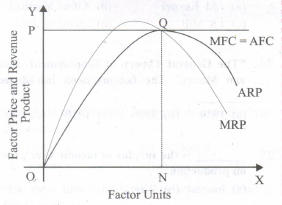
Draw a diagram of marginal productivity under perfect competition?
14.
What do you mean by interest?
15.
Distinguish between real and money wages.
16.
Define 'Rent'.
17.
What are the Kinds of profit?
18.
Write a note on speculative motive.
19.
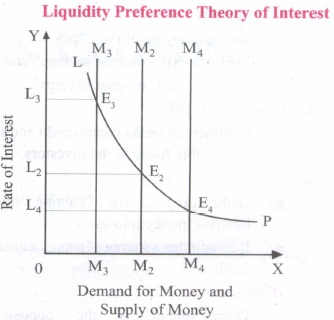
Draw the diagram for liquidity preference theory of interest.
20.
Describe briefly the Innovation Theory of Profit.
21.
Briefly explain the Subsistence Theory of Wages.
22.
Distinguish between rent and quasi-rent.
23.
Explain the Marginal Productivity theory of wage.
24.
Explain the four sources depend upon the supply of loanable funds.
1.
(a)
MPP x MR
2.
(b)
MPP x Price
3.
(a)
Theory of distribution
4.
(c)
Both 'a' and 'b'
5.
(d)
All of these
6.
(b)
Walker
7.
(d)
Ricardo
8.
(a)
Ricardo
9.
(d)
Marshall
10.
(a)
factors of production
11.
(i) Normal Profit: Normal Profit refers to the minimum expected return to stay in business.
(ii) Super Normal Profit: Supe normal profits are over and above the normal profit.
Super Normal Profit = Actual Profit - Normal Profit
12.
(i) In reality, the factors of production are not homogeneous.
(ii) In practice, factors cannot be substituted for each other.
(iii) This theory is applicable only in the long run.
13.
Marginal Productivity of Theory of Distribution
14.
(i) Interest is a payment made by a borrower to the lender for the money borrowed.
(ii) It is the price paid for the use of capital.
15.
(i) Nominal or money wages are the wages paid in terms of money.
(ii) Real wages are the wages paid in terms of goods & services.
16.
Rent is that portion of the produce of the earth which is paid to the landlord for the use of the original and indestructible powers of the soil" David Ricardo.
17.
1. Monopoly Profit
2. Windfall Profit
3. Profit as functional reward
18.
(i) The speculative motive relates to the desire of the people to hold cash in order to take advantage of market movements.
(ii) This regarding the future changes in the price of bonds and securities in the capital market.
(iii) The amount saved for this motive depends upon the rate of interest.
(iv) Ms = f(i)
(v) This theory is the inverse relationship between liquidity preference and rate of interest.
19.
20.
(i) According to Schumpeter profit is the reward for innovation.
(ii) Innovation means invention put into commercial practice.
(iii) Innovation may consist of introduction of a new product or a new method of production or opening a new market or discovery of new raw materials or reorganisation of an industry.
(iv) The cost of production decreases and so profit increases.
(v) Innovation should be done continuously.
21.
(i) Wage is equal to the subsistence level of the labourer ie the minimum amount of food, clothing & shelter which workers & their family require for existence
(ii) If workers are paid higher wages than the subsistence level, the workers would be better off & so population increases.
(iii) So wages come down & vice versa.
(iv) So wages should not be above or below the subsistence level of the labourer.
22.
| SI.No | Rent | Quasi Rent |
|---|---|---|
| 1 | Rent accrues to land | Quasi - Rent accrues to man made appliances |
| 2 | The supply of land is fixed forever. | The supply of man made appliances is fixed for a short period only. |
| 3 | It enters into price. | It does not enter into price. |
| 4 | It is temporary. |
23.
Marginal Productivity Theory of Wage:
(i) The application of a general theory of distribution to wage fixation is the marginal productivity theory of wages.
(ii) According to the theory wages are determined by the marginal productivity of labour and equal to it at the point of equilibrium.
(iii) Under perfect competition, wage is paid equal to marginal product of labour (wage = MPL)
(iv) But in real world where there is imperfect competition, there is exploitation of labour and wage is less than MPl.
24.
The supply of loanable funds depends upon the following four sources.
(i) Savings (S)
(ii) Bank Credit (BC)
(iii) Dis hoarding (DH)
(iv) Disinvestment (DI)
(i) Savings (S):
1. Supply of loanable funds comes form savings.
2. Savings may be of two types.
They are
(i) "ex-ante savings" and
(ii) "ex-post savings".
(ii) Bank Credit (BC):
1. Commercial banks create credit and supply of loanable funds to the investors.
(iii) Dishoarding (DH):
1. Dishoarding means bringing out the hoarded money into use.
2. It constitutes a source of supply of loanable funds.
(iv) Disinvestment (DI):
1. Disinvestment is the opposite of investment.
2. Not providing sufficient funds for depreciation of equipment.
3. All the four sources of supply of loanable funds vary directly with the interest rate.

11th Standard Syllabus & Materials
11th Standard
TN 11th Tamil பீடு பெற நில் - செய்யுள் - காவடிச்சிந்து Important Questions And Answers Study Material - QB365 Set A
NEW11th Standard
TN 11th Tamil பீடு பெற நில் - உரைநடை - மலை இடப்பெயர்கள் : ஓர் ஆய்வு Important Questions And Answers Study Material - QB365 Set A
NEW11th Standard
TN 11th Tamil மாமழை போற்றுதும் - துணைப்பாடம் - யானை டாக்டர் Important Questions And Answers Study Material - QB365 Set A
NEW11th Standard
TN 11th Tamil மாமழை போற்றுதும் - செய்யுள் - ஐங்குறுநூறு Important Questions And Answers Study Material - QB365 Set A



Tamilnadu Stateboard 11th Standard Subjects

Maths

Commerce
Economics

Biology

Business Maths and Statistics

Accountancy

Computer Science

Physics

Chemistry
Maths
Biology
Economics
Physics
Chemistry

History
Business Maths and Statistics

Computer Science
Accountancy

Computer Applications
History
Computer Technology
Commerce
Computer Applications
Computer Technology

Tamil

English

French
Tamilnadu Stateboard Standards
