
 100% FREE ACCESS
11th Standard Syllabus & Materials
11th Standard
TN 11th Tamil இயற்கை வேளாண்மை,சுற்றுச்சூழல் -செய்யுள் - மனோன்மணீயம் Important Questions And Answers Study Material - QB365 Set A
NEW11th Standard
TN 11th Tamil என்னுயிர் என்பேன் -துணைப்பாடம் - இசைத்தமிழர் இருவர் Important Questions And Answers Study Material - QB365 Set A
NEW11th Standard
TN 11th Tamil மொழி கலை -செய்யுள் - ஒவ்வொரு புல்லையும் Important Questions And Answers Study Material - QB365 Set A
NEW11th Standard
TN 11th Tamil பீடு பெற நில் - இலக்கணம் - பகுபத உறுப்புகள் Important Questions And Answers Study Material - QB365 Set A
NEW11th Standard
TN 11th Tamil பீடு பெற நில் - துணைப்பாடம் - வாடிவாசல் Important Questions And Answers Study Material - QB365 Set A
NEW11th Standard
TN 11th Tamil பீடு பெற நில் - செய்யுள் - குறுந்தொகை Important Questions And Answers Study Material - QB365 Set A

Published on: 29/11/2018
Every student should have a trial exam using the model papers to increase the study strength in subject wise.we are here provided you the important Biology questions, which will help you in your class 11 board exam. Questions from most important topics are covered in this question paper.
This is the most important question paper for Plus One students for the subject Biology. By practicing repeatedly you will get the idea of answering the questions and this improves the speed of answering.
Everyone has the same aim that is to reach the top rank list. We are paving the way for you to reach your goal. practice with important question papers and get set ready to crack your exams with confidence.
The question paper is created based on the current state board syllabus. It is a very useful question paper for Matriculation and state board students for their exam preparation. The question paper is designed based on the half-yearly syllabus.
Download Tamil Nadu 11th Standard Biology question papers, model tests, one-mark questions, important questions, and public exam papers in PDF format. Free study materials and answer keys for TN State Board students.
Questions + Answers key
Take MCQ Biology Test1.
Read the following statements. ( A to E ) and select the option with all correct statements.
A) Mosses and Lichens are the first organisms to colonise a bare rock.
B) Selaginella is a homosporous pteridophyte.
C) Coralloid roots in Cycas have VAM.
D) Main plant body in bryophytes is gametophytic, whereas in pteridophytes it is sporophytic.
E) In gymnosperms, male and female gametophytes are present within sporangia located on sporophyte.
B, C and E
A, C and D
B, C and D
A, D and E
2.
During synaptic transmission of nerve impulse, neurotransmitter (P) is released from synaptic vesicles by the action of ions (Q). Choose the correct P and Q.
P = Acetylcholine, Q = Ca++
P = Acetylcholine, Q =Na+
P = GABA, Q = Na+
P = Cholinesterase, Q = Ca++
3.
Which of the following are exclusive endocrine glands?
Thymus and Testis
Adrenal and Ovary
Parathyroid and Adrenal
Pancreas and Parathyroid
4.
Muscles are formed by ____.
myocytes
leucocytes
osteocytes
lymphocytes
5.
The respiratory structures of insects are _____.
tracheal tubes
gills
green glands
lungs
6.
A person who is on a long hunger strike and is surviving only on water, will have
Less amino acids in his urine
Macula densa cells
Less urea in his urine
More sodium in his urine
7.
The sphincter of Oddi guards _____.
Hepatopancreatic duct
Common bile duct
Pancreatic duct
Cystic duct
8.
A patient's chart reveals that he has a cardiac output of 7500mL per minute and a stroke volume of 50 mL. What is his pulse rate (in beats/min)?
50
100
150
400
9.
What do A and B indicate in the given diagram.
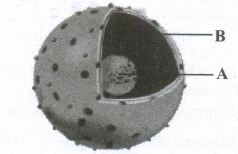
Nucleolus, Nuclear membrane
Nucleolus, Chromatin
Nucleolus, Nucleoplasm
Chromosome, Nuclear membrane
10.
Bryophyllum and Dioscorea are examples of ______.
Foliar bud, apical bud
Foliar bud, cauline bud
Cauline bud, apical bud
Cauline bud, foliar bud
11.
Aggregate fruit develops from _____.
Multicarpellary, apocarpous ovary
Multicarpellary, syncarpous ovary
Multicarpellary ovary
Whole inflorescence
12.
13.
Proteins perform many physiological functions. For example some functions as enzymes. One of the following represents an additional function that some proteins discharge:
Antibiotics
Pigment conferring colour to skin
Pigments making colours of flowers
Hormones
14.
Match the columns and identify the correct option:
| Column I | Column II | ||
| A | Thylakoids | 1. | Disc-shaped sacs in Golgi apparatus |
| B. | Cristae | 2. | Condensed structure of DNA |
| C. | Cisternae | 3. | Flat membranous sacs in stroma |
| D | Chromatin | 4. | Infoldings in mitochondria |
| A | B | C | D |
| (iii) | (iv) | (ii) | (i) |
| A | B | C | D |
| (iv) | (iii) | (i) | (ii) |
| A | B | C | D |
| (iii) | (iv) | (i) | (ii) |
| A | B | C | D |
| (iii) | (i) | (iv) | (ii) |
15.
The taxonomy which involves the similarities & dissimilarities among the immune system of different taxa is termed as ______.
Chemotaxonomy
Molecular systematics
Serotaxonomy
Numerical taxonomy
16.
17.
A tree is believed to be releasing oxygen during night time. Do you believe the truthfulness of this statement? Justify your answer by giving reasons?
18.
Why is that in certain plants deficiency symptoms appear first in younger parts of the plants while in others, they do so in mature organs?
19.
Write the role of oestrogen in ovulation.
20.
What are the components of blood in frog?
21.
Give the location of clitellum and spermathecal openings in Lampito mauritii.
22.
Why do you call a cockroach a pest?
23.
Identify the structure that the archenteron becomes in a developing animal.
24.
Given below is the diagrammatic representation of one of the categories of small molecular weight organic compounds in the living tissues. Identify the category shown & one blank component " X" in it.
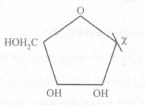
| Category | Compound |
| Cholesterol | Guanine |
| Amino acid | NH2 |
| Nucleotide | Adenine |
| Nucleoside | Uracil |
25.
State the protoplasm theory.
26.
Give an outline of Bryophytes.
27.
Growth hormone is important for normal growth. Justify the statement.
28.
Why is Limulus called living fossil?
29.
Write the distinguishing features of Monera.
30.
31.
Describe the method of preparation of herbarium specimen
32.
Explain the process of digestion in the stomach (OR)
What happens when food enters the stomach and explain the role of HCI in digestion process.
33.
Compare sympodial branching with monopodial branching.
34.
What are the factors affecting the rate of enzyme reaction?
1.
(d)
A, D and E
2.
(a)
P = Acetylcholine, Q = Ca++
3.
(c)
Parathyroid and Adrenal
4.
(a)
myocytes
5.
(a)
tracheal tubes
6.
(c)
Less urea in his urine
7.
(a)
Hepatopancreatic duct
8.
(c)
150
9.
(c)
Nucleolus, Nucleoplasm
10.
(b)
Foliar bud, cauline bud
11.
(a)
Multicarpellary, apocarpous ovary
12.
(a)
13.
(d)
Hormones
14.
(c)
| A | B | C | D |
| (iii) | (iv) | (i) | (ii) |
15.
(c)
Serotaxonomy
16.
(c)
17.
(i) No. there is no scientific proof for this statement. During day time photosynthesis takes place oxygen is evolved.
(ii) This reaction requires light hence the above statement is incorrect.
18.
This is due to the immobile nature of minerals, Eg: Calcium.
19.
The hormone oestrogen is secreted by the ovaries.
1. It stimulates the pituitary gland to release Luteinizing hormone which induces ovulation and maintains corpus luteum. Ovulation is the release of egg from the ovary by rupture of follicular cells.
2. It stops production of follicular stimulating hormone so that only one egg mature in a cycle.
20.
(i) Blood consists of 60% of plasma and 40% of blood cells.
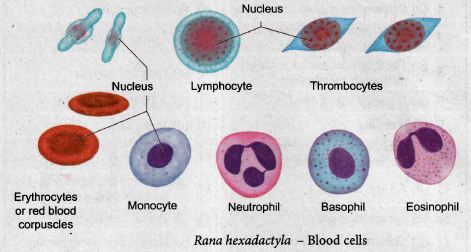
(ii) Red blood cells are nucleated containing haemoglobin (red pigment) and these are oval shaped.
(iii) Leucocytes are nucleated and circular in shape.
21.
(a) Clitellum Location: 14th to 17th segments appears as unsegmented externally
(b) Spermathecal openings: Location 6/7, 7/8 and 8/9 segments.
22.
(i) Four species of cockroachs destroy food and contaminate them with their offensive odour.
(ii) Their mere presence is a sign of unhygenic condition and they are also known as the carriers of many bacterial diseases.
Eg: The allergen of cockroach can cause asthma or hypersensitivity among the human beings.
23.
(i) In the gastrula stage of embryo on the root of gastrocoel an archenteron is formed.
(ii) Archenteron develops chordodorsatis or notochord dorsally.
(iii) Its anterior end forms brain and posterior axis form spinal cord.
Eg: Hemichordates and chordates.
24.
| Category | Compound |
| Nucleoside | Uracil |
A Nitrogenous base is linked to pentose sugar through a N-glycosidic linkage and forms a nucleoside.
25.
(i) Corti first observed protoplasm Felix Dujardin (1835) observed a living juice in animal cell and called it "Sarcode". Purkinje (1839) coined the term protoplasm for sap inside a plant cell. Hugo Van Mohl (1846) indicated importance of protoplasm.
(ii) Max Schultze (1861) established similarity between Protoplasm and Sarcode and O. Hertwig (1892) proposed a theory which later called the 'protoplasm theory' Huxley (1868) proposed protoplasm as a "physical basis of life".
26.
(i) In the previous chapter we noticed a wide range of thallus organization in Algae.
(ii) Majority of them are aquatic. The development of heterotrichous habit, development of parenchyma tissue, dichotomous branching in some algae supports the view that colonization of plants in land occurred in the past.
(iii) Bryophytes are simplest and most primitive plant groups descended from alga-like ancestors. They are simple embryophytes.
(iv) Let us learn about the structure and reproduction of these primitive land plants called Bryophytes in detail.
(v) Bryophytes are simplest land inhabiting cryptogams and are restricted to moist, shady habitats. They lack vascular tissue and hence called 'Non-vascular cryptogams'.
(vi) They are also called as 'amphibians of plant kingdom' because they need water for completing their life cycle.
27.
Somatotropic hormone is important for normal growth because it performs several duties like.
(i) It promotes growth of all the tissues and metabolic process of the body.
(ii) It promotes the metabolism of Carbohydrates, proteins and lipids and increases the rate of protein biosynthesis in the cells.
(iii) It increases the release of fatty acids from adipose tissue and decreases the rate of glucose utilization for energy by the cells. It helps to minerals retention in the body like nitrogen, potassium, phosphorous and sodium.
(iv) The hyper secretion and hypo secretion of growth hormones leads to several disorders like dwarfism, gigantism and acromegaly.
28.
Limulus or the King crab continues to remain unchanged for the past 190 million years. Hence it is called living fossil
29.
| S.No | Criteria | Monera |
| 1. | Cell type | Prokaryotic |
| 2. | Level of organization |
Mostly unicellular, rarely Multicellular |
| 3. | Cell wall | Present (made up of peptidoglycan and mucopeptides) |
| 4. | Nutrition | Autotrophic (Phototrophic, Chemoautotrophic) Heterotrophic (Parasitic and Saprophytic) |
| 5. | Motility | Motile or non-motile |
| 6. | Organisms | Archaebacteria, Eubacteria, Cyanobacteria, Actinomycetes and Mycoplasma |
30.
31.
(i) Plant Collection: Plant specimen with flower or fruit is collected.
(ii) Documentation of field site data: Certain data are to be recorded at the time of plant collection. It includes date, time, country, state, city, specific locality information, latitude, longitude, elevation and land mark information. These data will be typed onto a herbarium label.
(iii) Preparation of plant specimen: Plant specimen collected from the field is pressed immediately with the help of portable field plant press. Plant specimen is transferred to a standard plant press (12" x 18") which between two outer 12" x 18" frames and secured by two straps.
(iv) Mounting herbarium specimen: The standard size of herbarium sheet is used for mounting the specimen (29cm x 41cm). specimens are affixed to herbarium sheet with standard white glue or solution of Methylcellulose.
(v) Herbarium label: Herbarium label size is generally 4-5" wide and 2-3" tall. A typical label contains all information like habit, habitat, vegetation type, land mark information, latitude, longitude, image document, collection number, date of collection and name of the collector.
(vi) Protection of herbarium sheets against mold and insects: Application of 2% Mercuric chloride, Naphthalene, DDT, carbon disulphide. Fumigation using formaldehyde. Presently deep freezing(-20°C) method is followed throughout the world.
32.
Digestion in the stomach:
1. Food remains in the stomach for 4 to 5 hours, the rhythmic peristaltic movement churns and mixes the food with gastric juice and make it into a creamy liquid called chyme.
2. The gastric secretion is partly controlled by autonomic reflexes.
3. The secretion of gastric juice begins when the food is in the mouth.
4. The gastric juice contains HCI and proenzymes. The proenzyme pepsinogen, on exposure to HCI gets converted into the active enzyme pepsin which converts proteins into proteoses and peptones (peptides).
5. The HCI provides an acidic medium (PH1.8) which is optimum for pepsin, kills bacteria and other harmful organisms and avoids putrefaction.
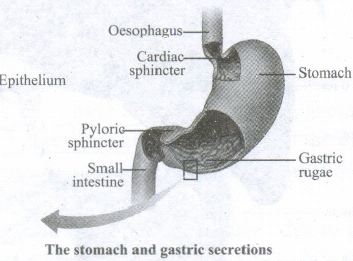
6. The mucus and bicarbonates present in the gastric juice play an important role in lubrication and protection of the mucosal epithelium from the eroding nature of the highly acidic HCI.
7. Another proteolytic enzyme found in gastric juice of infants is rennin helps in the digestion of milk protein, caseinogen to casein in the presence of calcium ions. This enzyme secretion gradually reduces with aging.
33.
| S.No | Monopodial Branching | Sympodial branching |
|---|---|---|
| 1 | Indeterminate: The terminal bud grows uninterrupted and produce several lateral branches. This type of growth is also known as monopodial branching. Example: Polyalthia, Swietenia. |
Determinate: The terminal bud ceases to grow after a period of growth and further growth is taken care by successive or several lateral meristem or buds. This type of growth is also known as sympodial branching. Example: Cycas. |
34.
Factors affecting the rate of enzyme reactions: Enzymes are sensitive to environmental conditions. It could be affected by temperature, pH, substrate concentration and enzyme concentration. The rate of enzyme reaction is measured by the amount of substrate changed or amount of product formed during a period of time.
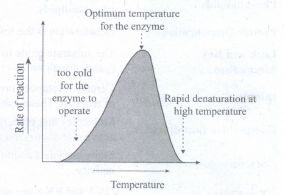
1. Temperature: Heating increases molecular motion. Thus the molecules of the substrate and enzyme move more quickly resulting in a greater probability of a reaction occurring. The temperature that promotes maximum activity is referred to as optimum temperature.
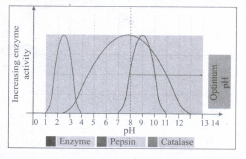
2. pH: The optimum pH is that at which the maximum rate of reaction occurs. Thus the pH change leads to an alteration of enzyme shape, including the active site. If extremes of pH are encountered by an enzyme, then it will be denatured.
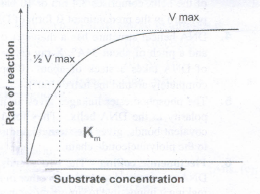
3. Substrate concentration: For a given enzyme concentration, the rate of an enzyme reaction increases with increasing substrate concentration.
4. Enzyme concentration: The rate of reaction is directly proportional to the enzyme concentration.
5. Michaelis-Menten Concept: When the initial rate of reaction of an enzyme is measured over a range of substrate concentrations (with a fixed amount of enzyme) and the results plotted on a graph. With increasing substrate concentration, the velocity increases - rapidly at lower substrate concentration.
6. Inhibitors of Enzyme: Certain substances present in the cells may react with the enzyme and lower the rate of reaction. These substances are called inhibitors. It is of two types competitive and non-competitive.

11th Standard Syllabus & Materials
11th Standard
TN 11th Tamil பீடு பெற நில் - செய்யுள் - காவடிச்சிந்து Important Questions And Answers Study Material - QB365 Set A
NEW11th Standard
TN 11th Tamil பீடு பெற நில் - உரைநடை - மலை இடப்பெயர்கள் : ஓர் ஆய்வு Important Questions And Answers Study Material - QB365 Set A
NEW11th Standard
TN 11th Tamil மாமழை போற்றுதும் - துணைப்பாடம் - யானை டாக்டர் Important Questions And Answers Study Material - QB365 Set A
NEW11th Standard
TN 11th Tamil மாமழை போற்றுதும் - செய்யுள் - ஐங்குறுநூறு Important Questions And Answers Study Material - QB365 Set A



Tamilnadu Stateboard 11th Standard Subjects

Maths

Commerce

Economics
Biology

Business Maths and Statistics

Accountancy

Computer Science

Physics

Chemistry
Maths
Biology
Economics
Physics
Chemistry

History
Business Maths and Statistics

Computer Science
Accountancy

Computer Applications
History
Computer Technology
Commerce
Computer Applications
Computer Technology

Tamil

English

French
Tamilnadu Stateboard Standards

