
 100% FREE ACCESS
11th Standard Syllabus & Materials
11th Standard
TN 11th Tamil இயற்கை வேளாண்மை,சுற்றுச்சூழல் -செய்யுள் - மனோன்மணீயம் Important Questions And Answers Study Material - QB365 Set A
NEW11th Standard
TN 11th Tamil என்னுயிர் என்பேன் -துணைப்பாடம் - இசைத்தமிழர் இருவர் Important Questions And Answers Study Material - QB365 Set A
NEW11th Standard
TN 11th Tamil மொழி கலை -செய்யுள் - ஒவ்வொரு புல்லையும் Important Questions And Answers Study Material - QB365 Set A
NEW11th Standard
TN 11th Tamil பீடு பெற நில் - இலக்கணம் - பகுபத உறுப்புகள் Important Questions And Answers Study Material - QB365 Set A
NEW11th Standard
TN 11th Tamil பீடு பெற நில் - துணைப்பாடம் - வாடிவாசல் Important Questions And Answers Study Material - QB365 Set A
NEW11th Standard
TN 11th Tamil பீடு பெற நில் - செய்யுள் - குறுந்தொகை Important Questions And Answers Study Material - QB365 Set A

Published on: 22/09/2018
Two mark important questions
Download Tamil Nadu 11th Standard Maths question papers, model tests, one-mark questions, important questions, and public exam papers in PDF format. Free study materials and answer keys for TN State Board students.
Questions + Answers key
Take MCQ Maths Test1.
Evaluate: sin-1 \((cos^{-1}{3\over5})\)
2.
Solve: sinx - cosx +\(\sqrt{2}\) = 0
3.
4.
If \(\frac { 6! }{ n! } \) = 6, then find the value of n.
5.
Evaluate \(\frac { n! }{ r!(n-r)! } \) when n = 50, r = 47.
6.
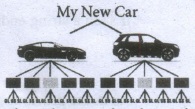
A person wants to buy a car. There are two brands of car available in the market and each brand has 3 variant models and each model comes in five different colours as in figure. In how many ways she can choose a car to buy?
7.
A School library has 75 books on Mathematics, 35 books on Physics. A student can choose only one book. In how many ways a student can choose a book on Mathematics or Physics?
8.
If \(\triangle ABC\) is a right triangle and if \(\angle A=\frac{\pi}{2}\), then prove that \(\sin^2B+\sin^2C=1\)
9.
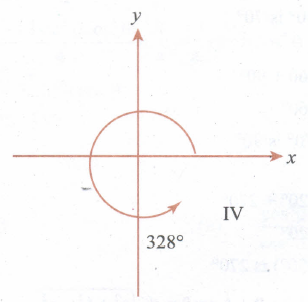
Identify the quadrant in which an angle of each given measure lies; 3280
10.
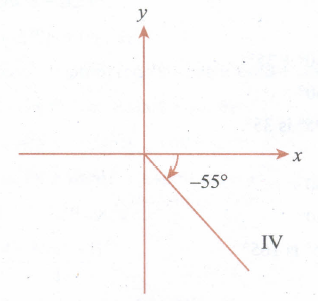
Identify the quadrant in which an angle of each given measure lies; -550
11.
Find the values of sin 18°
12.
Expand: (i) sin(A + B + C). (ii) tan(A + B + C)
13.
Prove that using the Mathematical induction \(sin (α) + sin\left(\alpha+{\pi\over 6}\right)+ sin\left(\alpha+{2\pi\over 6}\right)+...+ sin\left(\alpha+{(n-1)\pi\over 6}\right)={sin\left[\alpha+{(n-1)^\pi\over 12}\right]\times sin\left(n\pi\over12\right)\over sin\left(\pi\over 12\right)}\)
14.
By the principle of mathematical induction, prove that for n > 1,
\(1^2+2^2+3^2+L+n^2>{n^3\over 3}\)
15.
Using the mathematical induction, show that for any natural number n
\({1\over 2.5}+{1\over 5.8}+{1\over 8.11}+...+{1\over (3n-1)(3n+2)}={n\over 6n+4}\)
16.
By the principle of mathematical induction, prove that for n > 1
\(1·2 + 2·3 + .. +n(n + 1)={n(n+1)(n+2)\over 3}\)
17.
To travel from a place A to place B, there are two different bus routes B1, B2, two different train routes T1, T2 and one air route A1. From place B to place C there is one bus route say B'1, two different train routes say T'1, T'2 and one air route A'1. Find the number of routes of commuting from place A to place C via place B without using similar mode of transportation.
18.
How many three-digit odd numbers can be formed using the digits 0, 1, 2, 3, 4, 5? if
The repetition of digits is allowed
19.
How many numbers are there between 100 and 500 with the digits 0, 1, 2, 3, 4, 5 ? if
(i) repetition of digits allowed
(ii) the repetition of digits is not allowed.
20.
If \(\triangle\)ABC is a right triangle and if \(\angle A\) = \(\pi/{2}\) , then prove that cos B - cos C = -1 + 2\(\sqrt { 2 } cos\frac { B }{ 2 } sin\frac { C }{ 2 } \)
21.
A fighter jet has to hit a small target by flying a horizontal distance. When the target is sighted, the pilot measures the angle of depression to be 300. If after 100 km, the target has an angle of depression of 600, how far is the target from the fighter jet at that instant?
22.
Let N denote the number of days. If the value of N! is equal to the total number of hours in N days then find the value of N?
1.
\(4\over 5\)
2.
\(\theta=2n\pi-{\pi\over4}\)
3.
4.
\(\frac { 6! }{ n! } =\frac { 1.2.3.4.5.6 }{ 1.2.3...n } \) = 6. As n < 6 we get, n = 5
5.
When n = 50, r = 47
\(\frac { n! }{ r!(n-r)! } =\frac { 50! }{ 47!(50-47)! } =\frac { 50\times 49\times 48\times 47! }{ 47!\times 3! } =\frac { 50\times 49\times 48 }{ 1\times 2\times 3 } \) = 19600
6.
A car can be bought by choosing a brand, then a variant model, and then a colour. A brand can be chosen in 2 ways; a model can be chosen in 3 ways and a colour can be chosen in 5 ways. By the rule of product, the person can buy a car in 2 \(\times\) 3 \(\times\)5 = 30 different ways.
7.
(i) A student can choose a Mathematics book in "75" different ways.
(ii) A student can choose a Physics book in "35" different ways.
Hence applying the Rule of Sum, the number of ways a student can choose a book is 75 + 35 = 110.
8.
LHS = sin2B + sin2C
= sin2B +\({ \left[ sin\left( \frac { \pi }{ 2 } -B \right) \right] }^{ 2 }\)= sin2B + cos2B
= 1 = RHS
Hence proved
9.
3280
3280 = 2700 + 580
∴ 3280 lies in the IV quadrant
10.
-550
Since the given angle is negative, it moves in the clockwise direction
∴ -550 lies in the IV quadrant
11.
Let θ = 18°, Then 5θ = 90°
3θ + 2θ = 90° ⇒2θ = 90°-3θ
sin 2θ = sin (90° - 3θ) = cos 3θ
2 sin θ cos θ = 4 cos3θ - 3 cos θ. Since cos θ = cos 18° ≠ 0, we have
2 sin θ = 4 cos2θ - 3 = 4 (1 - sin2θ) - 3
4 sin2θ + 2 sin θ - 1 = 0
\(sin\ \theta=\frac{-2\pm\sqrt{4-4(4)(-1)}}{2(4)}=\frac{-1\pm\sqrt 5}{4}\)
Thus, \(\sin\ 18^o=\frac{\sqrt 5 -1}{4}\) (positive sign is taken sin 18o is in I quadrant sinθ is positive).
12.
(i) sin (A + B + C)
= sin A cos (B + C) + cos A sin (B + C)
= sin A cos B cos C + cos A sin B cos C + cos A cos B sin C - sin A sin B sin C
(ii) \(\tan (A+B+C) =\tan [A+(B+C)] \)
\(=\frac{\tan A+\tan (B+C)}{1-\tan A \tan (B+C)} \)
\(=\frac{\tan A+\frac{\tan B+\tan C}{1-\tan B \tan C}}{1-\tan A \frac{\tan B+\tan C}{1-\tan B \tan C}} \)
\(=\frac{\tan A+\tan B+\tan C-\tan A \tan B \tan C}{1-\tan A \tan B-\tan B \tan C-\tan C \tan A}\)
13.
Let p(n) be the statement
\(Sin \alpha +sin\left(\alpha+{\pi \over6}\right)+...+sin\left(\alpha+(n-1){\pi\over 6}\right)={sin\left[\alpha+{(n-1}^\pi\over12\right]\times sin\left(n\pi\over 12\right)\over sin\left(\pi\over 12\right)}\)
Step 1: Putting n = 1, we get,
\(sin α={sin (α).sin{\pi\over12}\over sin{\pi\over 12}}=sin α\)
∴ p(1) is true
Step 2 : Let us assume that p(k) is true
\(sin α+sin\left(α+{\pi\over 6}\right)+...+sin \left(α+(k-1){\pi\over 6}\right)={sin\left(α+{(k-1)\pi\over12}\right)\times sin{k\pi\over 12}\over sin\left(\pi\over 12\right)}\)
Step 3 : To prove that p(k+1) is true
i.e. to p.T \(sin α+sin\left(α+{\pi\over 6}\right)+...+sin\left(α+(k-1){\pi\over 6}\right)+sin\left(α+{k\pi\over 6}\right)={sin\left(α+k{\pi\over 12}\right).sin{(k+1)\pi\over 12}\over sinm\left(\pi\over 12\right)}\)
LHS = \(sin α+sin\left(α+{\pi\over 6}\right)+...+sin\left(α+(k-1){\pi\over 6}\right)+sin\left(α+{k\pi\over 6}\right)\)
\(={sin\left(α+{(k-1)\pi\over 12}\right).sin{k\pi\over 12}\over sinm\left(\pi\over 12\right)}=sin\left(α+k{\pi\over 6}\right)\)
\(={1\over sin\left(\pi\over 12\right)}\left[ sin\left(α+(k-1){\pi\over12}\right).sin{k\pi\over 12}+sin\left(α+{k\pi\over 6}\right).sin\left(\pi\over 12\right)\right]\)
\(={1\over sin\left(\pi\over 12\right)}\left[ sin\left(α+{k\pi\over12}-{\pi\over12}\right).sin{k\pi\over 12}+sin\left(α+{k\pi\over 6}\right).sin\left(\pi\over 12\right)\right]\)
\(={1\over sin\left(\pi\over 12\right)}\left[\left[sin\left(α+{k\pi\over12}\right).cos{\pi\over12}+cos\left(α+{k\pi\over12}\right)sin\left(\pi\over 12\right)\right]sin{k\pi\over12}+sin\left(k+{k\pi\over 6}\right)sin{\pi\over 12} \right]\)
∵ (sin (A-B)=sinA cos B - cos Asin B)
\(={1\over sin\left(\pi\over 12\right)}\left[\left[sin\left(α+{k\pi\over12}\right).cos{\pi\over12}sin{k\pi\over12}-cos\left(α+{k\pi\over12}\right)sin{\pi\over 12}.sin{\pi\over12}\right]+sin\left(α+{k\pi\over12}\right)+sin\left({\pi\over 12}\right) \right]\)
\(={1\over sin{\pi\over 12}}\left[ sin\left(α+{k\pi\over 12}\right)cos{\pi\over 12}sin{k\pi\over 12}\right]+{sin\left(\pi\over12\right)\over 2}\left[ 2sin\left(α+{k\pi\over 6}\right)-2cos\left(α+{k\pi\over12}\right)sin{k\pi\over12}\right]\)
[Multiply and divide the second term by 2]
\(={1\over sin{\pi\over 12}}\left[ \left[sin\left(α+{k\pi\over12}\right)cos{\pi\over 12}.sin{k\pi\over12}\right] +{sin{\pi\over12}\over2}\left[ 2sin\left(α+{k\pi\over6}\right)-\left(sin\left( α+{k\pi\over12}+{k\pi\over 12}\right)-sin\left(α+{k\pi\over12}-{k\pi\over 12}\right)\right)\right)\right]\)
∵2cos A sin B = sin (A + B) - sin(A-B)
\(={1\over sin{\pi\over 12}}\left[ sin\left(α+{k\pi\over 12}\right)cos{\pi\over 12}sin{k\pi\over 12}+\right]{sin{\pi\over 12}\over 2}\left[2sin\left(α+{k\pi\over 6}\right)-sin\left(α+{k\pi\over6}\right)+sinα\right]\)
\(={1\over sin{\pi\over12}}\left[ \left[ sin\left(α+{k\pi\over 12}\right)cos{\pi\over 12}sin{k\pi\over 12}\right] +{sin{\pi\over 12}\over 2}\left[ sin\left(α+{k\pi\over6}\right)+sin α\right]\right]\)
\(={1\over sin{\pi\over 12}}\left[ sin\left(α+{k\pi\over12}\right)cos{\pi\over 12}sin{k\pi\over 12}+sin{{\pi\over2}\over 2}\left(2sin\left(α+{k\pi\over6}+α\over 2\right)cos\left(α+{k\pi\over 6}-α\over 2\right)\right)\right]\)
\([∵\ sinC+sinD=2sin\left(C+D\over2\right)cos\left[C-D\over 2\right]]\)
\(={1\over sin{\pi\over 12}}\left[ sin\left(α+{k\pi\over 12}\right)cos{k\pi\over 12}+sin{\pi\over 12}.\left[sin\left(α+{k\pi\over 12}\right).cos\left(k\pi\over12\right)\right]\right]\)
\(={1\over sin{\pi\over 12}}.sin\left(α+{k\pi\over12}\right)\left[cos{\pi\over 12}sin{\pi\over 12}+sin{\pi\over 12}cos{k\pi\over 12}\right]\)
\(={sin\left(α+{k\pi\over12}\right).sin(k+1){\pi\over12}\over sin{\pi\over 12}}\) [∵ sin(A + B) = sin A cos B + cos A sin B]
= RHS
∴ p(k + 1) is true
Hence by the principle of mathematical induction, p(n) is true for all values of n.
14.
Let p( n) be the statement \(1^2+2^2+3^2+L+n^2>{n^3\over 3}\)
Step1: Putting n = 1, we get
\(1>{1^3\over 3}⇒1>{1\over 3}\) Which is true
∴ p(l) is true.
Step 2:
Let us Assume that p(k) is true.
∴ \(1^2+2^2+3^2+...+k^2>{k^3\over 3}\)
Step 3:
To prove that p( k + 1) is true.
ie to P.T. \(1^2+2^2+3^2+ ... k^2+(k+1)^2>{(k+1)^3\over3}\)
Consider 12 + 22 + 32 + ... k2 + (k + 1)2
\(>{K^3\over 3}+(k+1)^2\) [using (1)]
\(> {k^3\over 3}+k^2+2k+1\)
\(>{1\over 3}[k^2 + 3k^2 + 6k + 3]\)
[∴ (a + b)3 = a3+ 3a2 b + 3 ab2 + b3]
\(>{1\over 3}{k+1}^3\)
∴ p(k + 1) is true
Hence, by the principle of mathematical induction,p(n) is true for all values of m.
15.
Let p(n) be the statement
\({1\over 2.5}+{1\over 5.8}+{1\over 8.11}+...+{1\over {(3n-1)(3n+2)}}={n\over 6n+4}\)
Step 1: Putting n = 1, we get
\({1\over 2.5}={1\over 6(1)+4}⇒{1\over 10}={1\over 10}\)
∵ p(1) is true
Step 2: Let us assume that p(K) is true
\(∵\ {1\over 2.5}+{1\over 5.8}+...+{1\over (3K-1)(3K+2)}={K\over 6K+4}\)
Step. 3: To show that p(K + 1) is true
ie to P.T \({1\over 2.5+}+{1\over 5.8}+...+{1\over{(3K-1)(3K+2)}}={K\over 6+4}\)
ie to P.T \({1\over 2.5}+{1\over 5.8}+...+{1\over (3K-1)(3K+2)}+{1\over (3K+2)(3K+5)}={K+1\over 6K+10}\)
LHS = \({1\over 2.5}+{1\over 5.8}+...+{1\over (3k-1)(3k+2)}+{1\over (3k+2)(3k+5)}\)
\(={k\over 6k+4}+{1\over 5.8}+...+{1\over (3k-1)(3k+2)}+{1\over (3K+2)(3k+5)}\)
\(={k\over 6k+4}+{1\over (3k+2)(3k+5)}\) [using (1)]
\(={k\over 2(3k+2)}+{1\over (3k+2)(3k+5)}\)
\(={1\over 3k+2}\left[{k\over 2}+{1\over 3k+5}\right]\)
\(={1\over 3k+2}\left[k(3k+5)+2\over 2(3k+5)\right]={1\over 3k+2}\left[3k^2+5k+2\over 2(3k+5)\right]\)
\(={1\over 2(3k+5)(3k+5)}(k+1)(3k+2)\)
\(={k+1\over 2(3k+5)}={k+1\over 6k+10}=RHS\)
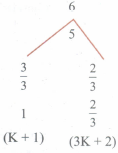
∴ p (k + 1) is line.
Hence, by the principle mathematical induction p(n) is true for all values of n.
16.
Let p(n) be the statement
\(1.2+2.3+...+n(n+1)={n(n+1)(n+2)\over 3}\)
Step 1:
Putting n = 1 we get
\(1.2={1(1+1)(11+2)\over 3}={2(3)\over3}=2⇒2=2\)
∵ p(1) is true
Step 2: Let us assume that p(K) is true
∵ \(1.2+2.3+3.4+...+K(K+1)={K(K+1)(K+2)\over3}\)
Step 3: To prove that p(K+1) is true
ie to P.T. \(1.2+2.3+3.4+...+K(K+1)+(K+1)(K+2)={(K+1)(K+2)\over 3}\)
LHS = 1.2 + 2.3 +...+K(K+1)+(K+1)(K+2)
\(={K(K+1)(K+2)\over 2}+(K+1)(K+2)\)
\(=(K+1)(K+2)\left[{K+\over3}+1\right]\)
\(={(K+)(K+2)(K+3)\over 3}=RHS\)
∵ p(K+1) is true.
Hence, by mathematical induction, p(n) is true for all values of n.
17.
The given data can be converted as a route map diagram as follows:
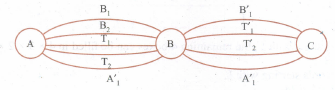
The possible choices for number of routes commuting from A to place C via place b, without using similar mode of transportation are
( B1, T'1) ( B2, T'2 ) ( B1, A1 ) ( B2, T'1 ) ( B2, T'2 ) ( B2, A'1 ) ( T1, A'1 ) ( T2, B'1 ) ( T2, A'1 ) ( A1, B'1 ) ( A1, T'1 ) and ( A2, T'2 )
Required number of routes of commuting from place A to place C via place 'B'
\(=(2 \times 3)+(2 \times 2)+(1 \times 3)\)
= 6+4 + 0 = 7
Required number of routes = 20 - 7 = 13
18.
The repetition of digits is allowed
| Hundreds | tens | unit |
| 5 | 6 | 3 |
The unit place can be filled in 3 ways using the digits 1, 3, or 5 since we need 3 digit odd numeric Hundreds place can be filled in 5 ways excluding 0 and repetition of digits is allowed.
Tens place can be filled in 6 ways .
∴ By fundamental principle of multiplication, required number of 3 = digit odd numbers
= 5 \(\times\) 6 \(\times\) 3 = 30 \(\times\) 3 = 90.
19.
(i) Repetition of digit is allowed
| 4 | 6 | 6 |
Since we are going to find numbers between 100 and 500 it has 3 = digits
The unit place can be filled in 6 ways using the digits 0, 1, 2, 3, 4, 5
The tens place also can be filled in 6 ways since repetition of digits is allowed.
The hundreds place can be filled in 4 ways using the digits 1, 2, 3, 4 [excluding 0 and 5]
∴ By fundamental principle of multiplication, required number of 3 - digit numbers = 4 \(\times\) 6 \(\times\) 6 = 144.
(ii) Repetition of digits is not allowed.
| 4 | 5 | 4 |
Hundreds place can be filled in 4 ways excluding 0 and 5
Tens place can be filled in 5 ways since repetition of digits is not allowed
Unit place can be filled in 4 ways.
∴ By fundamental principle of multiplication, required number of three-digit numbers = 4 \(\times\) 5 \(\times\) 4 = 80.
20.
LHS = cos B - cos C
\(cos\left( \frac { \pi }{ 2 } -C \right) -cosC\)
= sin C - cos C
= \(sinC-\left( 1-2{ sin }^{ 2 }\frac { C }{ 2 } \right) \)
= \(2sin\frac { C }{ 2 } cos\frac { C }{ 2 } -1+2{ sin }^{ 2 }\frac { C }{ 2 } \)
= \(-1+2sin\frac { C }{ 2 } \left[ cos\frac { C }{ 2 } +sin\frac { C }{ 2 } \right] \)
= \(-1+2sin\frac { C }{ 2 } \left[ cos\left( 45-\frac { B }{ 2 } \right) +sin\left( 45-\frac { B }{ 2 } \right) \right] \)
= \(-1+2sin\frac { C }{ 2 } \left[ cos45cos\frac { B }{ 2 } +sin45sin\frac { B }{ 2 } +sin45cos\frac { B }{ 2 } -cos45sin\frac { B }{ 2 } \right] \)
= \(-1+2sin\frac { C }{ 2 } \left[ \frac { 1 }{ \sqrt { 2 } } cos\frac { B }{ 2 } +\frac { 1 }{ \sqrt { 2 } } sin\frac { B }{ 2 } +\frac { 1 }{ \sqrt { 2 } } cos\frac { B }{ 2 } -\frac { 1 }{ \sqrt { 2 } } sin\frac { B }{ 2 } \right] \)
= \(-1+2sin\frac { C }{ 2 } \left[ \frac { 2 }{ \sqrt { 2 } } cos\frac { B }{ 2 } \right] =-1+\frac { 4 }{ \sqrt { 2 } } sin\frac { C }{ 2 } cos\frac { B }{ 2 } \)
= \(-1+\frac { 4\sqrt { 2 } }{ \sqrt { 2 } \times \sqrt { 2 } } cos\frac { B }{ 2 } sin\frac { C }{ 2 } \)
= \(-1+2\sqrt { 2 } cos\frac { B }{ 2 } sin\frac { C }{ 2 } \) = RHS
Hence proved.
21.
Let C be the position of the target and A and B be the positions of the fighter jet
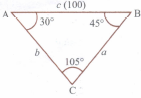
Given ㄥBAC = 30, ㄥABC = 45
ஃ ㄥC = 180 - (30 - 45) = 180 - 75 = 105
Given AB = 100 km
Using sine formula,
\(\frac { a }{ sinA } =\frac { c }{ sinC } \)
\(\Rightarrow \frac { a }{ sin30° } =\frac { 100 }{ sin105° } \)
\(\Rightarrow \frac { a }{ \frac { 1 }{ 2 } } =\frac { 100 }{ sin105° } \Rightarrow 2a=\frac { 100 }{ sin105° } \Rightarrow a=\frac { 50 }{ sin105° } \)
Now, sin 105° = sin (60 + 45) = sin 60 cos 45 + cos 60 sin 45
= \(\frac { \sqrt { 3 } }{ 2 } .\frac { 1 }{ \sqrt { 2 } } +\frac { 1 }{ 2 } .\frac { 1 }{ \sqrt { 2 } } =\frac { \sqrt { 3 } +1 }{ 2\sqrt { 2 } } \)
Substituting (2) in (1) we get,
a = \(\frac { 50 }{ \frac { \sqrt { 3 } +1 }{ 2\sqrt { 2 } } } \Rightarrow a=\frac { 50\left( 2\sqrt { 2 } \right) }{ \sqrt { 3 } +1 } =\frac { 100\sqrt { 2 } }{ \sqrt { 3 } +1 } \times \frac { \sqrt { 3 } -1 }{ \sqrt { 3 } -1 } \)
a = \(\frac { 100\left( \sqrt { 6 } -\sqrt { 2 } \right) }{ 3-1 } =50\left( \sqrt { 6 } -\sqrt { 2 } \right) km\)
22.
We need to solve the equation N! = 24 \(\times\) N.
For N = 1, 2, 3, 4, N! < 24 \(\times\) N.
For N = 5, we have N! = 5! = 4! \(\times\) 5 = 24N.
For N> 5, we have N! ≥ 5! N > 24 \(\times\) N.
Hence N = 5.

11th Standard Syllabus & Materials
11th Standard
TN 11th Tamil பீடு பெற நில் - செய்யுள் - காவடிச்சிந்து Important Questions And Answers Study Material - QB365 Set A
NEW11th Standard
TN 11th Tamil பீடு பெற நில் - உரைநடை - மலை இடப்பெயர்கள் : ஓர் ஆய்வு Important Questions And Answers Study Material - QB365 Set A
NEW11th Standard
TN 11th Tamil மாமழை போற்றுதும் - துணைப்பாடம் - யானை டாக்டர் Important Questions And Answers Study Material - QB365 Set A
NEW11th Standard
TN 11th Tamil மாமழை போற்றுதும் - செய்யுள் - ஐங்குறுநூறு Important Questions And Answers Study Material - QB365 Set A



Tamilnadu Stateboard 11th Standard Subjects
Maths

Commerce

Economics

Biology

Business Maths and Statistics

Accountancy

Computer Science

Physics

Chemistry
Maths
Biology
Economics
Physics
Chemistry

History
Business Maths and Statistics

Computer Science
Accountancy

Computer Applications
History
Computer Technology
Commerce
Computer Applications
Computer Technology

Tamil

English

French
Tamilnadu Stateboard Standards

