
 100% FREE ACCESS
11th Standard Syllabus & Materials
11th Standard
TN 11th Tamil இயற்கை வேளாண்மை,சுற்றுச்சூழல் -செய்யுள் - மனோன்மணீயம் Important Questions And Answers Study Material - QB365 Set A
NEW11th Standard
TN 11th Tamil என்னுயிர் என்பேன் -துணைப்பாடம் - இசைத்தமிழர் இருவர் Important Questions And Answers Study Material - QB365 Set A
NEW11th Standard
TN 11th Tamil மொழி கலை -செய்யுள் - ஒவ்வொரு புல்லையும் Important Questions And Answers Study Material - QB365 Set A
NEW11th Standard
TN 11th Tamil பீடு பெற நில் - இலக்கணம் - பகுபத உறுப்புகள் Important Questions And Answers Study Material - QB365 Set A
NEW11th Standard
TN 11th Tamil பீடு பெற நில் - துணைப்பாடம் - வாடிவாசல் Important Questions And Answers Study Material - QB365 Set A
NEW11th Standard
TN 11th Tamil பீடு பெற நில் - செய்யுள் - குறுந்தொகை Important Questions And Answers Study Material - QB365 Set A

Published on: 28/07/2018
From the chapter Kinematics, some of the important questions are covered in this question paper. The questions are covers from the book back and the previous year questions.
Teacher please subscribes and gets the plenty of question paper based on chapter wise and also predefined blueprint. For subscription, please Click Here
Download Tamil Nadu 11th Standard Physics question papers, model tests, one-mark questions, important questions, and public exam papers in PDF format. Free study materials and answer keys for TN State Board students.
Questions + Answers key
Take MCQ Physics Test1.
The length of a vector is _______________
always a negative quantity
always a positive quantity
either positive or negative
denoted by '\(\lambda \)'
2.
Consider the quantities pressure, power, energy, impulse, charge. Out of these, the only vector quantity is _______________.
pressure
power
impulse
charge
3.
The component of position vector \(\overrightarrow { r } \) along x-axis will maximum value if ____________
\(\overrightarrow { r } \) is along the x - axis
\(\overrightarrow { r } \) makes an angle of 45° with x - axis
\(\overrightarrow { r } \) is along the y - axis
\(\overrightarrow { r } \) is along - ve y - axis
4.
The angle between A i +j and B = i - j is ______________.
45°
90°
-45°
180°
5.
A ball is projected vertically upwards with a velocity v. It comes back to ground in time t. Which v-t graph shows the motion correctly?
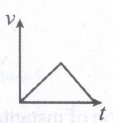
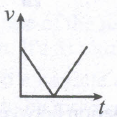
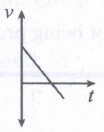
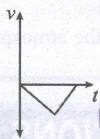
6.
If an object is dropped from the top of a building and it reaches the ground at t = 4 s, then the height of the building is (ignoring air resistance) (g = 9.8 ms-2)
77.3 m
78.4 m
80.5 m
79.2 m
7.
If the velocity is \(\overrightarrow { v } =2\hat { i } +{ t }^{ 2 }\hat { j } -9\overrightarrow { k } \), then the magnitude of acceleration at t = 0.5s is
1 ms-2
2 ms-2
zero
-1 ms-2
8.
If a particle has negative velocity and negative acceleration, its speed
increases
decreases
remains same
zero
9.
Two objects of masses m1 and m2 fall from the heights h1 and h2 respectively. The ratio of the magnitude of their momenta when they hit the ground is
\(\sqrt { \frac { { h }_{ 1 } }{ { h }_{ 2 } } } \)
\(\sqrt { \frac { { { m }_{ 1 }h }_{ 1 } }{ { { m }_{ 2 }h }_{ 2 } } } \)
\(\frac { { m }_{ 1 } }{ { m }_{ 2 } } \sqrt { \frac { { h }_{ 1 } }{ { h }_{ 2 } } } \)
\(\frac { { m }_{ 1 } }{ { m }_{ 2 } } \)
10.
A projectile is fired horizontally with a velocity u. Obtain the expression for speed of the particle when it hits the ground.
11.
The velocity-time graph of an object moving along a straight line is as shown.
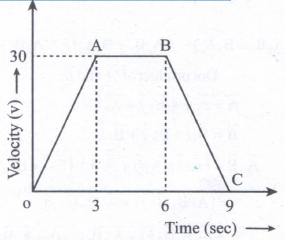
Calculate distance covered by object between t =0 to t = 3 and t = 0 to t = 6.
12.
A bus starting from rest moves with a uniform acceleration of 0.2 ms-2 for 3 minutes. Find the speed and distance travelled.
13.
A train 100 m long is moving with a speed of 60 km h-1. In how many seconds will it cross a bridge of 1 km long?
14.
A gun is fired from a place which is at distance 1.2 km from a hill. The echo of the sound is heard back at the same place of firing after 8 second. Find the speed of sound.
15.
An object is thrown vertically downward. What is the acceleration experienced by the object?
16.
Distinguish between average velocity and average speed.
17.
Write the relation between summation and integration.
18.
Write note on function with example.
19.
If the speed of a particle is v = 10t2m/s. Find out distance covered from t = 2s to t = 5s.
20.
Find the distance travelled by the particle during the time t = 0 to t = 3 seconds from the figure.
21.
A girl travels along a straight road due east for the first half distance with speed v1 and the second half distance with speed v2. What is the average speed of the girl?
22.
Deduce the relation between angular acceleration and linear acceleration.
23.
A projectile is fired horizontally with a velocity u making an angle θ. Derive the expression for time of the flight.
1.
(b)
always a positive quantity
2.
(c)
impulse
3.
(a)
\(\overrightarrow { r } \) is along the x - axis
4.
(b)
90°
5.
Initially velocity has maximum value and at maximum height velocity becomes zero. After that the velocity becomes negative
6.
(b)
78.4 m
7.
\(\vec{v}=2 \hat{l}+t^{2} \hat{j}-9 \vec{k}\)
\(\vec{a}=\frac{d \vec{v}}{d t}=2 t \hat{j}\)
\(\text { When } t=0.5 \mathrm{~s}\)
\(a=1 \mathrm{~ms}^{-2}\)
8.
Velocity and acceleration are in the same direction: So speed increases.
9.
For freely falling body, velocity while the body, hit the ground \(v=\sqrt{2 g h}\)
\(v_{1}=\sqrt{2 g h_{1}} \text { and } v_{2}=\sqrt{2 g h_{2}} \)
\(\therefore \frac{m_{1} v_{1}}{m_{2} v_{2}}=\frac{m_{1} \sqrt{h_{1}}}{m_{2} \sqrt{h_{2}}}=\frac{m_{1}}{m_{2}} \sqrt{\frac{h_{1}}{h_{2}}}\)
10.
When the projectile hits the ground after initially thrown horizontally from the top of tower of height h, the time of flight is
\(t=\sqrt\frac{2h}{g}\)
The horizontal component velocity of the projectile remains the same i.e vx = u.
The vertical component velocity of the projectile at time T is
\({ v }_{ y }=gT=g\sqrt { \frac { 2h }{ g } } =\sqrt { 2gh } \)
The speed of the particle when it reaches the ground is
\(v=\sqrt { { u }^{ 2 }+2gh } \)
11.
(i) t = \(\theta\) to t = 3:
velocity at t = 0, u = 0
velocity at t = 3 see, v = 30 mls
So, from velocity v = u + at
Acceleration \(a={{u}\over{t}}={{30}\over{3}}=10{ms}^{-2}\)
So distance covered between 0 to 3 see
\(s=ut+{{1}\over{2}}{at}^{2}\)
initial velocity u = 0 and t = 3
\(s=ut+{{1}\over{2}}{at}^{2}\)
\(=0\times3+{{1}\over{2}}\times10{(3)}^{2}\)
\(=0+{{1}\over{2}}\times10\times9\)
\(={{1}\over{2}}\times90\)
s = 45 m
From 3 to 6 see, velocity is same 30 m/s.
So distance travelled, = 30\(\times\)3 = 60. m
Total distance covered between 0 to 6 sec.
= 30 + 60
= 90m
(ii) At t = 3 sec, u = 30 ms-1, at t = 6 see,
v = 0 m/s .
So from, v = u + at
0= 30 + a\(\times\) 3
a =-10m/s2
So, distance covered from t = 3 to t = 6 see is,
v2 = u2 +2as
(0)2 = (30)2 - 2\(\times\)10\(\times\) s
\(s={{900}\over{20}}=45\ m\)
So total distance covered = 90 + 45
= 135 m
12.
Initial velocity 'u' =0
Acceleration 'a' = 0.2 ms-2
Time (t) = 3 minutes = 180 seconds.
Speed of a bus, v = u + at
= 0 + 0.2\(\times\) 180
= 36 m/s.
Displacement s = ut+\(\frac { 1 }{ 2 } { at }^{ 2 }\)
\(=0\times 180+\frac { 1 }{ 2 } \times 0.2\times ({ 180) }^{ 2 }\)
\(=0+\frac { 1 }{ 2 } \times 0.2\times 32400\)
= 3240 m
=3.24 km
13.
Total distance to be covered = 1 km + 100 m = 1100 m (including both bridge and time)
Then, Speed=60 kmh-1\(=60\times\frac{5}{18}ms^{-1}=\frac{50}{3}\ ms^{-1}\)
Then, time taken to cover this distance \(=\frac{1100}{\frac{150}{9}}s=66s\)
14.
The echo will be heard when the sound reaches back at the place of firing. So, the total distance travelled by sound is 2\(\times\)1.2 km = 2.4 km = 2400 m.
\(speed=\frac{2400m}{8s}=300\ ms^{-1}\)
15.
.png)
We know that when the object falls towards the Earth, it experiences acceleration due to gravity g = 9.8 m s-2 downward. We can choose the coordinate system as shown in the figure. The acceleration is along the negative y direction.
\(\vec { a } =g(-\hat { j } )-g\hat { j } \)
16.
Average velocity: The average velocity is defined as ratio of the displacement vector to the corresponding time interval.
\(\vec{v_{avg}}=\frac{\Delta\vec{r}}{\Delta t}\)
It is a vector quantity. The direction of average velocity is in the direction of the displacement vector (AY).
Average speed: The average speed is defined as the ratio of total path length travelled by the particle in a time interval.
Average speed = Total path length / total time
It is a scalar quantity. Doesn't possess direction.
17.
Area = \(\overset { b }{ \underset { a }{ \int } } f(x)dx=\lim _{ \Delta x\rightarrow 0 }{ \overset { N }{ \underset { i=1 }{ \Sigma } } } f\left( { x }_{ i } \right) \triangle x\)
18.
Any physical quantity is represented by a "function" in mathematics. Take the example of temperature T. We know that the temperature of the surroundings is changing throughout the day. It increases till noon and decreases in the evening. At any time "t" the temperature T has a unique value. Mathematically this variation can be represented by the notation 'T (t)' and it should be called "temperature as a function of time". It implies that if the value of 't' is given, then the function "T (t)" will give the value of the temperature at that time 't'.
Eg: Consider a function f(x) = x2 Sometimes it is also represented as y = x2. Here y is called the dependent .variable and x is called independent variable. It means as x changes, y also changes. Once a physical quantity is represented by a function, one can study the variation of the function over time or over the independent variable on which the quantity depends.
19.
Given:
Speed of a particle v = 10t2m/s
Formula:
\(s=\int { v } dt\)
\(=\int _{ 2 }^{ 5 }{ 10{ t }^{ 2 }dt } =10\int _{ 2 }^{ 5 }{ { t }^{ 2 }dt } \)
\(=\frac { 10 }{ 3 } \left( { t }^{ 3 } \right) _{ 2 }^{ 5 }=\frac { 10 }{ 3 } \left( { 5 }^{ 3 }-{ 2 }^{ 3 } \right) =390m\)
20.
Given:
t=3s
Distance s = Area of \(\triangle OAB\)
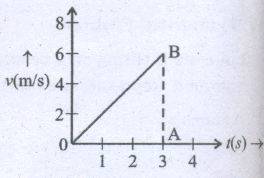
\(=\frac{1}{2}\times OA\times BA\)
\(=\frac{1}{2}\times 3\times 6=9m\)
If the speed varies with the time: Then \(v=\frac{ds}{dt}\Rightarrow ds=v\ dt\)
\(\Rightarrow \int { ds } =\int { v }\ dt\)
\(or\ s=\int { v }\ dt\)
21.
Given: Total distance = s
Velocity of the girl for the first half distance = v1
Velocity of the girl for the second half distance = v2
Formula:
\(Time\ taken=\frac{Distance}{Velocity}\)
Time taken for the first half distance \(=\frac{\frac{s}{2}}{v_{1}}=\frac{s}{2v_1}\)
Time taken for the second half distance \(=\frac{\frac{s}{2}}{v_{2}}=\frac{s}{2v_2}\)
Total time taken \(=\frac{s}{2v_1}+\frac{s}{2v_2}\)
Average speed,\(v_{av}=\frac{s}{\frac{s}{2v_1}+\frac{s}{2v_2}}=\frac{2v_1v_2}{v_1+v_2}\)
22.
The relation between linear and angular velocity is given by
v=rω
Differentiating the equation with respect to time, we get (since r is constant)
\(\frac{dv}{dt}=\frac{rd\omega}{dt}=r\alpha\)
Here, \(\frac{dv}{dt}\) is the tangential acceleration and is denoted as \({ a }_{ t }.\frac { d\omega }{ dt } \) is the angular acceleration \(\alpha\). Then
\(at=r\alpha\)
23.
The total time taken by the projectile from the point of projection till it hits the horizontal plane is called time of flight.
This time of flight is the time taken by the projectile to go from point O to B via point A in the figure (Initial velocity resolved into components)
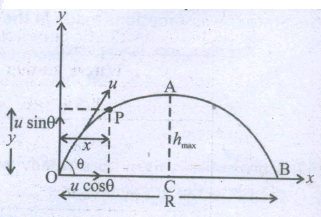
We know that \({ s }_{ y }={ u }_{ y }t+\frac { 1 }{ 2 } { a }_{ y }{ t }^{ 2 }\)
Here, Sy=y = 0 (net displacement in y-direction is zero), uy = u sinθ, ay = -g, t = Tf
\(0=usin\theta { T }_{ f }-\frac { 1 }{ 2 } g{ T }_{ f }^{ 2 }\)
\({ T }_{ f }=2u\frac { sin\theta }{ g } \)

11th Standard Syllabus & Materials
11th Standard
TN 11th Tamil பீடு பெற நில் - செய்யுள் - காவடிச்சிந்து Important Questions And Answers Study Material - QB365 Set A
NEW11th Standard
TN 11th Tamil பீடு பெற நில் - உரைநடை - மலை இடப்பெயர்கள் : ஓர் ஆய்வு Important Questions And Answers Study Material - QB365 Set A
NEW11th Standard
TN 11th Tamil மாமழை போற்றுதும் - துணைப்பாடம் - யானை டாக்டர் Important Questions And Answers Study Material - QB365 Set A
NEW11th Standard
TN 11th Tamil மாமழை போற்றுதும் - செய்யுள் - ஐங்குறுநூறு Important Questions And Answers Study Material - QB365 Set A



Tamilnadu Stateboard 11th Standard Subjects

Maths

Commerce

Economics

Biology

Business Maths and Statistics

Accountancy

Computer Science
Physics

Chemistry
Maths
Biology
Economics
Physics
Chemistry

History
Business Maths and Statistics

Computer Science
Accountancy

Computer Applications
History
Computer Technology
Commerce
Computer Applications
Computer Technology

Tamil

English

French
Tamilnadu Stateboard Standards

