
 100% FREE ACCESS
11th Standard Syllabus & Materials
11th Standard
TN 11th Tamil இயற்கை வேளாண்மை,சுற்றுச்சூழல் -செய்யுள் - மனோன்மணீயம் Important Questions And Answers Study Material - QB365 Set A
NEW11th Standard
TN 11th Tamil என்னுயிர் என்பேன் -துணைப்பாடம் - இசைத்தமிழர் இருவர் Important Questions And Answers Study Material - QB365 Set A
NEW11th Standard
TN 11th Tamil மொழி கலை -செய்யுள் - ஒவ்வொரு புல்லையும் Important Questions And Answers Study Material - QB365 Set A
NEW11th Standard
TN 11th Tamil பீடு பெற நில் - இலக்கணம் - பகுபத உறுப்புகள் Important Questions And Answers Study Material - QB365 Set A
NEW11th Standard
TN 11th Tamil பீடு பெற நில் - துணைப்பாடம் - வாடிவாசல் Important Questions And Answers Study Material - QB365 Set A
NEW11th Standard
TN 11th Tamil பீடு பெற நில் - செய்யுள் - குறுந்தொகை Important Questions And Answers Study Material - QB365 Set A

Published on: 06/12/2018
HSC Board Exams are fast approaching and students are getting anxious about how to prepare for their HSC Board Exams. The latest sample papers have been designed as per the latest syllabus and examination trends. Students can make use of this question paper since all the questions are taken from the book back and creative question papers. Our aim is to bring out the best scores on board exams. By practicing with this important model question paper student can gain more knowledge and confidence to crack the exams.
In this question paper, all the important questions from 11th Biology Chapter Living World are included for practice. Not only with book back questions, but also included creative questions. It's nearing the examination and right time to grab the model question papers and practice for the board exams. Everyone has the same aim that is to reach the top rank list. We are paving the way for you to reach your goal.
Practice with important questions from all chapters and get set ready to crack your exams with confidence. Concentrate on making small improvements and importantly keep practicing model question papers. This question paper exclusively designed for the chapter Living World from plus one Biology. Since board exams are very important for your upcoming career, you should pay attention to practice and score good marks. The best way to prepare exams is to simply do one thing at a time. Now you can use this model question paper for practice on your own to score more on your board exams.
Download Tamil Nadu 11th Standard Biology question papers, model tests, one-mark questions, important questions, and public exam papers in PDF format. Free study materials and answer keys for TN State Board students.
Questions + Answers key
Take MCQ Biology Test1.
__________ acid is obtained from lichen acting as antibiotics.
Alginic
Acetic
Oxalic
Usnic
2.
In which mycelium, the hyphae are arranged loosely?
Prosenchyma
Plectenchyma
Pseudoparenchyma
Arenchyma
3.
_____________ is NOT a phycobiont in lichens.
Gloeocapsa
Dermacarpa
Scytonema
Nostoc
4.
Transformation in bacteria was demonstrated by _________ .
Lederberg
Zinder
Edward
Griffith
5.
The term bacterium was coined by _________ .
Stanley
Ehrenberg
Gram
Koch
6.
Which is not a part of five kingdom classification?
Viruses
Monera
Protista
Mycoplasma
7.
Which of the following organism undergoes regeneration?
Spirogyra
Planaria
Yeast
Aspergillus
8.
Which one of the following statements is wrong?
Cyanobacteria are also called blue-green algae
Golden algae are also called desmids
Eubacteria are also called false bacteria
Phycomycetes are also called algal fungi
9.
Select the mismatch
Pinus - Dioecious
Cycas - Dioecious
Salvinia - Heterosporous
Equisetum - Homosporous
10.
Litmus paper is obtained from _________.
Rocellamontagne
Lasallia
Cladonia
Both b and c.
11.
Bengal femaine is due to __________.
Ergot
Phytophthora
Helminthosporium
Ustilago
12.
__________is called as "Club fungi".
Actinomycetes
Deutromycetes
Basidiomycetes
Phagomycetes
13.
The Earthy Odour is produced from the soil after rain due to presence of ________.
Basidiomycetes
Actinobacteria
Deutromycetes
Oomycetes
14.
Plaque is caused by ___________.
Vibrio cholerae
Salmonella
Yersinia pestis
Clostridium
15.
The special type of pili helps in conjugation called ________.
Flagella
Sexpili
Mesosomes
Plasmid
16.
Typhoid is caused by ______________.
salmonella typhi
Vibrio cholerae
Clostridium tetani
Clostridium botulinum
17.
Three Kingdom System of classification was given by _________.
Ernst Hackel
Copeland
Copeland
R.H.Whittaker
18.
The process involving the recognition of phage to bacterium is called _________.
Landing
Pinning
Splicing
Attachment
19.
TMV is discovered by _______.
d' Herelle
Stanley
Loffler
Dimitry Ivanowsky
20.
Viruses have nucleic acid core surrounded by __________.
Protein coat
Lipid
Ammonia
Glucose
21.
Transfer of DNA from one bacterium to another is called
Conjugation
Transduction
Transformation
Endospores
22.
PHB means:
Poly Hexo Butyrate
Poly Hydrolxl Butyle
Poly - β Hydroxl Butyrate
Poly Hedral Butyrate
23.
Cyanophages means:
Viruses infecting red algae
Viruses infecting brown algae
Viruses infecting blue green algae
Viruses infecting green algae
24.
A completely closed ascocarp is called ______________
cleistothecium
perithecium
apothecium
pseudothecium
25.
Who discovered plasmid?
David
Koch
Joshua Lederberg
Griffith
26.
______________ is a capnophilic bacteria.
Campylobacter
Chlorobium
Chromatium
Clostridium
27.
Bacterial photosynthesis differs from higher plants in evolution of ____________.
Oxygen
Hydrogen sulphide
Hydrogen
CO2
28.
Which Gram negative bacterium caused Duodenal and Gastric ulcers?
Helicobacter pylori
Helicobacter Vibrio
E. Coli
Haemophilus
29.
Griffith demonstrated Transformation in ________________
1928
1930
1975
1900
30.
Identify the sequence involved in lytic life cycle.
(a) Pinning
(b) Maturation
(c) Synthesis
(d) Ghost
ABCD
ADCB
DACB
ACDB
31.
______________ is a basic unit of life.
Atoms
Compounds
Soils
Cell
32.
Living things are made of ___________
Organisms
Atoms
Organs
Cells
33.
Monotropa derives nutrition by ___________
Root Nodules
Lichens
Mycorrhizae
Roots
34.
Identify the correctly matched pair.
Actinomycete - Late blight
Mycoplasma - Lumpy jaw
Bacteria - Crown gall
Fungi - Sandal spike
35.
Which one of the following statement about virus is correct?
Possess their own metabolic system
They are facultative parasites
They contain DNA or RNA
Enzymes are present
36.
Name the strains used in Gram staining procedure.
37.
Imagine yourself as Carl Woese and explain your colleagues about your classification.
38.
When does a prophage enter lytic cycle?
39.
Generally nucleic acid in viruses is present as single unit. Name any two viruses that possess segmented nucleic acid.
40.
Why viruses are not included in the category of microorganisms?
41.
Arrange the following in a proper sequence with respect to fungal sexual cycle.
Karyogamy, protoplasmic fusion, meiosis and spores production.
42.
Define mycology. Who is the founder of mycology?
43.
Define bacteria and bacteriology.
44.
Point out Green sulphur bacteria.
45.
Why is Rhizopus called as 'Bread mould'?
46.
Explain the statement of non-living things also grow.
47.
Categorise the following based on nutrition.
(a) Chlorobium
(b) Iron bacteria
48.
What is Homeostasis?
49.
List out the beneficial aspects of lichens.
50.
Describe the structure of T4 phage.
51.
Explain Lysogenic cycle of a phage.
52.
How symbiotic relationship is executed in mycorrhiza?
53.
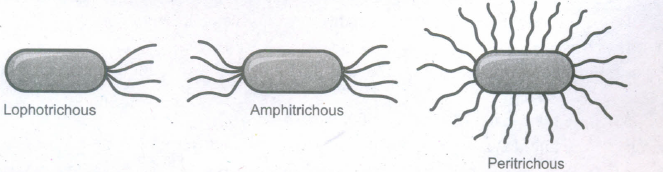
Draw Amphitrichous, Lophotrichous and Peritrichous flagellation in bacteria.
54.
Write the characteristics of phycomycetes in fungus.
55.
Collect the Merits of five kingdom classification.
56.
Describe Cellular structure.
57.
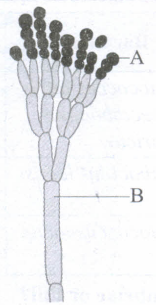
Identify the diagram and label any 2 parts.
58.
What is Mycorrhiza? Mention the types.
59.
What is transduction? Mention the types.
1.
(d)
Usnic
2.
(a)
Prosenchyma
3.
(a)
Gloeocapsa
4.
(d)
Griffith
5.
(b)
Ehrenberg
6.
(a)
Viruses
7.
(b)
Planaria
8.
(c)
Eubacteria are also called false bacteria
9.
(a)
Pinus - Dioecious
10.
(a)
Rocellamontagne
11.
(c)
Helminthosporium
12.
(c)
Basidiomycetes
13.
(b)
Actinobacteria
14.
(c)
Yersinia pestis
15.
(b)
Sexpili
16.
(a)
salmonella typhi
17.
(a)
Ernst Hackel
18.
(a)
Landing
19.
(d)
Dimitry Ivanowsky
20.
(a)
Protein coat
21.
(c)
Transformation
22.
(c)
Poly - β Hydroxl Butyrate
23.
(c)
Viruses infecting blue green algae
24.
(a)
cleistothecium
25.
(c)
Joshua Lederberg
26.
(a)
Campylobacter
27.
(a)
Oxygen
28.
(a)
Helicobacter pylori
29.
(a)
1928
30.
(b)
ADCB
31.
(d)
Cell
32.
(d)
Cells
33.
(c)
Mycorrhizae
34.
(c)
Bacteria - Crown gall
35.
(c)
They contain DNA or RNA
36.
Crystal violet and safranin.
37.
I (Carl Woese) classified the living organisms into three domains based on the differences in rRNA nucleotide sequence and lipid structure of the cell membrane. The three domains are Bacteria, Archae and Eukarya.
38.
On exposure to UV radiation and chemicals, the prophage enters the lytic cycle.
39.
(i) Wound tumour virus
(ii) Influenza virus
40.
Viruses possess characters of both living and non-living and also they does not have well defined body organisation. Hence they are not included in the category of microorganism.
41.
Protoplasmic fusion ~ Karyogamy ~ Meiosis ~ Spores production.
42.
Study of fungi is called mycology. P.A. Micheli is considered as the founder of mycology.
43.
Bacteria are prokaryotic, unicellular, ubiquitous, microscopic organisms. The study of bacteria is called bacteriology.
44.
In this type of bacteria the hydrogen donor is H2S and possess pigment called Bacterioviridin. Example: hlorobium
45.
1. Rhizopus is a saprophytic fungus and grows on substrates like bread, jelly, leather, decaying vegetables and fruits.
2. It is commonly called 'Bread mould'. Since it easily grows on stale bread and is of common occurrence on bread.
46.
1. Non-living things like mountains, boulders, sand dunes also grow by accumulating the material on their external surface.
2. But, this growth is considered as external growth in comparison to the growth of living things which is internal.
47.
(a) Chlorobium - Photoautotrophic bacteria / Photolithotroph.
(b) Iron bacteria - Chemoautotrophic bacteria / Chemolithotroph.
48.
Property of self-regulation and tendency to maintain a steady state within an external environment which is liable to change is called Homeostasis. It is essential for the living organisms.
49.
(a) Lichens secrete organic acids like oxalic acids which corrodes the rock surface and helps in weathering of rocks, thus acting as pioneers in Xerosere.
(b) Usnic acid produced from lichens show antibiotic properties.
(c) Lichens are sensitive to air pollutants especially to sulphur-di-oxide. Therefore, they are considered as pollution indicators.
(d) The dye present in litmus paper used as acid base indicator in the laboratories is obtained from Roccella montagnei.
(e) Cladonia rangiferina (Reindeer moss) is used as food for animals living in Tundra regions.
50.
Structure of T4 Bacteriophage:
1. The T4 phage is tadpole-shaped and consists of head, collar, tail, base plate and fibres.
2. The head is hexagonal which consists of about 2000 identical protein subunits.
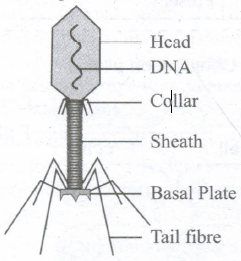
3. The long helical tail consists of an inner tubular core which is connected to the head by a collar.
4. There is a base plate attached to the end of tail.
5. The base plate contains six spikes or tail fibres.
6. These fibres are used to attach the phage on the cell wall of bacterial host during replication.
7. A dsDNA molecule of about 50 \(\mu\)m is tightly packed inside the head.
8. The DNA is about 1000 times longer than the phage itself.
51.
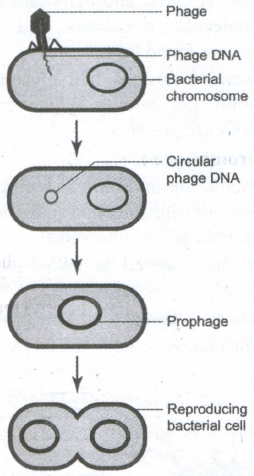
1. In the lysogenic cycle the phage DNA gets integrated into the DNA of the host cell and gets multiplied along with nucleic acid of the host. No independent viral particle is formed.
2. As soon as the phage injects its linear DNA into the host cell it becomes circular and integrates into the bacterial chromosome by recombination. The integrated phage DNA is now called prophage.
3. The activity of the prophage gene is repressed by two repressor proteins which are synthesized by phage genes. This checks the synthesis of new phages within the host cell.
4. However, each time the bacterial cell divides, the prophage multiplies along with the bacterial chromosome.
5. On exposure to UV radiation and chemicals the excision of phage DNA may occur and results in lytic cycle.
52.
In mycorrihiza , relationship fungi absorbs nutrition from the root and in turn the hyphal network of mycorrhiza forming fungi helps the plant to absorb water and mineral nutrients from the soil.
53.
54.
1. Among these 'Phycomycetes' include fungal species of Oomycetes, Chytridiomycetes and Zygomycetes which are considered as lower fungi indicatlng algal origin of fungi.
2. Constantine J. Alexopoulos and Charles W. Mims in the year 1979 proposed the classification of fungi in the book entitled 'Introductory Mycology'.
3. They classified fungi into three divisions namely Gymnomycota, Mastigomycota and Amastigomycota. There are 8 subdivisions, 11 classes, 1 form class and 3 form subclasses in the classification proposed by them.
4. The salient features of some of the classes - Oomycetes, Zygomycetes, Ascomycetes, Basidiomycetes and Form class Deuteromycetes are discussed below.
5. With the advent of molecular methods, fungi traditionally studied by mycologists at present fall into 3 kingdom of Eukaryota.
6. The Eumycota include only fungi and protozoa and chromista which accommodates (myxomycetes, Oomycetes) formerly placed in fungi.
55.
1. The classification is based on the complexity of cell structure and organization of thallus.
2. It is based on the mode of nutrition
3. Separation of fungi from plants
4. It shows the phylogeny of the organisms.
56.
1. All living organisms are made up of cells which may be prokaryotic or eukaryotic.
2. Prokaryotesare unicellular; lack membrane bound nuclei and organelles like mitochondria, endoplasmic reticulum, golgi bodies and so on (Example: Bacteria and Blue green algae).
3. In Eukaryotes a definite nucleus and membrane bound organelles are present.
4. Eukaryotes may be unicellular (Amoeba) or multicellular (Oedogonium).
57.
Penicillium - Conidia formation.
A- Conidium
B - Conidiophore
58.
The Symbiotic association between fungal mycelium and roots of plants is called as mycorrhizae. Types.
1. Ectomycorrhizae
2. Endomycorrhizae
3. Ectendomycorrhizae
59.
Phage-mediated DNA transfer is called transduction. It is of two types.
1. Generalised transduction.
2. Specialised or restricted transduction.

11th Standard Syllabus & Materials
11th Standard
TN 11th Tamil பீடு பெற நில் - செய்யுள் - காவடிச்சிந்து Important Questions And Answers Study Material - QB365 Set A
NEW11th Standard
TN 11th Tamil பீடு பெற நில் - உரைநடை - மலை இடப்பெயர்கள் : ஓர் ஆய்வு Important Questions And Answers Study Material - QB365 Set A
NEW11th Standard
TN 11th Tamil மாமழை போற்றுதும் - துணைப்பாடம் - யானை டாக்டர் Important Questions And Answers Study Material - QB365 Set A
NEW11th Standard
TN 11th Tamil மாமழை போற்றுதும் - செய்யுள் - ஐங்குறுநூறு Important Questions And Answers Study Material - QB365 Set A



Tamilnadu Stateboard 11th Standard Subjects

Maths

Commerce

Economics
Biology

Business Maths and Statistics

Accountancy

Computer Science

Physics

Chemistry
Maths
Biology
Economics
Physics
Chemistry

History
Business Maths and Statistics

Computer Science
Accountancy

Computer Applications
History
Computer Technology
Commerce
Computer Applications
Computer Technology

Tamil

English

French
Tamilnadu Stateboard Standards

