
 100% FREE ACCESS
11th Standard Syllabus & Materials
11th Standard
TN 11th Tamil இயற்கை வேளாண்மை,சுற்றுச்சூழல் -செய்யுள் - மனோன்மணீயம் Important Questions And Answers Study Material - QB365 Set A
NEW11th Standard
TN 11th Tamil என்னுயிர் என்பேன் -துணைப்பாடம் - இசைத்தமிழர் இருவர் Important Questions And Answers Study Material - QB365 Set A
NEW11th Standard
TN 11th Tamil மொழி கலை -செய்யுள் - ஒவ்வொரு புல்லையும் Important Questions And Answers Study Material - QB365 Set A
NEW11th Standard
TN 11th Tamil பீடு பெற நில் - இலக்கணம் - பகுபத உறுப்புகள் Important Questions And Answers Study Material - QB365 Set A
NEW11th Standard
TN 11th Tamil பீடு பெற நில் - துணைப்பாடம் - வாடிவாசல் Important Questions And Answers Study Material - QB365 Set A
NEW11th Standard
TN 11th Tamil பீடு பெற நில் - செய்யுள் - குறுந்தொகை Important Questions And Answers Study Material - QB365 Set A

Published on: 27/04/2019
Most expected three mark questions in Basic Concepts of Chemistry and Chemical Calculations
Download Tamil Nadu 11th Standard Chemistry question papers, model tests, one-mark questions, important questions, and public exam papers in PDF format. Free study materials and answer keys for TN State Board students.
Questions + Answers key
Take MCQ Chemistry Test
1.
Bring out the dissimilarities in mole concept and molar mass by clearly analysing them
2.
Does one gram mole of a gas occupy 22.4 L under all conditions of temperature and pressure
3.
Which law co-relates the mass and volume of a gas?
4.
Define atomicity.
5.
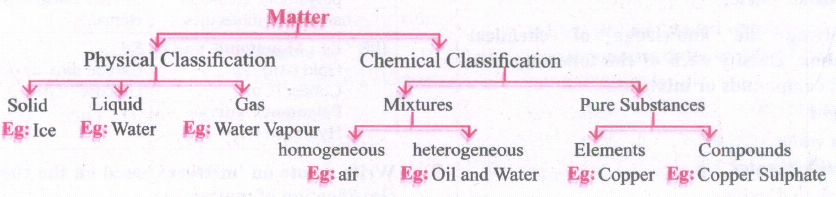
Calculate
(a) The mass of 0.5g molecule of sugar and
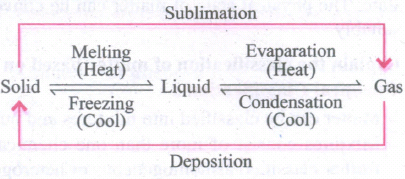
(b) Gram molecule of sugar in 547.2 g
6.
Calculate the gram molecular mass of sugar having molecular formula C12H22O11
7.
Calculate the equivalent weight of H3PO4 and Ca(OH)2 on the basis of given reaction.
H3PO4 + NaOH \(\longrightarrow\) NaH2PO4 + H2O
Ca(OH)2 + HCI \(\longrightarrow\) Ca(OH)CI + H2O
8.
What mass of N2 will be required to produce 34g of NH3 by the reaction, N2 + 3H2 \(\longrightarrow\) 2NH3·
9.
Calculate the oxidation number of underlined atoms of the following :
NO3-
10.
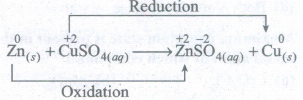
Calculate the oxidation number of underlined atoms of the following:
K2CrO4
11.
Calculate the oxidation number of underlined atoms of the following:
K2 MnO4
12.
Calculate the mass of the atom in amu
13.
How many moles of barium sulphate is precipitated when 1 mole of aluminium sulphate reacts completely with barium chloride ?
14.
Calculate the oxidation number of nitrogen in nitrous acid and nitric acid
15.
Calculate the Formula Weights of the following compounds.Mg(OH)2
16.
Calculate the Formula Weights of the following compounds. NaOH
17.
Calculate the Formula Weights of the following compounds.C6H12O6 - Glucose
18.
Calculate the Formula Weights of the following compounds. NO2
19.
How much mass (in gram units) is represented by the following?
5.14 mol of H5IO6
20.
How much mass (in gram units) is represented by the following ?
3.0 mol of CO2
21.
How much mass (in gram units) is represented by the following ?
0.2 mol of NH3
22.
One million silver atoms weigh 1.79 x 10⁻¹⁶ g. Calculate the atomic mass of silver.
23.
Calculate the mass of the following : 1 molecule of water.
24.
Calculate the mass of the following : 1 molecule of benzene
25.
Calculate the mass of the following : 1 atom of silver
26.
Calculate the number of atoms in the following 52 moles of He.
27.
Calculate the number of atoms in the following 52 g of He
28.
Draw a flow chart to illustrate classification of matter.
29.
Explain the classification of matter based on chemical composition.
30.
How will you classify matter based on physical state ?
31.
Write a note on 'mixture' based on the chemical classification of matter.
32.
Write a note on the differences between elements and compounds
33.
Matter is defined as anything that has mass and occupies space. All matter is composed of atoms
34.
By applying the knowledge of chemical classification, classify each of the following into elements, compounds or mixtures
Sugar
35.
Why is air sometimes considered as a heterogeneous mixture?
36.
Mixture of salt and water is a solution while that of oil and water is not. Explain
37.
Why is distilled water a compound whereas tap water is a mixture?
38.
What are the basic properties used to identify a substance?
39.
'X' is an impure substance. Is it an element, compound or mixture?
40.
Consider the reactions,
(i) H3PO2(aq) + 4AgNO3(aq)+ 2H2O(l) \(\longrightarrow\) H3PO4(aq)+ 4Ag(s)+ 4HNO3(aq)
(ii) H3PO2(aq) + 2CuSO4(aq) + 2H2O(l) \(\longrightarrow\) H3PO4(aq)+ 2Cu(s) + H2SO4(aq)
(iii) C6H5CHO(l) + 2[Ag(NH3)2]+(aq) + 3OH-(aq) \(\longrightarrow\) C6H5COO-(aq) + 2Ag(s)+ 4NH3(aq) + 2H2O(l)
(iv) C6H5CHO(l) + 2Cu2+(aq) + 5OH-(aq) \(\longrightarrow\) No change observed.
What interference do you draw about the behavior of Ag+ and Cu2+ from these reactions?
41.
Which one of the two, ClO2- or ClO4- shows disproportionation reaction and why?
42.
Nitric acid is an oxidising agent and reacts with PbO but it does not react with PbO2 Explain why?
43.
Zn rod is immersed in CuSO4 solution. What will your observe after an hour? Explain your observation in terms of the redox reaction.
44.
Why is anode called oxidation electrode, whereas the cathode is called reduction electrode?
45.
What is the most essential conditions that must be satisfied in a redox reaction?
46.
How would you know whether a redox reaction is taking place in an acidic, alkaline or neutral medium?
47.
2Cu2S + 3O2 \(\longrightarrow\) 2Cu2O + 2SO2
(i) In this reaction which substance is getting oxidised and which substance is getting reduced?
(ii) Name the oxidising and reducing agents.
48.
Categorise the redox reactions that occur in our daily life
49.
MnO42- undergoes disproportionation reaction in acidic medium but MnO4- does not. Give reason.
50.
Classify the following species into acids and bases according to Lewis concept.
S2-, H+, OH-, BF3' Ni2+, F-
51.
State Avogadro's hypothesis.
52.
53.
What is Avogadro number ?
1.
| S.No | Mole | Molar Mass |
|---|---|---|
| 1 |
It is defined as the amount of the substance that |
It is defined as the mass of one mole of the substance |
| 2 | 1 mole = 6.023 x 10²³ | Molar mass = \(\frac { mass }{ mol } g{ mol }^{ -1 }\) |
2.
No, one gram mole of a gas occupies 22.4 L only under S.T.P conditions, i.e. at 273 K temperature and 760mm of pressure
3.
Avogadro's law. It states equal volumes of all gases under the same conditions of temperature and pressure contain equal number of molecules
4.
Atomicity of an elementary substance is defined as the number of atoms in a molecule of the element.
5.
(a) 1 gram molecule of sugar = 342 g
\(\therefore\) 0.5 g molecule of sugar = 342 x 0.5
= 171 g
(b) 342 g of sugar = I gram molecule
547.2 of sugar = \(\frac { 1 }{ 342 } \times 547.2\)
= 1.6 gram molecule
6.
Molecular mass of Sugar C12H22O11
= 12 x 12 + 22 x 1 + 11 x 16 = 342
7.
Equivalent weight of H3PO4
= \(\frac { Molecular\ mass }{ No.of\ replaceable\ { H }^{ + } } =\frac { 98 }{ 1 } =98\)
Equivalent weight of Ca(OH)2
= \(\frac { Molecular\ mass }{ No.of\ replaceable\ {O H }^{ - } } =\frac { 74 }{ 1 } =74\)
8.
The reaction is
N2 + 3H2 \(\longrightarrow\) 2NH3
1mol 3mol 2 mol
2 x 14 = 2(1 x 14 + 3 x 1)
28 g = 34 g
Thus, to produce 34.0 g ammonia, 28 g of N2 is required
9.
NO3-
x + 3(-2) = -1
x - 6 = -1
x = -1 + 6
x = +5
Oxidation number of N in NO3- is +5
10.
K2CrO4
2(1) + x + 4(-2) = 0
2 + x - 8 = 0
x - 6 = 0
x = +6
Oxidation number of Cr in K2CrO4 is +6
11.
K2MnO4
Oxidation number of Mn be x
2 (1) + x + 4 (-2) = 0
2 + x - 8 = 0
x - 6 = 0
x = 6
Oxidation number of Mn in K2MnO4 is +6
12.
Oxygen
Mass of oxygen atom = 2.656 x 10⁻²³ gram
1 amu = 1.6605 x 10⁻²⁴g
The mass of oxygen atom in amu = \(\frac { 2.656\times { 10 }^{ -23 } }{ 1.66056\times { 10 }^{ -24 } } \approx 15.99\quad amu\)
13.
Al2(SO4)3 + 3 BaCl2 \(\longrightarrow\) 3 BaSO4 + 2 AlCl3
When 1 mole of aluminium sulphate reacts with barium chloride, 3 moles of BaSO4 is precipitated.
14.
(i) Nitrous acid: HNO2
+ 1 + x - 2 x 2 = 0
x = +3
(ii) Nitric acid: HNO3
+ 1 + x - 2 x 3 =0
x = +5.
15.
1 x AW of Mg = 1 x 24.305 = 24.305 amu
2 x AW of O = 2 x 16 = 32.000 amu
2 x AW of H = 2 x 1.008 = 2.016 amu
Formula weight of Mg(OH)2 is = 58.321 amu
Formula weight of Mg(OH)2 is = 58 amu.
16.
1 x AW of Na = 1 x 22.99 = 22.99 amu
1 x AW of O = 1x 16 = 16.00 amu
1 x AW of H = 1 x1.008 = 1.008 amu
Formula weight of NaOH is = 39.998 amu
17.
6 x AW of C = 6x12.01 = 72.06 amu
12 x AW of H = 12x1.008 = 12.096 amu
6 x AW of O = 6 x16 = 96.0 amu
Formula weight of Glucose is = 180.156 am
18.
1 x AW of N = 1 x 14 = 14amu
2 x AW of O = 2 x16 = 32 amu
Formula weight of NO2 = 46 amu
19.
Molar mass of H5IO6 = (5x1 + 1x127 + 6x16)
= 228 g mol-1
Mass of 5.14 mol of H5IO6 =5.14 mol x 228g mol-1
= 1171.9 g.
20.
Molar mass of CO2 = (1 x 12 + 2 x 16)
= 44 g mol-1
Mass of 3 moles of CO2 = 3 mol x 44g mol-1
= 132 g
21.
Molar mass of NH3 = (1 x 14 + 3 x 1) = 17g mol-1
Mass of 0.2 mol of NH3 = 0.2 mol x 17g mol-1
= 3.4 g
22.
No. of silver atoms = 1 million = 1 x 10⁶
Mass of one million Ag atoms = 1.79 x 10⁻¹⁶g
Mass of 6.023 x 10²³atoms of silver
= \(\frac { 1.79\times { 10 }^{ -16 }g }{ 1\times { 10 }^{ 6 } } \times 6.023\times { 10 }^{ 23 }\)
= 107.8 g.
Atomic mass of silver = 6.023 x 10²³ atoms of Ag
\(\therefore\) The atomic mass of Ag = 107.8 g
23.
Molecular mass of water = (2 x 1u) + (1 x 16u)
= 18 u
Molar mass of water = 18 g mol-1
Mass of 1 molecule of water
= \(\frac { Molar\ mass\ of\ water }{ Avogadro's\ number } \)
= \(\frac { 18\ g\ { mol }^{ -1 } }{ 6.023\times { 10 }^{ 23 }\ { mol }^{ -1 } } \)
= 2.99 x 10⁻²³ g
Mass of 1 molecule of water = 2.99 x 10⁻²³ g
24.
Molecular mass of benzene (C6H6) = (6 x 12.01 u) + (6 x 1 u) = 78.06 u
Molar mass of benzene = 78.06 g mol-1
Then, mass of [molecule of benzene = \(\frac { Molar\ mass }{ Avogadro's\ number } \)
= \(\frac { 78.06g\ { mol }^{ -1 } }{ 6.023\times { 10 }^{ 23 }\ { mol }^{ -1 } } \)
= 12.96 x 10⁻²³ g
25.
Molecular mass of silver (Ag) = 107.87 u
Molar mass of Ag = 107.87 g mol-1
\(\therefore\) Mass of 1 atom of Ag = \(\frac { Molar\ mass }{ Avogadro's\ number } \)
= \(\frac { 107.87g\ { mol }^{ -1 } }{ 6.023\times { 10 }^{ 23 }\ { mol }^{ -1 } } \)
= 17.91 x 10⁻²³g
Mass of 1 atom of Ag = 17.91 x 10⁻²³ g.
26.
52g of He contains 7.83 x 1024 He atoms.
1 mol of He contains 6.023 x 10²³ He atoms
\(\therefore\) 52 moles of He contains = \(\frac { 6.023\times { 10 }^{ 23 }\times 52 }{ 1} \)
= 3.132 x 1025
52 moles of He contains 3.132 x 1025 He atoms
27.
1 mol of He \(\equiv\) 4g \(\equiv\) 6.022 x 10²³ He atoms
(ie) 4g of He contains 6.022 x 10²³ He atoms
\(\therefore\) 52g of He contains = \(\frac { 6.023\times { 10 }^{ 23 }\times 52 }{ 4 } \)
= 7.83 x 1024
28.
29.
Chemical Classification:
1) Matter can be classified into mixtures and pure substances based on chemical compositions.
2 ) Mixtures consist of more than one chemical entity present without any chemical interactions. They can be further classified as homogeneous or heterogeneous mixtures based on their physical appearance
3) Pure substances are composed of simple atoms or molecules. They are further classified as elements and compounds.
(a) Element:
1) An element consists of only one type of atom.
2) Element can exist as monatomic or polyatomic units. The polyatomic elements are called molecules
3) Eg: Monatomic unit - Gold (Au), Copper (Cu); Polyatomic unit- Hydrogen (H2)
(b) Compound:
1) Compounds are made up of molecules which contain two or more atoms of different elements.
2) Properties of compounds are different from those of their constituent elements.
3) Eg: Carbon dioxide (CO2), Glucose (C6HI2O6)
30.
Physical Classification of Matter : Matter can be classified as solids, liquids and gases based on their physical state. The physical state of matter can be converted into one another by modifying the temperature and pressure suitably.
31.
Two or more substances mix together in any ratio without any chemical interaction is called mixture.
(i) Homogeneous mixture :
A mixture having a uniform composition throughout is called homogeneous mixture.
Eg: salt solution, air etc.
(ii) Heterogeneous mixture :
A mixture in which the composition is not uniform throughout and different components can be observed is called heterogeneous mixture. Eg : Mixture of salt and sugar, cereals and pulse etc.,
32.
| ELEMENTS | COMPOUNDS | |
|---|---|---|
| (i) | An element consists of only one type of atom | Compounds are made up of molecules which contain two or more atoms of different elements. |
| (ii) | Element can exist as monatomic or polyatomic units. The polyatomic elements are called molecules | Properties of compounds are different from those of their constituent elements. |
| (iii) | Eg : Monatomic unit - Gold (Au), Copper (Cu); Poly atomic unit - Hydrogen (H2) |
Eg: Carbon dioxide (CO2), Glucose (C6H12O6) |
33.
34.
Compound
35.
Air sometimes considered as a heterogeneous mixture due to the presence of dust particles which form a separate phase.
36.
The solution is a homogeneous mixture of two or more components. Salt in water is homogeneous and therefore it is a solution. Whereas oil in water is heterogeneous or immiscible mixture and so is not a solution
37.
Distilled water molecules contain only H2O It is a pure substance so a compound. Tap water usually contain impurities such as dust so it is a mixture
38.
The properties used to identify a substance are colour, density, melting point and boiling point etc
39.
'X' is a mixture since elements and compounds are pure substance.
40.
(i) In reactions, (i) & (ii) AgNO3 and CuSO4 act as oxidising agents. They oxidise H3PO2 (hypophosphorous acid) to (orthophosphoric acid)
(ii) In reaction (iii) [Ag (NH3)2]+ (aq) oxidises C6H5CHO to C6H5COOH.
(iii) In reaction (iv) Cu2+ does not oxidise C6H5 to C6H5COOH.
(iv) This indicates that Ag+ is a strong oxidising agent than Cu.
41.
The oxidation state of CI in ClO2- is +3. So, chlorine can get oxidised as well as reduced and can act as reductant and oxidant.
The disproportionation reaction of ClO2- is
\(\begin{matrix} +1 \\ 3Cl{ O }_{ 2 }^{ - } \end{matrix}\longrightarrow { Cl }^{ - }+\begin{matrix} +5 \\ Cl{ O }_{ 3 }^{ - } \end{matrix}\)
In CIO4- , CI is in its highest oxidation state, So it can only be an oxidant.
42.
(i) Nitric acid in an oxidising agent. It oxidises an element from lower oxidation state to the higher oxidation state In PbO, lead is in lower oxidation state of +2. HNO3 oxidises lead from Pb2+ to Pb4+
PbO + 2HNO3 \(\longrightarrow\) Pb (NO3)2 + H2O
(ii) In PbO2, lead is in +4 oxidation state and cannot be oxidised further. Therefore no reaction takes place.
43.
1. The blue colour of CuSO4 solution will get discharged and reddish brown copper metal will be deposited on Zn rod.
2. This is because blue colour Cu2+ (in CuSO4) gets reduced to Cu by accepting two electrons from Zn, which gets oxidised to colourless ZnSO4.
44.
At the anode, loss of electron takes place (ie.,) oxidation occurs. Hence called as oxidation electrode.
At the cathode, the gain of electrons takes place (ie.,) reduction occurs. Hence called as reduction electrode.
45.
In a redox reaction, the total number of electrons lost by the reducing agent must be equal to the number of electrons gained by the oxidising agent.
46.
1. If H+ any acid appears on either side of the chemical equation, the reaction occurs in acidic solution.
2. If OH- or any base appears on either side of the chemical equation, the reaction occurs in basic solution.
3. If neither H+, OH- nor any acid or base is present in the chemical equation, the solution is neutral.
47.
(i) Oxygen is being added to Cu, (ie.,) Cu2S is oxidised to Cu2O and the other reactant O2 is getting reduced
(ii) Cu2S is the reducing agent.
O2 is an oxidising agent.
48.
1. Fading of the colour of the clothes
2. Burning of cooking gas, fuel, wood, etc.
3. Rusting of Iron
4. Extraction of Metals
49.
In MnO42-, Mn is in the highest oxidation state (ie) +7. Therefore, it does not undergo disproportionation. MnO42- undergoes disproportionation as follows :
3MnO42- +4H+\(\longrightarrow\) 2MnO4- + MnO2 + 2H2O
In MnO42-, the oxidation state of Mn is +6. It can disproportionate to form MnO2 and MnO4
50.
Lewis acid : H+, BF3, Ni2+
Lewis Base : S2-, OH-, F-
51.
Equal volumes of all gases under the same conditions of temperature and pressure contain equal number of molecules.
52.
53.
The total number of entities present in one mole of any substance is equal to 6.022 x 10²³. This number is called Avogadro number.

11th Standard Syllabus & Materials
11th Standard
TN 11th Tamil பீடு பெற நில் - செய்யுள் - காவடிச்சிந்து Important Questions And Answers Study Material - QB365 Set A
NEW11th Standard
TN 11th Tamil பீடு பெற நில் - உரைநடை - மலை இடப்பெயர்கள் : ஓர் ஆய்வு Important Questions And Answers Study Material - QB365 Set A
NEW11th Standard
TN 11th Tamil மாமழை போற்றுதும் - துணைப்பாடம் - யானை டாக்டர் Important Questions And Answers Study Material - QB365 Set A
NEW11th Standard
TN 11th Tamil மாமழை போற்றுதும் - செய்யுள் - ஐங்குறுநூறு Important Questions And Answers Study Material - QB365 Set A



Tamilnadu Stateboard 11th Standard Subjects

Maths

Commerce

Economics

Biology

Business Maths and Statistics

Accountancy

Computer Science

Physics
Chemistry
Maths
Biology
Economics
Physics
Chemistry

History
Business Maths and Statistics

Computer Science
Accountancy

Computer Applications
History
Computer Technology
Commerce
Computer Applications
Computer Technology

Tamil

English

French
Tamilnadu Stateboard Standards
