
 100% FREE ACCESS
11th Standard Syllabus & Materials
11th Standard
TN 11th Tamil இயற்கை வேளாண்மை,சுற்றுச்சூழல் -செய்யுள் - மனோன்மணீயம் Important Questions And Answers Study Material - QB365 Set A
NEW11th Standard
TN 11th Tamil என்னுயிர் என்பேன் -துணைப்பாடம் - இசைத்தமிழர் இருவர் Important Questions And Answers Study Material - QB365 Set A
NEW11th Standard
TN 11th Tamil மொழி கலை -செய்யுள் - ஒவ்வொரு புல்லையும் Important Questions And Answers Study Material - QB365 Set A
NEW11th Standard
TN 11th Tamil பீடு பெற நில் - இலக்கணம் - பகுபத உறுப்புகள் Important Questions And Answers Study Material - QB365 Set A
NEW11th Standard
TN 11th Tamil பீடு பெற நில் - துணைப்பாடம் - வாடிவாசல் Important Questions And Answers Study Material - QB365 Set A
NEW11th Standard
TN 11th Tamil பீடு பெற நில் - செய்யுள் - குறுந்தொகை Important Questions And Answers Study Material - QB365 Set A

Published on: 01/08/2018
In this question paper, some of the important one mark, two and five marks questions from the chapter Reproductive Morphology are covered. The questions are prepared from the book back and previous year questions. Please click here, to get the answer of this question paper.
Download Tamil Nadu 11th Standard Biology question papers, model tests, one-mark questions, important questions, and public exam papers in PDF format. Free study materials and answer keys for TN State Board students.
Questions + Answers key
Take MCQ Biology Test1.
Persistent calyx is seen in ______________
Nelumbo
Papaver
Brinjal
Onion
2.
Asymmetric flowers are seen in ____________
Hibiscus
Water lily
Canna
Pisum
3.
Coenanthium is seen in ____________
Ocimum
Leucas
Dorstenia
Pipal
4.
Banyan has ___________ inflorescence.
Hypanthodium
Coenanthium
Mixed Inflorescence
Cymose
5.
The inflorescence in Euphorbia is a ____________
Hypanthodium
Verticillaster
Coenanthium
Cyathium
6.
7.
In an inflorescence where flowers are borne laterally in an acropetal succession the position of the youngest floral bud shall be ______.
Proximal
Distal
Intercalary
Anywhere
8.
Aggregate fruit develops from _____.
Multicarpellary, apocarpous ovary
Multicarpellary, syncarpous ovary
Multicarpellary ovary
Whole inflorescence
9.
Gynoecium with united carpels is termed as ______.
Apocarpous
Multicarpellary
Syncarpous
None of the above
10.
Vexillary aestivation is characteristic of the family _____.
Fabaceae
Asteraceae
Solanaceae
Brassicaceae
11.
Define Merosity. Explain the various types of merosity.
12.
Explain the types of stamens based on the length of stamens.
13.
List out the difference between spike and spadix
14.
Define Umbel.
15.
Differentiate between aggregate fruit with multiple fruit.
16.
Explain the types of placentation with examples.
17.
Describe the Special Inflorescence.
18.
Describe different types of anthers in plants.
19.
Where does the inflorescence axis arise in cauliflorous type of inflorescence?
20.
Write a note on Hesperidium fruit.
21.
Write a note on Drupe fruit.
22.
Write a note on Berry fruit.
23.
Write a note on the Structure of Fruit
24.
What is mother axis and posterior side?
1.
(c)
Brinjal
2.
(c)
Canna
3.
(c)
Dorstenia
4.
(a)
Hypanthodium
5.
(d)
Cyathium
6.
(a)
7.
(a)
Proximal
8.
(a)
Multicarpellary, apocarpous ovary
9.
(c)
Syncarpous
10.
(a)
Fabaceae
11.
Number of floral parts per whorl is called merosity. Perianth merosity is the number of perianth parts per whorl.
1. Isomerous-Presence of same number of perianth parts in different whorls of a flower. (five sepals, five petals). Example: Hibiscus.
2. Anisomerous-Each whorl of flower contains different number of members. Example: Annona.
3. Bimerous-Floral parts in two or multiples of two. Example: Ixora
4. Trimerous-Floral parts in three or multiples of three. Example: Allium, Monocots.
5. Tetramerous-Floral parts in four or multiples of four. Example: Brassica juncea.
6. Pentamerous-Floral parts in five or multiples of five. Example: Hibiscus, Dicots.
12.
Types of Stamens based on Length:
1. Didynamous (di-two, dynamis-strength): Four stamens in which two with long filaments and two with short filaments. Eg: Lamiaceae, Ocimum. If all four stamens are in two equal pairs then the condition is called didynamous.
2. Tetradynamous (tetra-four): Six stamens of which four with long filaments and two with short filaments. Eg: Brassicaceae (Brassica).
3. Heterostemonous: Stamens are of different lengths in the same flower. Eg: Cassia, Ipomoea
13.
| S.No | Spike | Spadix |
| 1 | It is an unbranched indeterminate inflorescence with sessile flowers. | An inflorescence with fleshy axis bearing unisexual sessile flowers. |
| 2 | The flowers are exposed. | The flowers are covered by bract called spathe. |
| 3 | Flowers are generally bisexual. Eg: Wheat | Flowers are generally unisexual. Eg: Cocos |
14.
1. An inflorescence with the indeterminate central axis and pedicellate flowers arise from the common point of peduncle at the apex.
2. Compound umbel inflorescence is a branched umbel.
3. Each such umbel is called an umbellet.
4. Eg: Daucus carota (carrot).
15.
| S.No. | Aggregate fruit | Multiple fruit |
| 1 | Aggregate fruits develop from a single fl ower having an apocarpous pistil. each of the free carpel develops into a simple fruitlet. A collection of simple fruitlets makes an Aggregate fruit. An individual ovary develops into a drupe, achene, follicle or berry | A Multiple or composite fruit develops from the whole infl orescence along with its peduncle on which they are borne |
| 2 | Eg: Polyalthia | Eg: Pineapple |
16.
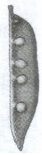
Placentation: The mode of distribution of placenta inside the ovary is called placentation. (Placenta bears the ovules.) It is of different types as follows:
1. Marginal: It is with the placentae along the margin of a unicarpellate ovary. Eg: Fabaceae.
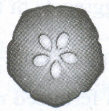
2. Axile: The placentae arises from the column in a compound ovary with septa. Eg: Hibiscus, tomato, lemon.
3. Superficial: Ovules arise from the surface of the septa. Eg: Nymphaeaceae.
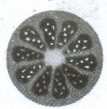
4. Parietal: It is the placentae on the ovary walls or upon intruding partitions of a unilocular, compound ovary. Eg: Mustard, Argemone, cucumber.
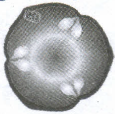
5. Basal: It is the placenta at the base of the ovary. Eg: Sunflower, Marigold.
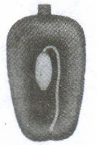
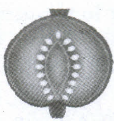
6. Free-central: It is with the placentae along the column . in a compound ovary without septa. Eg: Caryophyllaceae, Dianthus, Primrose.
17.
The inflorescences do not show any of the development pattern types are classified under special type of inflorescence.
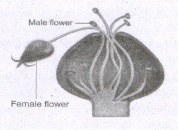
Cyathium:
Cyathium inflorescence consists of small unisexual flowers enclosed by .acommon involucre which mimics a single. flower. Male flowers are organised in a scorpioid manner. Female flower is solitary and centrally located on a long pedicel. Male flower is represented only by stamens and female flower is represented only by pistil. Cyathium may be actinomorphic (Example: Euphorbia) or zygomorphic (Example: Pedilanthus.) Nectar is present in involucre.
Hypanthodium:
Receptacle is a hollow, globose structure consisting unisexual flowers present on the inner wall of the receptacle. Receptacle is closed except a small opening called ostiole which is covered by a series of bracts. Male flowers are present nearer to the ostiole, female and neutral flowers are found in a mixed manner from middle below. Example: Ficus sp. (Banyan and Pipal). Coenanthium:
Circular disc like fleshy open receptacle that bears pistillate flowers at the center and staminate flowers at the periphery. Example: Dorstenia
18.
(i) Monothecal: One lobe with two microsporangia. They are kidney-shaped in a cross-section. eg. Malvaceae.
Some other types: Haplostemonous: stamens are uniseriate and equal in number to the petals and opposite the sepals (antisepalous).
Obhaplostemonous: Stamens are uniseriate, number equal to petals and opposite the petals (antipetalous)
Diplostemonous: Stamens are biseriate, outer antisepalous, inner antipetalous. eg. Murraya.
Obdiplostemonous: Stamens are biseriate, outer antipetalous, inner antisepalous. eg. Caryophyllaceae.
Polystemonous: Numerous stamens are normally many more than the number of petals.
(ii) Dithecal: It is a typical type, having two lobes with four microsporangia. They are butterfly shaped in cross section. eg. solanaceae.
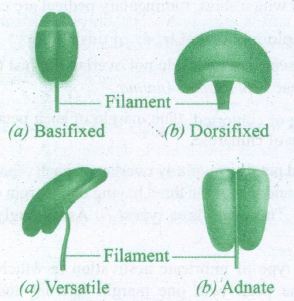
(i) Basifixed (Innate): Base of anther is attached to the tip of a filament. eg. Brassica, Datura.
(ii) Dorsifixed: Apex of filament is attached to the dorsal side of the anther. eg. Citrus, Hibiscus.
(iii) Versatile: Filament is attached to the anther at the midpoint. eg. Grasses.
(iv) Adnate: Filament is continued from the base to the apex of the anther. eg. Verbena, Ranunculus, Nelumbo.
Anther dehiscence: It refers to opening of anther to disperse pollen grains.
.png)
(i) Longitudinal: Another dehisces along a suture parallel to long axis of each anther lobe. eg. Datura, chinarose, cotton.
(ii) Transverse: Anther dehisces at right angles to the long axis of anther lobe. eg. Malvaceae.
(iii) Poricidal: Anther dehisces through pores at one end of the thecae. eg. Ericaceae, Solanum, potato, brinjal, Cassia.
(iv) Valvular: Anther dehisces through a pore covered by a flap of tissue. eg. Lauraceae, Cinnamomum.
Anther dehiscing direction: It shows the position of anther opening relative to the anther of the flower.
.png)
(i) Introrse: Anther dehisces towards the centre of the flower. eg. Dianthus.
(ii) Extrorse: Anther dehisces towards periphery of the flower. eg. Argemone.
19.
In cauliflorous type, inflorescence developed directly from a woody trunk. Example: Theobroma cocoa.
20.
Fruit develops from multicarpellary, multilocular, syncarpous, superior ovary. The fruit wall is differentiated into leathery epicarp with oil glands, a middle fibrous mesocarp. The endocarp forms distinct chambers, containing juicy hairs. Example: Orange, Lemon.
21.
Fruit develops from monocarpellary, superior ovary. It is usually one seeded. Pericarp is differentiated into outer skinny epicarp, fleshy and pulpy mesocarp and hard andstony endocarp around the seed. Example: Mango, Coconut.
22.
Fruit develops from bicarpellaryor multicarpellary, syncarpous ovary. Here the epicarp is thin, the mesocarp and endocarp remain undifferentiated. They form a pulp in which the seeds are embedded. Example: Tomato, Date Palm, Grapes, Brinjal.
23.
Fruit has a fruit wall. It is otherwise called pericarp. It is differentiated into outer epicarp, middle mesocarp and inner endecarp. The inner part of the fruit is occupied by the seed.
24.
1. The branch that bears the flower is called mother axis.
2. The side of the flower facing the mother axis is called posterior side.

11th Standard Syllabus & Materials
11th Standard
TN 11th Tamil பீடு பெற நில் - செய்யுள் - காவடிச்சிந்து Important Questions And Answers Study Material - QB365 Set A
NEW11th Standard
TN 11th Tamil பீடு பெற நில் - உரைநடை - மலை இடப்பெயர்கள் : ஓர் ஆய்வு Important Questions And Answers Study Material - QB365 Set A
NEW11th Standard
TN 11th Tamil மாமழை போற்றுதும் - துணைப்பாடம் - யானை டாக்டர் Important Questions And Answers Study Material - QB365 Set A
NEW11th Standard
TN 11th Tamil மாமழை போற்றுதும் - செய்யுள் - ஐங்குறுநூறு Important Questions And Answers Study Material - QB365 Set A



Tamilnadu Stateboard 11th Standard Subjects

Maths

Commerce

Economics
Biology

Business Maths and Statistics

Accountancy

Computer Science

Physics

Chemistry
Maths
Biology
Economics
Physics
Chemistry

History
Business Maths and Statistics

Computer Science
Accountancy

Computer Applications
History
Computer Technology
Commerce
Computer Applications
Computer Technology

Tamil

English

French
Tamilnadu Stateboard Standards

