
 100% FREE ACCESS
11th Standard Syllabus & Materials
11th Standard
TN 11th Tamil இயற்கை வேளாண்மை,சுற்றுச்சூழல் -செய்யுள் - மனோன்மணீயம் Important Questions And Answers Study Material - QB365 Set A
NEW11th Standard
TN 11th Tamil என்னுயிர் என்பேன் -துணைப்பாடம் - இசைத்தமிழர் இருவர் Important Questions And Answers Study Material - QB365 Set A
NEW11th Standard
TN 11th Tamil மொழி கலை -செய்யுள் - ஒவ்வொரு புல்லையும் Important Questions And Answers Study Material - QB365 Set A
NEW11th Standard
TN 11th Tamil பீடு பெற நில் - இலக்கணம் - பகுபத உறுப்புகள் Important Questions And Answers Study Material - QB365 Set A
NEW11th Standard
TN 11th Tamil பீடு பெற நில் - துணைப்பாடம் - வாடிவாசல் Important Questions And Answers Study Material - QB365 Set A
NEW11th Standard
TN 11th Tamil பீடு பெற நில் - செய்யுள் - குறுந்தொகை Important Questions And Answers Study Material - QB365 Set A

Published on: 04/02/2019
Download Tamil Nadu 11th Standard Chemistry question papers, model tests, one-mark questions, important questions, and public exam papers in PDF format. Free study materials and answer keys for TN State Board students.
Questions + Answers key
Take MCQ Chemistry Test1.
The pH of normal rain water is ________
6.5
7.5
5.6
4.6
2.
Which sequence for green house gases is based on GWP ?
CFC > N2O > CO2 > CH4
CFC > CO2 > N2O > CH4
CFC > N2O > CH4 > CO2
CFC > CH4 > N2O > CO2
3.
Which of the following reagent is helpful to differentiate ethylene dichloride and ethylidene chloride?
Zn / methanol
KOH / ethanol
aqueous KOH
ZnCl2 / Con HCl
4.
With respect to the position of – Cl in the compound CH3 – CH = CH – CH2 – Cl, it is classified as __________
Vinyl
Allyl
Secondary
Aralkyl
5.
In which of the following molecules, all atoms are co-planar ___________

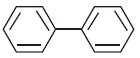
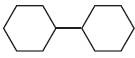
both (a) and (b)
6.
\({ C }_{ 2 }{ H }_{ 5 }Br+2Na\overset { dry\quad ether }{ \longrightarrow } { C }_{ 4 }{ H }_{ 10 }+2NaBr\) The above reaction is an example of which of the following
Reimer Tiemann reaction
Wurtz reaction
Aldol condensation
Hoffmann reaction
7.
IUPAC name of \({ CH }_{ 3 }-\overset { \underset { | }{ H } }{ \underset { \overset { | }{ { C }_{ 2 }{ H }_{ 5 } } }{ C } } -\overset { \underset { | }{ { C }_{ 4 }{ H }_{ 9 } } }{ \underset { \overset { | }{ { CH }_{ 3 } } }{ C } } -{ CH }_{ 3 }\) is ________
3, 4, 4 – Trimethylheptane
2 – Ethyl –3, 3– dimethyl heptane
3, 4, 4 – Trimethyloctane
2 – Butyl -2 –methyl – 3 – ethyl-butane
8.
In the hydrocarbo \(\overset { 7 }{ { CH }_{ 3 } } -\overset { 6 }{ { CH }_{ 2 } } -\overset { 5 }{ CH } =\overset { 4 }{ CH } -\overset { 3 }{ { CH }_{ 2 } } -\overset { 2 }{ C } =\overset { 1 }{ CH } \) the state of hybridisation of carbon 1,2,3,4 and 7 are in the following sequence.
sp, sp, sp3, sp2, sp3
sp2, sp, sp3, sp2, sp3
sp, sp, sp2, sp, sp3
none of these
9.
The temperature of the system, decreases in an _____________
Isothermal expansion
Isothermal Compression
adiabatic expansion
adiabatic compression
10.
In a reversible process, the change in entropy of the universe is ____.
> 0
> 0
< 0
= 0
11.
If uncertainty in position and momentum are equal, then minimum uncertainty in velocity is _________
\(\frac { 1 }{ m } \sqrt { \frac { h }{ \pi } } \)
\( \sqrt { \frac { h }{ \pi } } \)
\(\frac { 1 }{ 2m } \sqrt { \frac { h }{ \pi } } \)
\( { \frac { h }{4\pi } } \)
12.
Choose the disproportionation reaction among the following redox reactions.
3Mg(s) + N2(g) \(\longrightarrow \) Mg3N2(s)
P4(s) + 3NaOH + 3H2O \(\longrightarrow \) PH 3(g) + 3NaH2 PO2(aq)
Cl2(g) + 2Kl(aq) \(\longrightarrow \) 2KCl(aq) + I2
Cr2O3(s) + 2A1(s) \(\longrightarrow \) Al2O3(s) + 2Cr(s)
13.
Which of the following elements will have the highest electro negativity ____________
Chlorine
Nitrogen
Cesium
Fluorine
14.
Splitting of spectral lines in an electric field is called _____________
Zeeman effect
Shielding effect
Compton effect
Stark effect
15.
Assertion: Two mole of glucose contains 12.044 x 10²³ molecules of glucose
Reason: Total number of entities present in one mole of any substance is equal to 6.02 x 10²²
(a) both assertion and reason are true and the reason is the correct explanation of assertion
(b) both assertion and reason are true but reason is not the correct explanation of assertion
(c) assertion is true but reason is false
(d) both assertion and reason are false
both assertion and reason are true and the reason is the correct explanation of assertion
both assertion and reason are true but the reason is not the correct explanation of assertion
an assertion is true but reason is false
both assertion and reason are false
16.
What is green chemistry ?
17.
Why chlorination of methane is not possible in dark?
18.
Give IUPAC names for the following compounds
CH3 – CH = CH – CH = CH – C ≡ C – CH3
19.
Write structural formula for the following compounds
m - dinitrobenzene
20.
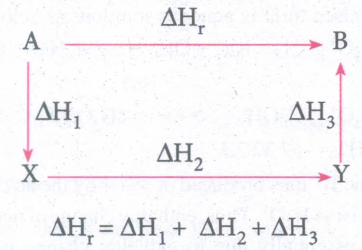
Define Hess's law of constant heat summation.
21.
How many orbitals are possible for n = 4?
22.
What is effective nuclear charge?
23.
Two isomers (A) and (B) have the same molecular formula C2H4Cl2. Compound (A) reacts with aqueous KOH gives compound (C) of molecular formula C2H4O. Compound (B) reacts with aqueous KOH gives compound(D) of molecular formula C2H6O2. Identify (A), (B), (C) and (D).
24.
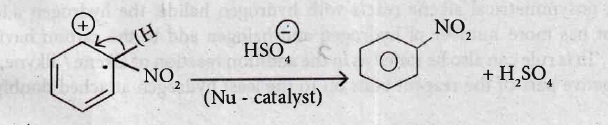
Describe the mechanism of Nitration of benzene.
25.
Give the general characteristics of organic compounds?
26.
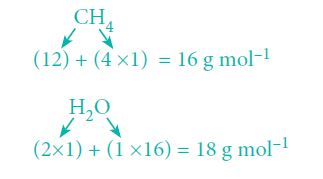
Calculate the amount of water produced by the combustion of 32 g of methane.
27.
State the various statements of second law of thermodynamics.
28.
Distinguish between oxidation and reduction.
29.
30.
Explain how oxygen deficiency is caused by carbon monoxide in our blood ? Give its effect
31.
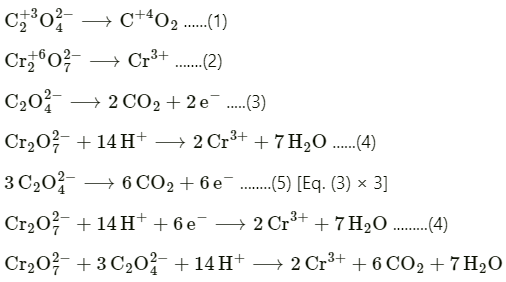
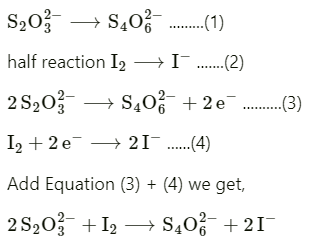
Balance the following equations by ion electron method.
i) \({ KMn }O_{ 4 }+{ SnCl }_{ 2 }+HCI\longrightarrow MnCI_{ 2 }+{ SnCI }_{ 4 }+{ H }_{ 2 }O+KCI\)
ii) 
iii) 
iv) 
32.
List the characteristics of internal energy.
33.
Write down the Born-Haber cycle for the formation of CaCl2
34.
What is the de Broglie wavelength (in cm) of a 160 g cricket ball travelling at 140 Km hr -1.
35.
A Compound on analysis gave Na = 14.31% S = 9.97% H = 6.22% and 0 = 69.5%.
Calculate the molecular formula of the compound if all the hydrogen in the compound is present in combination with oxygen as a water of crystallization. (molecular mass of the compound is 322).
36.
Describe the Aufbau principle
37.
Explain the diagonal relationship.
38.
Explain the pauling method for the determination of ionic radius.
39.
State and explain pauli exclusion principle.
1.
(c)
5.6
2.
(c)
CFC > N2O > CH4 > CO2
3.
(c)
aqueous KOH
4.
(b)
Allyl
5.
(d)
both (a) and (b)
6.
(b)
Wurtz reaction
7.
(c)
3, 4, 4 – Trimethyloctane
8.
(a)
sp, sp, sp3, sp2, sp3
9.
(c)
adiabatic expansion
10.
(d)
= 0
11.
(c)
\(\frac { 1 }{ 2m } \sqrt { \frac { h }{ \pi } } \)
12.
(b)
P4(s) + 3NaOH + 3H2O \(\longrightarrow \) PH 3(g) + 3NaH2 PO2(aq)
13.
(d)
Fluorine
14.
(d)
Stark effect
15.
(c) assertion is true but reason is false
16.
(i) Green chemistry is a chemical philosophy encouraging the design of products and Processes that reduce or eliminate the use and generation of hazardous substances.
(ii) For this, scientist are trying to develop methods to produce eco-friendly compounds. This can be best understood by considering the following example in which styrene is produced both by traditional and greener routes. To avoid carcinogenic benzene, greener route is to start with cheaper and environmentally safer xylenes.
(iii) Green chemistry means science of environmentally favourable chemical synthesis.
17.
The Chlorination of methane is carried out by free radical mechanism. The initiation step to form free radical needs high energy which is supplied by light energy.
\(\mathrm{Cl}-\mathrm{Cl} \stackrel{h \nu}{\longrightarrow} 2 \mathrm{Cl}\)
So this reaction is not possible in dark.
18.

19.
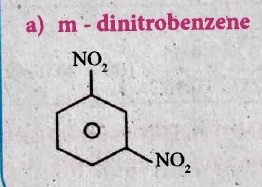
20.
The enthalpy change of a reaction either at constant volume or constant pressure is the same whether it takes place in a single or multiple steps provided the initial and final states are same.
21.
| n | l | m | orbitals | Total no of orbitals |
| 0 | 0 | 1 | (1- 4s +3 - 4P orbital +5 - 4d orbital +7 - 4f orbital) =16 |
|
| 4 | 1 | -1 0 +1 |
3 | |
| 2 |
-2 |
5 | ||
| 3 |
-3 |
7 |
22.
The net nuclear charge experienced by valence electrons in the outermost shell is called the effective nuclear charge.
Zeff=Z-S
Where Z is the atomic number and 'S' is the screening constant.
23.
\(\overset { \underset { | }{ Cl } }{ \underset { \overset { | }{ Cl } }{ CH } } -{ CH }_{ 3 }\quad (A)\) 1, 1,-dichloro ethane
\(\underset { \overset { | }{ Cl } }{ { CH }_{ 2 } } -\underset { \overset { | }{ Cl } }{ { CH }_{ 2 } } \) (B) 1, 2, dichloro ethane
\(\overset { \underset { | }{ Cl } }{ \underset { \overset { | }{ Cl } }{ CH } } -{ CH }_{ 3 }\underset { aq\quad KOH }{ \longrightarrow } \left[ \overset { \underset { | }{ OH } }{ \underset { \overset { | }{ OH } }{ CH } } -{ CH }_{ 3 } \right] \underset { -{ H }_{ 2 }) }{ \longrightarrow } { CH }_{ 3 }CHO\)
(A) (C)
1, 1, dichloro ethane Acetaldhyde
\(A \ \ \overset { \underset { | }{ Cl } }{ \underset { \overset { | }{ Cl } }{ CH } } -{ CH }_{ 3 }\) -1,1 dichloro ethane
B \(\underset { \overset { | }{ Cl } }{ { CH }_{ 2 } } -\underset { \overset { | }{ Cl } }{ { CH }_{ 2 } } \)-1, 2 dichloro ethane
C CH3CHO -Acetaldehyde
D \(\underset { \overset { | }{ OH } }{ { CH }_{ 2 } } -\underset { \overset { | }{ OH } }{ { CH }_{ 2 } } \)-Ethyleneglycol
24.
Benzene undergoes nitration reaction becasuse it is an elecron - rich system due to delocalised \(\pi\) electron. So it is easily attacked by electrophiles and gives substituted products.

Mechanism:
Step - I : Formafion of the electrophile:

Step - II : Formation of carbocation intermediate:
The electrophile attacks the aromatic ring to form a carbocation intermediate which is stabilised by resonance.

Step - III: Formation of nitro benzene:
The electrophile attacks the artomatic ring to fo
25.
They are covalent compounds of carbon and generally insoluble in water and readily soluble in organic solvent such as benzene, toluene, ether, chloroform etc...
Many of the organic compounds are inflammable (except CCI4). They possess low boiling and melting points due to their covalent nature
Organic compounds are characterised by functional groups. A functional group is an atom or a specific combination of bonded atoms that react in a characteristic way, irrespective of the organic molecule in which it is present. In almost all the cases, the reaction of an organic compound takes place at the functional group. They exhibit isomerism which is a unique phenomenon.
Homologous series: Aseries of organic compounds each containing a characteric functional group and the successive members differ from each other in molecular formula by a CH2 group is called homologous series. Eg.
Alkanes: Methane (CH4), Ethane (C2H6), Propane(C3H8) etc.Alcohols: Methanol (CH3OH), Ethanol (C2H5OH) Propanol (C3H7OH) etc..) Compounds of the homologous series are represented by a general formula Alkanes CnH2n+2, Alkenes CnH2n, Alkynes CnHr2n-2 and can be prepared by general methods. They show regular gradation in physicial properties but have almost similar chemical property.
26.
CH4(g) + 2O2 \(\rightarrow\) CO2 + 2H2O
16g (2x18)g
As per stoichiometric equation,
16 g of methane produces 36 g of H2O
\(\therefore\) 32 g of methane will produce = \(\frac { 36 }{ 16 } \times 32=72\) g of water.
27.
(i) Kelvin-Planck statement: It is impossible to construct a machine that absorbs heat from a hot source and converts it completely into work by a cyclic process without transferring a part of heat to a cold sink.
(ii) Clausius statement: It is impossible to transfer heat from a cold reservoir to a hot reservoir without doing some work.
(iii) Entropy statement: The entropy of an isolated system increases during a spontaneous process
28.
| Oxidation | Reduction | |
| 1. | Addition of oxygen | Addition of Hydrogen |
| 2. | Removal of Hydrogen | Removal of oxygen |
| 3. | Addition of an electronegative element. | Addition of an electro positive element |
| 4. | Removal of an electro positive element | Removal of an electro negative element |
| 5. | Loss of electron | Gain of electron |
| 6. | Increase in oxidation state / number | Decrease in oxidation state/ number. |
29.
30.
It binds with haemoglobin and form carboxy haemoglobin which impairs normal oxygen transport by blood and hence the oxygen carrying capacity of blood is reduced. This oxygen deficiency results in headache, dizziness, tension, Loss of consciousness, blurring of eye sight and cardiac arrest.
31.
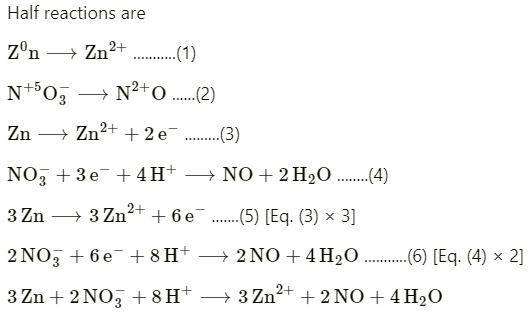
Half reactions are:
\(\overset { +7 }{ M } { nO }_{ 4 }^{ - }\longrightarrow { Mn }^{ 2+ }\)
and \({ Sn }^{ 2+ }\longrightarrow { Sn }^{ 4+ }\)
(1) \(\Rightarrow \) \({ MnO }_{ 4 }^{ - }+{ 8H }^{ - }+5e^{ - }\longrightarrow { Mn }^{ 2+ }+{ 4H }_{ 2 }O\)
(2) \(\Rightarrow \) \({ Sn }^{ 2+ }\longrightarrow { Sn }^{ 4+ }+{ 2e }^{ - }\)
.png)
ii)
iii)
iv)
32.
Characteristics of internal energy (U) :
33.
Born - Haber cycle for the formation of CaCl2
Born - Haber cycle is used to calculate the lattice enthalpy of CaCl2
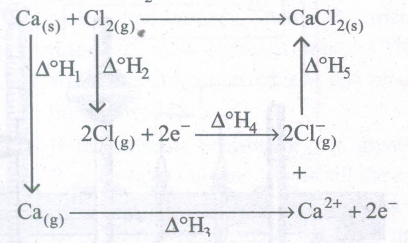
ΔoH1 - Enthalpy change for the sublimation of Ca(s) to Ca(g)
ΔoH2 - Enthalpy change for dissociation of Cl2(g) to 2Cl(g)
ΔoH3 - Ionisation energy for Ca(g) to Ca2+(g)
ΔoH4 - Electron affinity for the conversion of 2Cl(g) to 2Cl-(g)
ΔoH5 - Lattice enthalpy for the formation of solid CaCl2·
ΔoHf =ΔoH1+ΔoH2+ΔoH3+ΔoH4+ΔoH5
34.
m 160 g = 160 x 10-3 kg
\(v=140 km hr^{-1}=\frac{104\times10^{3}}{60\times60}ms^{-1}\)
\(v=38.88ms^{-1}\)
\(\lambda=\frac{h}{mv}\)
\(=\frac{6.626\times^{-34}Kgm^{2}s^{-1}}{160\times10^{-3}Kg\times38.88ms^{-1}}\)
\(\lambda=1.065\times10^{-34}m\)
35.
| Element | % | Relative number of atoms | Simple Ratio |
| Na | 14.31 | \(\frac { 14.31 }{ 23 } =0.62\) | \(\frac { 0.62 }{ 0.31 } =2\) |
| S | 9.97 | \(\frac { 9.97 }{ 32 } =0.31\) | \(\frac { 0.31 }{ 0.31 } =1\) |
| H | 6.22 | \(\frac { 6.22 }{ 1 } =6.22\) | \(\frac { 6.22 }{ 0.31 } =20\) |
| O | 69.5 | \(\frac { 69.5 }{ 16 } =4.34\) | \(\frac { 4.34 }{ 0.31 } =14\) |
Empirical formula = Na2 SH20 O14
\(\left[ \begin{matrix} { Na }_{ 2 }{ SH }_{ 20 }{ O }_{ 14 } \\ =(2\times 23)+(1\times 32)+(20\times 1)+14(16) \\ =46+32+20+234 \\ =322 \end{matrix} \right] \)
n = \(\frac { molar\quad mass }{ caluclated\quad empirical\quad formula\quad mass } =\frac { 322 }{ 322 } =1\)
Molecular formula = Na2 SH20O14
Since all the hydrogen in the compound are present as water
\(\therefore \) The molecular formula is Na2 SO4 10H2O.
36.
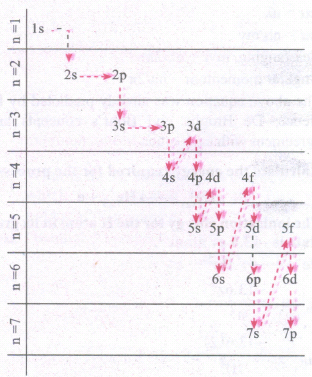
The word Aufbau in German means 'building up'. In the ground state of the atoms, the orbitals are filled in the order of their increasing energies. That is the electrons first occupy the lowest energy orbital available to them.
Once the lower energy orbitals are completely filled, then the electrons enter the next higher energy orbitals. The order of filling of various orbitals as per the Aufbau principle which is in accordance with (n + l) rule.
37.
On moving diagonally across the periodic table, the second and third period elements show certain similarities. It is quite pronounced in the following pair of elements.

The similarity in properties existing between the diagonally placed elements is called diagonal relationship.
38.
(i) Ionic radius of uni-univalent crystal can be calculated using Pauling's method from the inter ionic distance between the nuclei of the cation and anion.
(ii) Pauling assumed that ions present in a crystal lattice are perfect spheres, and they are in contact with each other therefore,
d=rC+ + rA- ...(1)
Where d is the distance between the centre of the nucleus of cation C+ and anion A-and rC+, rA- are the radius of the cation and anion respectively.
(iii) Pauling also assumed that the radius of the ion having noble gas electronic configuration is inversely proportional to. the effective nuclear charge.
\({ r }_{ C }^{ + }\alpha \frac { 1 }{ ({ Z }_{ eff }){ C }^{ + } } \) ....(2) and
\({ r }_{ A }^{ - }\alpha \frac { 1 }{ ({ Z }_{ eff }){ A }^{ - } } \)...(3)
Where Zeff is the effective nuclear charge and Zeff= Z - S
Dividing the equation 1 by 3
\(\frac { { r }_{ C }^{ + } }{ { r }_{ A }^{ - } } =\frac { ({ Z }_{ eff }){ A }^{ - } }{ ({ Z }_{ eff }){ C }^{ + } } \) ...(4)
On solving equation and (1) and (4) the values of rC+ and rA- can be obtained.
39.
Statement : "No two electrons in an atom can have the same set of values of all four quantum numbers"
Explanation : It means that, each electron must have unique values for the four quantum numbers (n, l, m and s).
For the lone electron present in hydrogen atom, the four quantum numbers are: n = 1; l = 0; m = 0 and s = +1/2. For the two electrons present in helium, one electron has the quantum numbers same as the electron of hydrogen atom, n = 1.
l = 0, m = 0 and s = +1/2. For other electron, the fourth quantum number is different i.e., n = 1, l = 0, m = 0 and s = -1/2.
As we know that the spin quantum number can have only two values +1/2 and - 1/2, only two electrons can be accommodated in a given orbital in accordance with pauli exclusion principle.
| Atom | e- | n | l | m | s |
| Helium | First | 1 | 0 | 0 | +1/2 |
| Second | 1 | 0 | 0 | +1/2 |

11th Standard Syllabus & Materials
11th Standard
TN 11th Tamil பீடு பெற நில் - செய்யுள் - காவடிச்சிந்து Important Questions And Answers Study Material - QB365 Set A
NEW11th Standard
TN 11th Tamil பீடு பெற நில் - உரைநடை - மலை இடப்பெயர்கள் : ஓர் ஆய்வு Important Questions And Answers Study Material - QB365 Set A
NEW11th Standard
TN 11th Tamil மாமழை போற்றுதும் - துணைப்பாடம் - யானை டாக்டர் Important Questions And Answers Study Material - QB365 Set A
NEW11th Standard
TN 11th Tamil மாமழை போற்றுதும் - செய்யுள் - ஐங்குறுநூறு Important Questions And Answers Study Material - QB365 Set A



Tamilnadu Stateboard 11th Standard Subjects

Maths

Commerce

Economics

Biology

Business Maths and Statistics

Accountancy

Computer Science

Physics
Chemistry
Maths
Biology
Economics
Physics
Chemistry

History
Business Maths and Statistics

Computer Science
Accountancy

Computer Applications
History
Computer Technology
Commerce
Computer Applications
Computer Technology

Tamil

English

French
Tamilnadu Stateboard Standards

