
 100% FREE ACCESS
11th Standard Syllabus & Materials
11th Standard
TN 11th Tamil இயற்கை வேளாண்மை,சுற்றுச்சூழல் -செய்யுள் - மனோன்மணீயம் Important Questions And Answers Study Material - QB365 Set A
NEW11th Standard
TN 11th Tamil என்னுயிர் என்பேன் -துணைப்பாடம் - இசைத்தமிழர் இருவர் Important Questions And Answers Study Material - QB365 Set A
NEW11th Standard
TN 11th Tamil மொழி கலை -செய்யுள் - ஒவ்வொரு புல்லையும் Important Questions And Answers Study Material - QB365 Set A
NEW11th Standard
TN 11th Tamil பீடு பெற நில் - இலக்கணம் - பகுபத உறுப்புகள் Important Questions And Answers Study Material - QB365 Set A
NEW11th Standard
TN 11th Tamil பீடு பெற நில் - துணைப்பாடம் - வாடிவாசல் Important Questions And Answers Study Material - QB365 Set A
NEW11th Standard
TN 11th Tamil பீடு பெற நில் - செய்யுள் - குறுந்தொகை Important Questions And Answers Study Material - QB365 Set A

Published on: 30/09/2018
Important 2mark -chapter 3,4
Download Tamil Nadu 11th Standard Chemistry question papers, model tests, one-mark questions, important questions, and public exam papers in PDF format. Free study materials and answer keys for TN State Board students.
Questions + Answers key
Take MCQ Chemistry Test
1.
Write the chemical reactions to show the amphoteric nature of water.
2.
Write a note about gas hydrates.
3.
Ionization energy of beryllium is greater than the ionization energy of boron Why?
4.
Define ionisation energy. Give its unit
5.
Define ionic radius.
6.
Explain about the type of bonding present in hydrogen fluoride?
7.
State the Newland's law of octaves.
8.
Why H2O2 is used as mild antiseptic?
9.
How alkali metals react with water? Give an equation?
10.
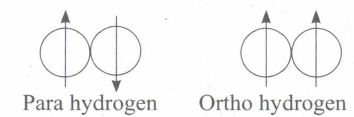
Draw and define ortho and para hydrogen molecule.
11.
The first ionisation energy (lE1) and second ionisation energy (lE2) of elements X, Y and Z are given below.
| Element | IE1(kJ mol-1) | IE2(kJ mol-1) |
| X | 2370 | 5250 |
| Y | 522 | 7298 |
| Z | 1680 | 3381 |
Which one of the above elements is the most reactive metal, the least reactive metal and a noble gas?
12.
Account for the difference in size of Na +(95 pm) and Mg+2(65pm) both of which have the same noble gas configuration
13.
How is ionisation energy related to the metallic character? How does the basic nature of hydroxides of alkaline earth metals very down the group?
14.
Explain why noble gases are inert?
15.
Explain the term valence or oxidation state. How does it vary in a period and in group?
16.
Explain the cause for the variation of atomic radius along a period.
17.
How is Tritium prepared?
18.
How is heavy hydrogen D2 produced.
19.
How does atomic and ionic radii vary across the group and period.
20.
Explain the reaction of water with halogens.
21.
Give two uses of Tritium.
22.
Give the general electronic configuration of lanthanides and actinides.
23.
Discuss the three types of Covalent hydrides.
24.
An ice cube at 0°C is placed in some liquid water at 00C, the ice cube sinks - Why? An ice cube at 0°C is placed in some liquid water at 0°C, the ice cube sinks. What is the nature of water? Justify.
25.
An ice cube at 0° C is placed in some liquid water at 00C, the ice cube sinks - Why? What will happen to ice at 00C placed in liquid water at 00C?
26.
How would you explain the fact that the second ionisation potential is always higher than first ionisation potential?
27.
Define electro negativity.
28.
Define modern periodic law.
29.
Predict which of the following hydrides is a gas on a solid
(a) BCI
(b) NaH
Give your reason.
30.
Explain why hydrogen is not placed with the halogen in the periodic table.
1.
Water is amphoteric in nature and it behaves both as an acid as well as base. With acids stronger than itself (e.g., H2S) it behaves as a base and with bases stronger than itself (e.g., NH3) it acts as an acid.
(i) As a base: H2O(1) + H2S(aq)⟶H3O(aq) + HS-(aq)
(ii) As an acid: H2O(1) + NH3(aq)⟶OH-(aq) + NH4+(aq)
2.
Gas hydrates are a kind of inclusion compounds, where gas molecules are trapped in the crystal lattice having voids of right size, without being chemically bonded. An interesting hydrate is that of the hydronium ion (H3O+) in the gas-phase, similar to methane hydrate. Each water molecule is bonded to three others in the dodecahedron.
3.
Be (Z = 4) 1s2 2s2. It has completely filled valence electrons, which requires high IE1.
B (Z = 5) 1s2 2s2.2p1. It has incompletely filled valence electrons, which requires comparatively less IE1.Hence I.E1 Be > I.E1B.
4.
The energy required to remove the most loosely held electron from an isolated gaseous atom is called ionization energy.
M(g)+ energy ⟶ M+(g) + electron
The unit of ionization energy is KJ mole-1
5.
The ionic radius of an ion is the distance between the centre of the ion and the outermost point of its electron cloud.
6.
In, hydrogen fluoride (HF), for example, one molecule is strongly attracted to the fluorine on its neighboring hydrogen. In both liquid and solid, hydrogen fluoride forms long hydrogen bonded zig-zag chains as a consequence of the orientation of the lone pairs on the fluorine atoms.

7.
The Law of octaves states that, "when elements are arranged in the order of increasing atomic weights, the properties of the eighth element are a repetition of the properties of the first element".
8.
The oxidising property of hydrogen peroxide and harmless nature of its products such as water and oxygen, leads to oxidation of pollutants in water and act as a mild antiseptic.
9.
The most reactive alkali metals decompose water in the cold with the evolution of hydrogen and leaving an alkali solution
2Na(s) + 2H2O(1) ⟶ 2NaOH(aq) + H2(g)
10.
Molecular hydrogen have ortho and para form in which the nuclear spins are aligned or opposed, respectively
11.
Noble gases: Ioniation energy ranging from 2372 KJmol-1 to 1037 kJ mol-1.
For element X, the IE1 value is in the range of noble gas, moreover for this element both IE1 and IE2 are higher and hence X is the noble gas.
For Y, the first ionisation energy is low and second ionisation energy is very high and hence Y is most reactive metal. For Z, both IE1 and IE2 are higher and hence it is least reactive.
12.
The nuclear charge in Mg+2 is more than Na+ and therefore electrons are drawn more closely, and hence size decreases
13.
Metals have low ionisation energy and highly electropositive. As the ionisation energy of the metals decreases down the group, the electro positive character of elements increases. The basic character of hydroxides of alkaline earth metals increases down the group
| Be(OH)2 amphoteric |
Mg(OH)2 Weakly Basic |
Ba(OH)2 Strongly Basic |
Sr(OH)2 Strobly Basic |
Ba(OH)2 Strongly Basic |
14.
The noble gases having completely filled electronic configuration neither accept nor lose their electron readily and hence they are chemically inert in nature
15.
The valence of an atom primarily depends on the number of electrons in the valence shell. As the number of valence electrons remains same for the elements in same group, the maximum valence also remains the same. However, in a period the number of valence electrons increases, hence the valence also increases.
16.
Atomic radius tends to decrease in a period. Along a period, the valence electrons are added to the same shell. The simultaneous addition of protons to the nucleus, increases the nuclear charge, as well as the electrostatic attractive force between the valence electrons and the nucleus. Therefore atomic radius decreases along a period.
17.
It is artificially prepared by bombarding lithium with slow neutrons in a nuclear fission reactor. The nuclear transmutation reaction for this process is as follows.
\(_{ 3 }^{ 6 }{ Li+ }_{ 0 }^{ 1 }{ n }\rightarrow _{ 2 }^{ 4 }{ He }+_{ 1 }^{ 3 }{ T }\)
18.
Prolonged electrolysis of heavy water produces heavy hydrogen. The electrolysis is continueduntil the resulting solution becomes enriched in heavy water. Further electrolysis of the heavy water gives deuterium.
\(2D_2O\xrightarrow{electrolysis}2D_2+O_2\)
19.
Variation down the group: On moving down a group both atomic and ionic radii increase with increasing atomic number. The increase in size is due to introduction of extra energy shells which outweigh the effect of increased nuclear charge.
20.
Halogens react with water to give an acidic solution. For example, chlorine forms hydrochloric acid and hypochlorous acid.
Cl2(g) + H2O(l) ➝ HCl (aq) + HOCl(aq)
21.
(i) Used in emergency exit signs.
(ii) Used in illumination of wrist watches in place of radium.
22.
Lanthanides: [54Xe] 4f1-14 5d1 6s2
Actinides : [86Rn] 5f0-146d0-2 7s2
23.
a) Electron-precise hydrides:
These have required number of electron to represent their conventional d lewis structure. All the elements of carbon group (14) form such hydrides.
Eg CH4, C2H6, SiH4, GeH4
b) Electron - deficient hydrides:
There act as Lewis acids (ie) electron acceptors. The elements from group (13) form such hydrides.
Eg: B2H6
c) Electron - rich hydrides:
There have excess electron, which are present as lone pairs. Elements of group 15-17 form such hydrides. They behave as Lewis bases (ie) electron donors.
Eg: NH3 ,H2O, HF
24.
NOTE :
At any condition ice cube does not sink in water.
At 0°C, ice and liquid water will be in equilibrium and will coexist. Hence no freezing or melting will occur.
25.
NOTE:
At any condition ice cube does not sink in water.
At 00C, ice and liquid water will be in equilibrium and will coexist. Hence no freezing or melting will occur.
26.
The total number of electrons are less in the cation than the neutral atom while the nuclear charge remains the same. Therefore the effective nuclear charge of the cation is higher than the corresponding neutral atom. Thus the successive ionisation energies, always increase in the following order
IE1 < IE2 < IE3 < .....
27.
It is defined as the relative tendency of an element present in a covalently bonded molecule, to attract the shared pair of electrons towards itself.
28.
The modem periodic law states that, "the physical and chemical properties of the elements are periodic functions of their atomic numbers.
29.
a) HCl is a gas. It is an electron rich covalent hydride. It is a covalent molecule with strong covalent bond. However the forces between the molecules are not as strong.
b) NaH is a solid. It is an ionic hydride of group I sodium metal. It is an insoluble hydride
30.
Hydrogen has electronic configuration 1s1. So it resembles ns1 general valence shell configuration of alkali metals.
Its similarity with alkali metals are:
1. Form uni positive (H+) ions like Na+, K+, Cs+
2. Form halides, (HX), oxides (H2O) peroxides (H2O2) and sulphides (H2S) like (Nax, Na2O, Na2O2, Na2S)
3. Acts as reducing agent.
4. Has +1 oxidation state.
5. If it is placed in the halogen family it should be the most electro negative element which is not true.

11th Standard Syllabus & Materials
11th Standard
TN 11th Tamil பீடு பெற நில் - செய்யுள் - காவடிச்சிந்து Important Questions And Answers Study Material - QB365 Set A
NEW11th Standard
TN 11th Tamil பீடு பெற நில் - உரைநடை - மலை இடப்பெயர்கள் : ஓர் ஆய்வு Important Questions And Answers Study Material - QB365 Set A
NEW11th Standard
TN 11th Tamil மாமழை போற்றுதும் - துணைப்பாடம் - யானை டாக்டர் Important Questions And Answers Study Material - QB365 Set A
NEW11th Standard
TN 11th Tamil மாமழை போற்றுதும் - செய்யுள் - ஐங்குறுநூறு Important Questions And Answers Study Material - QB365 Set A



Tamilnadu Stateboard 11th Standard Subjects

Maths

Commerce

Economics

Biology

Business Maths and Statistics

Accountancy

Computer Science

Physics
Chemistry
Maths
Biology
Economics
Physics
Chemistry

History
Business Maths and Statistics

Computer Science
Accountancy

Computer Applications
History
Computer Technology
Commerce
Computer Applications
Computer Technology

Tamil

English

French
Tamilnadu Stateboard Standards
